Categories
Breaking News

Unusual Burial Discovered at the Settlement that Doesn’t Exist

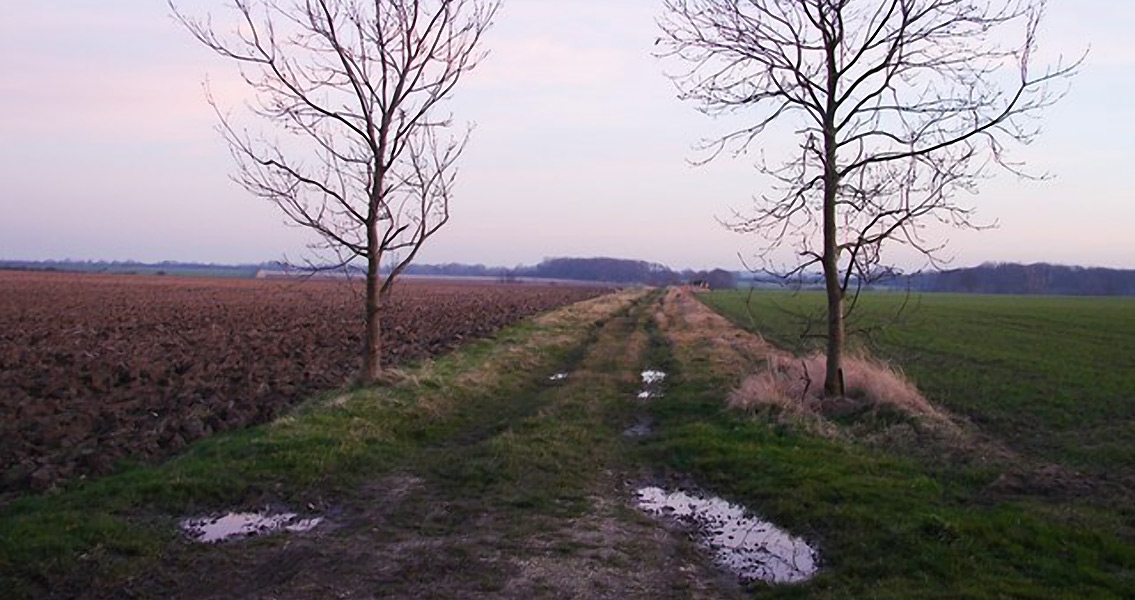
Lincolnshire Live: “What makes this a really interesting burial is the fact that they have been buried on their front. But there’s something else that really makes it special. You see how narrow it is in the grave. It’s about 25cm between the shoulders, it’s really crammed together.” The incredible discovery featured in an episode of Digging for Britain, presented by Anthropologist Professor Alice Roberts. Professor Roberts described the burial of a Christian person in this fashion as “bizarre”, adding, “What we can say for definite is it was buried after the body had started to decompose. The limbs have started to fall away from the rest of the body, but great care has been made to try to put the body back.” Dr. Willmott is quoted by Lincolnshire Live as saying: “A great deal of care has been taken in this burial. So this could be an individual who perhaps has died away from the site and been brought here to be interred here specially. There are stories of the bodies of kings being moved. And of course saints and holy people. So there could be something like that going on here, which suggests Little Carlton was a place of great importance.” The unusual skeleton was just the first of many rare and intriguing finds, including writing tools, approximately 300 clothing pins, a large number of coins dating to the seventh and eighth centuries called Sceattas, a lead tablet with the faint, but still legible word Cudberg (an Anglo-Saxon woman’s name) on it, and glassware that suggested the inhabitants traded with the European mainland. Another rare find in Britain, an iron manacle, was also found, suggesting the site was the location of a slave-trade operation or slaves were owned by the occupants. Additionally, a pair of tweezers commonly used to turn book pages were recovered and may have been used by Christian monks as they read religious manuscripts. Today the site is completely surrounded by dry land, however, it’s believed that in the past the site would have been surrounded by water, and that it was probably occupied by either a trading post or monastery within the Anglo-Saxon Kingdom of Lindsey. The settlement also produced woven textiles that were exported to northern Europe, while German pottery and wine were imported from the mainland. Bizarrely, there is no record of the settlement ever existing. It’s believed that it was abandoned when the Viking raids in England started in the later part of the eighth century, and there was no trace of it ever being there by the time the Domesday Book (a survey of England and areas in Wales) was completed in 1086. Images of the burial can be found at Lincolnshire Live ]]>
Categories
Breaking News

Catholic Monastery Built as Penance Hides Ancient Iraqi Texts

Live Science: “Each one contains lengthy colophons [notes] written by the scribes, telling historical and social, and religious events of their times — a fact that makes them precious sources.” Mar Behnam monastery was the home of numerous ancient texts, pieces of artwork and carved inscriptions that dated back centuries. It was occupied by ISIS beginning in June, 2014, until it was recaptured by the Iraqi government in November, 2016. Photographs and a news report published shortly after the monastery’s recapture show that ISIS militants had destroyed several of the monastery’s buildings, burnt any texts they found, defaced and destroyed artwork and inscriptions, and left graffiti on all of the remaining structures. The Monastery of the Martyrs Mar Behnam and Marth Sarah is a Syriac Catholic monastery in northern Iraq. It was built in the twelfth century by Senchareb, an Assyrian king, as penance for the murder of his son Behnam and daughter Sarah following their conversion to Christianity. Sculptures of the church indicate that renovations were completed in 1164 and again between 1250-1261. The monks abandoned the monastery, for unknown reasons, in 1819. It’s been under the care of the Syriac Catholic Church since 1839, although at some point in its history it was part of the Church of the East for ten centuries or more, as shown by the rare Turkic inscriptions left behind by Mongol pilgrims during the thirteenth century. The monastery was renovated again in 1986, and was visited by thousands of Muslims and Christians every year until ISIS took control of the region. A young priest hid the texts at Mar Behnam just 40 days before ISIS arrived. They were put in large metal cans and placed in a storage room enclosed behind the newly constructed wall. The priest, who was forced out of the monastery, kept the undertaking a secret until he felt the region was secure. The texts remained behind the wall for more than two years. It’s been reported that ISIS used the same building as a base for its morality police. What happens to the texts now is unclear and Harrak wonders if they should be taken out of Iraq, at least in the short term, for safekeeping. “What is the future of these manuscripts? Iraq is a restless country,” Harrak told Live Science. “Should they take them to Europe, for example, or the Vatican Library or somewhere more secure?” ]]>

Categories
Breaking News

Radiocarbon Dating Verifies the Oldest Monastic Cemetery in the UK

Live Science: “It is great to show that a community excavation can produce results that revolutionise our view of the origins of monasticism in Britain and Ireland. Archaeology is providing evidence that can get us beyond the uncertainty of the historical sources. The ancient origins of the Beckery site may explain why later medieval writers linked it to figures such as King Arthur and Saint Brigit.” Beckery, a small, rocky island, is part of the Avalon Marshes near Glastonbury. The name means either ‘bee-keeper’s island’, which is the Old English translation, or ‘Little Ireland’ in the Irish language. Smaller islands like this one were generally chosen as the sites for monasteries and hermitages during this time period, primarily because the separation from the regular work was conducive to spiritual enlightenment. The Chapel is already known as being the place where King Arthur reportedly had a vision of Mary Magdalene and the baby Jesus. These new findings, however, tell researchers considerably more about the location, for example, that it was constructed prior to the region being defeated by the Saxon kings of Wessex in the seventh century. ]]>

Categories
Breaking News

50 Graves Found at English Medieval Pilgrimage Site

Categories
Breaking News

Ancient Monastery Doubled as Winepress