

Live Science: “Each one contains lengthy colophons [notes] written by the scribes, telling historical and social, and religious events of their times — a fact that makes them precious sources.” Mar Behnam monastery was the home of numerous ancient texts, pieces of artwork and carved inscriptions that dated back centuries. It was occupied by ISIS beginning in June, 2014, until it was recaptured by the Iraqi government in November, 2016. Photographs and a news report published shortly after the monastery’s recapture show that ISIS militants had destroyed several of the monastery’s buildings, burnt any texts they found, defaced and destroyed artwork and inscriptions, and left graffiti on all of the remaining structures. The Monastery of the Martyrs Mar Behnam and Marth Sarah is a Syriac Catholic monastery in northern Iraq. It was built in the twelfth century by Senchareb, an Assyrian king, as penance for the murder of his son Behnam and daughter Sarah following their conversion to Christianity. Sculptures of the church indicate that renovations were completed in 1164 and again between 1250-1261. The monks abandoned the monastery, for unknown reasons, in 1819. It’s been under the care of the Syriac Catholic Church since 1839, although at some point in its history it was part of the Church of the East for ten centuries or more, as shown by the rare Turkic inscriptions left behind by Mongol pilgrims during the thirteenth century. The monastery was renovated again in 1986, and was visited by thousands of Muslims and Christians every year until ISIS took control of the region. A young priest hid the texts at Mar Behnam just 40 days before ISIS arrived. They were put in large metal cans and placed in a storage room enclosed behind the newly constructed wall. The priest, who was forced out of the monastery, kept the undertaking a secret until he felt the region was secure. The texts remained behind the wall for more than two years. It’s been reported that ISIS used the same building as a base for its morality police. What happens to the texts now is unclear and Harrak wonders if they should be taken out of Iraq, at least in the short term, for safekeeping. “What is the future of these manuscripts? Iraq is a restless country,” Harrak told Live Science. “Should they take them to Europe, for example, or the Vatican Library or somewhere more secure?” ]]>
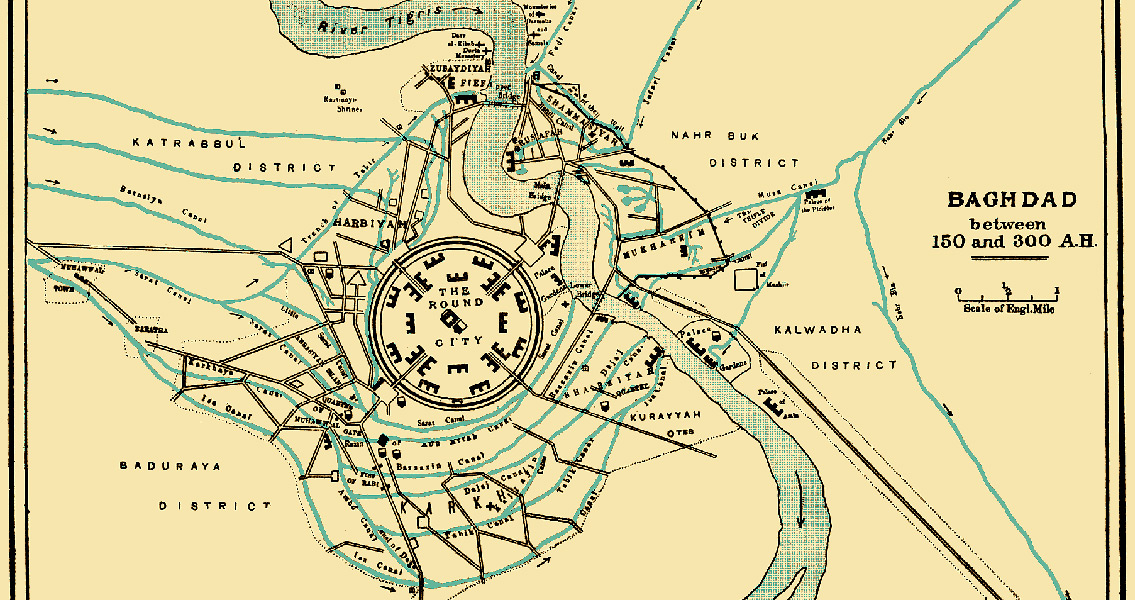
Jewish History. “Yet these narratives can often be dismantled when the primary sources that support the narrative are revisited.” Interestingly, Ackerman-Lieberman argues that the supposed move away from an agricultural economy towards a more urbanised, artisan way of life was merely a coincidence. Migration to the cities, he argues, simply coincided with the fact that agriculture was no longer the main source of income for Jews in the Middle East in the eighth and ninth centuries. Ackerman-Lieberman suggests that urbanisation was not the only process occurring in this period. Not only were urban centres growing, but rural areas were also. “Burgeoning irrigational infrastructure and the expansion of river transport led to intensified rural settlement akin to that seen in the urban areas,” he argued. It appears that there would have been little economic incentive for rural Jews to head towards urban centres, as agriculture was still a profitable business along the Tigris and Euphrates. Importantly, for the vast majority of Jewish farmers, it was not especially profitable for them to up sticks and change their means of generating an income. The impoverished majority of Jewish tenant farmers, Ackerman-Lieberman argues, simply lacked the financial capital to become merchants, while wealthier Jews could expand their rural holdings by engulfing smaller farms. One of the central tenets surrounding the supposed Jewish urbanisation is that there are very few mentions of Jews in historical records. Ackerman-Lieberman, however, views this silence in a different way. He argues that the record of Jewish agricultural pursuits is poor not because Jews were not involved in agriculture, but because what survives tends to be legal and mercantile letters, not agricultural correspondence. Also, much agricultural and commercial law had been settled before the Abbasids came to power. As a result, what legal records there are do not refer to numerous Jewish farmers in the law reports. “Without clearer evidence that the bulk of the Jewish population moved to the garrison cities in the eighth century,” Ackerman-Lieberman concluded, “the very reasonable explanation that Jews continued in their agricultural pursuits should be maintained.” It is important to note that Ackerman-Lieberman does not provide a clear explanation of what did happen to the Jewish population under the Abbasid caliphate. What he does do, however, is critically engage with an established narrative in Jewish history and effectively call into question many long-held assumptions. For more information: www.link.springer.com Image courtesy of Wikimedia Commons user: Andres rojas22]]>

www.ice.gov Image courtesy of Wikimedia commons user: Flickr upload bot]]>

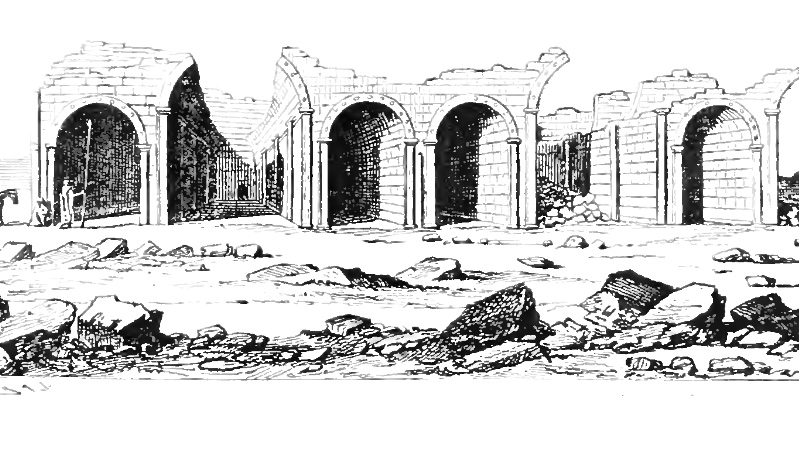
One official who oversaw the security of Hatra, Mohammed Abdallah Khozal, reported that the police officers guarding the city left when they heard that ISIS was coming their way. He says that there is no one protecting the temple and rebels have taken full control. He fears that gun fights and explosives may cause more damage to the area. UNESCO Director-General, Irina Bokova, voiced her concerns about the uprising taking place in Iraq and said that more of Iraq’s cultural heritage could be destroyed, as it was during the war. She calls on the rebels to avoid the destruction of cultural and religious sites, as their destruction is a war crime and a blow to the identity of the Iraqi people. One of the incidents that Bokova might have been referring to was the destruction of the al-Askari golden mosque in Samarra, north of Baghdad, by Islamist terrorists in 2006. These fears over the destruction of this heritage site by ISIS are certainly not unwarranted. Several landmarks have already been destroyed by terrorists. Earlier this month, the statue of the 19th century Iraqi composer and musician, Othman al-Mousuli, was destroyed when the city of Mosul was taken over by the militants. These rebels also destroyed the tomb of Arab poet Abu Tammam from the Abbasid era and the tomb of 12th century Arab philosopher Ibn al Athirl, who traveled with the army of sultan Salahuddin.]]>