Categories
Breaking News

Catholic Monastery Built as Penance Hides Ancient Iraqi Texts

Live Science: “Each one contains lengthy colophons [notes] written by the scribes, telling historical and social, and religious events of their times — a fact that makes them precious sources.” Mar Behnam monastery was the home of numerous ancient texts, pieces of artwork and carved inscriptions that dated back centuries. It was occupied by ISIS beginning in June, 2014, until it was recaptured by the Iraqi government in November, 2016. Photographs and a news report published shortly after the monastery’s recapture show that ISIS militants had destroyed several of the monastery’s buildings, burnt any texts they found, defaced and destroyed artwork and inscriptions, and left graffiti on all of the remaining structures. The Monastery of the Martyrs Mar Behnam and Marth Sarah is a Syriac Catholic monastery in northern Iraq. It was built in the twelfth century by Senchareb, an Assyrian king, as penance for the murder of his son Behnam and daughter Sarah following their conversion to Christianity. Sculptures of the church indicate that renovations were completed in 1164 and again between 1250-1261. The monks abandoned the monastery, for unknown reasons, in 1819. It’s been under the care of the Syriac Catholic Church since 1839, although at some point in its history it was part of the Church of the East for ten centuries or more, as shown by the rare Turkic inscriptions left behind by Mongol pilgrims during the thirteenth century. The monastery was renovated again in 1986, and was visited by thousands of Muslims and Christians every year until ISIS took control of the region. A young priest hid the texts at Mar Behnam just 40 days before ISIS arrived. They were put in large metal cans and placed in a storage room enclosed behind the newly constructed wall. The priest, who was forced out of the monastery, kept the undertaking a secret until he felt the region was secure. The texts remained behind the wall for more than two years. It’s been reported that ISIS used the same building as a base for its morality police. What happens to the texts now is unclear and Harrak wonders if they should be taken out of Iraq, at least in the short term, for safekeeping. “What is the future of these manuscripts? Iraq is a restless country,” Harrak told Live Science. “Should they take them to Europe, for example, or the Vatican Library or somewhere more secure?” ]]>

Categories
Breaking News

Coins Hidden More Than 2,000 Years Ago Discovered

Categories
Breaking News

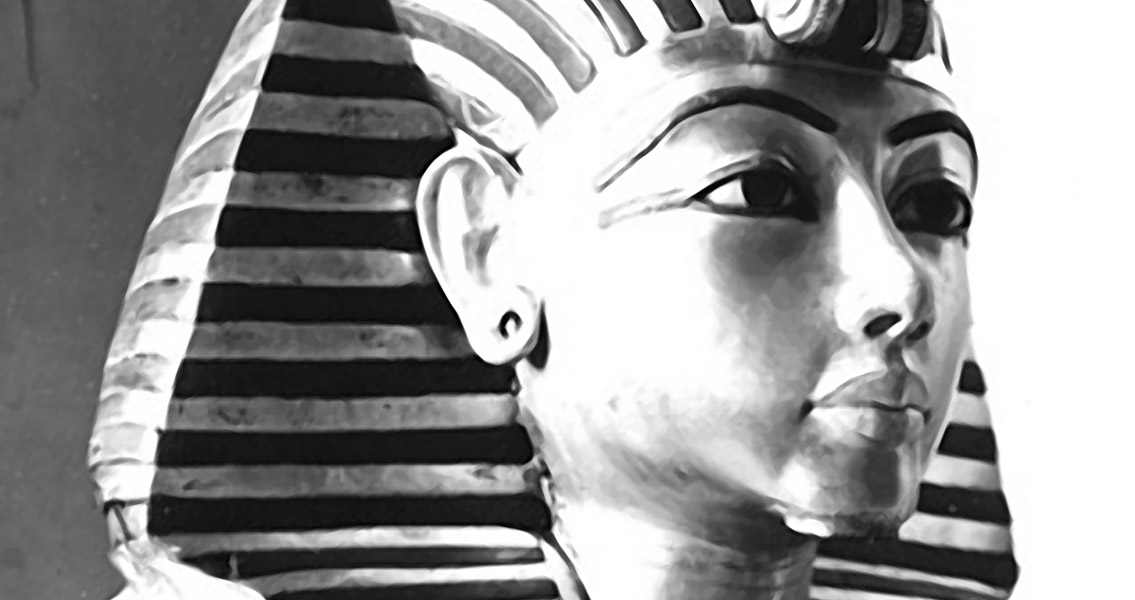
Latest Scan of Tut’s Tomb Totally Contradicts the Previous One

Categories
Breaking News

Radar Scans of Tut’s Tomb Raising Questions

presented radar data at a news conference in March which they claimed showed evidence of two empty spaces, or hidden cavities, behind the North and West walls of the chamber. According to officials the scans also suggested that organic and metallic substances were present within the voids. Nicholas Reeves, Egyptologist and Director of the Amarna Royal Tombs Project, has posited that the cavities could contain the burial of Tutankhamun’s stepmom, Queen Nefertiti. These radar scans were conducted in part to either confirm or negate these theories. It’s been noted by experts that in the Valley of the Kings region, the geology contains a lot of natural voids which radar has difficulty differentiating from archaeological features. “It does not appear that these GPR [ground-penetrating radar] data have been processed, or that any of the so-called anomalies are visible in the raw data that are provided,” Lawrence Conyers, an anthropology professor with the University of Denver, told Live Science. Conyers wrote the book, literally, on the archeological use of ground-penetrating radar (GPR). According to Live Science, Conyers suggests that the researchers make raw data available to outside GPR experts for peer review prior to allowing the Antiquities Ministry to release statements discussing all the treasure supposedly hidden behind these walls. The consensus of scientists following the peer review process would reduce the criticism and speculation which has been zipping around the internet since the announcement. Michele Pipan, a professor of geoscience with the University of Trieste (Italy) was reported in Live Science as saying that while the radar images the Antiquities Ministry released do show some interesting features, they also lack things which would have facilitated an accurate interpretation, for example vertical and horizontal scales, details related to the inversion/interpretation procedure, and information regarding to radar velocity. Additional radar surveys are scheduled to be conducted within a few days, and the Egyptian Antiquities Ministry will hold a news conference following that work in Luxor in early April. Coincidentally, tourism numbers in Egypt have fallen dramatically since the revolution in 2011 which forced Hosni Mubarak (President at the time) from office, other experts told Live Science. The country has been the target of terrorist attacks by the Islamic State and Egyptologists were hopeful the discovery of Nefertiti’s tomb behind the wall of Tutankhamun’s burial chamber would bring tourists back, thus boosting the suffering economy. Reeves himself was recently quoted in the The New York Times as saying, “For anyone interested in Egyptian history, this is the time to plan a trip, because you’re not going to get jostled by others the way you would have pre-revolution. And, it’s also a more affordable destination because prices have dropped.” ]]>