Categories
Breaking News

Historian lifts the veil on cross-dressing in the English Civil War

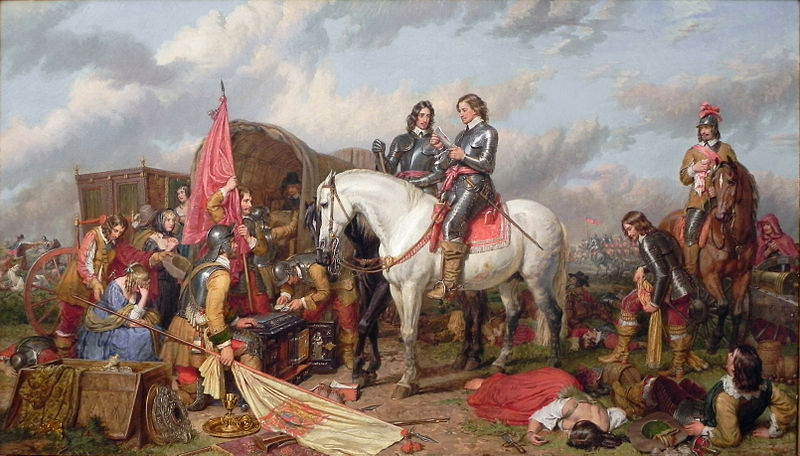
Battle of Naseby, by an unknown artist. The victory of the Parliamentarian New Model Army, under Sir Thomas Fairfax and Oliver Cromwell, over the Royalist army, commanded by Prince Rupert, at the Battle of Naseby (June 14, 1645) marked the decisive turning point in the English Civil War. Credit: Encyclopaedia Britannica Online[/caption]

Clothes maketh the man

After exploring hundreds of original manuscripts and printed works, a handful of fascinating cases were revealed. Wives, unmarried partners, would-be female soldiers and even prostitutes were present. Some women were motivated by a desire to fight; others wanted to remain close to their husbands. For example, the mistress of captured royalist Lord Henry Percy is documented to have been dressed in men’s clothing to hide her identity. To ridicule her, Oliver Cromwell got the woman to sing, so as to confirm his suspicions of the would-be man as a ‘damsel’.

A prince intervenes

One anonymous letter from 1642 describes a woman named Nan Ball, who was “taken in mans cloathes, waiting upon her beloved Lieutenant” while he served in the king’s army near York. It was later published in a pro-royalist news pamphlet, sparking an investigation. The Lieutenant was sacked, and there were suggestions that Nan Ball ought to be shamed by either public whipping or pillory. However, after an intriguing letter from the king’s son, which saw him beg for her reprieve, she was simply expelled from the camp. Exactly why her punishment was lifted is unclear; but it is possible that the initial threats were simply a warning.

“The severest punishment”

The following year, a draft proclamation set out the required standards of behaviour for the army of King Charles I. In the margin, the king hand-wrote: “lett no woman presume to counterfeit her sex by wearing mans apparall under payne of the severest punishment”. Professor Stoyle was fascinated by this statement: “These words suggest the king believed female cross-dressing was quite widespread in his army and show a willingness on his part to take a much firmer line on the practice – particularly in relation to prostitutes. Curiously though, when the proclamation was finally published it contained no reference to cross-dressing.” [caption id="attachment_8701" align="aligncenter" width="500"] Cromwell in the Battle of Naseby in 1645 by Charles Landseer. Credit: Wikimedia Commons[/caption]
Dressed to kill: female bravery during the English Civil War

A pamphlet published in 1645 details the account of a young soldier who spent a year in the parliamentary garrison of Gloucester. Eventually, she was discovered to be a woman after visiting a tailor to order a petticoat and waistcoat ‘for my sister’. The suspicious tailor raised the alert with the military authorities. In their investigation, they found that the solider had bravely disguised herself in order to first escape the royalists, and then fight against them. These pioneering women represent just one example of how female bravery was forced into disguise as they navigated a society rocked by war. Stoyle finishes: “Above all, though, the subject of female cross‐dressing during the Civil War is surely worthy of detailed study in its own right because it helps to illuminate one small corner of a much larger story: that of how ‘the crisis in English affairs’ during the 1640s made space for some bold women fleetingly to test the boundaries of patriarchy.” Read the full paper here.]]>

Categories
Editorial

Chevalier d'Eon: Spy, Celebrity and Europe's First Transgender Person

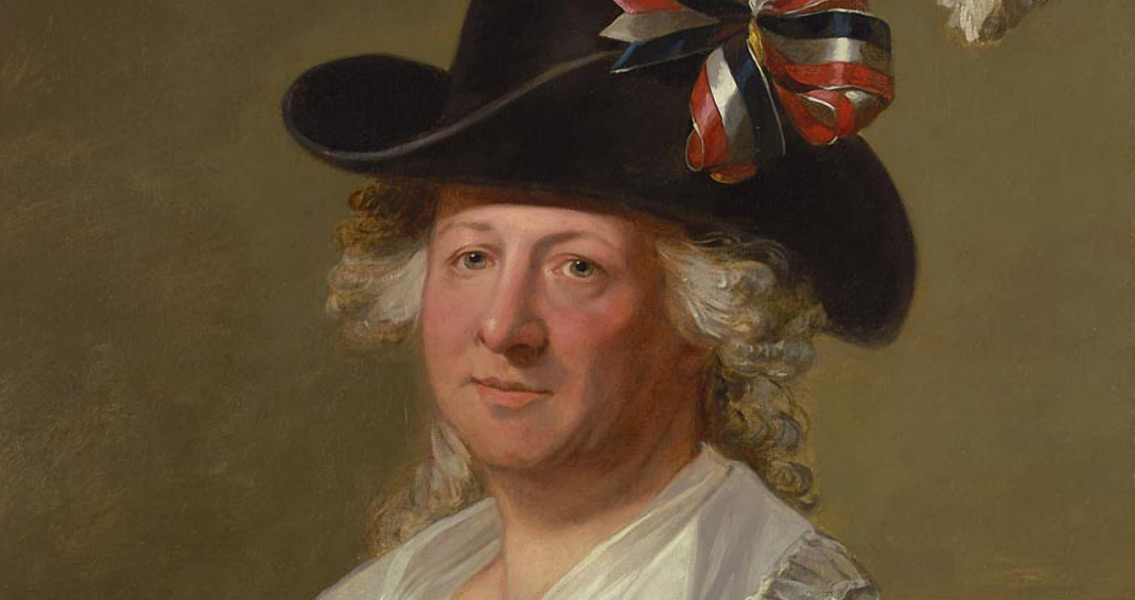
le Secret du Roi, “the King’s Secret”, a clandestine network of spies created by Louis XV in the 1740s. The King’s Secret’s first mission was to have Louis’ cousin, Prince Conti, placed on the Polish throne – thereby making the country a useful French satellite and ally in Eastern Europe. D’Eon was tasked with winning the support of Russian Empress Elizabeth, as well as promoting French interests in Russia more generally. Some biographies claim that d’Eon’s time in Russia also saw his first encounters with cross dressing. Empress Elizabeth held regular ‘drag balls’ where all attendants were obliged to arrive in a dress, regardless of their gender. When the Seven Years War erupted in 1756, d’Eon returned to France to serve as a dragoon in the French army before being appointed as a secretary to the French ambassador in 1762 as peace was secured between the warring nations. It was a role which would embroil d’Eon in all manner of geopolitical intrigue, as the French King looked for ways to gain revenge for the colonies France lost in the final treaty. As a member of the civil service d’Eon was employed as an ambassador in the British court. As a member of the King’s Secret he was tasked with scouting the British coast in preparation for a French invasion. D’Eon’s relationship with the French government deteriorated to the extent he threatened to reveal secret documents to the British. Several attempts were launched by French authorities to extradite d’Eon back home, some through diplomatic channels, others via force (D’Eon evaded kidnapping several times and was forced to live under armed guard). In 1764, he gave his first warning to the French authorities, publishing a book which contained all of his personal correspondence with the French royal family – embarrassing revelations which served to isolate him from France but win popularity in England. At the same time, rumours started to appear concerning D’Eon’s gender and habits. Some claimed he dressed as a woman, regularly buying ladies’ corsets for himself. D’Eon likely started some of these rumours, although others could have been created by his enemies to discredit him. Another story surfaced that he had actually been born a woman – it was common in this period for women to pretend to be men to gain entry into the army. Eventually, a deal was agreed between d’Eon and the French king. D’Eon would receive a lucrative pension from France and in exchange he would hand over all documents which could incriminate the French government. D’Eon would remain in London, exiled from France but still delivering reports for the King’s Secret. One final condition was included. D’Eon would have to officially declare a gender. In a remarkable turn, she elected to be known as a woman for the rest of her life. In 1777 she returned to France, the official story being d’Eon had been born a woman but raised a man by a father desperate for a son. Mademoiselle la Chevaliere d’Eon even had a formal unveiling in the French court, wearing an elaborate dress and make-up. Her life in France however, was a miserable one. D’Eon suddenly found herself a victim of the patriarchal society of the day. Politically her voice had been silenced, while attempts to rejoin the army were repeatedly blocked. Quickly she was forced into retirement, returning to England in 1785. A celebrity to the British public, d’Eon was nevertheless brought to near poverty when the French Revolution resulted in the cancellation of her pension. To make ends meet she began staging and taking part in fencing competitions, mesmerising the public as a ferocious woman sword fighter. Well into her sixties she continued the displays, until a serious injury forced her to retire. For the final years of her life d’Eon lived in virtual obscurity, lodging with an elderly woman in London and increasingly vanishing from the public eye. It was only when she passed away in 1810 that a mortician discovered Mademoiselle la Chevaliere d’Eon was biologically male. ]]>