Categories
Breaking News

Construction Work Reveals Russian Spy Room

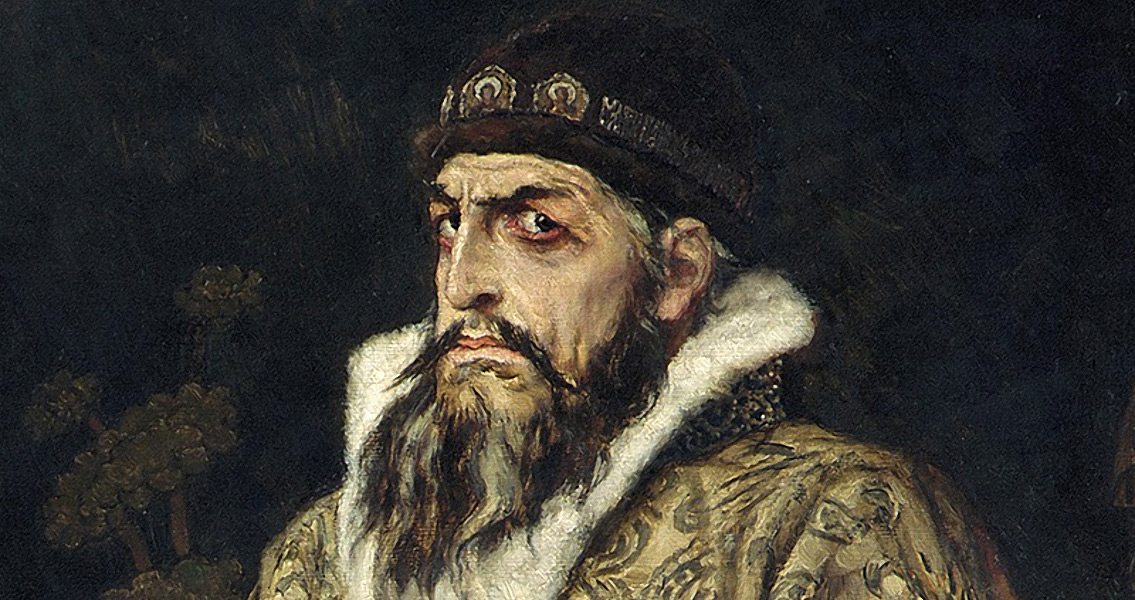
RT’s Ruptly news agency. Ivan IV Vasilyevich, also known as Ivan the Terrible, was the Grand Prince of Moscow between 1533 and 1547. During his reign, Russia conquered several neighboring regions to become a multicontinental and multiethnic state that spanned approximately 4,050,000 square kilometers (1,560,000 square miles). Historic sources offer dissimilar accounts of Ivan’s character. He’s often described as devout and intelligent, and a patron of the arts and trade (he established Russia’s first publishing house), yet he was prone to rages and episodic periods of mental instability that grew more common as he aged. During one such outburst, he reportedly killed his second son and heir Ivan Ivanovich during a heated argument that resulted in Ivan Vasilyevich striking him in the head with a pointed staff. In total, archeologists recovered approximately 150 artifacts dating back to between the sixteenth and nineteenth centuries, the majority of which are eighteenth and nineteenth century ceramics, including fragments of bowls and pots, as well as an intact ceramic cup. Trade sealing marks made of lead, 12 copper coins, nails, and iron knives were also recovered from the room. Experts are currently considering whether the room should be opened up for the public to see or preserved as it is. ]]>

Categories
Editorial

Chevalier d'Eon: Spy, Celebrity and Europe's First Transgender Person

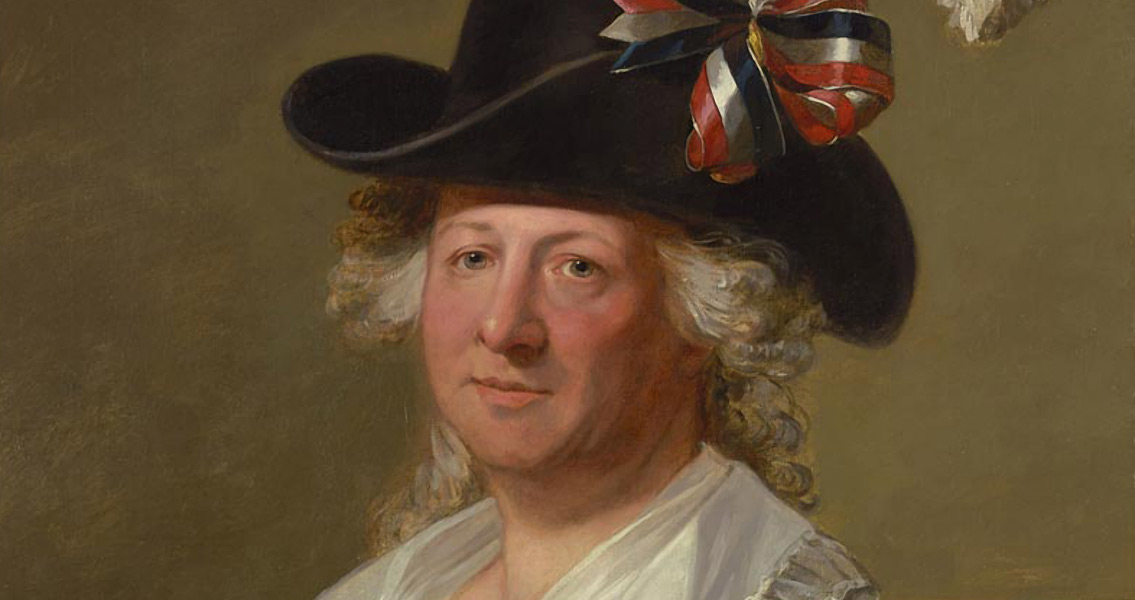
le Secret du Roi, “the King’s Secret”, a clandestine network of spies created by Louis XV in the 1740s. The King’s Secret’s first mission was to have Louis’ cousin, Prince Conti, placed on the Polish throne – thereby making the country a useful French satellite and ally in Eastern Europe. D’Eon was tasked with winning the support of Russian Empress Elizabeth, as well as promoting French interests in Russia more generally. Some biographies claim that d’Eon’s time in Russia also saw his first encounters with cross dressing. Empress Elizabeth held regular ‘drag balls’ where all attendants were obliged to arrive in a dress, regardless of their gender. When the Seven Years War erupted in 1756, d’Eon returned to France to serve as a dragoon in the French army before being appointed as a secretary to the French ambassador in 1762 as peace was secured between the warring nations. It was a role which would embroil d’Eon in all manner of geopolitical intrigue, as the French King looked for ways to gain revenge for the colonies France lost in the final treaty. As a member of the civil service d’Eon was employed as an ambassador in the British court. As a member of the King’s Secret he was tasked with scouting the British coast in preparation for a French invasion. D’Eon’s relationship with the French government deteriorated to the extent he threatened to reveal secret documents to the British. Several attempts were launched by French authorities to extradite d’Eon back home, some through diplomatic channels, others via force (D’Eon evaded kidnapping several times and was forced to live under armed guard). In 1764, he gave his first warning to the French authorities, publishing a book which contained all of his personal correspondence with the French royal family – embarrassing revelations which served to isolate him from France but win popularity in England. At the same time, rumours started to appear concerning D’Eon’s gender and habits. Some claimed he dressed as a woman, regularly buying ladies’ corsets for himself. D’Eon likely started some of these rumours, although others could have been created by his enemies to discredit him. Another story surfaced that he had actually been born a woman – it was common in this period for women to pretend to be men to gain entry into the army. Eventually, a deal was agreed between d’Eon and the French king. D’Eon would receive a lucrative pension from France and in exchange he would hand over all documents which could incriminate the French government. D’Eon would remain in London, exiled from France but still delivering reports for the King’s Secret. One final condition was included. D’Eon would have to officially declare a gender. In a remarkable turn, she elected to be known as a woman for the rest of her life. In 1777 she returned to France, the official story being d’Eon had been born a woman but raised a man by a father desperate for a son. Mademoiselle la Chevaliere d’Eon even had a formal unveiling in the French court, wearing an elaborate dress and make-up. Her life in France however, was a miserable one. D’Eon suddenly found herself a victim of the patriarchal society of the day. Politically her voice had been silenced, while attempts to rejoin the army were repeatedly blocked. Quickly she was forced into retirement, returning to England in 1785. A celebrity to the British public, d’Eon was nevertheless brought to near poverty when the French Revolution resulted in the cancellation of her pension. To make ends meet she began staging and taking part in fencing competitions, mesmerising the public as a ferocious woman sword fighter. Well into her sixties she continued the displays, until a serious injury forced her to retire. For the final years of her life d’Eon lived in virtual obscurity, lodging with an elderly woman in London and increasingly vanishing from the public eye. It was only when she passed away in 1810 that a mortician discovered Mademoiselle la Chevaliere d’Eon was biologically male. ]]>

Categories
News

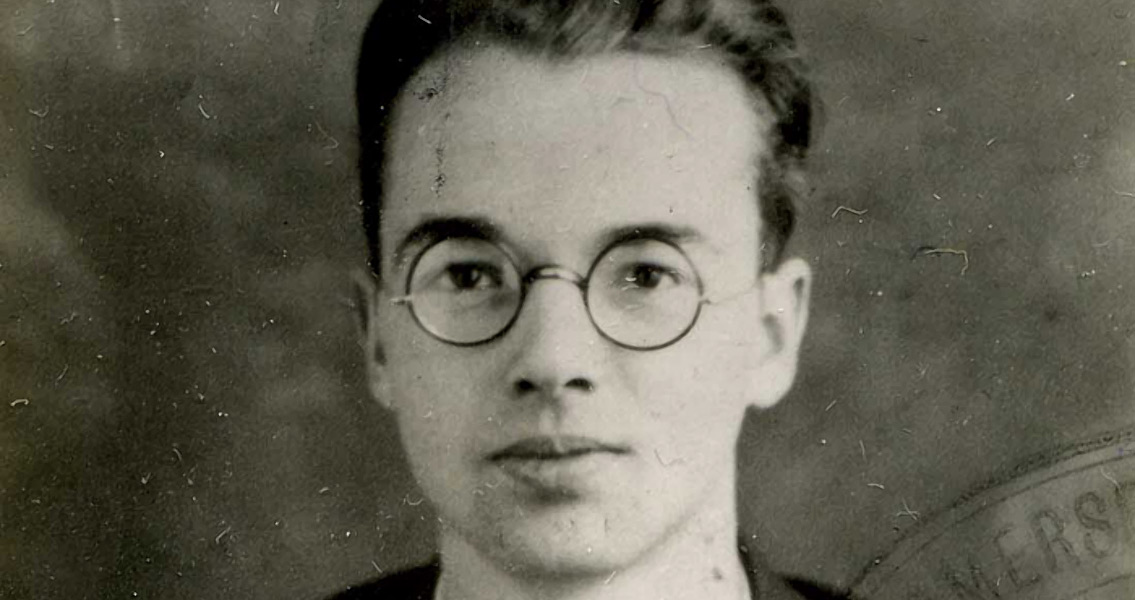
USSR Denies Involvement With Spy Klaus Fuchs

Categories
Book Reviews

Daniel Defoe Goes to the Pillory

Related Books


The Works of Daniel Defoe book

The Works of Daniel Defoe
Carefully Selected from the Most Authentic Sources, With Chalmers’ Life of the Author, Annotated by Daniel Defoe

[gap height=”20″]]]>

Categories
Breaking News

Espionage in Early Modern Central Europe Revealed

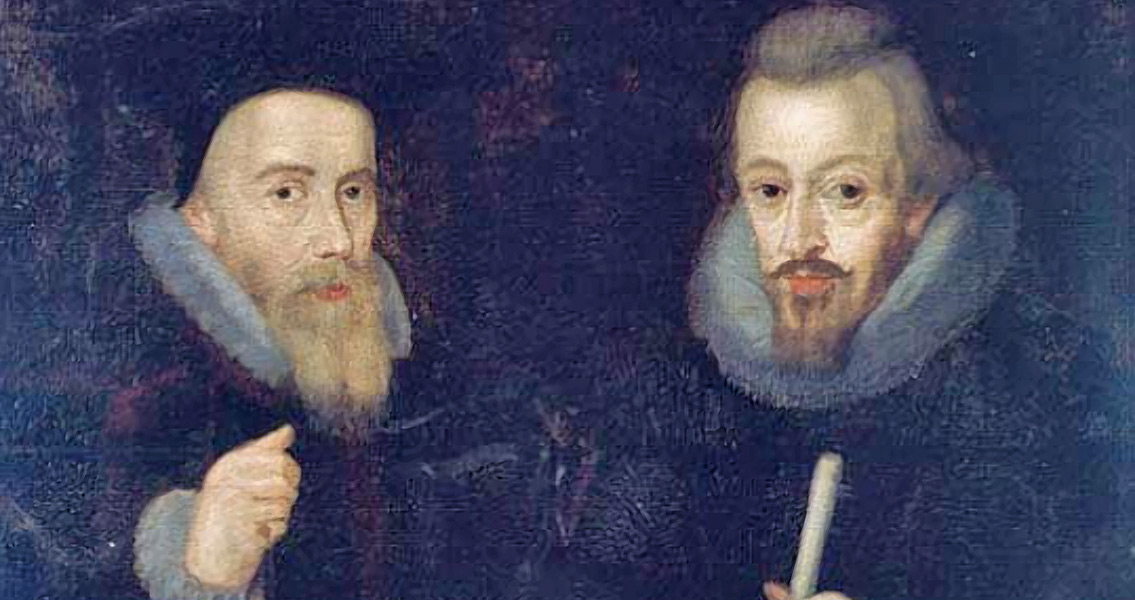
A Relation of the State of Polonia and the United Provinces of that Crown – and presented a version to King James I of England and VI of Scotland. An intriguing new study has focused on this text and drawn attention to its little-known author. Sebastian Sobecki, in his article recently published in the journal Renaissance Studies, examines the ties that Peyton enjoyed with a man extensively involved with state security: Robert Cecil, Secretary of State for both Elizabeth I and James I. Sobecki argues that John Peyton’s Grand Tour between 1596 and 1601 – where Peyton visited Germany, Bohemia, Poland-Lithuania, Switzerland and Italy – was an intelligence gathering operation to discover Spanish diplomatic activity in the Empire and in the Polish-Lithuanian Commonwealth. “Peyton’s reports are not ethnographical travel accounts or itineraries,” Sobecki writes. “Instead, [they] contain detailed and remarkably comprehensive accounts of the governance and political life of the countries he visited. In this regard, Peyton’s writings, although they are in English are closer to the factual qualities of Latin diplomatic writing.” A Relation of Polonia contains a vast amount of very nuanced information. The political structure of the Polish-Lithuanian Commonwealth forms the heart of the work, with particular discussion of the electoral system behind the Commonwealth’s royal elections. Some of the longest sections, with the most detailed treatment, concern the armed forces and warfare, Sobecki notes. In his description of the Polish people, Peyton noted that “they are large of body, tall, vprighte, and personable. The gentry full of ceremonies, ciuill [civil] and curteous in enterteinement, bountifull at table, costly in dyett, greate gourmandes, and quaffers, not sleepy, nor heavy in theire dronkennesse, as the Dutche, but furious, and quarrellsome, highe-mynded, and proude, but in a iollity, and not surly, as the Germans.” Sobecki notes that, despite this portrait of the Poles being very comprehensive by contemporary standards, Peyton’s real interests lay elsewhere. The sheer amount of administrative detail in Peyton’s work is unlike any other travel account of central Europe from the sixteenth or seventeenth centuries. Peyton’s works, for Sobecki, “amount to substantial and accurate studies of the type supplied confidentially by modern ambassadors to their governments. Throughout, the organizing principle of each text is the stake England held in the places Peyton visited. Trade, religious denominations, domestic political profiles and foreign relations and alliances – all these dominate Peyton’s reports.” To understand why Peyton compiled these works, Sobecki has explored Peyton’s relationship with Cecil. The 1590s saw an arms race between the Earl of Essex and Cecil, Sobecki explains. Essex, leading the anti-Cecil faction at court, increasingly relied on the provision of intelligence to boost his reputation. Cecil seized the opportunity given to him when appointed Secretary of State to build up a system of espionage that surpassed all others. “By the end of 1597, Cecil was England’s undisputed spymaster,” Sobecki writes. At about this time, Peyton’s father, Sir John Peyton, emerged as one of the most important pieces in Cecil’s domestic intelligence network. Sir John was even appointed to the post of Lieutenant of the Tower, a very sensitive office. “There is no shortage of notes and reports from Sir John to Cecil about prisoners’ activity and intelligence,” Sobecki notes, “including in-depth accounts of Raleigh’s emotional breakdown and the searching of Essex’s person.” The younger Peyton’s reports of Poland-Lithuania, therefore, seem to be works of espionage. Sobecki has clearly shown that Peyton the Younger’s accounts are no mere travel diaries for personal reflection, they are in-depth studies of central Europe undertaken by a man with close links to England’s security network. Sobecki’s work reveals that espionage and subterfuge were sophisticated operations in the Early Modern period. For more information: www.onlinelibrary.wiley.com Image courtesy of Wikimedia Commons user: Bascon]]>
Categories
News

Espionage Between Allies