Categories
Breaking News

Why does science say there was only 1 man for every 17 women in 3000 BC?

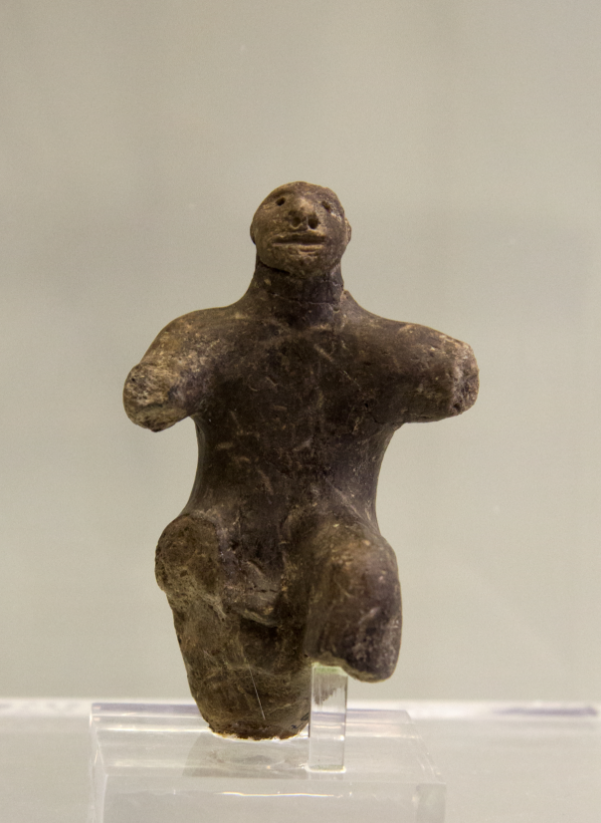
Male figurine, pottery. Neolithic, 5000 – 3000 BC. Credit: Archaeological Museum of Heraklion.[/caption]

The Y Chromosome Bottleneck

Known as the Y chromosome bottleneck, this research was first proposed in 2015 by Monika Karmin, a population geneticist at the University of Tartu in Estonia. Since then, academics have been trying to understand how this could have happened. Some research has told us that the drop-off in the male population was the result of ecological factors mainly affecting male babies. Stanford University students Alan Aw and Tian Cheng Zeng thought there must be another explanation. They took their theories to Marcus Feldman, a population geneticist at the University, who said that the imbalance “struck us as being very extreme.”  

A new explanation?

On 25th May 2018, the team published a new paper in the journal Nature Communications. It posits that humans who were living in patrilineal clans, which consisted of males from the same lineage, could have entered a particularly violent age; with inter-clan wars happening particularly frequently. If true, this had the potential to wipe out entire lines of male descent at a time. In his research, Feldman suggests that rather than the male population taking an apparent nosedive, the diversity of the Y chromosome decreased due to the ways people were living and fighting with one another. Or, to put it another way, there weren’t actually fewer males. There was just far, far less diversity.  

A quick recap of our chromosomes

As humans, most of our genes are carried in 23 pairs of chromosomes. The 23rd pair determines our sex: females have two X chromosomes, whereas males have one X and one Y chromosome. A baby’s sex is determined by the chromosomes it inherits from its parents. This allows genes to get shuffled around, which increases the overall diversity in the species. But the Y chromosome, which has no female counterpart, stays almost the same from grandfather to father to son, and so on. Of course, mutations occur, which explains why the Y chromosome does in fact differ among males.  

How were people living at the time?

After the advent of farming around 12,000 years ago, societies were increasingly organising themselves around extended kinship groups, ultimately manifesting as patrilineal clans. As we know from this study, this was a cultural fact with poignant biological consequences. Women may have married into a clan, but the men in the clan were all related through male ancestors. “From the point of view of those chromosomes at least, it’s almost as if everyone in a clan has the same father,” says Nathan Collins from Stanford University. This study, which looks at genetic occurrences between 5,000 and 7,000 years ago, considers people living in a transitional period. Soon after, people moved into larger societies and built towns. At that point, humans because less intent on maintaining the Y chromosome lineage and perhaps unsurprisingly, the diversity of the Y chromosome bounced back. [caption id="attachment_8716" align="aligncenter" width="500"] Marcus Feldman with fellow researchers Tian Cheng Zeng and Alan Aw. Credit: Marcus Feldman, Stanford University[/caption]
Simulating the possibilities

Feldman, Zeng and Aw conducted 18 different simulations, each representing different scenarios that could explain the bottleneck. This included situations reflecting Y chromosome mutations; competition between different tribes, and natural death. Crucially, the bottleneck did not occur in the simulation in which patrilineal clans did not exist. We can then assume that the most likely reason for the bottleneck was patrilineal clans going to war. If one clan was wiped out, so was its shared Y chromosome. Monika Karmin, lead author of the original study, weighs in: “fighting clans are indeed likely to cause a drastic drop in male genetic diversity… However, we do have to keep in mind that there is very little information on the actual societal organisation from that time.”  

No XX bottleneck

Incidentally, there was no such bottleneck in females. Feldman was able to deduce this by analysing mitochondrial DNA, which is only passed down from the mother. “In that same group, the women could have come from anywhere,” Feldman says. “They would’ve been brought into the group from either the victories that they had over other groups, or they could’ve been females who were residing in that area before.” He added that colonisation tends to see the men killed, and the women kept alive.  

A cultural influence on genetic variation

Academic research often focuses on behaviours that have a genetic basis; but not necessarily on behaviours that influence genes. The new research is, in Feldman’s words: “an example of what a cultural preference can do in changing the level of genetic variation.”]]>

Categories
Breaking News

Historian lifts the veil on cross-dressing in the English Civil War

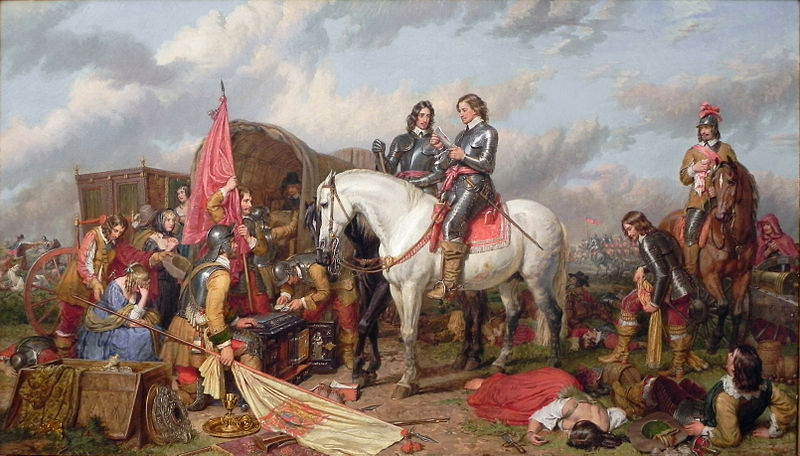
Battle of Naseby, by an unknown artist. The victory of the Parliamentarian New Model Army, under Sir Thomas Fairfax and Oliver Cromwell, over the Royalist army, commanded by Prince Rupert, at the Battle of Naseby (June 14, 1645) marked the decisive turning point in the English Civil War. Credit: Encyclopaedia Britannica Online[/caption]

Clothes maketh the man

After exploring hundreds of original manuscripts and printed works, a handful of fascinating cases were revealed. Wives, unmarried partners, would-be female soldiers and even prostitutes were present. Some women were motivated by a desire to fight; others wanted to remain close to their husbands. For example, the mistress of captured royalist Lord Henry Percy is documented to have been dressed in men’s clothing to hide her identity. To ridicule her, Oliver Cromwell got the woman to sing, so as to confirm his suspicions of the would-be man as a ‘damsel’.

A prince intervenes

One anonymous letter from 1642 describes a woman named Nan Ball, who was “taken in mans cloathes, waiting upon her beloved Lieutenant” while he served in the king’s army near York. It was later published in a pro-royalist news pamphlet, sparking an investigation. The Lieutenant was sacked, and there were suggestions that Nan Ball ought to be shamed by either public whipping or pillory. However, after an intriguing letter from the king’s son, which saw him beg for her reprieve, she was simply expelled from the camp. Exactly why her punishment was lifted is unclear; but it is possible that the initial threats were simply a warning.

“The severest punishment”

The following year, a draft proclamation set out the required standards of behaviour for the army of King Charles I. In the margin, the king hand-wrote: “lett no woman presume to counterfeit her sex by wearing mans apparall under payne of the severest punishment”. Professor Stoyle was fascinated by this statement: “These words suggest the king believed female cross-dressing was quite widespread in his army and show a willingness on his part to take a much firmer line on the practice – particularly in relation to prostitutes. Curiously though, when the proclamation was finally published it contained no reference to cross-dressing.” [caption id="attachment_8701" align="aligncenter" width="500"] Cromwell in the Battle of Naseby in 1645 by Charles Landseer. Credit: Wikimedia Commons[/caption]

Dressed to kill: female bravery during the English Civil War

A pamphlet published in 1645 details the account of a young soldier who spent a year in the parliamentary garrison of Gloucester. Eventually, she was discovered to be a woman after visiting a tailor to order a petticoat and waistcoat ‘for my sister’. The suspicious tailor raised the alert with the military authorities. In their investigation, they found that the solider had bravely disguised herself in order to first escape the royalists, and then fight against them. These pioneering women represent just one example of how female bravery was forced into disguise as they navigated a society rocked by war. Stoyle finishes: “Above all, though, the subject of female cross‐dressing during the Civil War is surely worthy of detailed study in its own right because it helps to illuminate one small corner of a much larger story: that of how ‘the crisis in English affairs’ during the 1640s made space for some bold women fleetingly to test the boundaries of patriarchy.” Read the full paper here.]]>

Categories
Breaking News

Forensic Analysis Answers 40,000-Year-Old Question

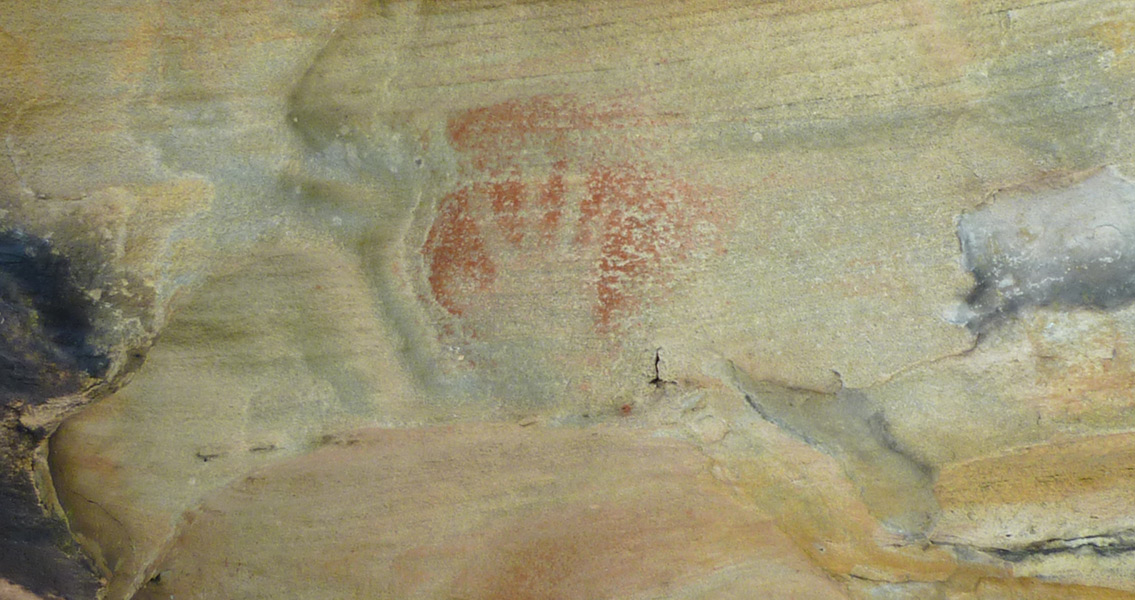
Phys ORG: “Archaeologists are interested in hand stencils because they provide a direct, physical connection with an artist living more than 35,000 years ago. Now, using a new experimental application, results from our study indicate it is possible to determine with more than 90% accuracy the sex of someone who lived tens of thousands of years ago from the shape and size of their hand outline. We have even applied the method to hand stencils where digits are missing – common in Paleolithic art – something prior studies have not been able to do.” The hand stencils were created by blowing pigment over a hand as it was held against a stone surface, when the hand was removed it left behind an outline of its shape. Hand stencils discovered in Sulawesi, Indonesia have been dated to 40,000 years ago, and the ones found in Europe are an estimated 37,000 years old, a time period referred to as the Upper Paleolithic. Prior to this research, experts studied the size of the hand and the length of the fingers to determine the gender of its owner, which often led to conflicting outcomes. For this project, researchers used geometric morphometrics to determine sex-based differences in the shape and form of the hand. By digitizing hand stencils from a known gender, along with a number of 2D landmarks, the true shape and the relative size of each sample could be statistically evaluated. Geometric morphometrics is the statistical analysis of a specific type of geometric data associated with an organism, data about the location of the parts of an organism in relation to each other. This technique combines morphometrics (the geometry of organisms) with engineering and computer science to focus on information at location points inside of, or on, organisms. Forensic anthropologist Dr. Patrick Randolph-Quinney told Phys ORG: “The problem with focusing on hand size and finger length is that two different shaped hands can have identical linear dimensions and ratios. To capture shape, we applied geometric morphometrics, a technique used in forensic studies that had never been tested on hand stencils before. This geometric approach is very powerful as it allows us to look at the palm and fingers independently. It revealed that the shape of the palm is actually most indicative of the sex of the individual, rather than the finger size or length.” The project was a collaborative effort between archaeologists, biologists, and anthropologists from the University of Central Lancashire (UCLan) and the University of Liverpool in the UK, and the University of the Witwatersrand (Wits) in South Africa. The research has been published in the Journal of Archaeological Science. ]]>

Categories
Breaking News

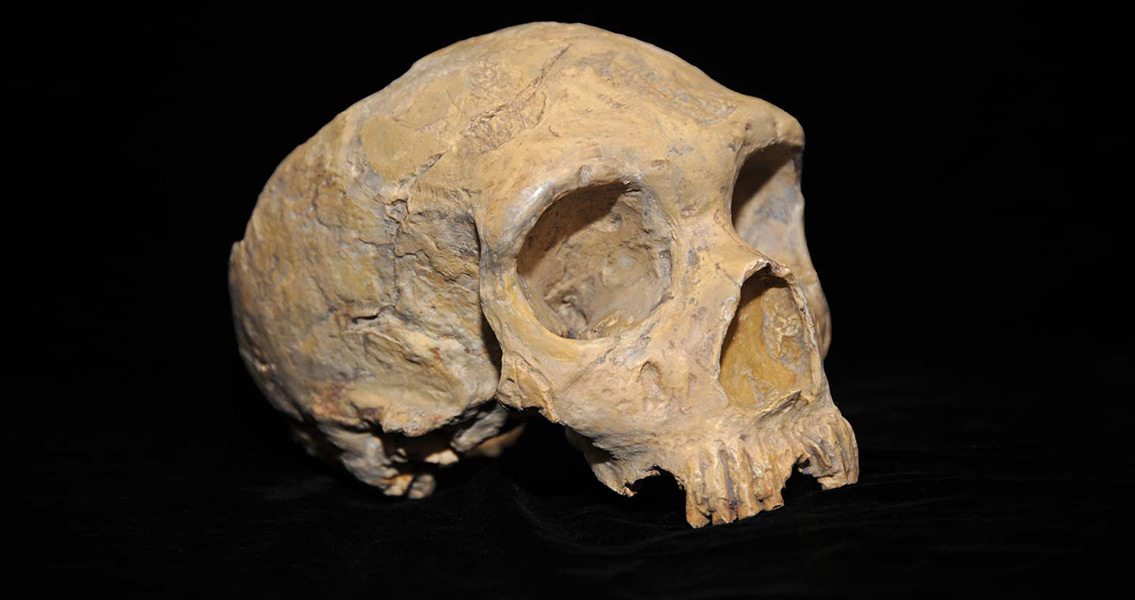
Neanderthal Gender Division of Labour Revealed

Journal of Human Evolution. “Neanderthals [however] might not have had such extreme sex-related specialization, at least in terms of the provisioning of food, with both males and females participating in the hunting of big game.” No previous work has explored what happened after Neanderthals had sufficient food, however. The Neanderthal teeth which Estalrrich and Rosas examined were taken from three different sites: El Sidron Cave in Spain, l’Hortus in France, and Spy in Belgium. All the Neanderthal teeth showed signs of significant wear. Interestingly, this wear was different to the damage usually caused by chewing food. Neanderthals are known to have had extensive anterior dental wear and their teeth often show scratches and chips. This is due to Neanderthals having used their front teeth as a tool for tasks such as food preparation, tool production and preparing skins. It is thought that Neanderthals used their mouths as a third hand, for activities other than the provisioning of food. “The fundamental observation is that all of the individuals present instrumental striations and dental chipping, regardless of provenance, age, and sex,” the team wrote. “Thus, similar behaviors could be expected among them, with all members of the groups performing tasks involving their teeth as tools, and leaving similar type of marks.” The division of labour amongst Neanderthal communities, therefore, was flexible. All Neanderthals, regardless of sex or age, used their teeth as tools. Subtle differences, however, were found between male and female Neanderthals. Teeth from female Neanderthals have more striations (linear marks or blemishes revealing wear on tooth enamel) than males, and the striations are longer. Extrapolating from these striations, Estalrrich and Rosas inferred possible behavioural situations. They believe that females were cutting different material to males and doing it more often. “That could mean a separation between sexes, or a sexual division of labor in activities other than foraging,” they wrote. Estalrrich and Rosas have decisively proved that Neanderthals used their mouths as tools. They have shown that teeth were not just for food preparation, but were useful in making tools and fashioning animal skins. Moreover, different striation patterns hint at social divisions amongst Neanderthal communities. “The results presented here illustrate how Neanderthals used their mouth as a third hand, and may indicate some subtle differences suggesting individual roles within the groups,” the report concludes. Image courtesy of Wikimedia Commons user: AquilaGib www.sciencedirect.com ]]>