here Image courtesy of Wikimedia Commons user: nevil zaveri]]>
here ]]>

here Image courtesy of Wikimedia Commons user: Preus museum]]>
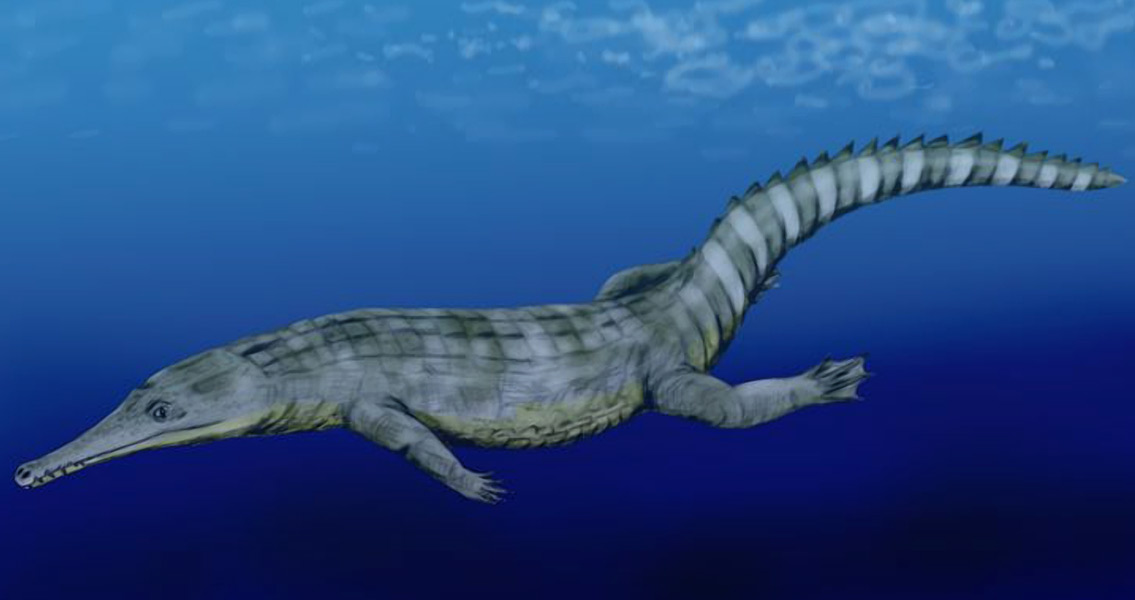
M. rex’s body but several turtle and fish remains that have yet to be identified. The giant crocodile was likely a scavenger or an ambush predator and was most definitely capable of hunting while in the water, according to the research team. The scientists compare the large head and short teeth of M. rex to modern crocodiles, leading to the claim that the bite force of the newly-discovered specimen was likely to have been incredible. With the ability to crush nearly anything and everything its jaws wrapped around, the prehistoric monster crocodile would have found it easy to crack open turtle shells, Fanti added. However, the revelation of the newest and biggest entry into the world of prehistoric crocodiles is important on a number of levels, especially when it comes to redefining the timeline for the species and its closest cousins. The other Machimosaurus species, such as M. hugii and M. mosae, were not only smaller than M. rex but were thought to have gone extinct around 150 million years in the past as the Jurassic came to a close. However, M. rex has been dated to just 130 million years ago – which means the species either evolved after the hypothesized mass extinction at the end of the Jurassic or somehow survived it. Fanti states that this could lead paleontologists to reconsider the strongly-held mass extinction theory in an attempt to understand just what went on at the tail end of the Jurassic. The research study detailing the findings of Fanti and his team, which was published recently in the journal Cretaceous Research, can be found online here Image courtesy of Wikimedia Commons user: Nobu Tamura]]>