Categories
Breaking News

How intense Ice Age fishing led to the invention of pottery as we know it

Jōmon pottery from the Kanagawa Prefecture, Japan. Credit: Nara National Research Institute for Cultural Properties.[/caption] Examined over a course of three years by researchers from Japan, the Netherlands, Sweden and the University of York’s BioArCh, the findings indicate that ceramics were used by our gatherer-hunter ancestors to initially store and process fish. As fishing techniques evolved and intensified, the range extended to include shellfish, freshwater and marine fish and even mammals. Until recently, ceramic vessels were associated with the arrival of farming. This study, however, debunks that theory. We now know that pottery was a much earlier gatherer-hunter innovation, and was used for the consumption of fish. Professor Oliver Craig, from the Department of Archaeology and Director of the BioArCh research centre at York, who led the study, said: “Our results demonstrate that pottery had a strong association with the processing of fish, irrespective of the ecological setting.” Some of the pottery dates from the end of the Late Pleistocene period: a time when our ancestors were navigating glacial conditions. Other ceramics included in the study are from the post-glacial period, when the climate reached a level close to our current temperature, allowing pottery to be produced in a much greater quantity. Craig continues: “Contrary to expectations, this association remained stable even after the onset of warming, including in more southerly areas, where expanding forests provided new opportunities for hunting and gathering. “The results indicate that a broad array of fish was processed in the pottery after the end of the last Ice Age, corresponding to a period when hunter-gatherers began to settle in one place for longer periods and develop more intensive fishing strategies. [caption id="attachment_8832" align="aligncenter" width="634"] A reconstructed early pottery vessel from Torihama, Japan, dating to the end of the Late Pleistocene (ca 12,000 years old). Chemical analysis revealed that such vessels were used to process fish during the late Glacial period. Credit: Wakasa History and Folklore Museum, Fukui, Japan[/caption] “We suggest this marks a significant change in the role of pottery of hunter-gatherers, corresponding massively increased volume of production, greater variation in forms and sizes and the onset of shellfish exploitation.” Researchers used advanced technologies to recover diagnostic lipids from the charred surface deposits of the vessels. Most of the compounds derive from the processing of freshwater or marine organisms. Because of findings like this, we now know that ceramics played a key role in the ways pre-historic gatherer-hunters consumed fish. Lead author, Dr Alex Lucquin, from BioArCh, Department of Archaeology, University of York, said: “Thanks to the exceptional preservation of traces of animal fat, we now know that pottery changed from a rare and special object to an every-day tool for preparing fish. “I think that our study not only reveals the subsistence of the ancient Jomon people of Japan but also its resilience to a dramatic change in climate.” Dr Simon Kaner, from the University of East Anglia, who was also involved in the study, added: “The research highlights the benefits of this kind of international collaboration for unlocking some of the big questions about the human past, and the potential of engaging with established research networks as created by the Sainsbury Institute over the years.”]]>

Categories
Breaking News

Climate Change and Humans Killed Ice Age Megafauna

Science Advances has used DNA evidence to argue that the Ice Age megafauna were in fact the victims of a ‘perfect storm’ of both. The study, led by the Australian Centre for Ancient DNA (ACAD) at the University of Adelaide, argues that it was only as the climate started to warm, around 12,300 years ago and long after the first humans had arrived in the region, that the megafauna in Patagonia started to die out. Researchers from University of Colorado Boulder, University of New South Wales and University of Magallanes in Patagonia, were involved in the study. For a thousand years humans lived in Patagonia alongside the megafauna. Seemingly, while the region stayed cold, the populations of megafauna remained constant. When the climate started to warm however, the impact was startlingly quick. “Patagonia turns out to be the Rosetta Stone – it shows that human colonisation didn’t immediately result in extinctions, but only as long as it stayed cold,” said study leader Professor Alan Cooper, ACAD Director, in a press release. “Instead, more than 1000 years of human occupation passed before a rapid warming event occurred, and then the megafauna were extinct within a hundred years.” DNA analysis was at the heart of the study. Researchers traced the genetic history of megafauna populations by studying DNA extracted from radio carbon dated teeth and bones excavated from caves in Patagonia and Tierra del Fuego. The pattern of human colonisation of the Americas was rapid, and coincided with contrasting temperature trends on each continent. Using the genetic histories of populations of sabre-toothed cats, giant jaguars, the South American horse and the short faced bear, the team managed to distinguish the impacts of humans and climate change on the mega fauna populations. “The America’s are unique in that humans moved through two continents, from Alaska to Patagonia, in just 1500 years,” said Professor Chris Turney from the University of New South Wales. “As they did so, they passed through distinctly different climate states – warm in the north, and cold in the south. As a result, we can contrast human impacts under the different climatic conditions.” Not all large species in Patagonia went extinct, the guanaco and vicuna – ancestors of modern day llamas and alpacas, survived, although their numbers reduced drastically in the period. “The ancient genetic data show that only the late arrival in Patagonia of a population of guanacos from the north saved the species, all other populations became extinct,” said Dr. Jessica Metcalf from the University of Colorado Boulder, the lead author of the study. The sites used in the study have long provided insights into the demise of Ice Age megafauna. “In 1936 Fell’s cave, a small rock shelter in Patagonia, was the first site in the world to show that humans had hunted Ice Age megafauna. So it seems appropriate that we’re now using the bones from the area to reveal the key role of climate warming, and humans, in the megafaunal extinctions,” said Dr. Fabian Martin, from the University of Magallanes. ]]>

Categories
Breaking News

Southern Arabia Inhabited Much Earlier Than Thought

Scientific Reports, the new study argues that in fact humans made their way to Arabia soon after the last Ice Age had receded. The researchers at the University of Huddersfield, who specialise in the analysis of human DNA, have based their conclusion on the study of a rare mitochondrial DNA lineage known as R0a. The haplogroup appears most frequently in Arabia and the Horn of Africa, but can also be found elsewhere. Genetic material from the parts of a cell responsible for converting food into usable energy, mitochondrial DNA is passed on maternally. It can provide vital insights into human migration thousands of years ago. Dr Francesca Gandini, the lead author, and her co-researchers from the University of Huddersfield have come to the conclusion that the R0a lineage is actually significantly more ancient than previously thought, with a deep presence in Arabia. Indeed, they believe it can be traced all the way back to the Pleistocene. These surprising results, according to Gandini and colleagues’ article, could be explained by the existence of an oasis or refuge in the region which allowed people to shelter from the inhospitable conditions of the Ice Age. 20,000 years ago much of the Earth was completely uninhabitable to humans as a result of plummeting temperatures in a period known as the Last Glacial Maximum. The only way they survived were in refugia where groups could cluster together and pool resources. The University of Huddersfield research argues that one such refuge could have existed somewhere in Southern Arabia, possibly close to what are now the Red Sea Plains. Earlier studies suggest the R0a haplogroup migrated to Southern Arabia from the Near East following the Ice Age, but Gandini et al’s work adds to a growing body of evidence that this was not the case. “…multiple lines of evidence suggest that the major R0a subclades had entered Arabia and begun diversifying before the Last Glacial Maximum.” they write in the study. “This is in accord with evidence from rock art in Northern Arabia that the Neolithic pastoral economy was adopted by hunter–gatherers, rather than introduced by dispersing agriculturalists from the Near East.” Significantly, there is little archaeological evidence for a human population surviving in Southern Arabia through the Lower Glacial Maximum. This, the team hypothesize, points to an as yet an unknown refuge somewhere in Arabia. Using the same mitochondrial data, the authors of the article also describe the dispersal during the post-glacial period around 11,000 years ago, of humans from Southern Arabia into East Africa. Moreover, as well as suggesting the potential migration of the R0a haplogroup through the Middle East and into Europe, the study raises the possibility that a prehistoric trading network could have existed in the region that covers modern day Pakistan, India and Iran. For more information: www.nature.com]]>

Categories
Breaking News

Ice Age Migration and Displacement Shown in Study

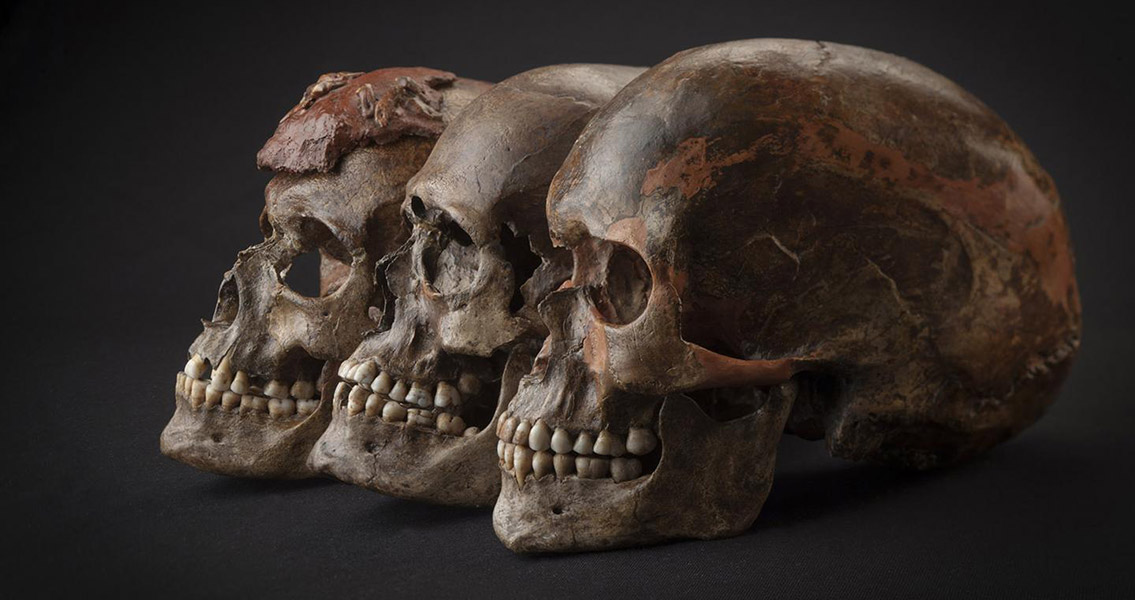
Nature on 2nd May, the study analysed the DNA of prehistoric humans to chart population changes over a period that stretched from the initial inhabitation of Europe by modern humans, to the end of the last Ice Age. The research was led by David Reich, Howard Hughes Medical Institute Investigator at Harvard Medical School. Two massive changes in prehistoric populations are revealed by the genetic data used in the research, which seem to be related to the end of the Ice Age around 19,000 years ago. The first has been documented previously, although in less detail. As the ice sheet retreated, northern Europe was repopulated by prehistoric humans from regions of southwest Europe, such as Spain. A second, more surprising event came some 5,000 years after that initial re-population. Populations from the southeast of Europe, such as what is now Turkey and Greece, migrated into Europe and displaced the first group of humans who had relocated there. The findings have the potential to cause a drastic rethink on how we understand the history of European migration and population. Previously, genetic data were only available for four samples of prehistoric European modern humans between 45,000 and 7,000 years old, but Reich and colleagues’ study has changed that; allowing much better insights to be gleaned on human populations in this distant period. “Trying to represent this vast period of European history with just four samples is like trying to summarize a movie with four still images. With 51 samples, everything changes; we can follow the narrative arc; we get a vivid sense of the dynamic changes over time,” said Reich, in a press release from the Howard Hughes Medical Institute. “And what we see is a population history that is no less complicated than that in the last 7,000 years, with multiple episodes of population replacement and immigration on a vast and dramatic scale, at a time when the climate was changing dramatically.” According to the team’s findings, all Europeans come from a single 37,000 year old population that survived through the last Ice Age. One of the branches of this population, which was represented by a specimen from Belgium, was displaced from most parts of Europe around 33,000 years ago, during the height of the last Ice Age. Some 19,000 years ago, a population related to it expanded across Europe, which the researchers believe could have originated in Spain. The second event took place 14,000 years ago, and would define Europe’s population until the advent of agriculture. “We see a new population turnover in Europe, and this time it seems to be from the east, not the west,” said Reich. “We see very different genetics spreading across Europe that displaces the people from the southwest who were there before. These people persisted for many thousands of years until the arrival of farming.” Fascinatingly, the study also showed the percentage of Neanderthal DNA in humans is decreasing, it consisting of between 3% and 6% of the prehistoric humans’ genetic makeup, but only 2% in most humans today. The results suggest that natural selection could be removing the toxic Neanderthal DNA. Reich and colleagues’ study shows that migration has long been an integral, complicated part of human history, shaping the world’s populations for thousands of years. Image courtesy of Martin Frouz and Ji?í Svoboda]]>

Categories
Breaking News

Neanderthal Extinction Accelerated by Opportunism

PLOS ONE, offers fresh insight into the fate of the Neanderthals, suggesting their adaptable subsistence strategies actually put them at a disadvantage compared to humans during the Last Glacial Maximum. The Neanderthal lineage existed successfully throughout Europe and Asia, surviving the harsh and shifting environments of glacial/interglacial cycles from the Pleistocene onward. However, as the climate commenced the deterioration which would result in the Last Glacial Maximum, just after the first humans had entered Eurasia, the Neanderthals disappeared. What happened to them is unclear, but the outcome is not, Western Eurasia was subsequently populated by just one homo species: modern humans. Led by Sireen El Zaatari from the Paleoanthropology department at the Eberhard Karls Universität Tübingen, Germany, the authors of the study analysed the fossilized molars of 52 Neanderthals and Upper Paleolithic Homo sapiens (modern humans). Their aim was to glean insights into the possible influence of dietary strategy, in particular by analysing the degree of microwear on the teeth. This information could be used to draw conclusions about diet type, which was then linked to prevalent climatic conditions. Surprisingly, the team found that dental microwear among Neanderthals varied significantly depending on ecological conditions. “Analyses of the data show that within the Neandertal lineage, dental microwear signatures are significantly associated with paleoecological conditions.” they wrote in the new study, published this week. Neanderthals that lived in wooded or mixed habitats possessed more complicated dental microwear than those from open habitats. The conclusion to be drawn from this is that Neanderthals adapted their diets to the resources available as climates and habitats changed. In cold, barren, open steppe environments, the Neanderthals had a diet made up mostly of meat. In forested landscapes they supplemented their diet with more plants, seeds and nuts. For modern humans, the situation was completely different. “For the Upper Paleolithic humans, unlike the case for the Neandertals, no significant correlation is detected through the paleoecological ranks.” Crucially, the modern humans’ adhered to the same dietary strategy despite environmental changes, retaining a large proportion of plant based foods. This could have fostered technical innovations which gave humans a distinct advantage. “To be able to do this, they may have developed tools to extract dietary resources from their environment” said El Zaatari, in a press release. Neanderthals had an opportunistic approach which allowed them to flourish throughout much of their history, eating whatever was available in the habitat they called home. Modern humans however, strove to access the same food resources despite the changing conditions, eventually pushing them to develop tools. According to the study, as humans’ technical complexity increased their diet started to change dramatically, as they were able to exploit their landscape much more effectively. When Neanderthals and modern humans came into contact and started to compete for resources, this technical superiority would have undoubtedly given the humans a significant advantage. El Zaatari and colleagues’ study offers a new take on the mystery surrounding the demise of the Neanderthals, suggesting their opportunism could have ultimately been a disadvantage. For more information: www.plos.org Image courtesy of Sireen El Zaatari PLOS ONE e0153277]]>

Categories
Breaking News

Neanderthals Could Have Lived in Southern Scandinavia

Quarternary International, the new study questions this idea. Although not proving either way whether Neanderthals actually made it as far as Southern Scandinavia, it shows that climate constraints wouldn’t have been enough to stop them. Two main hypotheses exist regarding Neanderthal inhabitation of Southern Scandinavia. The first, and by far the most widely held, is that climate constraints and dispersal barriers made it an impossibility. The second hypothesis claims that they did migrate north of 55°N, but they have for some reason remained invisible to the archaeological record. Led by Trine Kellberg Nielsen from Aarhus University, the authors of the study constructed climate models of where Neanderthals are known to have lived, and where they could have lived. Palaeoenvironmental reconstruction techniques were used to model the environment of Northern Germany and Southern Scandinavia during the Last Interglacial Complex. “Our results are inconsistent with the claim that climatic constraint and/or a lack of suitable habitats can fully explain the absence of Neanderthals in Southern Scandinavia during the Eemian Interglacial and Early Weichselian Glaciation”, they write in the abstract to the study. For years a cast of roe deer bones held in Denmark’s National Museum were considered evidence that Neanderthals had reached Southern Scandinavia. Archaeologists argued that the bones, discovered in 1955, showed signs of having been manipulated by Neanderthals. In 2013 this evidence was debunked by a team specialising in genetic engineering, from Aarhus University. Other evidence for a Neanderthal presence in Denmark comes in the form of Coups de poing, Lower Paleolithic hand axes. Around fifteen such axes which could have been used by Neanderthals have been found in Denmark. This evidence is far from conclusive however, human stone age hunters also used the primitive stone axes, and the examples found in Denmark were all unearthed from mixed soil, making it impossible to definitively date them. The timing and extent of Neanderthal migration throughout Europe is under constant revision and revaluation. Late last winter a study argued that Neanderthals had reached Italy 100,000 years earlier than previously thought. Significantly, Nielsen and colleagues’ study does find evidence that a geographic barrier may have impeded northerly migrations during the Eemian Interglacial Period between 130,000 and 115,000 years ago. The higher temperatures of the Interglacial Period inevitably led to higher sea levels, and there is a strong indication that the Baltic and North Seas were connected over southern Denmark. As such, even if the climate was warm enough for Neanderthals to have lived in Southern Scandinavia, a sea could have prevented them from walking there. Neanderthals lived across Eurasia between 200,000 and roughly 30,000 years ago, although these dates are far from agreed upon. Their duration, and the breadth of the area they inhabited: from the Middle East to the British Isles, shows the Neanderthals’ flexibility and endurance, especially when one considers the period they lived in included the last Ice Age. Nielsen et al’s study shows just how much there is still to learn about our closest extinct relatives. For more information: www.sciencedirect.com]]>

Categories
Breaking News

Ancient Human Agriculture Helped Keep Earth Warm

here Image courtesy of Wikimedia Commons user: nevil zaveri]]>

Categories
Breaking News

Rocks of Stonehenge Moved by Glaciers Says New Study

here Image courtesy of Wikimedia Commons user: Jeffrey Pfau This article has been updated to clarify that the research referred to the bluestones and not all the stones of Stonehenge, see comment by Dr. Brian John in the comment section.]]>

Categories
Breaking News

Jurassic Ice Age Caused by Volcano, Scientists Say

www.nature.com Image courtesy of Wikimedia Commons user: Árni Friðriksson ]]>

Categories
Breaking News

New Strand of European Ancestry Discovered

www.nature.com/ncomms ]]>