Categories
Breaking News

3-million-year-old skeleton reveals the story of ancient toddlers’ lifestyles

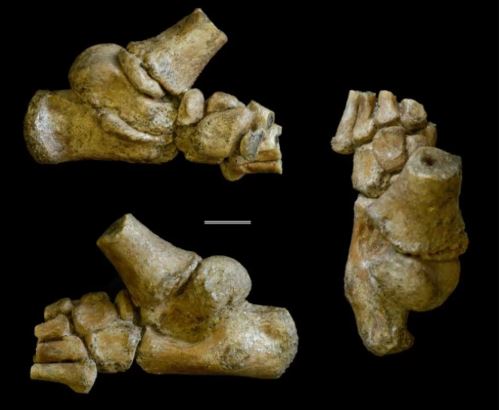
The 3.32 million-year-old foot from an Australopithecus afarensis toddler shown in different angles. Credit: Jeremy DeSilva & Cody Prang[/caption]

A complete 3-million-year-old skeleton

Discovered in 2002 by Zeresenay Alemseged, a professor of organismal biology and anatomy at the University of Chicago, the foot is about the size of a modern human’s thumb. Astonishingly, it is part of an almost complete skeleton of a young female Australopithecus afarensis living 3.32 million years ago in the Dikika region of Ethiopia. “This is the most complete foot of an ancient juvenile ever discovered,” Desilva says. “For the first time, we have an amazing window into what walking was like for a two-and-a-half-year-old, more than 3 million years ago.”

 “On the cusp of being human”

Alemseged is a world leader in palaeontology, specialising in the study of human origins and our evolution. He contributed to the study as a senior author. “Placed at a critical time and the cusp of being human, Australopithecus afarensis was more derived than Ardipithecus (a facultative biped) but not yet an obligate strider like Homo erectus. The Dikika foot adds to the wealth of knowledge on the mosaic nature of hominin skeletal evolution” explains Alemseged. The fossil record shows that these ancient ancestors were adept at walking upright. Desilva adds: “Walking on two legs is a hallmark of being human. But, walking poorly in a landscape full of predators is a recipe for extinction.” [caption id="attachment_8792" align="aligncenter" width="230"] The child’s foot (bottom) compared with the fossil remains of an adult Australopithecus foot (top). Credit: Jeremy DeSilva & Cody Prang[/caption]

A relative of the Lucy fossil?

The fossil of the toddler’s foot is not only the same species as the famous Lucy fossil, but was also found in the same vicinity in Ethiopia. Unsurprisingly, this led to it being erroneously called ‘Lucy’s baby’ by the popular press – despite this toddler having been around 200,000 years before Lucy.

What we know about the toddler’s lifestyle

With a remarkably preserved anatomy, the fossil foot has given the research time invaluable insight into the daily lifestyle of this toddler. After an examination into how the foot developed and what this tells us about human evolution, it can even start to tell the story of how our ancestors survived. At just two and a half years of age, this Dikika child was already walking on two legs. However, findings also suggest that she was still spending time in the trees, foraging for food while clinging to her mother. “If you were living in Africa 3 million years ago without fire, without structures, and without any means of defence, you’d better be able get up in a tree when the sun goes down,” adds DeSilva. Accordingly, the base of the big toe and the skeletal structure surrounding it suggests that vulnerable children spent more time in the trees than their adult carers. “These findings are critical for understanding the dietary and ecological adaptation of these species and are consistent with our previous research on other parts of the skeleton especially, the shoulder blade,” Alemseged notes.]]>

Categories
Breaking News

Elongated skulls reveal female-biased immigration to Early Medieval Germany

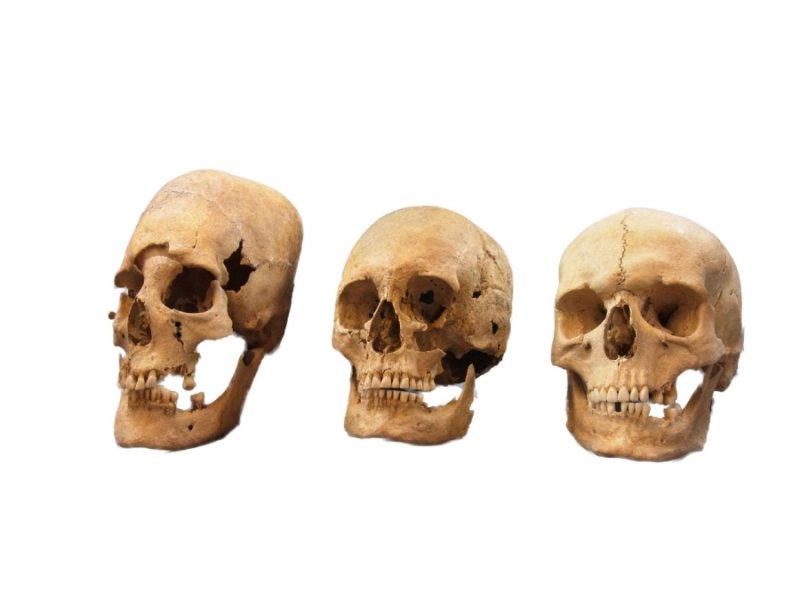
These are strong, intermediate, and non-deformed skulls (from left to right) from the Early Medieval sites Altenerding and Straubing in Bavaria, Germany.
Credit: State Collection for Anthropology and Palaeoanatomy Munich[/caption] In recent years, an international and interdisciplinary team of anthropologists and population geneticists has congregated to explore this transition. The team has now published a palaeogenomic study, which investigates early medieval migration in southern Germany and the peculiar phenomenon of artificial skull deformation. They performed the first genomic analysis of populations that occupied German Bavaria around 500 AD; shedding light on the complex population dynamics of the Völkerwanderung, or Migration Period. Dr Michaela Harbeck from the Bavarian State Collection for Anthropology and Palaeoanatomy (SAPM) teamed up with population geneticist Professor Joachim Burger of Johannes Gutenberg University Mainz (JGU). Working with them were Dr. Krishna Veeramah from US Stony Brook University and colleagues from the UK and Switzerland.  

A curious genetic profile

The study, which analysed 40 different inhabitants, revealed that most ancient Bavarians had a genetic similarity to Central and Northern Europeans. But one group had a particularly diverse genetic profile: the female skulls had been artificially deformed into a tower shape. [caption id="attachment_8728" align="aligncenter" width="500"] Credit: State Collection for Anthropology and Palaeoanatomy Munich. Artificially deformed female skull from Altenerding, an Early Medieval site in Bavaria[/caption] “Parents wrapped their children’s heads with bandages for a few months after birth in order to achieve the desired head shape,” says Dr. Michaela Harbeck. “It is difficult to answer why they carried out this elaborate process, but it was probably used to emulate a certain ideal of beauty or perhaps to indicate a group affiliation.”  

Elongated skulls: A long history

Elongated skulls are found in civilisations across history. The earliest written record refers to the Macrocephali, or Long-heads, and dates to 400 BC; though studies have determined its prevalence in cultures for many thousands of years earlier. Dr. Krishna Veeramah, first author of the study, says: “The presence of these elongated skulls in parts of eastern Europe is most commonly attributed to the nomadic Huns, led by Atilla, during their invasion of the Roman Empire from Asia, but the appearance of these skulls in western Europe is more mysterious, as this was very much the fringes of their territory.”  

Migrating from east to west

DNA analyses of these skulls revealed that the women migrated to early Bavarian settlements from areas across eastern Europe. As well as their deformed skulls, the women tended to have darker colouring in comparison to the other Bavarians they were living with, who generally had fair hair and blue eyes. “Although there is evidence that there was some genetic contribution from Central Asia, the genomic analysis points to the fact that women with deformed skulls in this region are genetically most similar to today’s south eastern Europeans, and that the Huns likely played only a minor role in directly transmitting this tradition to Bavaria,” Burger says. Those with deformed skulls were not the only women migrating to Bavaria. Two women closely resembling modern Greeks and Turks can also be identified. “Most of these foreign women are found with grave goods that look unremarkable compared to the rest of the buried population,” adds Veeramah. “These cases of female migration would have been invisible from the material culture alone.”  

Strategic alliances during political upheaval

“This is an example of long-range female mobility that bridges larger cultural spaces and may have been a way for distant groups to form new strategic alliances during this time of great political upheaval in the absence of a previous Roman hegemony,” notes Burger. “We must expect that many more unprecedented population-dynamic phenomena have contributed to the genesis of our early cities and villages.” “Interestingly, though our results are preliminary, there are no major traces of genetic ancestry in these early inhabitants of Bavaria that might have come from soldiers of the Roman army,” says Harbeck. “We need to keep investigating on an even broader basis how much Celtic and Roman ancestry is in these early Bavarians.”]]>
Categories
Breaking News

Ancient Tick Engorged with Mammal Blood Found Fossilized in Amber

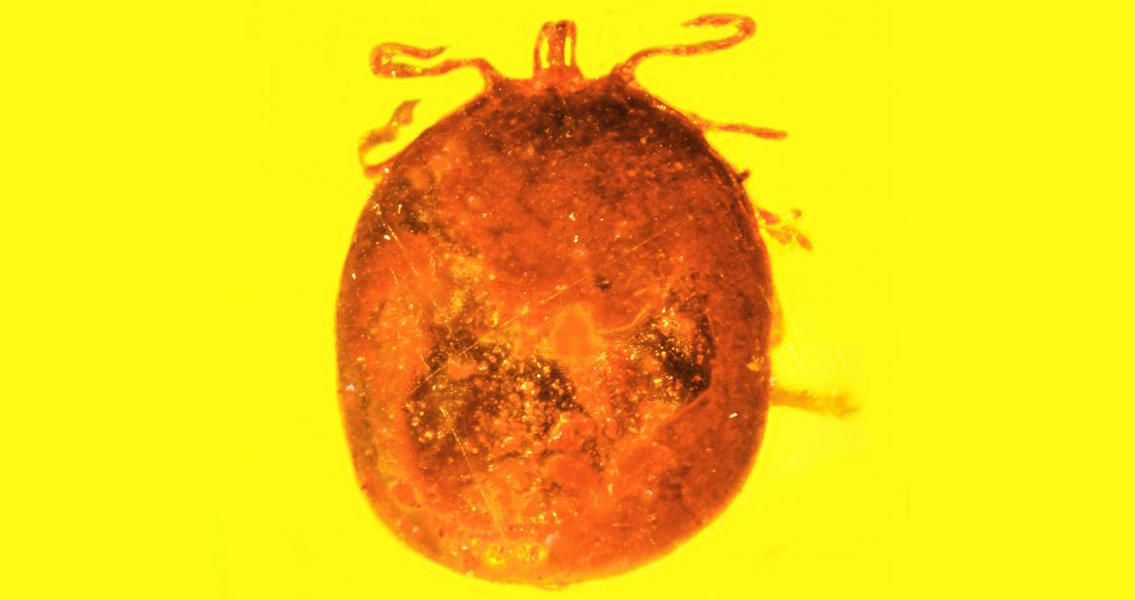
Babesia microti, a parasite that has survived to this day and is still transmitted by ticks to humans and other mammals. With its stomach distended by its last meal, the engorged tick looks as if it tumbled into a patch of tree sap after it was freshly plucked from a mammal sometime between 20 and 30 million years ago. Two small holes on its back, likely indicative of a primate pulling it off itself or a mate during grooming, were even oozing blood at the time the tick became encased in what would eventually become the piece of amber. Study author George Poinar, Jr., professor emeritus of Oregon State University’s College of Science, says the state of the tick speaks volumes of life millions of years ago in what would have been a tropical jungle in the modern Dominican Republic. The professor, an international expert on fossilized amber, added that the fossilized blood cells within the tick, which were infected with the B. microti parasite, are so detailed as to be “amazing.” B. microti can lead to a disease in humans known as babesosis, which mimics malaria in its symptoms and can be just as fatal. A genetically similar parasite is well-known for causing Texas cattle fever in live stock, a problem that has plagued plains states in the past. More than 500,000 acres of land in Texas have already been quarantined this spring because of an outbreak of the disease. Today, B. microti can be carried by the common deer tick, which is also known to carry Lyme disease. In a press release from Oregon State University, Poinar says that the life forms discovered in amber can unveil untold wonders concerning the evolution and history of diseases that modern humans are still plagued with to this very day. It’s now clear, thanks to the newly-discovered amber fossil, that B. microti was around well before humans ever evolved, and had adapted to flourish in our primate ancestors and other hosts, the scientist added. One of the unique facets of this find is how remarkably well-preserved the parasites and blood cells are within the amber-fossilized tick, Poinar said. The researcher likened it to a professional job, remarking that it was almost if they had been prepared in a laboratory in order to be subjected to study. In fact, the amber embalming process showcased the texture and the density of the parasites, which were different enough from the red blood cells harboring them to make them clearly identifiable. The new research study, which appears in the Journal of Medical Entomology, can be found online here Photo by George Poinar, Jr., courtesy of Oregon State University]]>

Categories
Breaking News

Rare Fossil Discovered in remnants of Trench From WWI

here Image courtesy of Ohio State University]]>

Categories
Breaking News

Did Neanderthals and Leopards Exist Side-by-side in Italy?

LiveScience, an ancient bone found in 2014 by Renato Bandera, an amateur scientist, turned out to be the shinbone of a leopard. The find was made in northern Italy on the banks of the River Po, not far from the entrance to Cremona’s harbor. The fossilized bone, which Bandera donated to the Paleoanthropological Museum of Po in San Daniele Po, is not the first specimen to be found in the region. Indeed, many fossils discovered nearby have led researchers to suggest a number of species made their home there, from elk, rhinos and giant deer to woolly mammoths, steppe bison and straight-tusked elephants. However, finding the fossilized remains of carnivorous species is much rarer. Only a handful of fossils from foxes, hyenas, wolves, and bears have been discovered in the region; the newest discovery – that leopards were present as well – fills in a major gap in our knowledge of the ecology of the time period. Researchers say that the leopard was likely just shy of 100 pounds, was around 3.6 feet long and had a 2.8-foot tail, all according to the size of the shinbone. Davide Persico, the study’s co-author and a paleontologist from the University of Parma, said this suggests the creature was either a young male or a large female. While the exact age of the fossilized remains has yet to be pinpointed, fossils found nearby place the leopard remains in context. According to Persico, the leopard is likely to have lived up to 180,000 years ago. The presence of leopards in Europe isn’t unheard of, especially since previous research has discovered evidence of the large cat living on the continent during the Pleistocene. The oldest known example of leopards living in Ice Age Europe comes from Vallonet Cave, a site in France that yielded leopard remains dated to between 900,000 and 1 million years old. Researchers said that as the climate continued to shift colder, leopards would have migrated closer to the equator. As a result, the large felines would have moved down from the mountainous regions into the Po River plain – and would have lived there at the same time as Neanderthals. In fact, the only other leopard fossils in Italy were found in the Apennines and the Alps exclusively. The fossil discovery shows that this ancient leopard species was not limited to the mountains, remarked the paleontologist. Persico drew a connection between ancient leopards and modern ones, stating that both have demonstrated the ability to adapt to different climates. Modern leopards do indeed demonstrate a wide distribution, in fact the largest of any wild cat. The largest spotted cats in modern-day Asia and Africa, leopards range from mountainous regions to forests, grasslands, and even semi-arid deserts. The new research study, published in the journal Quaternary International, can be found here]]>

Categories
Breaking News

New Theory on Bipedal Development in Dinosaurs Unveiled

The Journal of Theoretical Biology, can be found here Image courtesy of Scott Persons]]>

Categories
Breaking News

Oldest Venomous Vertebrate Evolved Well Before Snakes

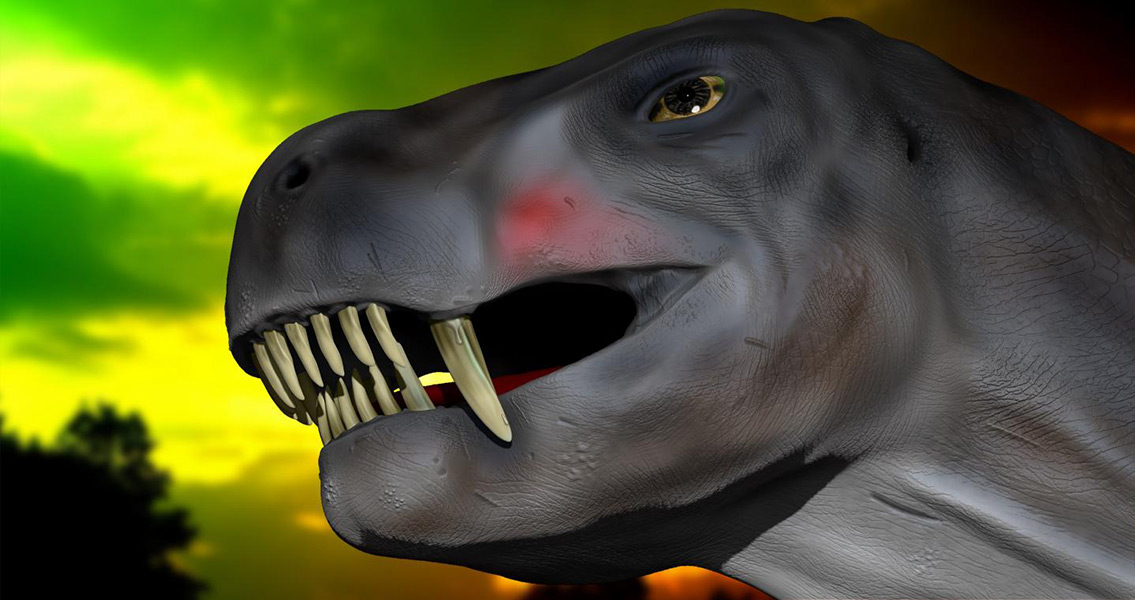
Euchambersia, a therapsid which was one of the evolutionary precursors to mammals. Euchambersia pre-dates the rise of even the first dinosaur by millions of years. While technically a reptile, it is inextricably tied to the rise of countless mammalian species, including our own. Euchambersia lived around 260 million years in the past. The small, dog-sized proto-mammal developed a unique biology in order to better protect itself from larger, more aggressive predators of the era, and also to aid it in hunting prey of its own. Living in South Africa near Colesberg in a region known as the Karoo, the therapsid evolved to develop a circular and deep fossa in its upper jaw behind its canine teeth. Venom would be produced in this hollow to be delivered in a bite through a complex series of canals and grooves in the Euchambersia’s bones and teeth. Today, the most well-known venomous animals are of course snakes, but Dr. Benoit pointed out that their fossil record only stretches back around 167 million years. Proving that Euchambersia even had venom glands was problematic, as the glands don’t fossilize. Benoit and his fellow Wits University researchers, along with the aid of London’s Natural History Museum, employed 3D imagery and CT scanning techniques to analyze the only pair of fossilized Euchambersia skulls found to date. The results of this analysis were described as “stunning”, as the therapsid was found to have had anatomical adaptions that indicated venom production. These adaptations included the fossa and a network of canals and grooves, as well as additional, previously undiscovered teeth that had sharp ridges which would have aided in injecting venom through the Euchambersia’s bite. The therapsid’s venom would have been passively introduced through its bite, unlike modern snakes with their needle-like grooved fangs that act to inject venom directly into their prey. In fact, the venom of the Euchambersia flowed freely into its mouth and through the ridges on the outside of its canines into whatever it had bitten. Dr. Benoit said that Euchambersia could have used its venomous bite for hunting or protection. With the majority of modern venomous species using their bite for hunting, the researcher feels that the therapsid would have likely followed the same route. Additionally, Dr. Benoit pointed out that animals from that time period, specifically therapsids, were not all insectivores but instead had a diverse diet. The new research paper, published in the journal PLOS ONE, can be found online here Image courtesy of Wits University]]>

Categories
Breaking News

Extinction-Level-Event Paved Way for Sponges, Scientists Discover

Current Biology, is available here Image courtesy of Botting, J. P]]>

Categories
Breaking News

Evidence of Oldest Known Human Ancestor Discovered

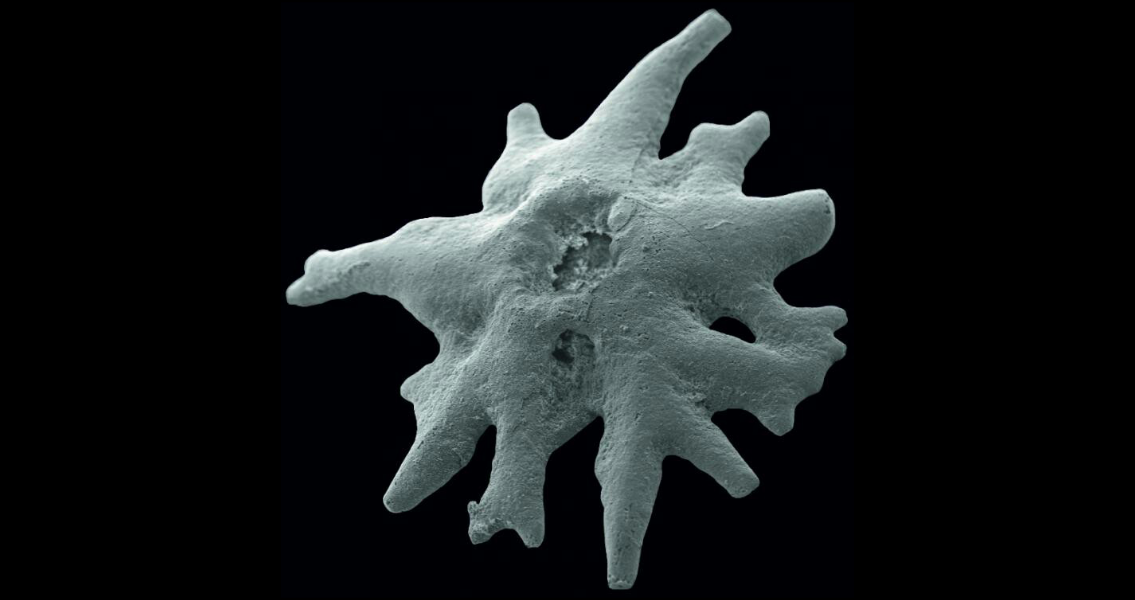
Saccorhytus, the miniscule sea creature that resembles nothing so much as a tiny, microscopic sack with a large mouth – a characteristic that some of its descendants today certainly share. The diminutive creature, according to a press release from the University of Cambridge, is the most primitive example to date of a broad biological category of creatures known as deuterostomes. There are several sub-groups under the deuterostome category, including vertebrates. In a recently published research study, scientists from Cambridge, Xi’an China’s Northwest University and other international locations say that Saccorhytus has the honor of being a common ancestor of a massive range of species. Additionally, the deuterostome represents the earliest stage ever discovered regarding the evolution of humans over the course of hundreds of millions of years. There is, of course, nothing even vaguely human when it comes to Saccorhytus. Measuring around a millimeter in size, its habitat was likely the seabed, being small enough to live between individual grains of sand. The microfossil that contained the creature proved to be well-preserved enough for the scientists to make several determinations – including the lack of any orifice for removing waste, such as an anus. In other words, our far-advanced evolutionary predecessor would have expelled waste the same way it came in – unappealing to say the least. One of the main authors of the study, Professor Simon Conway Morris from Cambridge’s St. John’s College, remarked that Saccorhytus looked like nothing so much as tiny black grains to the naked eye. However, under microscope magnification the level of detail preserved by the fossil was nothing less than “jaw-dropping,” the researcher added. Northwest University’s Degan Shu also commented, stating that the research team has a wide array of discoveries to its credit, including a variety of other early deuterostomes like Saccorhytus and also the earliest known instance of what could be classified as a fish. The discovery of the new sea creature, however, provides scientists a glimpse into the very first known evolutionary step of not just humans but also a wide range of related animals, the researcher said. Discovered in China’s central Shanxi Province, the Saccorhytus microfossils have been dated to 540 million years old, a good 20 to 30 million years earlier than the majority of other early deuterostome finds. Researchers were able to construct a picture of how the creature might have looked by isolating the fossils from the surrounding rock and then subjecting them to CT scans and electron microscopy. The amount of limestone the team needed to process in order to access these fossils was massive – approximately three tons, according to co-author Dr. Jian Han, Degan Shu’s colleague at Northwest university. The new research study, which was recently published in the journal Nature, can be found online here Image courtesy of S Conway Morris / Jian Han]]>

Categories
Breaking News

Prehistoric Marine Creatures Identified for First Time

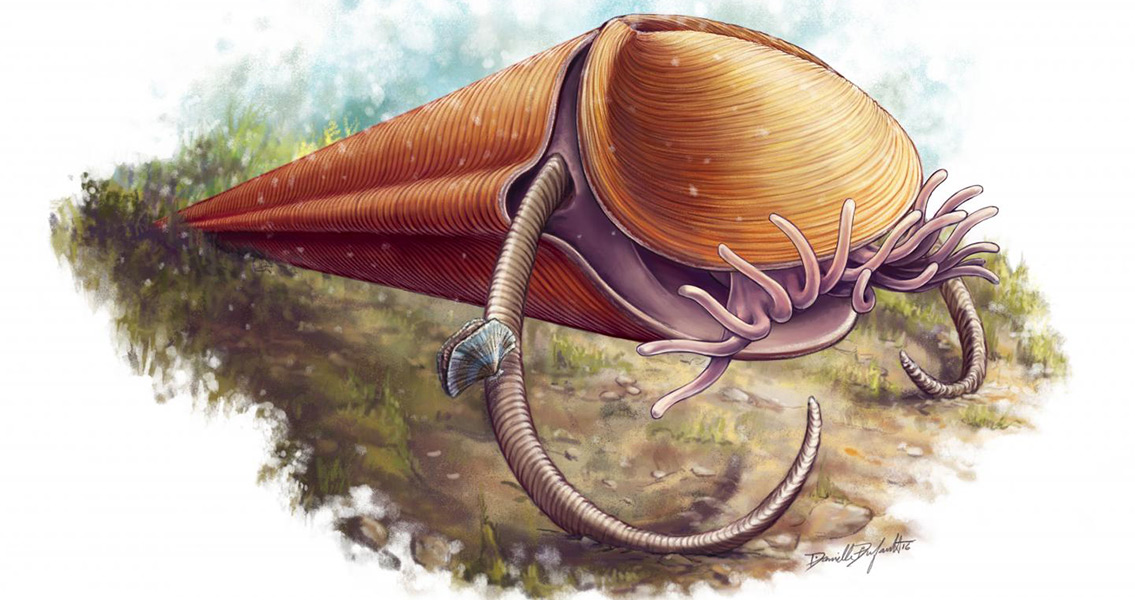
Nature, can be found online here Image courtesy of Artist: Danielle Dufault. © Royal Ontario Museum]]>