Categories
Breaking News

Humans left Africa 270,000 years earlier than we thought

One of the tools from the discovery site in Shangchen, China. Credit: Professor Zhaoyu Zhu[/caption] Prior to this discovery, the earliest evidence of humanity outside Africa was a collection of skeletal remains and stone tools found in Dmanisi, Georgia, which have been dated to 1.85 million years ago – 270,000 years after the new discovery in Shangchen in the southern Chinese Loess Plateau. The research, published in the journal Nature, also suggests that the ancient humans returned to the same site repeatedly, possibly for hunting. The collection includes a notch, scrapers, cobble, hammer stones and pointed pieces. Each item shows sign of human use. The hammer stones, for instance, had been intentionally flaked. Fragments of animal bones that would have been contemporaneous with the items were also found. Most of the artefacts were made of quartzite and quartz, suggesting that the materials were sourced from the foothills and streams of the Qinling Mountains around 5 to 10 kilometres from the site. [caption id="attachment_8815" align="aligncenter" width="425"] The extensive collection of 2.1 million years old artefacts is causing archaeologists to reconsider the overall story of human migration. Credit: Professor Zhaoyu Zhu[/caption] Because the 96 stone artefacts were found in 17 different layers of fossil soils that had developed over a period of one million years, we now know that early humans occupied the Chinese Loess Plateau under varying climatic conditions between 1.2 and 2.12 million years ago. Professor Dennell says: “Our discovery means it is necessary now to reconsider the timing of when early humans left Africa.” The find “may add a new chapter to the story of hominin evolution, suggesting that some of these species left Africa far earlier than once believed and managed to travel over 8,000 miles east of their evolutionary birthplace,” The New York Times reports. The age of the tools “suggests that the hominins who made them were neither tall nor big-brained. Instead, they may have been small bipedal apes, with brains about the size of a chimpanzee’s.” Michael Petraglia, a paleoanthropologist at the Max Planck Institute for the Science of Human History comment:S “The implications of all this are large. We must re-evaluate our understanding of human prehistory in Eurasia.”]]>

Categories
Breaking News

3-million-year-old skeleton reveals the story of ancient toddlers’ lifestyles

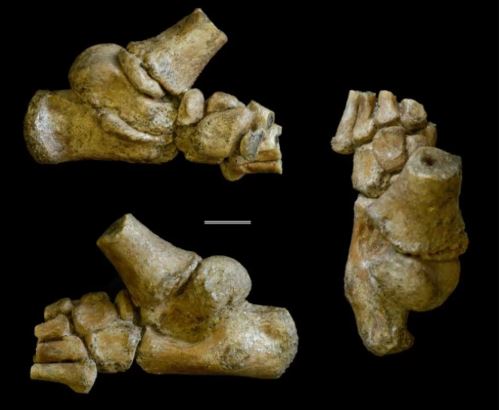
The 3.32 million-year-old foot from an Australopithecus afarensis toddler shown in different angles. Credit: Jeremy DeSilva & Cody Prang[/caption]

A complete 3-million-year-old skeleton

Discovered in 2002 by Zeresenay Alemseged, a professor of organismal biology and anatomy at the University of Chicago, the foot is about the size of a modern human’s thumb. Astonishingly, it is part of an almost complete skeleton of a young female Australopithecus afarensis living 3.32 million years ago in the Dikika region of Ethiopia. “This is the most complete foot of an ancient juvenile ever discovered,” Desilva says. “For the first time, we have an amazing window into what walking was like for a two-and-a-half-year-old, more than 3 million years ago.”

 “On the cusp of being human”

Alemseged is a world leader in palaeontology, specialising in the study of human origins and our evolution. He contributed to the study as a senior author. “Placed at a critical time and the cusp of being human, Australopithecus afarensis was more derived than Ardipithecus (a facultative biped) but not yet an obligate strider like Homo erectus. The Dikika foot adds to the wealth of knowledge on the mosaic nature of hominin skeletal evolution” explains Alemseged. The fossil record shows that these ancient ancestors were adept at walking upright. Desilva adds: “Walking on two legs is a hallmark of being human. But, walking poorly in a landscape full of predators is a recipe for extinction.” [caption id="attachment_8792" align="aligncenter" width="230"] The child’s foot (bottom) compared with the fossil remains of an adult Australopithecus foot (top). Credit: Jeremy DeSilva & Cody Prang[/caption]

A relative of the Lucy fossil?

The fossil of the toddler’s foot is not only the same species as the famous Lucy fossil, but was also found in the same vicinity in Ethiopia. Unsurprisingly, this led to it being erroneously called ‘Lucy’s baby’ by the popular press – despite this toddler having been around 200,000 years before Lucy.

What we know about the toddler’s lifestyle

With a remarkably preserved anatomy, the fossil foot has given the research time invaluable insight into the daily lifestyle of this toddler. After an examination into how the foot developed and what this tells us about human evolution, it can even start to tell the story of how our ancestors survived. At just two and a half years of age, this Dikika child was already walking on two legs. However, findings also suggest that she was still spending time in the trees, foraging for food while clinging to her mother. “If you were living in Africa 3 million years ago without fire, without structures, and without any means of defence, you’d better be able get up in a tree when the sun goes down,” adds DeSilva. Accordingly, the base of the big toe and the skeletal structure surrounding it suggests that vulnerable children spent more time in the trees than their adult carers. “These findings are critical for understanding the dietary and ecological adaptation of these species and are consistent with our previous research on other parts of the skeleton especially, the shoulder blade,” Alemseged notes.]]>

Categories
Breaking News

History News of the Week – Neanderthals Showed Compassion

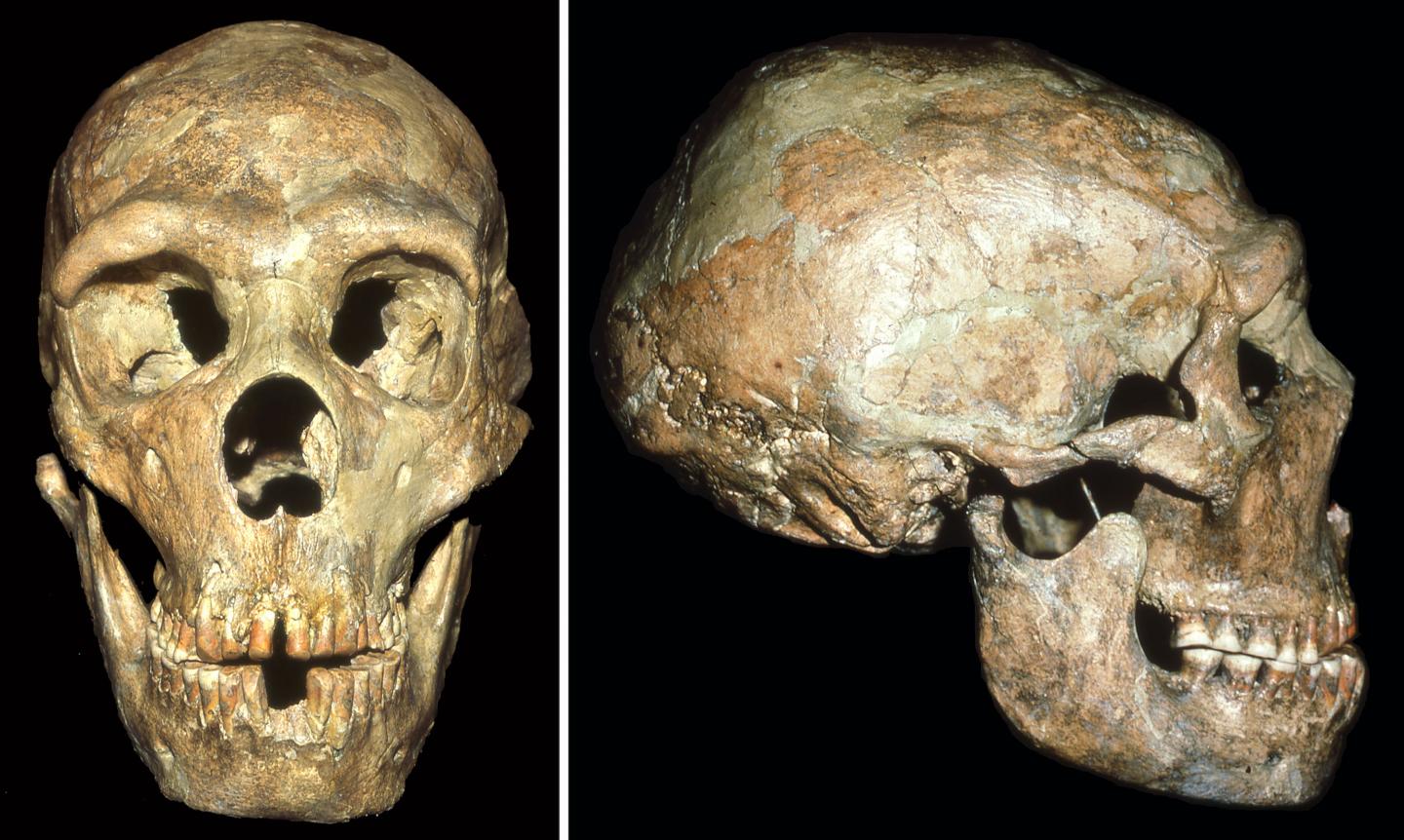
Neanderthals Were Compassionate, New Evidence Suggests Around 50,000 years ago, an older Neanderthal who had suffered multiple debilitating injuries and became deaf likely relied on others to avoid prey and survive into his forties, new analysis suggests. “More than his loss of a forearm, bad limp and other injuries, his deafness would have made him easy prey for the ubiquitous carnivores in his environment and dependent on other members of his social group for survival,” said Erik Trinkaus, study co-author and professor of anthropology in Arts & Sciences at Washington University in St. Louis. Trinkaus and colleagues’ research has been published in the online open access journal PLOS ONE. Known as Shanidar 1, the Neanderthal’s remains were discovered in 1957 at the Shanida Cave in Iraqi Kurdistan by Ralph Solecki, an American archaeologist. Previous studies of Shanidar 1’s remains had found evidence of multiple injuries, including a serious blow to the side of the face, fractures and the eventual amputation of the right arm at the elbow. It was also noted that he had suffered a systematic degenerative condition. In the latest analysis, Trinkaus and Sébastien Villotte of the French National Centre for Scientific Research confirm that bony growths in Shanidar 1’s ear canals would have produced profound hearing loss. Surviving in the hostile Pleistocene environment would have been highly challenging, even without hearing loss. As with other Neanderthals who have been found to have survived with serious injuries or disabilities, the authors suggest Shanidar 1 most likely required significant social support to reach old age. “The debilities of Shanidar 1, and especially his hearing loss, thereby reinforce the basic humanity of these much maligned archaic humans, the Neandertals,” said Trinkaus. Squirrels Spread Leprosy to England The prevalence of leprosy in the south-east of England during the medieval period could be explained by squirrel fur trade with Scandinavia, according to new research. Genetic analysis of a pre-Norman woman’s skull, unearthed from a garden in Suffolk, has added to growing evidence that East Anglia was the epicentre of a leprosy epidemic that spread through medieval England. New research, published in The Journal of Medical Microbiology, suggests the disease reached England through either contact with Scandinavia via Anglo-Saxon movement, or through the sustained trade in squirrel fur. Radiocarbon dating by researchers from the University of Cambridge confirmed that the woman, dubbed the “The Lady of Hoxne,” lived sometime between 885-1015 CE. Their analysis of the skull also detected traces of Mycobacterium leprae, the bacteria which cause leprosy. Squirrels are a known carrier of these bacteria. The disfiguring effects of leprosy were clear on the woman’s skull, providing evidence that she would have suffered extensive facial lesions and possibly nerve damage to her extremities. She was infected with the same strain of the disease that has been found in other remains in East Anglia. Sarah Inskip, Research Associate at St John’s College, Cambridge, and lead author of the paper, said: “This new evidence coupled with the prevalence of leper hospitals in East Anglia from the eleventh century onward adds weight to the idea that the disease was endemic in this region earlier than in other parts of the country. “It is possible that apparent clustering of leprosy cases in the East Anglia region could be attributed to chance – perhaps more medieval human remains have simply been uncovered in the region and the discoveries have been better conserved by a soil type containing high levels of bone-preserving chalk. However, the same conditions are also found in areas such as Hampshire and Dorset, where many early Anglo-Saxon cemeteries have been excavated, but no cases of leprosy have yet been reported.” Significantly, the same strain of leprosy that seems to have been prevalent in East Anglia has also been identified in medieval remains in Sweden and Denmark. This has led the authors to claim that North Sea trade links could have brought the disease to England. “It is possible that this strain of leprosy was proliferated in the South East of England by contact with highly-prized squirrel pelt and meat which was traded by the Vikings at the time this woman was alive. Strong trade connections with Denmark and Sweden were in full flow in the medieval period, with Kings Lynn and Yarmouth becoming significant ports for fur imports,” added Dr Inskip. Although leprosy has not been found in humans on the British Isles for over two centuries, a recent study has detected the infection in red squirrels on Brownsea Island in Dorset. Sequencing of the M.leprae strain that affects the squirrels found it to be closely related to that detected in the woman from Hoxne. “Research has already established that leprosy can be passed from armadillos to humans, so that it may also come from squirrels is an interesting idea,” said Inskip. “It is questionable how long the bacteria could have survived on fur or meat, but it’s notable that squirrels were also sometimes kept as pets.” “Perhaps it’s the movement of people and prolonged connection between East Anglia and Scandinavia that’s important to our understanding of the history of leprosy in the UK, but further research refuting or confirming the role of the fur trade could be highly enlightening and exciting”. Modern Society hasn’t Made Mankind less Violent Two anthropologists claim that people living in ‘modern-day nations’ are not less violent than their ancestors or people currently living in smaller hunter-gathering and horticultural societies. The research also claims that living in ‘a large, organised’ society increases the likelihood of surviving a war, pointing out that although ‘modern’ societies may have a larger number of soldiers or combatants who die in a war, they represent a smaller percent of the total population. Florida State University Distinguished Research Professor of Anthropology Dean Falk and Charles Hildebolt, a professor from the Washington University Medical School in St. Louis, make their claims in the journal Current Anthropology. “Rather than being more violent, people who live in small-scale societies are more vulnerable to a significant portion of their community being killed in warfare than those living in states because, as the old saying goes, ‘there is safety in numbers,'” Falk said in a press release. “We recognise, of course, that people living in all types of societies have the potential not only for violence — but also for peace.” Falk and Hildebot have found that war deaths for both small-scale and more modern state societies escalate with increasing population sizes. They attribute this, at least partly, to developments in weapons and military strategy. The authors claim their study challenges the idea that as nations and modern societies develop, there is a reduction in violence. Falk and Hildebolt analysed data on population sizes and death from intergroup conflicts in 11 chimpanzee communities, 24 human non-states, 19 countries that fought in World War I and 22 countries that fought in World War II. It was discovered that on the whole the chimpanzees were less violent than humans, pointing to humans having more severe forms of warfare. It was also found that, as with humans, the annual average percentage of deaths among chimpanzees declined as their populations increased. Featured image: The skull of a Neanderthal known as Shanidar 1 shows signs of a blow to the head received at an early age. Credit: Erik Trinkaus ]]>

Categories
Breaking News

Proliferation of Common Mouse Linked to Human Settlement

Proceedings of the National Academy of Sciences, can be found here Image courtesy of Lior Weissbrod ]]>

Categories
Breaking News

10,000-Year-Old Case of Cannibalism Discovered in Spanish Cave

Ars Technica, the remains in question show no signs of violence, indicating that the bodies were likely consumed after death. Identifying cannibalism can be a tricky business, but Morales-Pérez and his team say the evidence was clear. The bones themselves were discovered buried alongside the remains of other, non-human animals; bore signs of being burned and butchered, and evidence of being bitten and scraped. Radiocarbon dating has set the age of the bones to between 9,000 and 10,000 years old. Finding evidence of the practice of cannibalism during this time period is not unheard of, though this is the first time that cannibalism has reared its ugly head in Spain during the Mesolithic. Other archaeological finds throughout Europe and the Levant dating to this time period have yielded evidence of humans eating their own. Additional questions have arisen after discovering the cannibalism. One such question – one that may not ever be able to be answered – is why the humans inhabiting this cave in Spain decided to turn to the practice in the first place. Necessity due to starvation is always one reason for cannibalism, but the multitude of animal remains found in the cave indicates that the food sources for the humans living there were varied and apparently abundant. Occasional periods of privation do occur of course, and the evidence of cannibalism could represent a desperate time in the lives of the people who lived there when food sources were scarce. However, the possibility that the cannibalism might have been ritual in nature cannot be discounted – there’s precedent of complex rituals for eating the flesh of the deceased, often important members of the community, dating back thousands of years. The beginning of the Mesolithic also represented a time period when humans were beginning to transition from their hunter-gatherer existence of the earlier Paleolithic, and taking up the trappings of a more sedentary, agrarian lifestyle. The conflict between these two ways of life could have precipitated some funerary practices that would seem gruesome and barbaric to our own modern sensibilities, researchers say. The state of the remains seems to contradict the idea that they were consumed as part of a ritual. Seemingly dumped unceremoniously in a midden heap at the rear of the cave, these butchered, fire-processed and chewed human bones don’t seem to have been treated with much care. However, with literally ten thousand years having passed between the event and the discovery of the evidence of that event, there’s no way of knowing if the remains had at one time been buried with reverence and then ended up in a new location due to rain runoff and soil erosion. The new research study, published in the Journal of Anthropological Archaeology, can be found online here Image courtesy of Journal of Anthropological Archaeology]]>

Categories
Breaking News

Human Heel to Toe Stride Finally Explained Through Treadmill Study

Journal of Experimental Biology, explains why human’s walk the way they do Humans are very much set in the way they walk, something which obscures the fact that our stride is actually pretty curious. To Webber it is a particularly pertinent issue. Barefoot runners run in a way that sees them land on the middle or balls of their feet instead of their heels, a stride which would feel unnatural when walking. “Humans are very efficient walkers, and a key component of being an efficient walker in all kinds of mammals is having long legs,” Webber explains in a press release from the University of Arizona. “Cats and dogs are up on the balls of their feet, with their heel elevated up in the air, so they’ve adapted to have a longer leg, but humans have done something different. We’ve dropped our heels down on the ground, which physically makes our legs shorter than they could be if we were up on our toes, and this was a conundrum to us (scientists).” Webber suggests our stride can be explained by limb length. Key to his explanation is the idea that humans move like an inverted swinging pendulum. The body essentially pivots about the point where the foot meets the ground, with the centre of pressure sliding across the length of the foot from heel to toe as we take a step. This means that the true pivot point occurs in the centre of the foot, but at a ‘virtual point’ several centimetres below the ground. Our heel to toe stride then, extends the length of our ‘virtual legs’: the points we pivot around which are longer than our actual legs. “Humans land on their heel and push off on their toes. You land at one point, and then you push off from another point eight to 10 inches away from where you started.” Webber says in the press release. “If you connect those points to make a pivot point, it happens underneath the ground, basically, and you end up with a new kind of limb length that you can understand. Mechanically, it’s like we have a much longer leg than you would expect.” Webber and his team reached their conclusion after monitoring study participants on a tread mill. They compared those who walked normally with those they’d asked to walk toe first. They quickly observed that those who had to walk toe first were slower, and used 10% extra energy in their strides. “The extra ‘virtual limb’ length is longer than if we had just had them stand on their toes, so it seems humans have found a novel way of increasing our limb length and becoming more efficient walkers than just standing on our toes,” Webber said. “It still all comes down to limb length, but there’s more to it than how far our hip is from the ground. Our feet play an important role, and that’s often something that’s been overlooked.” Ancient footprints preserved in volcanic ash in Tanzania show that ancient hominins had a heel to toe stride up to 3.6 millions years ago. Nevertheless, our feet have changed over the years. Early bipeds had longer feet than modern humans – 70 percent of the length of the femur compared to 54 percent in modern humans, which likely helped them become very fast, efficient walkers. Webber suggests that as modern humans evolved the heel first style of walking their feet got proportionally smaller, allowing us to become better runners, possibly as a means to evade predators. “When you’re running, if you have a really long foot and you need to push off really hard way out at the end of your foot, that adds a lot of torque and bending,” Webber said. “So the idea is that as we shifted into running activities, our feet started to shrink because it maybe it wasn’t as important to be super-fast walkers. Maybe it became important to be really good runners.” ]]>

Categories
Breaking News

Ancient Desert Graves Indicate Possible Blood Feuds

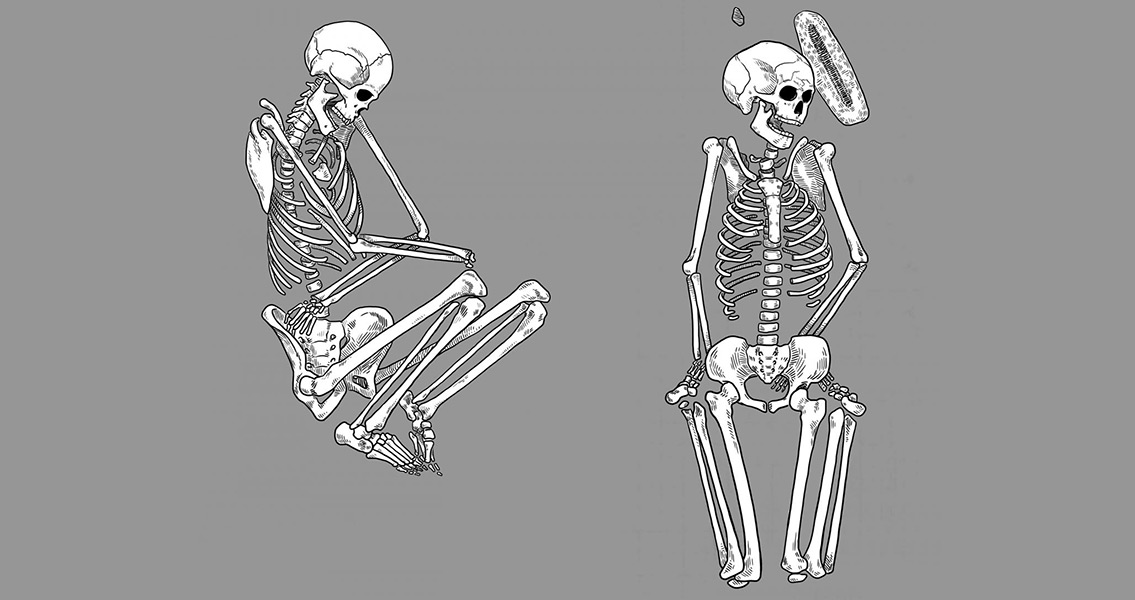
here Illustration by Caitlin McPherson]]>

Categories
Breaking News

Skull Condition Thought Lost to Time Re-Emerges

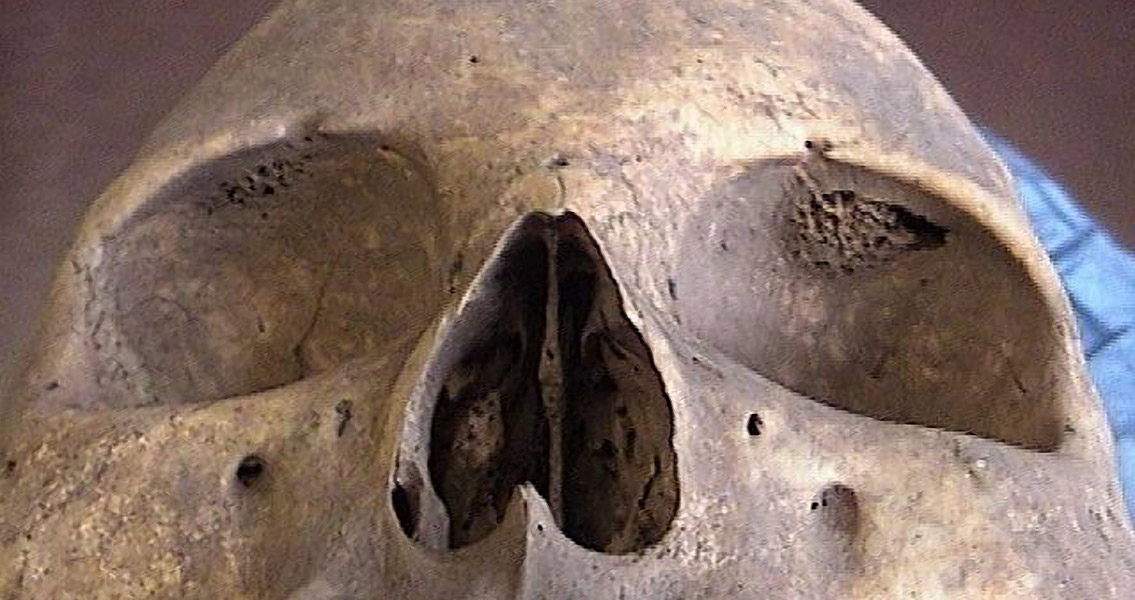
Clinical Anatomy, can be found online here Image courtesy of Ann Ross]]>

Categories
Breaking News

Fire – Early Humans Knew a Good Thing When They Saw It

Evolutionary Anthropology ]]>

Categories
Breaking News

New Study Reveals Poison Arrow Use in African Hunters

here. Image courtesy of KU News Service | University of Kansas]]>