Categories
Breaking News

Ancient Humans Pushed Large Mammals to Extinction – The History News of the Week

Science, the authors claim that the ‘magnitude and scale’ of the size-based extinction surpassed any other in the last 66 million years. Importantly, they claim that their research also found little evidence that climate change could have been responsible for these extinctions. “If climate were causing this, we would expect to see these extinction events either sometimes (diverging from) human migration across the globe or always lining up with clear climate events in the record,” said Lyons. “And they don’t do either of those things.” [caption id="attachment_8594" align="alignnone" width="800"]Zygomaturus_BW Zygomaturus trilobus, a diprotodontid marsupial from the Pleistocene of Australia, digital. Credit: Nobu Tamura (http://spinops.blogspot.com) via Wikimedia Commons[/caption] Conflicting Evidence Multiple studies in recent years have attempted to come up with an answer as to what drove the mass extinction of the world’s megafauna. Indeed, within days of each other last January two separate studies focusing on Australia came to significantly different conclusions. An article recently published in the journal Nature Communications claimed to have evidence pointing to 85% of megafauna weighing over 100 pounds in south-west Australia going extinct within a few thousand years of humans arriving in the region. A study in Quarternary Science Journal meanwhile, claimed that humans and the large marsupial Zygomaturus trilobus coexisted with each other in Australia for at least 17,000 years. That research claims that the spectacular creatures, roughly the size of a bull, lived until the beginnings of the Last Glacial Maximum. Intriguingly, the latter study argues that the dramatic climate change caused the region’s plains to dry up, forcing the animals into closer contact with humans. This could have meant the creatures started to be hunted, a theory that links human activity and climate change in the destruction of a megafauna species. Featured image is a statue of the Columbian mammoth housed at the University of Nebraska-Lincoln. Image credit: Craig Chandler, University of Nebraska-Lincoln]]>

Categories
Editorial

Case For the Anthropocene? Megafauna, Ice Ages and Man-Made Deserts

The death of megafauna Some scholars have suggested that humans started making irreversible changes to the planet as far back as ten thousand years ago. When humanity first started to spread across the globe spectacular megafauna inhabited the continents, from Wooly Mammoths in the Northern Hemisphere to giant kangaroos in Australia. Many of these creatures are now extinct, with scientists debating intensely whether this was the result of human activity – such as hunting or competition for food, the drastic climate change at the end of the Ice Age; or a mixture of both. If these mass extinctions were driven by humans, it would signify a massive, permanent change to the planet’s ecosystems. Ecosystem Makers Humanity’s influence has not necessarily been just destructive. There is an increasing number of scientists and archaeologists who argue that two of the planet’s most awe-inspiring ecosystems: the Amazon rainforest and the Sahara Desert, could have been created by human activity. Fertile land found radiating from the remains of ancient settlements in recent years has led some archaeologists to claim that for millennia a massive civilisation once inhabited the Amazon, enriching the soil to allow the rainforest to grow. Earlier this year, a new study looked at the distribution of various tree species to add further support to the idea the Amazon was shaped by human hand thousands of years ago. Earlier this year, a research study claimed humans may have played a role in turning the Sahara from green, fertile and dotted with lakes 10,000 years ago to the desert it is today. The research suggests that the arrival of pastoralism to the Sahara could have upset the region’s ecosystem, cleared vegetation leading to an increased albedo and drastic reduction in rainfall. The theory is a relatively new one, but the team behind it are continuing their search for more evidence to support it. The Little Ice Age A 1677 painting by Abraham Hondius depicts ice skaters on London’s River Thames. To any modern Londoner, such a sight seems unthinkable. The seventeenth century was characterised by plummeting temperatures on a global scale however, which some historians label the Little Ice Age. A number of explanations have been offered for this prolonged period of unusually low temperatures, from increased volcanic activity blocking the sun’s radiation to changing ocean current flows. Some have even suggested a shift in the earth’s orbital cycle could have caused the freeze. Another argument posits a human explanation. Specifically, some scientists claim that the massive population loss in the Americas following the arrival of Europeans led to a huge decline in agriculture and process of reforestation substantial enough to change the oxygen/carbon ratio in the atmosphere and generate a cooling effect. Killing the Aral Sea As recently as the 1970s the Aral Sea was the fourth largest lake in the world, yet only 10% of it now remains, leaving a desert in its place. Situated between Kazakhstan and Uzbekistan, the Aral Sea’s disappearance took less than forty years. In the 1960s irrigation projects by the Soviet Union saw the two main rivers feeding the lake diverted. The consequences have been terrifying. The climate in the area has changed massively due to a huge reduction in rainfall. Fishing communities have been devastated by lost livelihoods. Toxic gases rise from the exposed seabeds, leading to dangerous levels of pollution in the area. Ecosystems that once flourished in the Aral Sea are now all but extinct. Meanwhile, dust storms caused by the dried up land have caused nearby glaciers to melt much faster, in turn leading to massive reductions in the amount of drinking water. Radiation The 1950 date chosen by the Working Group on the Anthropocene is heavily tied in with the proliferation of nuclear weapons and power. Although atomic bombs were being tested in the USA in the 1940s, with the first two used in anger against Japan in 1945, it was in the 1950s that nuclear weapons went global. The nuclear arms race saw more and more countries testing weapons of mass destruction, while nuclear power stations also sprung up around the globe to meet a growing energy demand. These saw radioactive elements flung across the planet, having an immeasurable impact on the environment. There are of course countless other examples which could be mentioned, all of which point to the impact mankind has had on the planet. Some are debatable, some speculative, others, such as the drying of the Aral Sea, impossible to deny. Whether one believes we live in the Anthropocene or not, mankind has undoubtedly left a dramatic mark on the delicate ecosystems and environment of the planet. ]]>

Categories
Breaking News

Mammoth Preservation Project Underway in Mexico

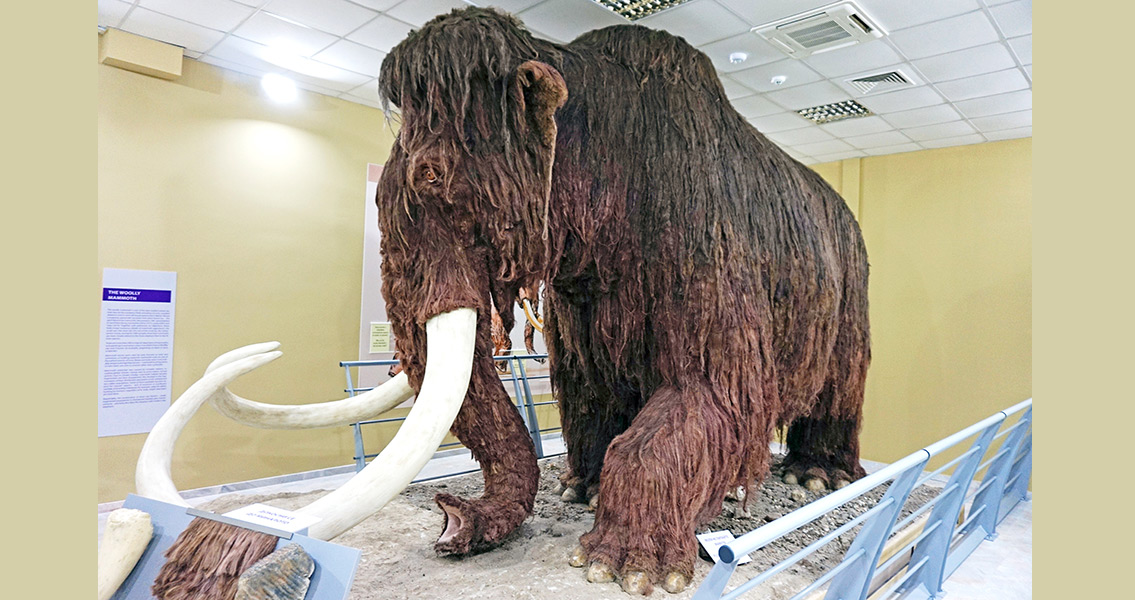
IB Times, adding, “The discovery in Tultepec is important because it indirectly supports the presence of humans 40,000 years ago.” Preliminary research reports the woolly mammal was approximately 25 years old at the time of its death, it was 3.5 meters (11.5 feet) tall and 5 meters (16.5 feet) in length, and weighed around 5 tons. The experts are hopeful that the mammoth remains are in good enough condition to be reassembled and displayed. Woolly mammoths died off around 5,000 years ago. “We are talking about 40,000 years ago so it is a very considerable period of time. The affect (on the bones) over such a period is that the bones are very sensitive.” explained assistant archaeologist Felipe Munos in the article. However, the fact that the remains were found in sediment at the bottom of a lake, and the mud was of a good level, helped to conserve the mammoth remains. Mexico was a hotbed of dinosaur activity at one time, and although the area surrounding modern-day Tultepec is arid, in earlier eras it is thought to have had an ample water supply and lush vegetation. Off the coast of Yucatan, around 825 miles south of Mexico City, is the Chicxulub crater, an impact crater that’s buried underneath Mexico’s Yucatán Peninsula. It was left behind when a large comet or asteroid, approximately 6 miles (10 kilometers) in diameter, struck the Earth. The impact coincides exactly with the Cretaceous–Paleogene (K–Pg) boundary some 66 million years ago, and it’s widely accepted that the global climate disruption caused by the event caused the mass extinction (the Cretaceous–Paleogene extinction event) of 75% of the earth’s animal and plant species, including all of the non-avian dinosaurs. ]]>

Categories
Breaking News

Asteroid Impact Could Have Coincided with Clovis Demise

Scientific Reports, suggests an extraterrestrial cause. The University of Carolina archaeologists found that platinum was most abundant in soil layers which coincided with the ‘Younger Dryas’, a period of extreme climatic cooling which started around 12,800 years ago and lasted around 1,400 years. The return to ice age conditions during the Younger-Dryas is well documented, but its causes have remained shrouded in mystery. The platinum discovery could change all that. “Platinum is very rare in the Earth’s crust, but it is common in asteroids and comets,” explained lead author of the study Christopher Moore in a University of Carolina press release. He stressed that the platinum found at archaeological sites in California, Arizona, New Mexico, Ohio, Virginia, North Carolina and South Carolina was most definitely an anomaly. “The presence of elevated platinum in archaeological sites is a confirmation of data previously reported for the Younger-Dryas onset several years ago in a Greenland ice-core. The authors for that study concluded that the most likely source of such platinum enrichment was from the impact of an extraterrestrial object,” Moore said. “Our data show that this anomaly is present in sediments from U.S. archaeological sites that date to the start of the Younger-Dryas event. It is continental in scale – possibly global – and it’s consistent with the hypothesis that an extraterrestrial impact took place.” In the study, the authors point out that the platinum anomaly is similar to the discovery of iridium in rock layers dated to 65 million years ago, a time that coincided with the cosmic collision which wiped out the dinosaurs. Like platinum, iridium is another element typically associated with cosmic objects. “In both cases, the anomalies represent the atmospheric fallout of rare elements resulting from an extraterrestrial impact,” Moore says. While the dinosaur extinction was the result of a large meteor impact, the Younger-Dryas onset was the likely the consequence of being hit by the fragments of a smaller comet or asteroid. The question now, of course, is where did this impact take place? Until an impact crater is found, the Younger-Dryas impact hypothesis is likely to be met with a certain level of skepticism. “… the Younger-Dryas impact event is not yet associated with any known impact crater,” Moore says. “This may be because the fragments of the large object struck the glacial ice-sheet or exploded in the atmosphere. Several candidate craters are under investigation but have not been confirmed.” Image courtesy of South Carolina Institute for Archaeology and Anthropology, University of South Carolina ]]>

Categories
Breaking News

Scientists Making Progress in Creation of Woolly Mammoth Hybrid Embryo

The Guardian. “Actually, it would be more like an elephant with a number of mammoth traits. We’re not there yet, but it could happen in a couple of years.” Already dubbed a “mammophant”, the animal would have numerous mammoth traits such as small ears, shaggy hair and blood that allows the animal to tolerate freezing temperatures. The existence of an actual mammophant however, is still years beyond the creation of an embryo. Future plans, which could take more than a decade to realize, are to grow the embryo in an artificial womb in a lab. The scientists believe their modifications can help the endangered Asian elephant, and help battle global warming by reducing the rate at which Arctic permafrost is thawing. As the permafrost thaws, the process of microbes consuming the organic material beneath it releases huge amounts of the greenhouse gas methane into the atmosphere. When herds of mammoths wandered the Arctic, they suppressed forest growth which in turn prevented the melting of permafrost. “They keep the tundra from thawing by punching through snow and allowing cold air to come in,” Church explained in the article, “In the summer they knock down trees and help the grass grow.” There are critics of the team’s work who consider the revival of extinct creatures to be filled with unpredictable consequences, such as the impact such an introduction would have on elephants and other animals. Regardless of the ethical considerations the team of scientists continues their work. They successfully grew a mouse embryo inside an artificial womb for 10 days, half of its 20-day gestation period. An elephant calf‘s gestation period is 660 days, making growing one a much more difficult feat. Professor Church recently spoke about his team’s progress trying to recreate the long-extinct mammoth’s genetic blueprint over the past two years at the annual meeting of the American Association for the Advancement of Science (AAAS) in Boston. ]]>

Categories
Breaking News

Why did Neanderthals Keep Returning to the Same Jersey Caves?

Antiquity. ]]>

Categories
Breaking News

Scientists Get Amazingly Accurate Date for Mammoth Extinction

Proceedings of the National Academy of Sciences. Exactly what caused the extinction of woolly mammoths and other prehistoric megafauna is a major point of contention among scientists. Theories tend to focus on climate change, the actions of humans (for example hunting), or a combination of both. The researchers used environmental proxies to study how the habitat on St. Paul Island was changing at the time of the mammoths’ extinction. They found that the fate of mammoths on the island was different to those on the world’s continents, where mammoths went extinct around 12,000 years ago. Formed between 14,700 and 13,500 years ago, the island sank rapidly until 9,000 years ago, and continued to sink slowly until 6,000 years ago (at present it is just 42 square miles in area). As the island shrank the mammoths were concentrated into an ever decreasing area, and the available water started to run out. Pollen from the lake cores show that the area around the lake was denuded of vegetation by the mammoths. Much like modern elephants, the mammoths likely started to dig holes in search of water, increasing erosion and filling the lake with soil, in turn leaving even less water for drinking. Once the mammoths had gone extinct however, vegetation returned to the area and the erosion came to an end. Put simply, the mammoths had contributed to their own demise. Interestingly, the authors point out that this raises a fresh take on what can push a population to extinction. “(the research) highlights freshwater limitation as an overlooked extinction driver and underscores the vulnerability of small island populations to environmental change, even in the absence of human influence”. Image courtesy of Wikimedia Commons user: Tiia Monto]]>

Categories
Breaking News

Arctic Mammoth Killed By Humans 45,000 Years Ago

here ]]>

Categories
Breaking News

Hunting Contributed to Mammoth Demise

with giant reptiles. Another one, from this month, suggested that humans change the habitats they enter much more quickly than previously thought, at least in some ecosystems. For more information: Test of Martin’s overkill hypothesis using radiocarbon dates on extinct megafauna ]]>

Categories
Breaking News

Herbivore Extinction Triggered Environment Change