Categories
Breaking News

Latest Dive to Provide New Insights on a Legendary Shipwreck’s Remains

‘star’ of King Henry VIII’s fleet took her last bow and went into the sea. She rested on the seabed for about 436 years before being successfully salvaged on 11 October 1982. Collective efforts from some hardcore enthusiasts had proven to attract plenty of attention, which laid the foundations for the eventual salvation of the Mary Rose. Today, she lies in a museum in Portsmouth, where her awe-inspiring remains continue to wow millions of visitors. The Mary Rose Museum has been the main contender for several awards including the Art Fund Museum of the Year award and the National Lottery Good Causes award in the Best Heritage category. ]]>

Categories
News

Money Before Children

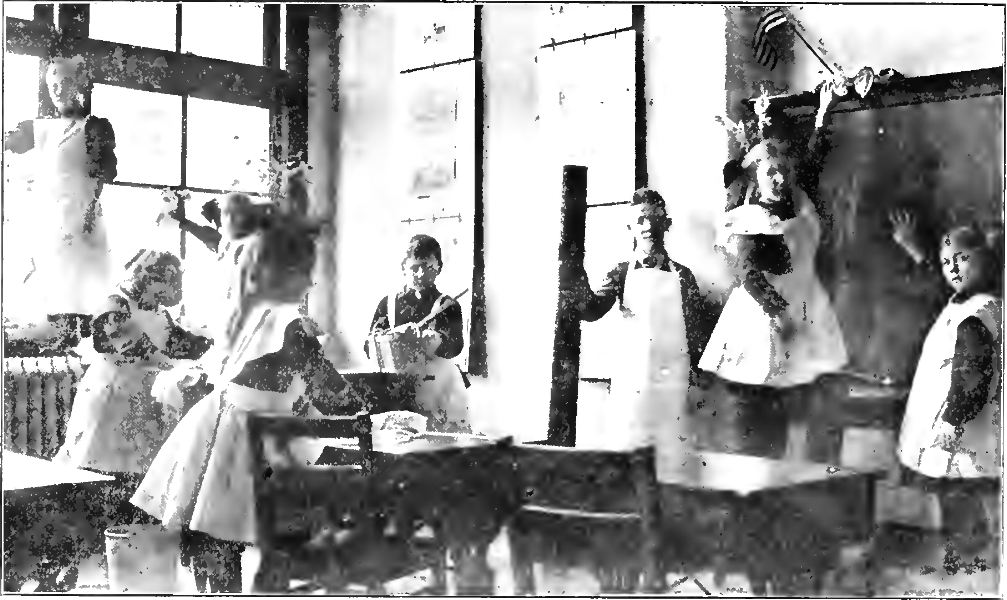
th century. The research pointed out evidence showing factory owners had deliberately falsified data in their effort to maximizing profits through child labour exploitation. The research was performed by Steven Toms and Alice Shepherd of Leeds University Business School. The duo looked at financial data presented to British parliament between 1833 and 1845 by renowned Lancashire mill owners including Holland Hoole, Robert Hyde Greg and Henry and Edmund Ashworth. Their analysis on the case is rooted in the comparison of the actual profits of the firms with the numbers they presented. From the analysis, they were able to detect some discrepancies that lead to two possibilities. The first possibility is an over-estimation of the fixed costs required by the businesses. The second possibility is an organized under-reporting of profits gained. The first possibility is the main key that added weight to arguments suggesting long working hours were needed to produce a reasonable rate of return. In an interview with BBC History Magazine, Steven Toms commented, “Even by modern standards of creative accounting, this was a pretty cynical attempt to head off regulation.” “These were among the leading businessmen of their time, and they worked to carefully co- ordinate the financial evidence presented to parliament to show that regulation would supposedly destroy their profits and ruin their trade. All were avowedly laissez-faire and opposed in principle to the factory reform movement led by labour reformer Richard Oastler, radical Tory MP Michael Sadler and Anthony Ashley-Cooper, later Lord Shaftesbury,” He added. Emma Griffin, author of Liberty’s Dawn: A People’s History of the Industrial Revolution says, “These findings are not difficult to believe. Child labour was widespread in the 1830s, and was in many people’s eyes just a normal part of life – these factory owners were certainly not the only ones who feared government regulation. She added, “The science of statistics was also in its infancy. Without well-established, widely understood accounting procedures, there was inevitably considerable scope for creative accounting of the kind that Toms and Shepherd have revealed.” Child labour was a normal part of life in 18th and 19th century. Despite being a driving force behind Britain’s industrial revolution and economic success, child labour carried with it some gruesome facts that violated human rights. Child workers were required to work in brutal conditions for a long period of time with minimal wages. Such harsh working conditions cost many children their lives or limbs. The cruel reality of child labour spurred concer ns among the masses, and debates about child labour came to light in the early 19th century. In 1833, the first version of the Ten Hours Bill was introduced.  One of the proposal suggested by the bill was that people younger than 18 should not work more than 10 hours a day. The bill also proposed that factories should be barred from employing children under the age of nine. Despite the bill’s introduction, the working time of young workers were not reduced significantly due to lobbying from industrialists. It was only in mid 19th-century that the proposal was properly implemented and children’s working time were limited to a 12-hour day. This finding solidifies the already established facts of inhuman exploitation in child labour. Hopefully, it will also raise global awareness on the issue and put an end to child labour once and for all.]]>

Categories
Breaking News

Archaeoastronomy Steps on the Stage

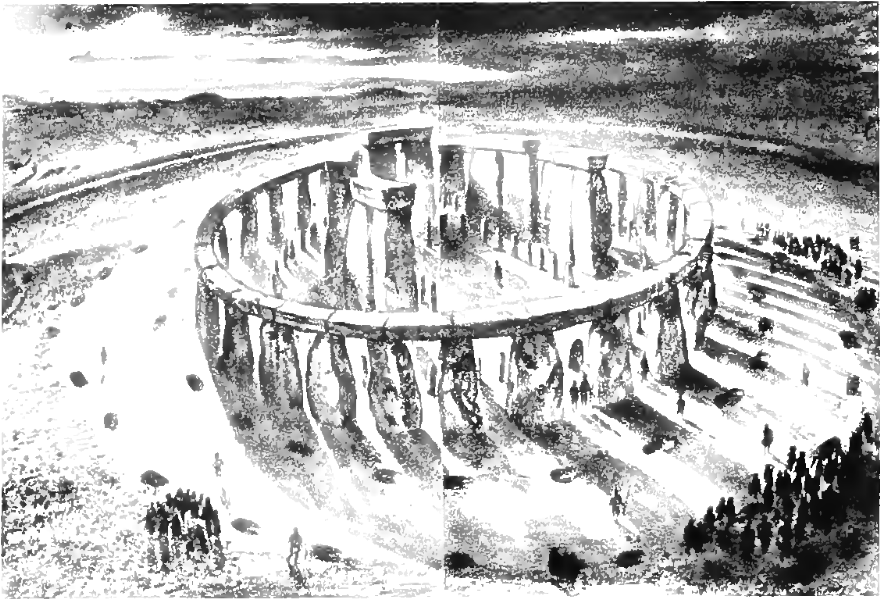
Researchers presented their works to shed a brighter light on Archaeoastronomy Recently the field of archaeoastronomy gained a new level of attention when it was presented to the scientific community at the National Astronomy Meeting 2014 in Portsmouth. This is due to the growing evidences found by archaeo-astronomers around the world that shows people from prehistoric era were actually watching the Sun, Moon and stars. The evidences also show that prehistoric human, from the Neolithic and Bronze age period, managed to establish some level of understanding about the mechanic of celestial objects. Archaeoastronomy is an interdisciplinary field that focuses on the study of ancient astronomical practices and structures. To put it in another words, it is the study that tries to relate the prehistoric and ancient societies’ understanding of celestial objects with the structures they built. Some scientists put it in much simpler terms when they described archaeoastronomy as “anthropology of astronomy”. The field began to gain attention when discoveries about Stonehenge came to light in 1960s. In the presentation of his work on 4000-year-old astronomically aligned standing stones at Gardom’s Edge, Dr. Daniel Brown of Nottingham Trent University however, stressed that archaeoastronomy encompassed more than just Stonehenge. He said “Modern archaeoastronomy encompasses many other research areas such as anthropology, ethno-astronomy and even educational research. It has stepped away from its speculative beginnings and placed itself solidly onto the foundation of statistical methods. However, this pure scientific approach has its own challenges that need to be overcome by embracing humanistic influences and putting the research into context with local cultures and landscape.” The term ‘archaeoastronomy’ owes its existence to Elizabeth Chesley Baity, the first person to use that term. As of late, some researchers believe a new term should be used considering the combination of several disciplines into it. ‘Skyscape Archaeology’ was the term proposed by some experts. Dr. Fabio Silva is among the people who agreed to that term and had even recently established the Journal of Skyscape Archaeology. “We have much to gain if the fields of astronomy and archaeology come together to a fuller and more balanced understanding of European megaliths and the societies that built them. Archaeologists will need to learn some basic observational astronomy, but archaeo-astronomers will also have to engage more with the archaeological record and ask different research questions. It is no longer enough to simply collect orientation data for a large number of monuments spread over vast regions and look for broad patterns. In addition, archaeo-astronomers cannot base their assumptions on modern concepts of precision and symmetry of axis, unless this can be independently demonstrated. To understand what alignments meant to prehistoric people and why they decided to incorporate them into their structures, we need to identify patterns and interactions between structures, landscape and skyscape,” said Dr. Silva. Experts are also in disagreement regarding the first person that launched archaeoastronomy into the fast track of scientific research. The disagreements exist because until this day, archaeoastronomy is still a loosely-defined term. According to Clive Ruggles, Heinrich Nissen who worked in the mid-nineteenth century was arguably the first archaeoastronomer. Clive Ruggles is the Emeritus Professor of Archaeoastronomy in the School of Archaeology and Ancient History at the University of Leicester, in United Kingdom. His opinion was countered by Rolf Sinclair, the author of Current Studies in Archaeoastronomy, believes Norman Lockyer, who worked in the late 19th and early 20th centuries, to be the ‘father of archaeoastronomy’. In contract to those two experts, Euan Mackie, a British anthropologist and archaeologist, put Alexander Thom who worked on the subject in Britain between the 1930s and the 1970s, to be the pioneer of archaeastronomy. Also presenting their work during the meeting were Pamela Armstrong of the University of Wales Trinity St David, Brian Sheen and Gary Cutts of the Roseland Observatory, Liz Henty of the University of Wales Trinity St David and Dr Frank Pendergast of Dublin Institute of Technology.]]>

Categories
News

Unintelligent Neanderthal Is A Myth

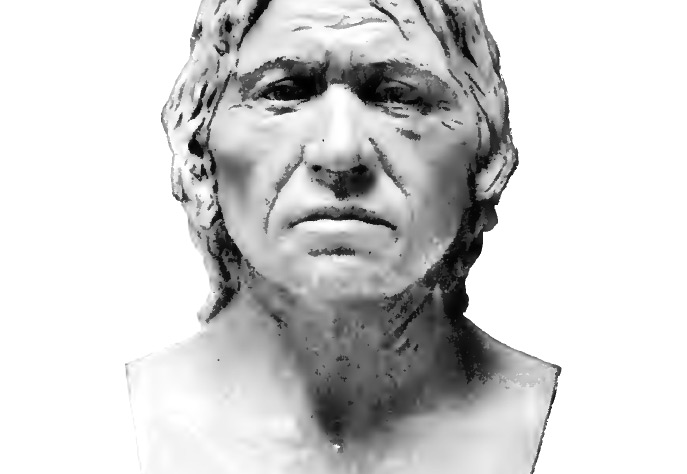
PLOS ONE, currently available scientific evidence does not support the premise of intellectual inferiority-based extinction. The paper was the combined work of lead author Paola Villa, a researcher and curator at the University of Colorado Museum of Natural History and co-author Wil Roebroeks, an archaeologist at Leiden University in the Netherlands. They wrote the paper after executing a large scale review on recent Neanderthal research. “The evidence for cognitive inferiority is simply not there,” Villa remarked. “What we are saying is that the conventional view of Neanderthals is not true.” Villa and Roebroeks examined several hypotheses including the one that claimed Neanderthals did not apply any elaborate symbolic communication. Other hypotheses claimed that the Neanderthals were less competent hunters compared to the early anatomically modern human. Some of the hypotheses also suggest the Neanderthals used low-grade weapons and that they had a limited range of diet which forced a competitive disadvantage on their side. Not a single hypothesis was supported by the available research. Evidence from multiple archaeological sites in Europe suggests that Neanderthals hunted as a group, using the landscape to aid them. Villa and Roebroeks show that Neanderthals had the ability to strategise. There is evidence that suggest Neanderthals likely drove hundreds of bison, rhinoceros and mammoths to their death by steering them into a sinkhole and ravines in south western France. These findings mean that Neanderthals were able to communicate effectively as a group, could plan ahead and were intelligent enough to take their surroundings into calculations. At another archaeological site, excavated artefacts proved that Neanderthals did in fact have a diverse diet. There were some traces of microfossils found in Neanderthal’s teeth and food remains which lead to the conclusion that Neanderthals may have eaten nearby available foods such as acorns, wild peas, grass seeds, pistachios, wild olives, date palms, and pine nuts. Other findings including ochre, a kind of earth pigment, at sites inhabited by Neanderthals. This may have been used for body painting, while ornaments suggest that Neanderthals had cultural rituals and symbolic communication. Villa and Roebroeks said that the previous misconception of Neanderthals’ intellectual capability may be due to researchers’ affinity to compare Neanderthals from Middle Paleolithic to modern Homo sapiens from Upper Paleolithic period, the time when technology advancement occurred. “Researchers were comparing Neanderthals not to their contemporaries on other continents but to their successors,” said Villa. “It would be like comparing the performance of Model T Fords, widely used in America and Europe in the early part of the last century, to the performance of a modern-day Ferrari and conclude that Henry Ford was cognitively inferior to Enzo Ferrari.” Villa also said that there is no support of any kind from the field of archaeology despite many attempts to relate the Neanderthals’ downfall to a single cause like intellectual or technology inferiority. However, one question continues to linger in the researcher’s mind. What is the real reason behind the Neanderthal extinction if it is not because of them being cognitively and technologically inferior? Whatever the reason might be, Villa and Roebroeks are in agreement that it is possibly a complex explanation. However, both researchers are of the opinion that some hints might be found in the recent studies of the Neanderthal genome. These studies suggest the possibility of inter-breeding between Neanderthals and modern humans that lead to the birth of infertile male progenies that unable to bear children. This would then lead to a decline in the Neanderthals’ population. Another suggestion based from studies was that Neanderthals lived in small communities. This leads to the possibility of assimilation and integration into a much larger modern humans’ population. So far, there is no solid explanation regarding the real causes of the Neanderthals extinction, but we all can bet that intellect inferiority is not one of them.]]>