Categories
Breaking News

Manhattan Carpet Store May be Selling Reconstructed Tudor-Era Carpet

New York Post, University of Cambridge professor Mary Beard discovered the tapestry at the Persian Gallery in the midst of her research into images of Julius Caesar. The composition of the tapestry, which features images of the Roman Emperor, matches those that would have been commissioned by the Tudor king during the later years of his reign in the 1500s. Henry VIII commissioned a set of ten of these tapestries, each nine feet tall and depicting the life of the ancient Roman ruler, ostensibly to connect his reign to that of Caesar’s – though seemingly without spending much time thinking of how the emperor came to such a grisly and violent end. Beard says that at the time they were made the tapestries were of immense value to the royal household and would have been its most prized possessions. In fact, in the wake of the execution of Charles I, the tapestries were listed as the second most valuable objects in the entire royal collection during an inventory of the beheaded royal’s property. The original tapestries have long vanished – and the one found in the Manhattan gallery is not one of these originals, the professor remarked. However, the designs used to create the originals were used to reconstruct these tapestries in the late sixteenth century. Many of these tapestries, like the one found in the Persian Gallery, are valued at $50,000 or more based on their age, their condition, and the royal design from which they are copied. If one of the original ten royal tapestries were ever recovered, its value would likely be even more immense, if not incalculable. Beard commented that the designs of these tapestries are intriguing. Pulled from Suetonius’ “Life of Caesar”, the images showcase both the rise and fall of the ruler, up to and including his death at the hands of his assassins in the Senate. The university professor remarked that the idea that the walls of the Tudor king’s palace were adorned with one of the most obvious critiques of autocratic power during the classical period might be high irony indeed, considering the rule of Henry VIII was rife with behavior such as splitting with the Roman Catholic Church in order to create his own, all to facilitate his constant marriages and annulments in search of a bride who would provide him a male heir. The particular tapestry spotted by Beard is 14-foot by 15-foot, created from wool and inlaid with silk, depicting Caesar crossing the Rubicon River, the famous act that marked the point of no return in his successful attempt to seize control from his rivals Pompey and Crassus, the other members of the First Triumvirate. The term “crossing the Rubicon” has since passed into modern parlance, indicating when someone has taken an irrevocable step forward in a serious matter. More information about the discovery, as well as images of the tapestry, can be found on Prof. Beard’s blog: A Don’s Life]]>

Categories
Breaking News

Can A Brexit Precedent Be Found In Henry VIII's Reformation?

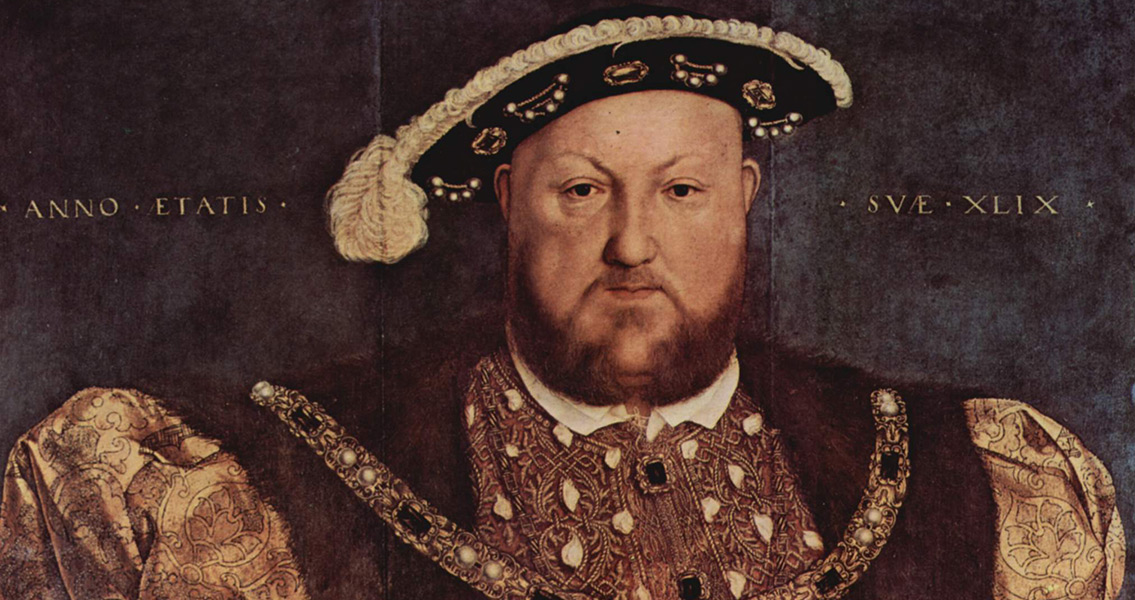
Act of Supremacy was passed by Parliament on 30th October, 1534. The Act had a clear aim: to assert the English monarch as the undisputed head of the Church of England, thus taking away the power of the Pope over English society. A number of factors motivated the decision to break with the Catholic Church. Martin Luther had published his Ninety Five Theses in 1517, accusing the Church of nepotism, usury, pluralism, bribery and other corruptions. Luther’s criticism caused ripples throughout Europe, capturing a growing discontent aimed at the hierarchy of the Vatican. The church had grown into something approaching a business, due to its ability to gain massive wealth, but it was riddled by complacency, corruption and poor administration. For the King, this was particularly disturbing. England’s pious population continued to pay vast sums to their local churches, but this wealth was going to the Vatican, not the crown. Of course, as most British school children likely know, Henry’s desire to break with the Vatican was also motivated by personal reasons. Desperate for a male heir, Henry wanted to annul his marriage to Catherine of Aragon. When the Pope stalled on agreeing to the divorce, out of fear of offending Catherine of Aragon’s relative: the Holy Roman Emperor Charles V, Henry opted to take matters into his own hands. The Act of Supremacy made Henry VIII “supreme head in earth of the Church of England.” It also repealed “usage, custom, foreign laws, foreign authority”. This is where the most obvious comparison with the Brexit referendum exists. Beyond the King’s desire for a divorce, the Reformation confronted issues of shared sovereignty between the English government and a continental power that was echoed in the dialogue of the Brexit referendum. As Henry VIII put it: “we thought that the clergy of our realm had been our subjects wholly, but now we have well perceived that they be but half our subjects; yea, and scarce our subjects; for all the prelates at their consecration make an oath to the Pope clean contrary to the oath that they make to us,” Hafeez challenges the popular notion that the Reformation led to a Golden Age in England. Instead, he paints an image of social upheaval, uprisings and rebellions in the wake of the adjustment the country needed to endure. Interestingly, the article by the financial analyst paints a largely equivocal image of the economic consequences of the Act of Supremacy by looking at economic markers from the period. Put simply, GDP barely changed in the century following the break with the Vatican, before plummeting during the English Civil War. Separating from the Vatican didn’t cause economic disaster for England, but neither did it trigger economic growth, despite the crown confiscating the enormous wealth of the church and becoming the new recipient of donations. How applicable Tudor England is to modern Britain is of course highly debatable. Nevertheless, Hafeez’s analysis sets out a precedent which could offer a point of insight to those trying to predict the aftermath of Britain leaving the European Union, showing that the consequences are likely to be complicated, and impossible to comprehend for quite some time.]]>

Categories
News

Thomas Cromwell Sentenced to Death

Categories
News

Anne Boleyn Executed For Adultery, Incest and Treason

jousting accident. Exactly what caused Henry VIII’s and Anne Boleyn’s marriage to fail will likely remain unknown; ultimately Boleyn’s shocking execution was just one of a multitude of remarkable events in the life of the erratic Tudor King.]]>

Categories
News

Teenage Queen Beheaded – Lady Jane Grey's Death

Categories
Breaking News

Act of Supremacy Breaks Vatican's Hold On England

Categories
News

Sir Thomas More Executed

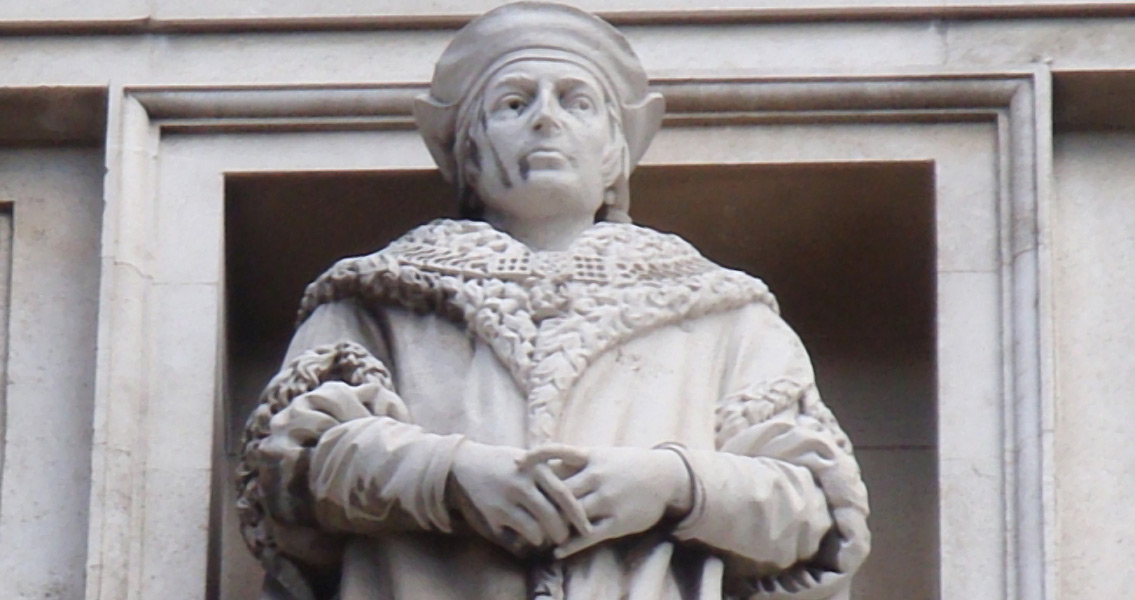
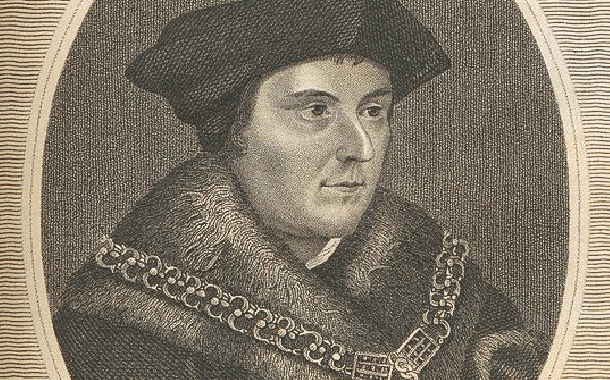
Utopia, is a key piece of political philosophy which remains hugely influential. In it, More describes a fictional society based on equality. It is debated whether More was advocating the world he described, or if the work was purely a means to encourage political debate. Nevertheless, it put forward radical ideas of a society which practiced religious tolerance, gender equality and averted any class systems, making the book seem as radical now as it did in the sixteenth century. More was arrested in 1534, accused of refusing to swear to an oath of succession which essentially confirmed that Henry VIII was a higher authority than the pope, and the head of the Church of England. He was sentenced to death, although he was spared the brutal ordeal of torture reserved for traitors and instead had his sentence reduced to decapitation. Born to a prominent family in London in 1478, More wanted to study Ancient Greek in his youth. Following his graduation from Oxford University, and under pressure from his father, More studied law and became a barrister in 1501. Nevertheless, alongside his legal career More dedicated himself to a study of the Classics while also leading a life of devotion to Catholicism. Such was his commitment to the church that More moved to a monastery just outside London in 1503. Although he ultimately opted to abandon the monastic life in order to serve his country in Parliament, More continued to practice strict regimes of fasting, prayer and penance for the rest of his life. In 1517 More entered the service of Henry VIII and quickly became one of his most important advisers, working among other roles as a diplomat, speech writer and interpreter. In 1521 he was knighted, in 1523 he became the Speaker of the House of Commons and in 1525 Chancellor of the Duchy of Lancaster. The Reformation saw More’s relationship with the king deteriorate drastically. More argued against Henry’s decision to split from the Catholic Church and declare himself the head of the Church of England. He resigned from his position as chancellor, and continued to criticise the king’s decision. It was this defiance which has seen More so widely celebrated by the Catholic church, but it also ultimately cost him his life. Image courtesy of Wikimedia Commons user: Lonpicman]]>

Categories
News

The Treaties of Greenwich

Categories
News

The Death of Henry VIII

Categories
Book Reviews

Utopia

Related Books


Utopia book

Utopia
Vol. 1Vol. 1
by Thomas More

[gap height=”20″]]]>