Categories
Breaking News

History News of the Week – Modern Humans Originated Earlier Than Thought

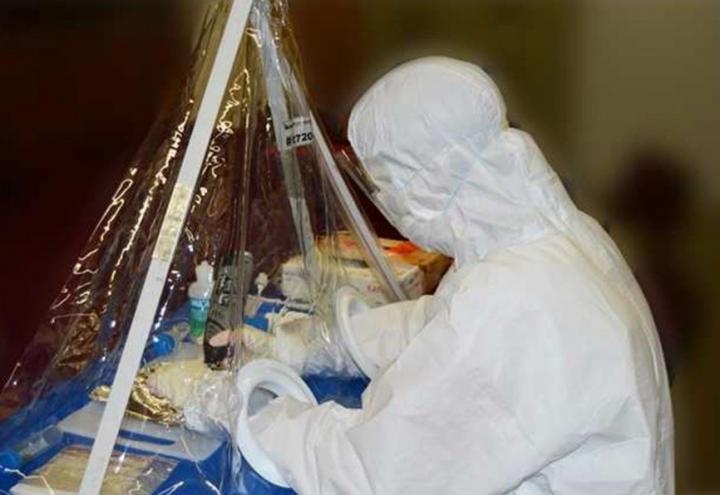
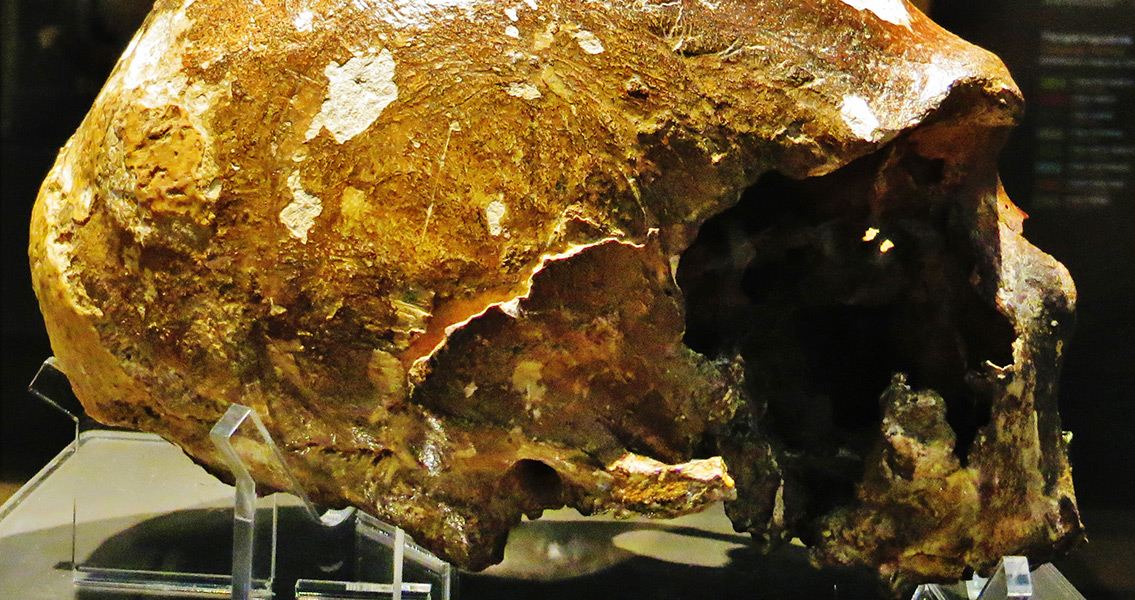
Modern Humans Emerged 300,000 Years Ago A new study claims that modern humans originated much earlier than previously thought, suggesting that the split between modern humans and earlier human groups occurred between 350,000 and 260,000 years ago. Researchers from the Universities of Witwatersrand and Johannesburg in South Africa, and the University of Uppsala in Sweden, used the 2000-year-old remains of a boy discovered in Ballito Bay in KwaZulu-Natal during the 1960s to make their conclusions. They reconstructed the Ballito Bay child’s entire genome, as well as the genome of six other individuals from KwaZulu-Natal who lived between 2300 and 300 years ago. Because the child from Ballito Bay was of hunter-gatherer descent, his DNA could be used to estimate that the split between earlier human groups and modern humans took place between 350,000 and 260,000 years ago. “This means that modern humans emerged earlier than previously thought”, says Mattias Jakobsson, population geneticist at Uppsala University, who headed the project together with Marlize Lombard from the University of Johannesburg. Significantly, the 350,000 to 260,000 years ago period coincides with the Florisbad skull, which would have been a contemporary of the small brained Homo naledi in what is now South Africa. “It now seems that at least two or three Homo species occupied the southern African landscape during this time, which also represents the early phases of the Middle Stone Age”, said Professor Marlize Lombard from the University of Johannesburg, who initiated the research. Interestingly, the fossil, ancient DNA and archaeological records indicate that the transition from archaic to modern humans might not have occurred in only one place in Africa. It seems likely that regions including southern and northern Africa also played a role. “Thus, both palaeo-anthropological and genetic evidence increasingly points to multiregional origins of anatomically modern humans in Africa, i.e. Homo sapiens did not originate in one place in Africa, but might have evolved from older forms in several places on the continent with gene flow between groups from different places”, said Carina Schlebusch, who worked on the study. The team’s research has been published in a recent edition of the journal Science. Sabre-toothed Kittens Born with Thicker Bones New research claims that although sabre-toothed kittens were born with thicker bones than contemporary kittens, they had a similar pattern of bone development. Previous research has pointed towards sabre-toothed cats from the Pleistocene Era having more robust bones than other wild cats of the time. However, how and when these stronger bones developed remained a mystery. Katherine Long from California State Polytechnic University, USA and colleagues measured and analysed hundreds of bones at various stages of development from both Smilodon fatalis and the contemporary tiger-sized cat Panthera atrox in the La Brea Tar Pits museum. It was discovered that rather than the difference in strength of the cats’ bones developing as the animals matured, the sabre-toothed cats were in fact born with more robust bones. Like other primitive cat species, Smilodon fatalis’ bones grew longer and slenderer as the creature aged. “Sabre-tooth cats had extraordinarily strong front limbs for tackling and subduing prey before they slashed their throats or bellies with their saber-like canine teeth,” said study co-author Don Prothero. “Using the extraordinary collection of limb bones of saber-tooth kittens at La Brea tar pits, we found that their limbs don’t become more robust as they grew up, but instead retain the stereotypical growth pattern where the limbs grow longer more quickly than they grow thick. To compensate, saber-tooth kittens were born with unusually robust limbs and retained that pattern as they grew.” The research has been published in the open access journal PLOS. Ancient Scandinavian Farmers Exchanged Terminology with Indo-Europeans New linguistic research shows that the proto-Indo-European language that arrived in Europe around 5,000 years ago absorbed vocabulary from the local languages it ultimately replaced. When the Yamnaya culture migrated into Europe from the Caspian Sea it brought with it the proto-Indo-European language that would replace local languages over the coming millennia and form the basis of most modern European languages. Researchers from the University of Copenhagen have now shown that local cultures also influenced the new language, particularly in southern Scandinavia where Neolithic farmers made lasting contributions to Indo-European vocabulary before their own language went extinct. Historical linguists generally agree that many of the words in modern European languages can be traced back to the Yamnaya people, however, not all of the words in modern European languages are of proto-Indo-European origin. There are words for flora and fauna which must have been incorporated into Indo-European languages from local cultures, which raises questions as to where this exchange took place. According to the new study published in the American Journal of Archaeology by archaeologist Rune Iversen and linguist Guus Kroonen from the University of Copenhagen, southern Scandinavia 2,800 BCE provides a perfect setting for such an exchange. “The archaeological evidence tells us that between 2,800 and 2,600 BCE two very different cultures co-existed in southern Scandinavia: there was the local, Neolithic culture known as the Funnel Beaker Culture with its characteristic funnel-shaped ceramics and collective burial practices and the new Single Grave Culture influenced by the Yamnaya culture. The Funnel Beaker Culture was eventually superseded by the Single Grave Culture, but the transition took hundreds of years in the eastern part of southern Scandinavia, and the two cultures must have influenced each other during this time, ” said Iversen. Kroonen points to a number of words which are clearly not derived from an Indo-European language. “There is a cluster of words in European languages such as Danish, English, and German – the Germanic languages – which stand out because they do not conform to the established sound changes of Indo-European vocabulary. It is words like sturgeon, shrimp, pea, bean and turnip that cannot be reconstructed to the proto-Indo-European ancestor,” Guus Kroonen explained. “This tells us that these words must have entered Indo-European after it had spread from the Caspian steppe to the various parts of Europe. In other words: the new Single Grave Culture is likely to have adopted much farming and hunting terminology from the local Funnel Beaker Culture that inhabited southern Scandinavia and Denmark till around 2,600 BCE. When Indo-European in Northern Europe developed into Proto-Germanic, the terminology for local flora and fauna was preserved, which is why we know and can study the terms today.” Featured image: Dr. Helena Malmström (Uppsala University) sampling in South Africa for ancient human DNA. Credit: Mattias Jakobsson (Uppsala University) ]]>
Categories
Breaking News

Could Neanderthals Speak Like Modern Humans?

producing jewelry. Following the discovery of the first Neanderthal fossils at the the start of the twentieth century, archaeologists dismissed our closest extinct cousins as primitive; the latest discoveries are increasingly challenging this assumption. Published in the Proceedings of the National Academy of Sciences, the study led by Alexander Stoessel and Jean Jacques Hublin from the Department of Human Evolution, Max Planck Institute for Evolutionary Anthropology, analysed ossicles in both Neanderthals and Homo Sapiens. The three tiniest bones in the body, ossicles are the coupling between the ear drum and the oval window of the inner ear. Until now, it was considered impossible to perform detailed comparisons of Neanderthal ossicles due to an extremely limited sample size, and the unavailability of methods to analyse the relationship between the bones and other parts of the ear structure. For their study, the authors present the largest sample of Neanderthal ossicles unearthed to date, from a variety of different geographic regions, and times. Using detailed ‘Micro CT scans’, the team were able to quantify the shape and functional properties of Neanderthal ossicles. From this, they were able to make comparisons with AMHs, as well as African Apes. “Based on microcomputed tomography images, our comparative 3D shape analysis of Neandertal ossicles shows striking shape differences between Neandertals and anatomically modern humans. However, these morphological differences do not affect the functional properties of the ossicles, potentially indicating consistent aspects of vocal communication in Neandertals and AMHs.” the team write in the study. Scientists have previously suggested that Neanderthals were so primitive they were only able to speak in grunts and groans. The new research adds to other recent studies arguing Neanderthals may in fact have had the ability to speak. The team’s findings suggest that despite some clear anatomical differences between the ears of Neanderthals and modern humans, they essentially functioned in the same way, giving Neanderthals similar auditory sensitivity to humans. When compared to the African apes however, the human and Neanderthal ear anatomies have little in common. “These functionally equivalent solutions could indicate selective pressures acting on the middle ear for conserving a similar auditory sensitivity inherited from the last common ancestor of anatomically modern humans and Neanderthals.” It’s a conclusion that suggests the differences between humans and Neanderthals could be more down to the species taking separate evolutionary paths than one being more advanced than the other. The study also raises fascinating questions about the origins of the complex languages humans use today For more information, the study itself can be found here]]>

Categories
Breaking News

Smoke Tolerance Key to Humans Outlasting Neanderthals

Molecular Biology and Evolution. A difference in the aryl hydrocarbon receptor, which regulates the body’s response to polycyclic aromatic hydrocarbons, may have desensitised humans to the toxic spew of chemicals generated by smoke and fire, according to the authors. This desensitisation would have given humans an advantage compared to other hominids when it came to processing the toxins. “If you’re breathing in smoke, you want to metabolize these hydrophobic compounds and get rid of them, however, you don’t want to metabolize them so rapidly that it overloads your system and causes overt cellular toxicity,” explained Perdew. “For Neandertals, inhaling smoke and eating charcoal-broiled meat, they would be exposed to multiple sources of polycyclic aromatic hydrocarbons, which are known to be carcinogens and lead to cell death at high concentrations. The evolutionary hypothesis is, if Neandertals were exposed to large amounts of these smoke-derived toxins, it could lead to respiratory problems, decreased reproductive capacity for women and make especially preadolescents susceptible to respiratory viruses, while humans would exhibit decreased toxicity because they are more slowly metabolizing these compounds.” Genomic data from humans, Neanderthals and Denisovans was compared to explore the differences in the genetics of polycyclic aromatic hydrocarbon tolerance. The disparity was even greater than the researchers anticipated. “We thought the differences in aryl hydrocarbon receptor ligand sensitivity would be about ten-fold, but when we looked at it closely, the differences turned out to be huge,” said Perdew. “Having this mutation made a dramatic difference, it was a hundred-fold to as much of a thousand-fold difference.” Why the Neanderthals went extinct is a question that has plagued scientists for decades, with many suggesting it may have been a consequence of the spread of humans, or climate change. There is evidence that both humans and Neanderthals used fire, according to George Perry, assistant professor of anthropology and biology, Penn State, who worked on the study. The consequences of this fire use, which likely started with our hominin ancestors around a million years ago, might have been deadly for Neanderthals. Resistance to smoke toxins would have been an evolutionary advantage that afforded modern humans a host of benefits. “Cooking with fire could have allowed our ancestors to incorporate a broader range of foods in our diets, for example, by softening roots and tubers that might otherwise have been hard to chew,” said Perry. “Cooking could also help increase the digestibility of other foods, both in chewing time and reduced energetic investment in digestion.” Fire had a multitude of other vital uses for early humans, providing warmth at high latitudes and helping form settlements. “Besides heating and cooking, humans used — and still use — fire for landscape burning and as part of hunting and gathering, and now as part of agriculture,” Perry continued. The findings add further weight to other studies that have suggested developing the ability to cook was one of the key advantages that helped humans thrive, drastically improving the quality of their diet. However, the scientists suggest that the mutation had one negative outcome. The receptor might explain modern humans’ greater tolerance to cigarette smoke, allowing people to develop the smoking addiction that contributes to millions of deaths each year across the globe. “Our tolerance has allowed us to pick up bad habits,” Perdew said. ]]>

Categories
Breaking News

Neanderthal Extinction Accelerated by Opportunism

PLOS ONE, offers fresh insight into the fate of the Neanderthals, suggesting their adaptable subsistence strategies actually put them at a disadvantage compared to humans during the Last Glacial Maximum. The Neanderthal lineage existed successfully throughout Europe and Asia, surviving the harsh and shifting environments of glacial/interglacial cycles from the Pleistocene onward. However, as the climate commenced the deterioration which would result in the Last Glacial Maximum, just after the first humans had entered Eurasia, the Neanderthals disappeared. What happened to them is unclear, but the outcome is not, Western Eurasia was subsequently populated by just one homo species: modern humans. Led by Sireen El Zaatari from the Paleoanthropology department at the Eberhard Karls Universität Tübingen, Germany, the authors of the study analysed the fossilized molars of 52 Neanderthals and Upper Paleolithic Homo sapiens (modern humans). Their aim was to glean insights into the possible influence of dietary strategy, in particular by analysing the degree of microwear on the teeth. This information could be used to draw conclusions about diet type, which was then linked to prevalent climatic conditions. Surprisingly, the team found that dental microwear among Neanderthals varied significantly depending on ecological conditions. “Analyses of the data show that within the Neandertal lineage, dental microwear signatures are significantly associated with paleoecological conditions.” they wrote in the new study, published this week. Neanderthals that lived in wooded or mixed habitats possessed more complicated dental microwear than those from open habitats. The conclusion to be drawn from this is that Neanderthals adapted their diets to the resources available as climates and habitats changed. In cold, barren, open steppe environments, the Neanderthals had a diet made up mostly of meat. In forested landscapes they supplemented their diet with more plants, seeds and nuts. For modern humans, the situation was completely different. “For the Upper Paleolithic humans, unlike the case for the Neandertals, no significant correlation is detected through the paleoecological ranks.” Crucially, the modern humans’ adhered to the same dietary strategy despite environmental changes, retaining a large proportion of plant based foods. This could have fostered technical innovations which gave humans a distinct advantage. “To be able to do this, they may have developed tools to extract dietary resources from their environment” said El Zaatari, in a press release. Neanderthals had an opportunistic approach which allowed them to flourish throughout much of their history, eating whatever was available in the habitat they called home. Modern humans however, strove to access the same food resources despite the changing conditions, eventually pushing them to develop tools. According to the study, as humans’ technical complexity increased their diet started to change dramatically, as they were able to exploit their landscape much more effectively. When Neanderthals and modern humans came into contact and started to compete for resources, this technical superiority would have undoubtedly given the humans a significant advantage. El Zaatari and colleagues’ study offers a new take on the mystery surrounding the demise of the Neanderthals, suggesting their opportunism could have ultimately been a disadvantage. For more information: www.plos.org Image courtesy of Sireen El Zaatari PLOS ONE e0153277]]>

Categories
Breaking News

Neanderthal DNA Linked to Depression, Strokes and Smoking

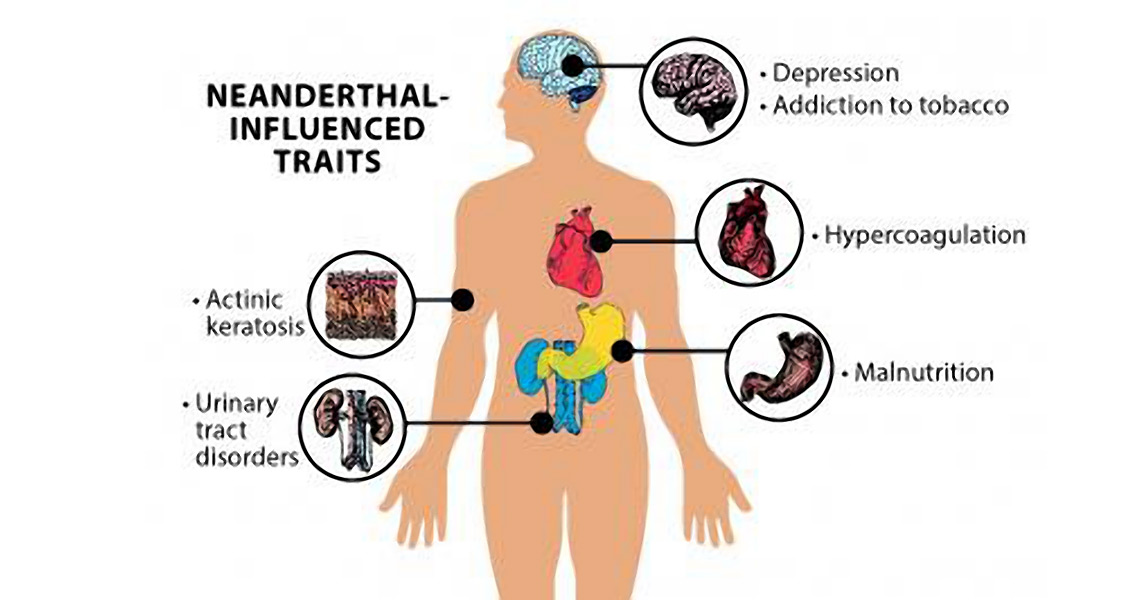
Science, the new study from scientists at Vanderbilt University is the first to actually compare Neanderthal DNA in a significant population of adults from European ancestry with their medical records. Just a few weeks ago, a study claimed that Neanderthal DNA could be responsible for allergies in humans, while previous research has suggested anything from skin colour to our fat metabolism could have been affected by Neanderthal DNA. Led by Professor John Capra from Vanderbilt University, the new study confirms that Neanderthal DNA influences a surprisingly diverse range of clinical traits in modern humans. “Our main finding is that Neanderthal DNA does influence clinical traits in modern humans: We discovered associations between Neanderthal DNA and a wide range of traits, including immunological, dermatological, neurological, psychiatric and reproductive diseases”, Capra explained. A surprising number of Neanderthal snippets are associated with neurological and psychiatric effects, according to the new study. “The brain is incredibly complex, so it’s reasonable to expect that introducing changes from a different evolutionary path might have negative consequences.” explained Corinne Simonti, a doctoral student from Vanderbilt University and the the paper’s first author. Aspects of Neanderthal DNA which modern humans retained to their advantage 40,000 years ago could be proving deadly now. One Neanderthal DNA variant is responsible for rapid blood coagulation in modern humans, something which seals wounds quickly and prevents infection – a crucial trait in hostile, perilous prehistoric environments. In modern societies however, this trait has become detrimental, with hypercoagulation increasing the risk of stroke, pulmonary embolism and complications during pregnancy. The team obtained their results by taking advantage of the Electronic Medical Records and Genomics Network funded by the National Human Genome Research Institute, a database which links the biological samples of 28,000 patients with their health records. After identifying individuals who suffered from specific medical conditions, such as heart disease or depression, the team determined the unique set of Neanderthal DNA those individuals carried. By comparing the two sets of data the team could identify whether each piece of Neanderthal DNA influenced the risks found in the medical records. The techniques developed by the team have the potential to open up new avenues to study the effects of different key events on human evolution. “Vanderbilt’s BioVU and the network of similar databanks from hospitals across the country were built to enable discoveries about the genetic basis of disease”, explained Prof. Capra “We realized that we could use them to answer important questions about human evolution.” Capra and his team are now looking into studying other data held in the medical records, beyond just physical traits, to gain an even wider understanding of the effects of Neanderthal DNA. For more information: www.science.sciencemag.org Image courtesy of Deborah Brewington, Vanderbilt University]]>

Categories
Breaking News

Last Common Ancestor of Us and Neanderthals Revealed

Categories
Breaking News

Eurasians Probably Left Africa Through Egypt

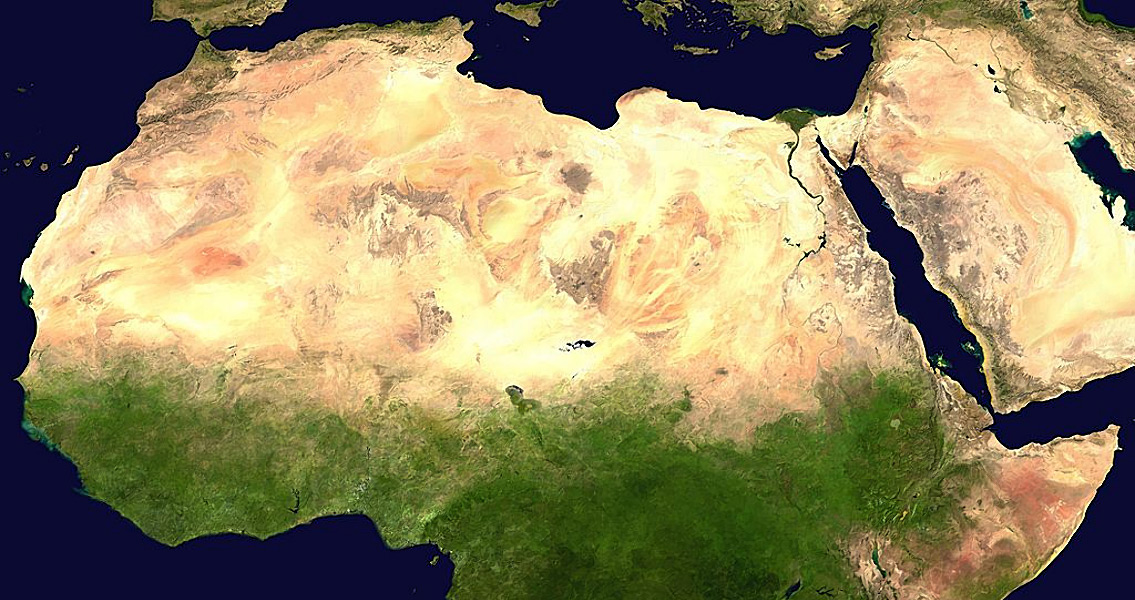
Live Science, the lead author Luca Pagani said that what is most exciting for the team is shedding light on an important stage of the evolution of all European and Asian peoples. This will deepen the understanding of billions of people of their “biological history”. Another of the authors, Toomas Kivisild from the University of Cambridge, told media that the results give a clear map of how modern humans moved out of Africa, even though they do not account for all the aspects of the process or give it any precise timing. One additional benefit of the study is that science has gained a neat genomic database of the genetic diversity present in Ethiopia and Egypt, which can be used as reference in other studies, Phys.org notes. Some questions related to this major exodus in the evolution of humans are still waiting to be answered however, says co-author Chris Tyler-Smith from the Wellcome Trust Sanger Institute. One such question is whether the route through Egypt was the only mass migration of that period, or were there other groups that left the continent without their genetic makeup surviving to the modern day? This question could be answered by the examination of ancient genomes from the areas through which such a migration would have passed. It has been established that the route through Ethiopia was indeed used, but probably by fewer people who did not go beyond the Arabian peninsula and whose genetic makeup has left no trace in the modern day, Pagani told Live Science. Image courtesy of Wikimedia Commons user: NASA]]>

Categories
Editorial

April History News Round-Up

Neanderthals The fate of our closest, extinct relatives: the Neanderthals, as well as the relationship modern humans had with them, have been a constant source of fascination. This month, intriguing new ideas and considerations have been added to the ongoing discussion of what happened to the Neanderthals. A study by Anna Goldfield, an archaeologist from Boston University, and Ross Booton, a mathematical biologist from Sheffield University, used mathematical modelling to determine the impact of the mastery of fire on both human and Neanderthal populations. Although there is evidence that Neanderthals used fire, it is clear that they did not use it as consistently as humans. Mastery of fire has a number of major benefits. Firstly, of course, cooking food kills bacteria, making it safer to eat. It also increases the amount of processable protein that can be taken from the food. Therefore, the populations that mastered fire had a much better chance of survival. Based on the model, Booton and Goldfield concluded that modern humans using fire consistently would have allowed their populations to grow, while the Neanderthals would have declined. Fire mastery allowed modern human populations to flourish, which in turn led to them depriving Neanderthals of crucial resources. Other studies released this month have added further theories to the discourse about why the Neanderthals became extinct. A study by authors from Cambridge and Oxford Brookes Universities has used genetic analysis to conclude that disease spread could have led to the Neanderthal’s extinction. The authors argue that humans migrating out of Africa brought new diseases with them which the Neanderthals would have lacked immunity to. Elsewhere, a study by researchers at the University of Bologna, in Ravenna, analysed various hominin and Neanderthal teeth fossils and concluded that the Neanderthal decline started shortly after modern humans had first arrived in Europe. This adds significant weight to theories which argue humans played a part in the Neanderthal’s decline. Connections Between the Past and Present Other studies have focused on issues from the past that remain poignant in the present. Data collection by governments or private institutions, whether on their own citizens or those of other countries, is a civil liberties concern that has remained at the forefront of public discourse for the last few years. A study by Margo Anderson, Professor of History and Urban Studies at the University of Wisconsin, has shown that government collection and use of ‘Big Data’ is far from just a recent development. Anderson argues that following the Japanese attack on Pearl Harbour, the US government used 1940 census data to round up the Japanese ancestry population living on the West Coast of the USA. In total, some 100,000 people were held in US concentration camps for the duration of the war. In 1790, Congress had forbid the use of census data to ‘harm’ US citizens. The treatment of Americans of Japanese ancestry shows how perceived ‘national security threats’ could lead to reinterpretations of exactly what government collected information could legitimately be used for. Recent riots in Baltimore, as well as last year’s in Ferguson, have highlighted the continued controversies over policing in the United States. Undoubtedly, there are a host of complicated social, political and economic issues behind the riots in these two cities, that cannot be fairly analysed here. What is clear however, is that a sense of racial discrimination by various police forces has been an important factor. An article by Themis Chronopoulos, from the University of East Anglia, has argued that a reaction against police misconduct was a major theme in the African American Civil Rights Movement of the 1960s. Histories of the Civil Rights Movement tend to focus on discrimination in schools, voting rights, public housing and employment law as the major causes for protest. Chronopolouos claims, “Survey after survey during the period revealed that one of the overriding concerns of urban blacks was police misconduct and that this issue functioned as one of the primary causes of riots.” This conclusion can perhaps help us frame the riots in Baltimore into a wider historical context. Both the study on the Civil Rights Movement, and the one on state use of data, provide a valuable reminder of the constant connetion between history and the present. ]]>

Categories
Breaking News

Fire Mastery May Have Given Modern Humans the Upper Hand

Homo species has just got more complex, with two scientists suggesting fire use contributed to our rise and the Neanderthals’ fall. Anna Goldfield, an archaeologist from Boston University, and Ross Booton, a mathematical biologist from Sheffield University, looked into this particular aspect of Neanderthals’ lives and discovered that even though fire was not completely unfamiliar to them, they definitely did not use it as consistently as modern humans. Although signs of fire use have been found at Neanderthal sites across Europe, they are scarce, suggesting fire was more of an occasional blessing than a fact of life. How did this impact the survival chances of the Neanderthals? By depriving them of a more wholesome calorie intake and safer food. Cooking is one of the best ways to rid food of harmful bacteria, parasites, and viruses, making it considerably safer to eat than when raw. Another major advantage of cooking is that it increases the amount of “processable” protein, and protein is indispensable for survival. So, according to Goldfield and Booton, who used mathematical models to try and detect a link between frequency of fire use and survival rates among both Neanderthals and modern humans, the former lived for hundreds of thousands of years in Europe without resorting to the use of fire on a regular basis. Modern humans, however, had mastered the element and made good use of it for warmth and cooking. The models revealed that this had a significant impact on survival chances. A mathematical model stipulating that modern humans used fire consistently while Neanderthals did not, yielded a gradual rise in the modern human population and a decline in Neanderthal numbers. A model which stipulated that the two species used fire with a similar frequency yielded no significant difference in their survival chances. Since we already know for a fact that the Neanderthals went extinct relatively soon after modern humans came on the European scene, the first model seems to be a more accurate reflection of reality. Further support for the “fire mastery hypothesis” comes in the different nutritional needs of Neanderthals and modern humans. Neanderthals were bulkier than us and needed a higher calorie intake to survive. Modern humans could survive with less. So, by mastering fire and cooking, the human populations expanded and, according to the mathematical models, consumed a larger share of the reindeer population (a crucial source of calories for both humans and Neanderthals, 40,000 years ago). Neanderthals were therefore left with scarcer access to a food source that they needed in larger quantities than humans. This latest research is further support of a more general theory that it was shrinking resources that spelled doom for the Neanderthals. This shrinking was not just due to the appearance of modern humans, however. Earlier studies have suggested that climatic factors reduced the amount of available sustenance. These, coupled with the mastery of fire characteristic of modern humans, may well have contributed to the demise of the Neanderthals, by restricting their access to the resources they needed to survive. Image courtesy of Wikimedia Commons user: Dirk Beyer]]>

Categories
News

Unintelligent Neanderthal Is A Myth

PLOS ONE, currently available scientific evidence does not support the premise of intellectual inferiority-based extinction. The paper was the combined work of lead author Paola Villa, a researcher and curator at the University of Colorado Museum of Natural History and co-author Wil Roebroeks, an archaeologist at Leiden University in the Netherlands. They wrote the paper after executing a large scale review on recent Neanderthal research. “The evidence for cognitive inferiority is simply not there,” Villa remarked. “What we are saying is that the conventional view of Neanderthals is not true.” Villa and Roebroeks examined several hypotheses including the one that claimed Neanderthals did not apply any elaborate symbolic communication. Other hypotheses claimed that the Neanderthals were less competent hunters compared to the early anatomically modern human. Some of the hypotheses also suggest the Neanderthals used low-grade weapons and that they had a limited range of diet which forced a competitive disadvantage on their side. Not a single hypothesis was supported by the available research. Evidence from multiple archaeological sites in Europe suggests that Neanderthals hunted as a group, using the landscape to aid them. Villa and Roebroeks show that Neanderthals had the ability to strategise. There is evidence that suggest Neanderthals likely drove hundreds of bison, rhinoceros and mammoths to their death by steering them into a sinkhole and ravines in south western France. These findings mean that Neanderthals were able to communicate effectively as a group, could plan ahead and were intelligent enough to take their surroundings into calculations. At another archaeological site, excavated artefacts proved that Neanderthals did in fact have a diverse diet. There were some traces of microfossils found in Neanderthal’s teeth and food remains which lead to the conclusion that Neanderthals may have eaten nearby available foods such as acorns, wild peas, grass seeds, pistachios, wild olives, date palms, and pine nuts. Other findings including ochre, a kind of earth pigment, at sites inhabited by Neanderthals. This may have been used for body painting, while ornaments suggest that Neanderthals had cultural rituals and symbolic communication. Villa and Roebroeks said that the previous misconception of Neanderthals’ intellectual capability may be due to researchers’ affinity to compare Neanderthals from Middle Paleolithic to modern Homo sapiens from Upper Paleolithic period, the time when technology advancement occurred. “Researchers were comparing Neanderthals not to their contemporaries on other continents but to their successors,” said Villa. “It would be like comparing the performance of Model T Fords, widely used in America and Europe in the early part of the last century, to the performance of a modern-day Ferrari and conclude that Henry Ford was cognitively inferior to Enzo Ferrari.” Villa also said that there is no support of any kind from the field of archaeology despite many attempts to relate the Neanderthals’ downfall to a single cause like intellectual or technology inferiority. However, one question continues to linger in the researcher’s mind. What is the real reason behind the Neanderthal extinction if it is not because of them being cognitively and technologically inferior? Whatever the reason might be, Villa and Roebroeks are in agreement that it is possibly a complex explanation. However, both researchers are of the opinion that some hints might be found in the recent studies of the Neanderthal genome. These studies suggest the possibility of inter-breeding between Neanderthals and modern humans that lead to the birth of infertile male progenies that unable to bear children. This would then lead to a decline in the Neanderthals’ population. Another suggestion based from studies was that Neanderthals lived in small communities. This leads to the possibility of assimilation and integration into a much larger modern humans’ population. So far, there is no solid explanation regarding the real causes of the Neanderthals extinction, but we all can bet that intellect inferiority is not one of them.]]>