Categories
Breaking News

History News of the Week – Volcanoes Caused Upheavals in Ancient Egypt

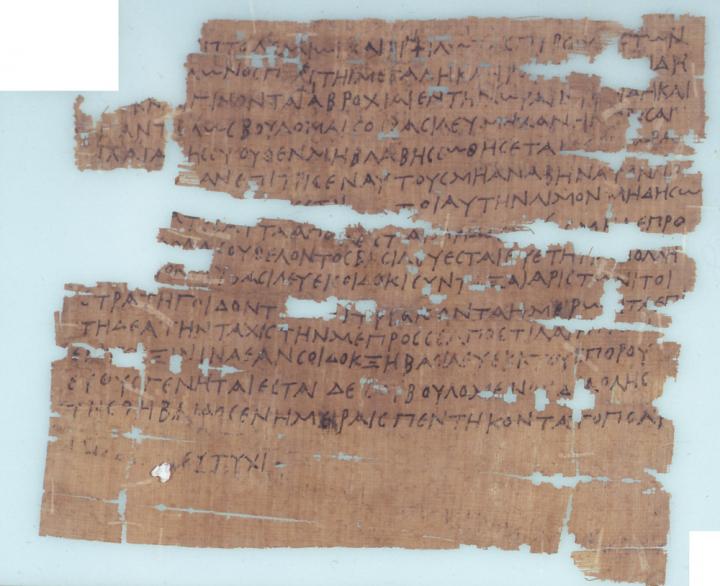
Volcano Led to Unrest in Ancient Egypt An event that “changed everything about Near-East history,” according to Yale University historian Joseph Manning, could be explained by volcanic eruptions. In the middle of a highly successful campaign against the Seleucid Empire, Ptolemy III, leader of the Ancient Egyptian Ptolemaic Kingdom, abruptly decided to return his forces back to Egypt in around 245 BCE. It was a dramatic and hugely significant move which historians have long been unable to explain. Manning and colleagues believe Ptolemy’s actions could be explained by the effects of volcanic eruptions. In particular, they’ve found evidence that by cooling the planet’s atmosphere, major volcanoes can disrupt the flow of the Nile River. This could have led to drastic food shortages in the region, and heightened tensions. Beyond the war with the Seleucid Empire, Manning believes that volcano eruptions could be linked to a host of upheavals and uprisings in Ptolemaic Egypt. Manning’s study, which has been published in the journal Nature Communications, drew on evidence ranging from ice core records to ancient papyri to analyse the effects of climate events on Ancient Egyptian society. “That’s the beauty of these climate records. For the first time, you can actually see a dynamic society in Egypt, not just a static description of a bunch of texts in chronological order,” Manning says. “This is of absolutely enormous importance.” During the Ptolemaic period, which spread from just after the death of Alexander the Great until the death of Cleopatra, Egyptian farmers depended hugely on flooding of the Nile in the summer months to irrigate their grain fields. “When the Nile flood was good, the Nile valley was one of the most agriculturally-productive places in the Ancient World,” says Francis Ludlow, a climate historian at Trinity College in Dublin and a co-author of the new study. “But the river was famously prone to a high level of variation.” If the Nile didn’t flood the land, it could lead to grain shortages. The authors suggest it was one such grain shortage that forced Ptolemy to return home in 245 BCE. The study authors highlight how this lack of flooding in the Nile could have been caused by volcano eruptions elsewhere on the planet. The key is a band of monsoon weather around the equator called the intertropical convergence zone. Most years, in the summer months, this band of weather moves up from the equator and floods one of the major tributaries to the Nile. When volcanoes erupt they blast out sulphurous gases which can ultimately cool the atmosphere. When this happens in the northern hemisphere, it can prevent the monsoon rains moving as far as normal. “When the monsoon rains don’t move far enough north, you don’t have as much rain falling over Ethiopia,” Ludlow said in a press release. “And that’s what feeds the summer flood of the Nile in Egypt that was so critical to agriculture.” Using computer simulations, the team found that poor flood years on the Nile matched up with major volcanic eruptions at locations across the globe. They then found that these volcanic eruptions also preceded major political and economic events that affected Egypt, including Ptolemy III’s abandonment of the campaign against the Seleucid empire, as well as the Theban Revolt. The volcanic eruptions didn’t cause these upheavals on their own, both Ludlow and Manning stress, but they likely added fuel to existing economic, political and ethnic tensions. Ominously, Ludlow claimed the findings could hold a warning for the future. “The twenty-first century has been lacking in explosive eruptions of the kind that can severely affect monsoon patterns. But that could change at any time,” he says. “The potential for this needs to be taken into account in trying to agree on how the valuable waters of the Blue Nile are going to be managed between Ethiopia, Sudan and Egypt.” Permian-Triassic Extinction Happened a Million Years Earlier than Thought New research in the remnants of the Godwanides mountain range has discovered evidence that one of the greatest mass extinction events in history happened earlier than previously thought. “We’ve established that climatic changes related to the devastating end of the Permian mass extinction event about 250 Million years ago were beginning earlier than previously identified,” said Dr. Pia Viglietti from the Witwatersrand University. The Permian-Triassic was one of history’s most significant mass extinction events, wiping out 96% of all marine species and 70% of terrestrial vertebrate species. Viglietti analysed fossil rich sediments present in the Karoo region of South Africa, which were deposited in the tectonic events that created the spectacular Gondwanides mountains. She found that the vertebrate animals in the area started to go extinct much earlier than would be expected under conventional dating of the mass extinction event. “The Karoo Basin takes up a huge portion of South Africa and most of us who drive through it do not think much of it,” explained Viglietti. “But if you know what you’re looking for, the Karoo represents a wealth of knowledge about the story of life on Earth.” She continued: “The Gondwanides not only influenced how and where rivers flowed (depositing sediment), it also had a significant effect on the climate, and thus the ancient fauna of the Karoo Basin,” As mountains erode, they place less weight on the earth’s crust, meaning the depression they’ve created in it starts to reduce. 100 million years ago, the Gondwanides would have had this effect on the Karoo region. This process is recorded in the sediment by periods of deposition and non-deposition. “During my PhD, I have identified a new tectonic “loading” event (mountain building event) that kick-started sedimentation in the Latest Permian Karoo Basin,” explained Viglietti. The sediments during this loading event also provided evidence of climatic changes as well as evidence of a previously overlooked “faunal turnover”, which points to the start of the end Permian mass extinction event, according to Viglietti’s findings. “Within the last million years before this major biotic crisis, the animals had already started to react. I interpret this faunal change as resulting from climatic effects relating to the end-Permian mass extinction event – only occurring much earlier than previously identified,” concluded Viglietti. Viglietti’s study has been published in the journal Scientific Reports. Amber Room Discovered? Three German researchers claim to have discovered the most valuable piece of treasure looted by the Nazi regime, the Independent reports. A series of ornate panels, the legendary Amber Room is often considered the most expensive item stolen by the Nazi’s in the Second World War. Embellished with amber and gold leaf, the panels were gifted to Peter the Great in 1716. Estimated to be worth £224 million, their whereabouts has remained a mystery since the end of the war. After examining witness reports compiled by the Stasi and KGB after World War Two, treasure hunters Leonhard Blume, Peter Lohr and Günter Eckhardt concluded that the Amber Room had been hidden in a network of tunnels in a cave in the Ore Mountains, eastern Germany. They used radar to reveal what lay beneath the cave outside the town of Hartenstein, close to the Czech border. “We discovered a very big, deep and long tunnel system and we detected something that we think could be a booby trap,” Blume told The Times. The three explorers also claim to have found evidence of an explosion in the area, which they say fits with witness accounts of items being hidden in the tunnel and then the entrance blown up to hide them. According to the Independent, historians tend to argue that either the Amber Rooms were destroyed in an air raid on Konigsberg, or by Soviet soldiers at the end of the war. Blume, Lohr and Eckhardt are now seeking funding from a sponsor, so they can excavate the location. Featured Image Caption: This piece of papyrus from the mid-Third Century BCE describes a period of famine in Egypt that occurred when the Nile River failed to flood for several years in a row. It was collected from the Egyptian city of Edfu. Credit: © Department of Papyrology, Institute of Archaeology, University of Warsaw ]]>
Categories
Breaking News

History News of the Week: A Discovery to Rewrite the Story of Mankind?

Shock as oldest Homo sapiens are found in an unexpected place Fossil remains of Homo sapiens, along with stone tools and animal bones, have been found in Jebel Irhoud, Morocco. The three hundred-thousand-year-old bones are the oldest Homo sapiens remains ever discovered, and could drastically rewrite our understanding of humanity’s origins. A hundred thousand years older than the next oldest securely dated Homo sapiens remains, the discovery suggests that the evolution of mankind was far more complicated than traditionally thought, and involved the entire African continent. Until now, the oldest Homo sapiens remains had all been found in East Africa, in the area around that is now Ethiopia, leading scientists to conclude that modern humans all descended from a population living in that region. “We used to think that there was a cradle of mankind 200 thousand years ago in east Africa, but our new data reveal that Homo sapiens spread across the entire African continent around 300 thousand years ago. Long before the out-of-Africa dispersal of Homo sapiens, there was dispersal within Africa,” said palaeoanthropologist Jean-Jacques Hublin, one of the authors of two papers appearing in the journal Nature that detail the discovery. The fact that Homo sapiens had spread to North Africa by three hundred thousand years ago suggests the origins of our species happened much earlier than previously thought. Japan’s largest dinosaur skeleton discovered The complete, eight-metre-long skeleton of a dinosaur has been excavated from 72-million-year-old marine deposits on Japan’s northern island, Hokkaido. It is the largest dinosaur skeleton ever discovered in Japan, according to researchers. A member of the duck-billed hadrosaurid family, excavations to uncover the spectacular skeleton started in 2013, in the Hobetsu district of Mukawa Town. According to the research team from Hokkaido University and Hobetsu Museum in Mukawa, it is only the third time in history a complete hadrosaurid skeleton has been found in marine deposits, and the first time such a finding has been made in Japan. Nicknamed Mukawaryu (Mukawa Dragon), it is only the second complete dinosaur skeleton to have been unearthed in Japan. Dr. Yoshitsugu Kobayashi of the research team said: “We first discovered a part of the fossilized Mukawaryu skeleton in 2013, and after a series of excavations, we believe we have cleaned more than half of the bones the dinosaur had, making it clear that it is a complete skeleton.” There are more than 50 kinds of dinosaur in the hadrosaurid group, divided into two categories: crested (Hadrosaurinae), and uncrested (Lambeosaurinae). “Although Mukawaryu has some characteristics of both groups, our preliminary analysis indicated it might belong to the Hadrosaurinae. Further cleaning of the fossils and detailed research should make it clearer which group the Mukawaryu skeleton belongs to,” said Kobayashi. Ancient Egyptians were closer to Europeans than modern Egyptians For the first time, scientists have successfully sequenced the DNA of Egyptian mummies. The findings reveal that the Ancient Egyptians had more in common genetically with the people of the eastern Mediterranean than those living in modern day Egypt. The research was carried out by scientists from the Population Genetics Group at the Max Planck Institute for the Science of Human History, in Jena, Germany, and has been published in the journal Nature Communications. Although there are thousands of sets of mummy remains worldwide, until now extracting the DNA has proven a challenge. “Researchers were generally skeptical about DNA preservation in Egyptian mummies, due to the hot climate, the high humidity levels in tombs and some of the chemicals used during mummification, which are all factors that make it hard for DNA to survive for such a long time,” Stephan Schiffels from the Max Planck Institute told Live Science. Schiffels and colleagues used an innovative new method called next generation sequencing, which allows human DNA to be extracted from other types to tell if a fragment is very old or suspiciously new. For this study, they focused on mummies from between 1380 BCE and 425 CE. When the mummy DNA was compared with genetic samples from modern Egyptians, they found that it had significantly less sub-Saharan ancestry than the modern samples. The scientists were only able to speculate on why this genetic change occurred. “One possible cause could be increased mobility down the Nile and increased long-distance commerce between sub-Saharan Africa and Egypt,” said Schiffels. Image courtesy of Philipp Gunz, MPI EVA Leipzig (License: CC-BY-SA 2.0) ]]>

Categories
Breaking News

Tombs Show Ancient Egyptians and Nubians Integrated

Anthropologist, is bringing that assumption into question. Study author Michele Buzon, associate professor of anthropology at Purdue University, has been excavating Nubian burial sites in the Nile River Valley to better understand the connection between Nubians and Egyptians. In particular, her research focuses on the period after the Egyptian colonisation of ancient Sudan. “There are not many archaeological sites that date to this time period, so we have not known what people were doing or what happened to these communities when the Egyptians withdrew.” Buzon explained, in a Purdue University press release. Buzon’s research was funded by the National Science Foundation and the National Geographic Society’s Committee for Research and Exploration. Led by the University of California Santa Barabara, Buzon’s colleagues on the project were Stuart Tyson Smith from UCSB, and Antonio Simonetti from the University of Notre Damme. Remarkably, Buzon and colleagues have found something of a two way cultural exchange between Egypt and the Nubians. When the colonisation happened, Nubian culture was not simply replaced with Egyptian. Rather, a kind of hybrid identity formed which fused elements of both peoples. “It’s been presumed that Nubians absorbed Egyptian cultural features because they had to, but we found cultural entanglement, that there was a new identity that combined aspects of their Nubian and Egyptian heritages.” explained Buzon. “And based on biological and isotopic features, we believe they were interacting, intermarrying and eventually becoming a community of Egyptians and Nubians.” Covering the Eighteenth, Nineteenth and Twentieth Dynasties of Ancient Egypt, the New Kingdom Period saw some of Egypt’s most well known and successful pharaohs. By the Third Intermediate Period however, the Egyptians had lost control following years of infighting. In around 1050 BCE the Nubians defeated Egypt, and took control as the 25th Dynasty. “We now have a sense of what happened when the New Kingdom Empire fell apart, and while there had been assumptions that Nubia didn’t function very well without the Egyptian administration, the evidence from our site says otherwise,” said Buzon. “We found that Tombos (the site under investigation) continued to be a prosperous community. We have the continuation of an Egyptian Nubian community that is successful even when Egypt is playing no political role there anymore.” Burial features and skeletal health analysis have been the focus of Buzon’s study. Tombs known as Tumulus graves show how the cultures merged. Although the physical structures of these tombs are distinctly Nubian, according to Buzon the burial practices on display reflected an Egyptian influence. “We found some (bodies) that combine a mixture of traditions. For instance, bodies were placed on a wooden bed, a Nubian tradition, and then placed in an Egyptian pose in an Egyptian coffin.” Even markers on the skeletons discovered within the tombs point to this fusion of two separate cultures. “This community developed over a few hundred years and people living there were the descendants of that community that started with Egyptian immigrants and local Nubians,” Buzon said. “They weren’t living separately at same site, but living together in the community.”]]>

Categories
Breaking News

Findings from the Khalet Al-Jam'a Necropolis Revealed

Categories
Breaking News

Demon Star Influenced Egyptian Calendars

PLOS ONE. ]]>