Categories
Breaking News

History News of the Week – A New Titanosaur, the Oldest Trigonometric Table, and the Fate of the H.L. Hunley

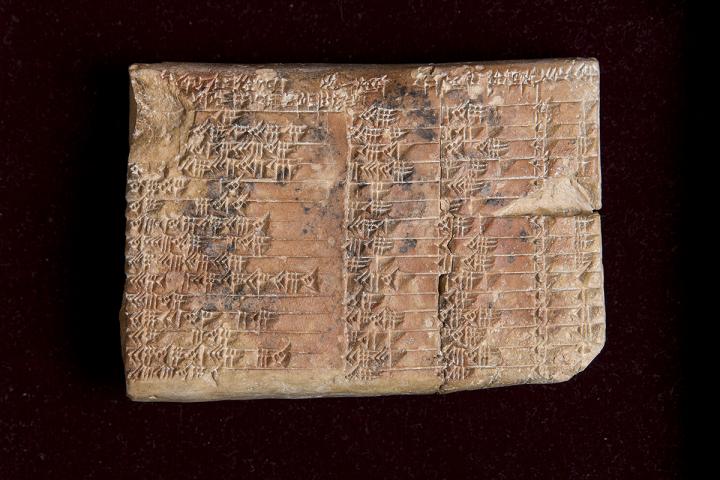
New Species of Titanosaur Discovered in Tanzania A new species of titanosaur has been discovered in Tanzania. A member of the gigantic, long-necked sauropod group, the creature’s fossil remains were discovered in Cretaceous period (70-100 million years ago) rocks in southwestern Tanzania. Although titanosaur remains have been found across the globe, they are most common in South America and rarely found in Africa. The new dinosaur has been named Shingopana songwensis, derived from the Swahili term ‘shingopana’, which means wide neck. The second part of the name comes from the Songwe region of the Great Rift Valley, where the remains were discovered. “There are anatomical features present only in Shingopana and in several South American titanosaurs, but not in other African titanosaurs,” said Eric Gorscak, a paleontologist at the Field Museum of Natural History in Chicago and the lead author of a paper in Journal of Vertebrate Paleontology detailing the find. “Shingopana had siblings in South America, whereas other African titanosaurs were only distant cousins.” Fascinatingly, Shingopana songwensis seems more closely related to sauropods found in South America than those that have been discovered in Africa. “This discovery suggests that the fauna of northern and southern Africa were very different in the Cretaceous Period,” said Judy Skog, a program director in the National Science Foundation’s Division of Earth Sciences, which supported the research. “At that time, southern Africa dinosaurs were more closely related to those in South America, and were more widespread than we knew.” Mysterious Babylonian Tablet Is the World’s Oldest Trigonometric Table Scientists have revealed that a 3,700-year-old Babylonian clay tablet is the world’s oldest trigonometric table. The researchers from UNSW Sydney believe the tablet could have been used by ancient mathematical scribes to calculate how to construct palaces, temples and canals. The findings unveil a previously unknown level of mathematical sophistication among the ancient Babylonians, showing they had begun to study the mathematics of triangles long before the ancient Greeks. Named Plimpton 322, the small tablet, which was discovered in what is now southern Iraq, has four columns and 15 rows of numbers written on it in the cuneiform script of the time using a base 60, or sexagesimal, system. Previously, scientists argued the tablet would have been a teaching aid for checking solutions to quadratic problems. “The huge mystery, until now, was its purpose – why the ancient scribes carried out the complex task of generating and sorting the numbers on the tablet,” said UNSW’s Dr. Daniel Mansfield, co-author of the study published in the journal Historia Mathematica. “Our research reveals that Plimpton 322 describes the shapes of right-angle triangles using a novel kind of trigonometry based on ratios, not angles and circles. It is a fascinating mathematical work that demonstrates undoubted genius.” The Greek astronomer Hipparchus, who lived circa 120 years BCE, is typically regarded as the father of trigonometry, with his “table of chords” on a circle considered the oldest trigonometric table. “Plimpton 322 predates Hipparchus by more than 1000 years,” said Dr Wildberger, the study’s other coauthor. “It opens up new possibilities not just for modern mathematics research, but also for mathematics education. With Plimpton 322 we see a simpler, more accurate trigonometry that has clear advantages over our own.” “A treasure-trove of Babylonian tablets exists, but only a fraction of them have been studied yet. The mathematical world is only waking up to the fact that this ancient but very sophisticated mathematical culture has much to teach us.” Confederate Submarine Crew Were Killed by Shockwave from Their Own Torpedo On 17th February, 1864, the Confederate H.L Hunley became the first combat submarine to sink an enemy vessel when it torpedoed a 1,200-ton Union warship, the USS Housatonic, outside Charleston Harbor, South Carolina. The torpedo blast, below the waterline of the Housatonic, was enough to sink the ship in under five minutes. Five seamen were killed in the attack, the rest were saved, rescued thanks to the fact the stricken ship came to rest upright in the water. For years, the fate of the Hunley crew remained a mystery. The 40-foot vessel was found in 1995, about 300 metres away from Housatonic’s resting place, and raised in 2000. Scientists from Duke University now think that firing the explosive torpedo instantly killed the submarine’s own eight-man crew. When the vessel was first unearthed, scientists were shocked to find the skeletons of the crew still at their stations. They had suffered no broken bones, the ships bilge pumps hadn’t been used and the air hatches remained closed. Except for some slight damage, the submarine was largely intact. Thorough research from Duke University, which has included modelling blasts next to a scale model of the Hunley, shooting Civil War weapons at iron plates and studies on the transmission of blast energy, has led Rachel Lance, a Duke Engineering graduate, to conclude that a powerful shockwave from the torpedo killed the submarine’s crew instantly. “This is the characteristic trauma of blast victims, they call it ‘blast lung,'” said Lance, who worked as a biomechanist at the U.S. Navy’s base in Panama City, Florida for three years before entering graduate school at Duke. “You have an instant fatality that leaves no marks on the skeletal remains. Unfortunately, the soft tissues that would show us what happened have decomposed in the past hundred years.” Lance observes that the physical evidence backs up her conclusion, showing no sign the crew took actions in response to either a flood or loss of air. “If anyone had survived, they may have tried to release the keel ballast weights, set the bilge pumps to pump water, or tried to get out the hatches, but none of these actions were taken,” she writes in her paper, which is part of her dissertation research and has been published in the journal PLOS ONE. Featured Image: The 3,700-year-old Babylonian tablet Plimpton 322 at the Rare Book and Manuscript Library at Columbia University in New York. Credit: UNSW/Andrew Kelly]]>
Categories
Breaking News

History News of the Week: A Discovery to Rewrite the Story of Mankind?

Shock as oldest Homo sapiens are found in an unexpected place Fossil remains of Homo sapiens, along with stone tools and animal bones, have been found in Jebel Irhoud, Morocco. The three hundred-thousand-year-old bones are the oldest Homo sapiens remains ever discovered, and could drastically rewrite our understanding of humanity’s origins. A hundred thousand years older than the next oldest securely dated Homo sapiens remains, the discovery suggests that the evolution of mankind was far more complicated than traditionally thought, and involved the entire African continent. Until now, the oldest Homo sapiens remains had all been found in East Africa, in the area around that is now Ethiopia, leading scientists to conclude that modern humans all descended from a population living in that region. “We used to think that there was a cradle of mankind 200 thousand years ago in east Africa, but our new data reveal that Homo sapiens spread across the entire African continent around 300 thousand years ago. Long before the out-of-Africa dispersal of Homo sapiens, there was dispersal within Africa,” said palaeoanthropologist Jean-Jacques Hublin, one of the authors of two papers appearing in the journal Nature that detail the discovery. The fact that Homo sapiens had spread to North Africa by three hundred thousand years ago suggests the origins of our species happened much earlier than previously thought. Japan’s largest dinosaur skeleton discovered The complete, eight-metre-long skeleton of a dinosaur has been excavated from 72-million-year-old marine deposits on Japan’s northern island, Hokkaido. It is the largest dinosaur skeleton ever discovered in Japan, according to researchers. A member of the duck-billed hadrosaurid family, excavations to uncover the spectacular skeleton started in 2013, in the Hobetsu district of Mukawa Town. According to the research team from Hokkaido University and Hobetsu Museum in Mukawa, it is only the third time in history a complete hadrosaurid skeleton has been found in marine deposits, and the first time such a finding has been made in Japan. Nicknamed Mukawaryu (Mukawa Dragon), it is only the second complete dinosaur skeleton to have been unearthed in Japan. Dr. Yoshitsugu Kobayashi of the research team said: “We first discovered a part of the fossilized Mukawaryu skeleton in 2013, and after a series of excavations, we believe we have cleaned more than half of the bones the dinosaur had, making it clear that it is a complete skeleton.” There are more than 50 kinds of dinosaur in the hadrosaurid group, divided into two categories: crested (Hadrosaurinae), and uncrested (Lambeosaurinae). “Although Mukawaryu has some characteristics of both groups, our preliminary analysis indicated it might belong to the Hadrosaurinae. Further cleaning of the fossils and detailed research should make it clearer which group the Mukawaryu skeleton belongs to,” said Kobayashi. Ancient Egyptians were closer to Europeans than modern Egyptians For the first time, scientists have successfully sequenced the DNA of Egyptian mummies. The findings reveal that the Ancient Egyptians had more in common genetically with the people of the eastern Mediterranean than those living in modern day Egypt. The research was carried out by scientists from the Population Genetics Group at the Max Planck Institute for the Science of Human History, in Jena, Germany, and has been published in the journal Nature Communications. Although there are thousands of sets of mummy remains worldwide, until now extracting the DNA has proven a challenge. “Researchers were generally skeptical about DNA preservation in Egyptian mummies, due to the hot climate, the high humidity levels in tombs and some of the chemicals used during mummification, which are all factors that make it hard for DNA to survive for such a long time,” Stephan Schiffels from the Max Planck Institute told Live Science. Schiffels and colleagues used an innovative new method called next generation sequencing, which allows human DNA to be extracted from other types to tell if a fragment is very old or suspiciously new. For this study, they focused on mummies from between 1380 BCE and 425 CE. When the mummy DNA was compared with genetic samples from modern Egyptians, they found that it had significantly less sub-Saharan ancestry than the modern samples. The scientists were only able to speculate on why this genetic change occurred. “One possible cause could be increased mobility down the Nile and increased long-distance commerce between sub-Saharan Africa and Egypt,” said Schiffels. Image courtesy of Philipp Gunz, MPI EVA Leipzig (License: CC-BY-SA 2.0) ]]>

Categories
Breaking News

15,000kg Dinosaur Fossil Identified after Being Ignored for Decades

Vouivria damparisensis. Dated to around 160 million years old, V. damparisensis is the earliest recorded fossil from the titanosauriform family, a group of dinosaurs which includes the likes of Brachiosaurus. Analysis of the fossil suggests the specimen died at a young age, weighed around 15,000 kilograms and measured over 15 metres in length. Its neck was spectacularly long and was likely held at a 45 degree angle. Much like other titanosauriforms, the creature also boasted a long tail and four legs of equal length. “Vouivria would have been a herbivore, eating all kinds of vegetation, such as ferns and conifers.” said Dr Philip Mannion, the lead author of the study from the Department of Earth Science and Engineering at Imperial College London, in a press release. “This creature lived in the Late Jurassic, around 160 million years ago, at a time when Europe was a series of islands. We don’t know what this creature died from, but millions of years later it is providing important evidence to help us understand in more detail the evolution of brachiosaurid sauropods and a much bigger group of dinosaurs that they belonged to, called titanosauriforms.” Titanosauriforms were the last surviving group of long necked dinosaurs, only coming to an end with the end-Cretaceous mass extinction event which wiped out the majority of life on earth. The gigantic, diverse group of sauropods originated in the Late Jurassic and included some of the largest creatures to have ever walked the planet. V. damparisensis‘ discovery looks set to greatly aid scientists in understanding the evolution and spread of titanosauriforms across the globe, a subject which has until now proven difficult to shed light on due to a limited fossil record for the earliest members of the family. By incorporating the new species into the fossil timeline, the team have shown that by the Early Cretaceous brachiosaurids were likely restricted to what is now Africa and the USA, and probably extinct in Europe. The discovery also throws into question the previously held belief that brachiosaurids spread as far as South America. Scientists have previously suggested that a sauropod dinosaur called Padillasaurus, whose remains have been found in South America, was a brachisosaurid. The discovery of V. damparisensis however, points to that not being the case. The genus name of the new creature is derived from the old French word for viper – vouivre. In the French-Comte region where the fossil was discovered, ‘la vouivre’ is a legendary winged reptile. The species name damparisensis meanwhile, refers to the village of Damparis where the fossil was first found in 1934. Image courtesy of Imperial College London/Chase Stone]]>

Categories
Breaking News

New Tyrannosaur Discovered With a Scaly Face and Sensitive Nose

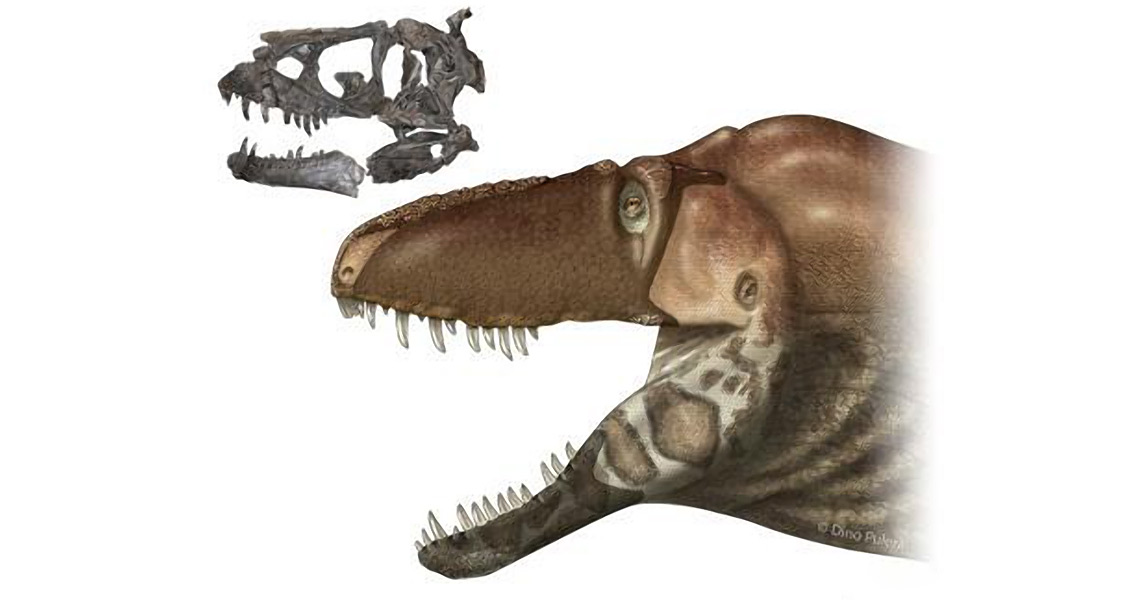
Daspletosaurus horneri – “Horner’s Frightul Lizard” – the new species is named after renowned paleontologist John “Jack” R. Horner. Horner, a former curator at the museum of the Rockies, discovered numerous dinosaur fossils in the region and also mentored local students towards scientific careers. “Being a tyrannosaur, they had really small arms,” said UNM Honors College Professor Jason R. Moore, who was involved in the discovery. “They wouldn’t be able to interact with their environment with their hands the way mammals do — find food, build nests, tend to eggs and young. In order to do these things, Daspletosaurus needed to use its feet or head. The discovery and analysis of the tyrannosaur shows that the dinosaur had a developed face sensitivity similar to the sensitivity in our finger tips, suggesting it could use its snout for all those complex ecological interactions, similar to the way crocodiles do today.” Published in Nature Publishing Group’s Scientific Reports, the study led by Thomas Carr of Carthage College’s Department of Biology in Wisconsin sheds new light on the development of the tyrannosaur lineage. “Daspletosaurus horneri was the youngest, and last, of its lineage that lived after its closest relative, D. torosus, which is found in Alberta, Canada,” explained Carr. “The geographic proximity of these species and their sequential occurrence suggests that they represent a single lineage where D. torosus has evolved into D. horneri.” The team’s research suggests the evolution of the tyrannosaurs was slow, the transition from D. torosus to D. horneri taking two million years. Carr and colleagues’ study stands to drastically enhance our understanding of tyrannosaurs, revealing a great deal about how their faces would have looked. “It turns out that tyrannosaurs are identical to crocodylians in that the bones of their snouts and jaws are rough, except for a narrow band of smooth bone along the tooth row,” explained Carr. “We did not find any evidence for lips in tyrannosaurs: the rough texture covered by scales extends nearly to the tooth row, providing no space for lips.” “However, we did find evidence for other types of skin on the face, including areas of extremely coarse bone that supported armor-like skin on the snout and on the sides of the lower jaws. The armor-like skin would have protected tyrannosaurs from abrasions, perhaps sustained when hunting and feeding.” Like crocodylians, tyrannosaurs had highly sensitive snouts and jaws, penetrated by numerous small nerve openings which would have allowed a multitude of branches of nerves to innervate the skin. This reveals a great deal about the development of the trigeminal nerve, responsible for sensations and motor actions in the face. “The trigeminal nerve has an extraordinary evolutionary history of developing into wildly different ‘sixth senses’ in different vertebrates, such as sensing magnetic fields for bird migration, electroreception for predation in the platypus bill or the whisker pits of dolphins, sensing infrared in pit vipers to identify prey, guiding movements in mammals through the use of whiskers, sensing vibrations through the water by alligators and turning the elephant trunk into a sensitive ‘hand’ similar to what has been done to the entire face of tyrannosaurs.” explained Jayc Sedlmayr, professor at the Louisiana State University Health Sciences Center New Orleans. Image courtesy of @Dino ]]>

Categories
Breaking News

Ichthyosaur Mystery Finally Solved As Two Become One

Journal of Systematic Palaeontology, published by Taylor & Francis. In the early nineteenth century the fossils of massive, mysterious sea creatures started to be unearthed around the coast of the United Kingdom. By 1821, scientists realised they had discovered a new, extinct group of sea dwelling reptiles and described the first ichthyosaur species: Ichthyosaurus communis. First appearing in the Triassic period, ichthyosaurs lived through the Jurassic and Cretaceous, ultimately dying out some 25 million years before the mass extinction event which wiped out the dinosaurs. Physically, ichthyosaurs were shaped like modern dolphins or sharks, yet the creatures were reptiles – evolved from an as yet unidentified land creature. Following the initial description of Ichthyosaurus communis in 1821, three more ichthyosaur species were quickly described – supposedly distinguished by the shape and structure of their teeth. Two of these species have since been designated as belonging to other types of ichthyosaur. The other, Ichthyosaurus intermedius, continued to be regarded as a relative of I.communis. For years confusion reigned as eminent scientists studied Ichthyosaur fossils unearthed on the coasts of Yorkshire, Dorset and Somerset. Ambiguity over the differences between I.communis and I.intermedius meant many fossils were identified on a possibly shaky basis. Lomax explained in a press release from the Taylor and Francis Group: “The early accounts of ichthyosaurs were based on very scrappy, often isolated, remains. This resulted in a very poor understanding of the differences between species and thus how to identify them. To complicate matters further, the original specimen of Ichthyosaurus communis is lost and was never illustrated. Similarly, the original specimen of I. intermedius is also lost, but an illustration does exist. This has caused a big headache for palaeontologists trying to understand the differences between the species”. Paleontologist Dr Chris McGowan was the first to suggest I. communis and I. intermedius could be the same species, in the 1970s. Since then, various studies have argued back and forth over whether the species should or should not be separated. Lomax and Massare’s study is the most comprehensive ever published comparing the species of ichthyosaur. The authors conclude that the two species are the same, and that characteristics of Ichthyosaurus intermedius can be found in other ichthyosaur species, including I. communis. The two authors have made countless other vital contributions to the study of ichthyosaurs over the years, including describing three new species and reassessing historical species. Their work is providing groundbreaking new insights into the spectacular reptiles that once dominated the earth’s seas. To read the full article please visit: http://www.tandfonline.com/doi/full/10.1080/14772019.2017.1291116 Image courtesy of London Natural History Museum]]>

Categories
Breaking News

Giant Penguin Might Have Been Around With the Dinosaurs

history of the flightless seabirds. Situated in New Zealand’s Canterbury region, the fossil sites along the Waipara River have long been a vital resource to scientists for the abundance of avian fossils which became embedded in the sand just four million years after the dinosaurs went extinct. “Among the finds from these sites, the skeletons of Waimanu, the oldest known penguin to date, are of particular importance,” explained Dr. Gerald Mayr of the Senckenberg Research Institute in Frankfurt. Hugely significant is the fact the bones of the recently discovered giant penguin differ markedly from those of others from the same time period, suggesting there was much greater diversity among Paleocene penguins than previously assumed. In their study published in the Springer Journal Science of Nature, the team postulate that the newly discovered giant penguin fossil could point to the evolution of the birds having started much earlier than previously thought, perhaps even during the age of the dinosaurs. “What sets this fossil apart are the obvious differences compared to the previously known penguin remains from this period of geological history,” explained Mayr, an ornithologist from Frankfurt. “The leg bones we examined show that during its lifetime, the newly described penguin was significantly larger than its already described relatives. Moreover, it belongs to a species that is more closely related to penguins from later time periods.” Although impressive with its 1.5 metre length, the newly described giant penguin was still not as big as Anthropornis nordenskjoeld, the largest penguin fossil ever discovered, which lived on the Antarctic coast between 45 and 33 million years ago. Evidence has been found suggesting A.nordenskjoeld could reach heights of up to two metres from beak to toe. According to Mayr, it’s highly significant that the newly discovered penguin is much older than A.nordenskjoeld. “This shows that penguins reached an enormous size quite early in their evolutionary history, around 60 million years ago”. The team believe that the newly discovered species would have already adopted the unique, waddling gait which characterises modern penguins. This is something which would have distinguished it from other, more primitive species in the genus Waimanu – a genus of early penguin which lived during the Early Paleocene. “The discoveries show that penguin diversity in the early Paleocene was clearly higher than we previously assumed,” concluded Mayr, adding, “In turn, this diversity indicates that the first representatives of penguins already arose during the age of dinosaurs, more than 65 million years ago.” Image courtesy of Senckenberg Gesellschaft für Naturforschung (Senckenberg Nature Research Society) The newly published study is available from Sprnger Nature ]]>

Categories
Breaking News

The Dinosaur That Had Teeth as a Baby, but Not as an Adult

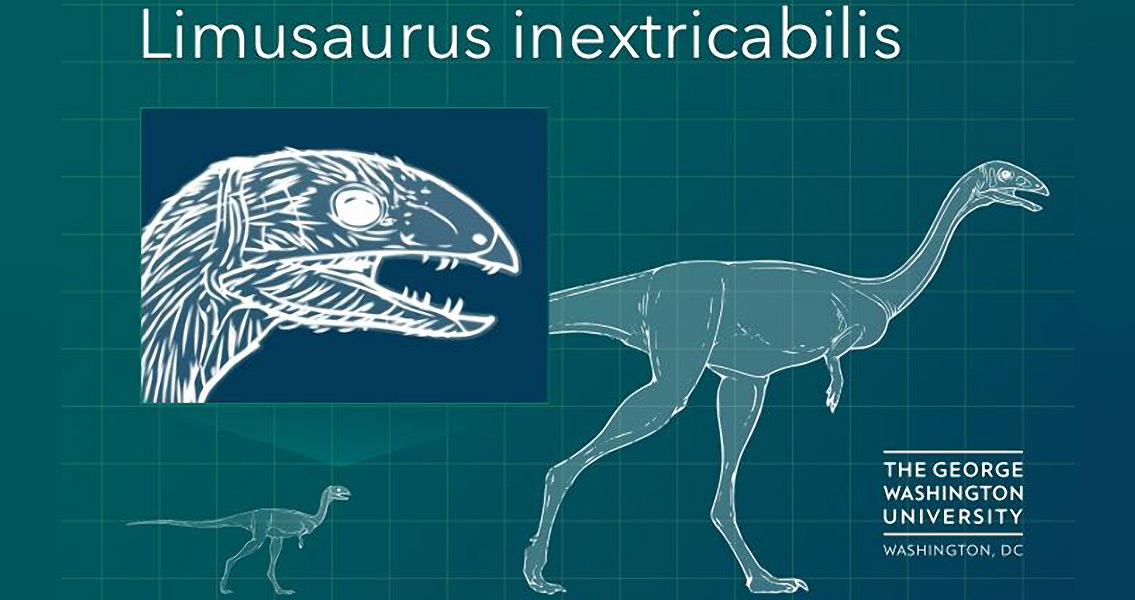
Current Biology, could explain why birds have beaks but not teeth. Limusaurus inextricabilis, the species in question, was a beaked therapod which lived in Western China during the Jurassic period – between 201.3 million years ago and 145 million years ago. Limusaurus inextricabilis is the only member of the Limusaurus genus. The research team from George Washington University in Washington D.C., USA, and the Capital Normal University in Beijing, China, analysed nineteen Limusaurus skeletons discovered in Xinjiang Province, China. The remains were unearthed from ‘death traps’ where the creatures had become fatally trapped and buried in mud. Ranging in age from babies to adults, the unfortunate victims of the muddy death traps provided the researchers with a pattern for Limusaurus‘ tooth development and loss over time. While the baby skeletons had small, sharp teeth, the adults were consistently toothless. “This discovery is important for two reasons,” said James Clark, a co-author on the paper and the Ronald Weintraub Professor of Biology at the George Washington University’s Columbian College of Arts and Sciences, in a press release. “First, it’s very rare to find a growth series from baby to adult dinosaurs. Second, this unusually dramatic change in anatomy suggests there was a big shift in Limusaurus’ diet from adolescence to adulthood.” Limusaurus is part of the theropod group of dinosaurs which are considered evolutionary ancestors of birds. Interestingly, theropods were ancestrally carnivorous but a number of species in the group were herbivorous or omnivorous. The team’s findings could point to an unusual change in diet for Limusaurus as they grew older. The babies of the species could have been meat eaters, while the adults were herbivores. The sharp teeth would have been needed to chew meat, but not plants. Chemical analysis of the Limusaurus bones supports this theory of a changing diet. It is hoped that further analysis of the Limusaurus fossils could provide an insight into how the descendants of theropods, such as birds, evolved with no teeth. It is possible that the origins of this trait can be found in the changes Limusaurus experienced in their development from childhood to adulthood. “For most dinosaur species we have few specimens and a very incomplete understanding of their developmental biology,” said Josef Stiegler, a graduate student at George Washington University and study co-author. “The large sample size of Limusaurus allowed us to use several lines of evidence including the morphology, microstructure and stable isotopic composition of the fossil bones to understand developmental and dietary changes in this animal.”]]>

Categories
Breaking News

Brazilian Dinosaur Discovered Six Decades Ago Comes Out of the Closet

Austroposeidon magnificus. Diogenes de Almeida Campos, the Museum director, is quoted as saying in Phys.org that six decades does sound on the slow side for studying such a big find. He went on to explain that in the 1950s Price and his colleagues were pioneers in the field of paleontology for Brazil and that a vertebra of this size needed to be studied. Campos continued, saying that a lack of money had held back research, as well as a shortage of staff qualified to take up the task. Today there are still only ten dinosaur experts in the entire country of Brazil. Campos told Phys.org: “We were waiting for the staff…, for a laboratory that started from nothing to mature. We made a first effort with students about eight years ago and it didn’t succeed.” It was one of Campos’ students, Kamila Bandeira, who made the mysterious creature the subject of her doctoral thesis, and put the pieces of the puzzle together. A majority of dinosaur discoveries occur in the desert or largely barren areas, like the southwest region of the USA, the south of Mongolia or Argentina, because they’re easier to find. The fossilized bones belonging to the biggest dinosaur ever discovered, around 40 meters (130 feet) long, were discovered in 2014 in Argentina. Like so many other discoveries, Austroposeidon magnificus was found by chance, by construction workers building a road near Sao Paulo. Researchers believe the small number of bones recovered at the site points to the creature’s unceremonious end. Campos told GMA News Online, “When these animals die, it’s… a huge new source of meat. So all the hunters, the carnivores ate this creature. The first thing they ate is the head, because the brain must be tasty. They also broke the long bones to get at the marrow… After, came smaller animals and nothing was left over. Anything that did remain the beetles and the spiders and the ants finished, and when there was just bones, the bacteria came. Finally, the remains sank into the lagoon.” There may yet be many more such discoveries waiting in Brazil’s thick flora. “Pay attention when roads are built, when wells are dug,” Campos tells GMA, “You could have a dinosaur in your backyard and not realize!” ]]>

Categories
Breaking News

Quicksand – Bane of the Dinosaurs?

Washington Post, Jim Kirkland, a paleontologist for the state of Utah, remarked that the initial thought was that he and his team had stumbled across a small body of water where animals might have frequently drowned or fought, but this didn’t fit the bill because of how the fossilized remains were found – encased in a type of sandstone that differed from the surrounding geology. In an attempt to understand the strange find, Kirkland allied with Edward Simpson, a paleontologist from Kutztown University in Pennsylvania, to determine what might have happened to these Utahraptors. The answer, it seems, is deceptively simple: quicksand. Quicksand, Kirkland explained, does not operate under the same rules that Hollywood productions throughout history have assumed. A mix of sand and water, quicksand appears solid until something (like a heavy dinosaur) steps on it. At this point the quicksand becomes more liquid temporarily as the extra weight disturbs the equilibrium of the mix of water and sand, turning the area into a soupy mix. However, once the water and sand are given time to separate again the mixture solidifies, trapping whatever may have stepped within. Kirkland, Simpson, and several colleagues were able to reconstruct the events that led to the entrapment and death of at least nine Utahraptors in eastern Utah more than 100 million years ago, by studying how quicksand traps behaved near Lake Powell, a man-made reservoir that straddles the Utah-Arizona border. However, the key was in the discovery of a second dinosaur species within the sandstone block alongside the Utahraptors. The remains of iguanadonts, beaked plant-eating dinosaurs, were also found within the fossilized quicksand, researchers revealed. The iguanadonts that became trapped within the quicksand likely died there, attracting predators and scavengers such as the Utahraptors to the location as well. Each of these carnivorous dinosaurs would have become trapped, but it’s unclear if the group arrived one at a time or all at once. Researchers hope to continue studying the giant rock slab in the future in order to reveal that piece of the puzzle; for now though, work has been halted temporarily in anticipation of a crowdfunding campaign to raise sufficient funds to ensure fossil preservation and to enlist the aid of noted paleontologist Scott Madsen. Regardless, the revelation that this series of Utahraptors died in rapid succession due to quicksand is groundbreaking, according to Kirkland. The paleontologist remarked that the accompanying research paper is the first of its kind to publish findings revealing a quicksand-related predator death trap. The paper revealing the findings are available from the journal PALAIOS here ]]>

Categories
Breaking News

New Species of Flying Dinosaur Discovered in Patagonia

Allkauren koi by the researchers behind the discovery. Preserved in remarkably good condition, the skull remains have revealed new information about the evolution of the braincase of pterodactyloids, a major suborder of Pterosaurs. The name Pterosaur comes from the Greek for ‘wing lizards’. These spectacular creatures dominated the skies during the Jurassic and Cretaceous periods, and included the largest vertebrate ever known to fly: Quetzalcoatlus from the late Cretaceous period. Members of the long extinct group were incredibly diverse, ranging from the size of a sparrow to the size of an airplane. Intriguingly however, Pterosaurs evolved flight separately from bats and birds; they are not closely related to either creature. The group had extraordinary adaptations enabling them to take to the skies: pneumatic bones drastically reducing their weight and an elongated digit supporting a wing membrane. The neuroanatomy of Pterosaurs has remained shrouded in mystery however, the consequence of a paucity of three dimensionally preserved remains. It is this that has afforded the latest discovery such importance, giving new insight into the intermediate forms of Pterosaurs. The study describing Allkauren koi, published in the journal PeerJ, provides new information about the origin, tempo and mode of evolution in the Pterosaur group. Allkauren koi has been named from the language of the Tehuelche, the group of indigenous peoples of Patagonia. ‘All’ comes from the Tehuelche word for ‘brain’, while ‘kauren’ is their word for ‘ancient’. It joins the over 150 other species of Pterosaur discovered so far. The remains, including the amazingly preserved, uncrushed braincase, were discovered in northern central Chubut Province, Patagonia Argentina. Through computer tomography, the researchers have been able to study the creature’s cranial anatomy, observing in three dimensions the cranial endocast and the inner ear. From this starting point a comprehensive phylogenetic analysis of the Pterosaur group was performed, one which “fills an important gap”, according to the study. “Allkaruen, from the middle lower Jurassic limit, shows an intermediate state in the brain evolution of pterosaurs and their adaptations to the aerial environment”, said Dr. Diego Poll, a member of the research team, in a PeerJ press release. “As a result, this research makes an important contribution to the understanding of the evolution of all of pterosaurs.” ]]>