Volcanoes and a Roman Climate Crisis
Volcanic eruptions in the Roman period led to climate anomalies affecting the whole northern hemisphere, according to new research.
The years 536 CE and 541 – 544 CE experienced a reduction in natural light which would have made human survival much more difficult, the researchers from the Chronology Laboratory of the Finnish Museum of Natural History and Natural Resources Institute Finland (Luke) claim.
Farming and animal husbandry would have been adversely affected by the reduction in sunlight, while humans would have been more prone to disease due to a lack of vitamin D.
“Our research shows that the climate anomaly, which covered all of the northern hemisphere, was the compound result of several volcanic eruptions,” says Markku Oinonen, director of the Chronology Laboratory.
Published in the Journal Scientific Reports, the new research is based on dendrochronology, also known as tree ring dating. The researchers analysed the variation in carbon isotopes in the annual growth rings of trees. The isotopes reflect the photosynthesis of the trees, which is largely dependent on the amount of solar radiation available in summer.
“Researchers have put together an annual growth ring calendar of treeline pine spanning more than 7,600 years. Various historical events can be contrasted with the calendar. The growth ring calendar is an important indicator of global climate change,” says researcher Samuli Helama from Luke.
Significantly, the years of unusually poor sunlight coincided with bubonic plague epidemic that ravished the Roman Empire. Starting in 542CE, the plague is believed to have killed around 50% of the inhabitants of the Eastern Roman Empire.
From its beginnings, the devastating plague spread in western Europe and as far north as Finland, killing millions.
Sulawesi Younger than Thought
The unique island of Sulawesi is not as old as typically thought, new research is claiming.
Located in the interface between Eurasia and Australasia, Sulawesi is home to myriad unique flora and fauna, such as the ‘deer-pig’ (Sulawesi Babirusa), ‘warty pig’ and the ‘miniature buffalo.’
Researchers from Oxford University’s Department of Archaeology and Queen Mary University of London used a combination of morphological and genetic data, alongside geological reconstructions of the island to gain a better understanding of the origins of the island’s fauna. Based on over a thousand samples, the scientists claim it is the largest ever genetic study of the island’s species.
It was found that each species most likely arrived on what is now Sulawesi at different times over the past 13 million years, but all of them began to spread across the island simultaneously about 1-2 million years ago. According to the study, this coincides with geological evidence for the emergence of the arms of the island from the ocean.
[caption id="attachment_8588" align="alignnone" width="512"] Location of Sulawesi (Celebes), Indonesia, Public Domain[/caption]
“Sulawesi is an amazing island, unlike any other on Earth. The key link between the three large mammals in this study is that none of them fly. Sulawesi has been an island for a long time so however they arrived, they have been evolving in isolation,” Professor Greger Larson, Director of Palaeogenomics & Bio-Archaeology Research Network at Oxford and senior author of the study.
“Understanding their evolutionary history was only possible by looking not only at their genetic signatures but also the geologic history of the island. The whole region is highly tectonic and we were able to reconstruct how much of the island was under water and when.
“Using a molecular clock we were then able to date the time of the expansion of all three species and by correlating those dates with the appearance of the different land masses that make up Sulawesi, we found a perfect temporal match.”
Laurent Frantz, Lecturer in Molecular Genetics and Informatics at the Queen Mary University of London, said: ‘Following his famous explorations, Alfred Wallace described Sulawesi as anomalous, first noting the merging of two immensely different worlds on this island. For a long time, we thought these anomalous ecosystems slowly assembled over tens of millions of years, as continents drifted. Yet, we now know that very recent geological processes, over only the last few million years, dramatically shaped this singular tropical paradise.”
Ancient Egyptian Papyrus Reveals Sexual Assault
A 3,000-year-old Ancient Egyptian papyrus contains some of the oldest evidence of a man being accused of sexual assault, The Independent reports.
Dubbed Papyrus Salt 124, the text lists alleged indiscretions by an artisan called Paneb, who lived in Thebes around 1200BCE. Paneb was the chief foreman of a community of artisans who built royal tombs in the ancient city, according to The Independent.
The papyrus is authored by someone called Amennakht. It was sent to an official of the Pharaoh, and lists a series of complaints against Paneb.
Although ambiguities in the text make some of the charges unclear, among the accusations are one of rape. Paneb is described as having taken the clothes of a woman called Yemenwaw before “he threw her on top of a wall and violated her.”
The papyrus was originally translated into English in 1929, by Jaroslav Cerny. The main accusation in the text is that Paneb bribed his way to the chief foreman job, a position Amennakht was due to inherit.
Light was first shed on the remarkable text by Narratively.
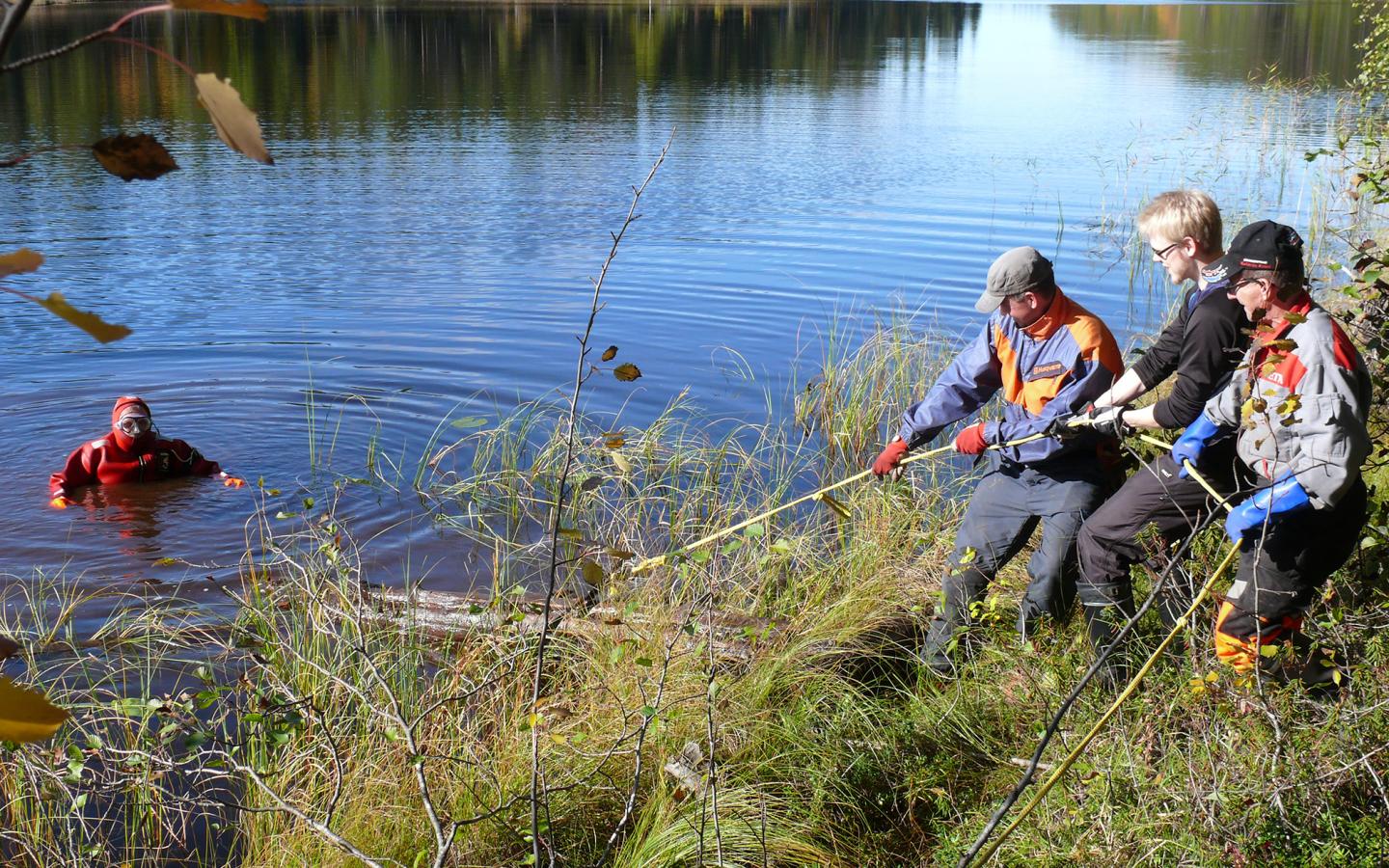
Featured image: A subfossil tree trunk being lifted out of a lake. Image credit: Samuli Helama / Natural Resources Institute Finland
]]>
 Horse Evolution Mystery Solved?
The genetic ancestors of the modern horse were animals with five toes. Generally, it is believed that horses evolved to have fewer digits, but new research is challenging that theory and arguing that remnants of the five toes are still present in modern hooves.
Humans and horses actually evolved from the same common ancestor, a creature with five digits. As a consequence of living on open grassland, horses adapted to move across these plains. Scientist’s widely believe that this adaption saw horses evolve to have fewer digits. The first horse only had four digits, its later descendant had three, while modern horses have just a central digit, known as the metacarpal.
In research published in a recent issue of Royal Society Open Science, a team of scientists are proposing that rather than horses simply losing four digits, all five merged to form the compacted forelimbs with hooves seen today.
Currently, scientists accept that splints, small bones found along the outer sides of the metacarpal in modern horses, are partially formed remnants of second and fourth digits. Tapering mid-way down the metacarpal, these fragments were inherited from an earlier ancestor, but ceased to develop into fully formed digits in modern horses. The authors of the new paper claim that this theory is incomplete, failing to account for the animals’ first and fifth digits.
“With a distinct surface from the metacarpal, we know the splints on today’s horses to be the remnants of the second and fourth digits,” said Nikos Solounias, a paleontologist from New York Institute of Technology (NYITCOM) and an author on the study. “However, these partially formed digits also appear to contain their own elevated surfaces which hold additional evolutionary clues. We find these ridges, located on the posterior of each splint, to be the partially formed remains of the first and fifth digits, which were once connected to the cartilages of the hoof.”
Key to the research are the famous Laetoil footrprints in Tanzania, which show that the famous, eight-million-year-old horse known as Hipparion primigenium walked alongside early humans and had three digits. According to a NYITCOM statement, Solounias analysed the footprints and came to the conclusion that Hipparion actually had five compacted toes, the forelimb divided into five sections – suggesting the small toes had binded together.
“Interestingly, we not only find hints of the missing digits on the modern horse, but also its ancestors, such as Hipparion and Mesohippus, two species believed to have three toes,” said Solounias.
Neurovascular evidence has provided further support to the NYITCOM researchers’ theory, with dissections of modern equine foetus forelimbs revealing a greater number of arteries and nerves than would be expected in a single digit.
“If today’s horse does indeed have one digit per forelimb, we would expect each forelimb to have a total of two veins, two arteries, and two nerve bundles,” said Melinda Danowitz, a recent NYITCOM graduate who worked with Solounias on the study. “However, our dissections found between five and seven neurovascular bundles per forelimb, suggesting that additional toes begin to develop, but do not become fully differentiated.”
King Ramses Statue Moved to New Home
A colossal, 83 tonne, 3,200 year old statue of the Ancient Egyptian King Ramses II has been moved to a new home, according to Reuters. The complex operation, which saw the statue moved 400m to Cairo’s new Grand Egyptian Museum, required army engineers and specialist contractors.
Reuters reports that the statue was put inside a cage, mounted on a truck and suspended from a steel beam to help reduce the impact of any jolts during the journey. Road surfaces on the route were treated with special materials to ensure they could adequately take the massive weight of the statue.
The entire operation cost 13.6 million Egyptian pounds ($770,000).
The statue was first discovered at the Mit Rahina archaeological site in 1820. Brought to Ramses Square in Cairo in 1955, it was moved again in 2006 due to pollution and congestion, according to Reuters. It was placed in a storage area away from public view, until now.
It will be the first site visitors to the Grand Egyptian Museum will see. The museum is set to partially open this year, before its full launch in 2022.
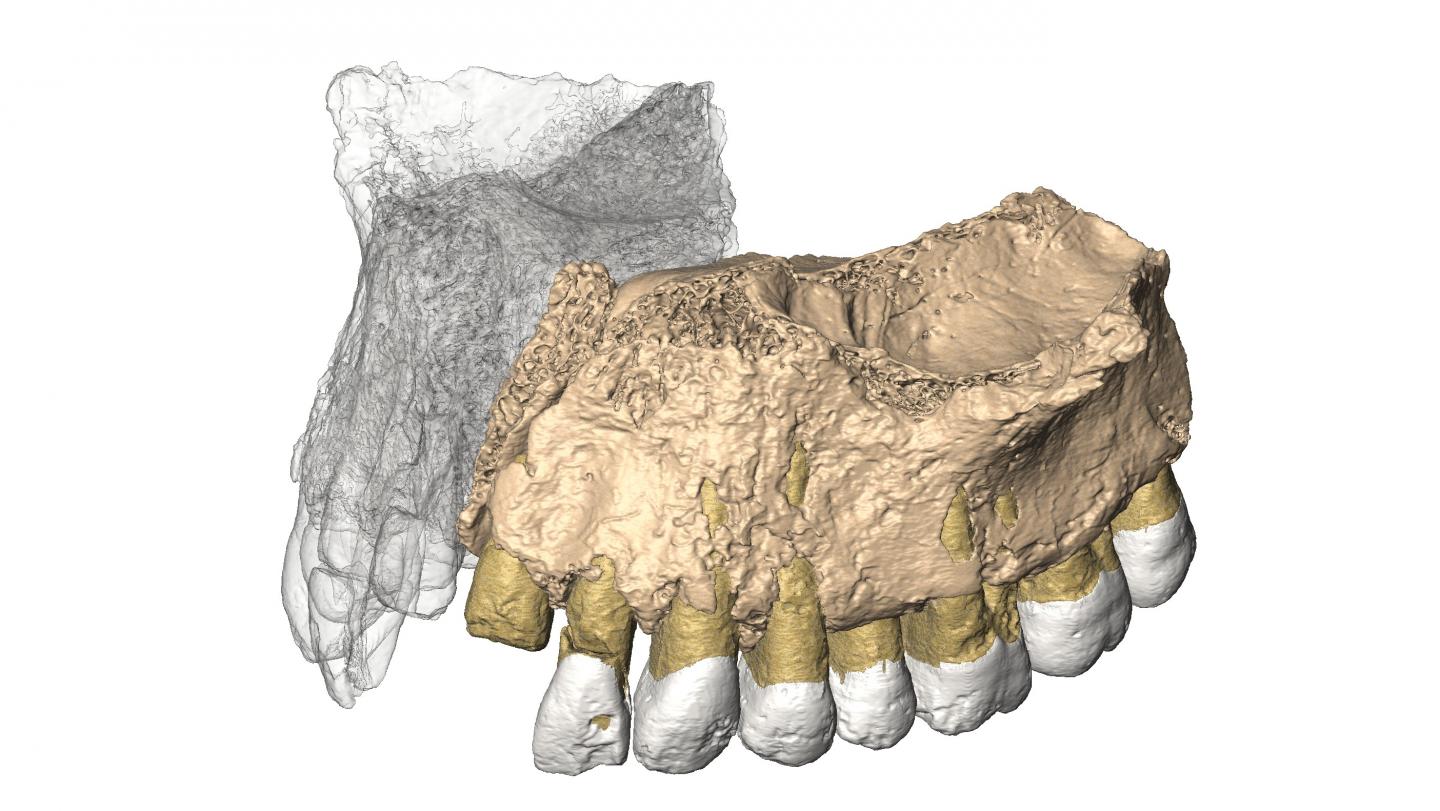
Featured image: Reconstruced maxilla from microCT images of the jawbone discovered in Israel. Image credit: Gerhard Weber, University of Vienna, Austria]]>
 Europe’s Forests Halved over last 6,000 years
More than 50% of Europe’s forests have disappeared in the last 6,000 years, new research claims. Authors of the new study identify the need for agricultural land and wood as a source of fuel as causing the massive deforestation.
The shocking findings were made through pollen analysis at over 1,000 different sites on the continent. They reveal that at one point more than two thirds of northern and central Europe were covered by trees. By contrast, now only a third of the region is covered with forest. In the UK, Ireland and other coastal areas, the amount has plummeted to less than 10%.
Published in the journal Scientific Reports, the study points out that this trend of massive deforestation is now starting to reverse due to new types of fuel and building techniques, and ecological initiatives.
“Most countries go through a forest transition and the UK and Ireland reached their forest minimum around 200 years ago,” said study lead author Neil Roberts, Professor of Physical Geography at the University of Plymouth.
“Other countries in Europe have yet to reach that point, and some parts of Scandinavia – where there is not such a reliance on agriculture – are still predominantly forest. But generally, forest loss has been a dominant feature of Europe’s landscape ecology in the second half of the current interglacial, with consequences for carbon cycling, ecosystem functioning and biodiversity.”
Along with Roberts, the study also involved scientists from Estonia, France, Germany, Sweden and Switzerland. Remarkably, in their bid to track the development of Europe’s forests over the last 11,000 years, the authors found that between 11,000 and 6,000 years ago the amount of forest coverage increased, from 60& to 80%.
The introduction of ‘modern’ farming practices in the Neolithic period started the drastic decline that accelerated towards the end of the Bronze Age and has lasted until the present.
Glass Was Made in Sub-Saharan Africa Centuries Before Europeans Arrived
Glass was being made in Sub-Saharan Africa centuries before the arrival of Europeans, new research has discovered.
Scientists from Rice University, University College London and the Field Museum say the findings represent a new chapter in the history of glass making.
Abidemi Babatunde Babalola, a recent graduate of Rice with a PhD in anthropology and a visiting fellow at Harvard University, came across evidence of early glass making during archaeological excavations at Igbo Olokun, located on the northern periphery of Ile-Ife in southwestern Nigeria. He recovered more than 12,000 glass beads and several kilograms of glass-working debris.
“This area has been recognised as a glass-working workshop for more than a century,” Babalola said. “The glass-encrusted containers and beads that have been uncovered there were viewed for many years as evidence that imported glass was remelted and reworked.”
A decade ago, it was found that the chemical composition of the glass from Ile-Ife was different to other known glass production areas, raising the possibility the glass was actually produced in Ile-Ife.
The excavations at Igbo Olokun have confirmed that possibility. The researchers analysed 52 of the glass beads discovered, revealing that none matched the chemical composition of any glass production area in the ‘Old World’. The excavations revealed that glass production at Igbo Olokun dates to the eleventh through fifteenth centuries CE, long before Europeans arrived at the west coast of Africa.
The teams’ findings have been published in the Journal of Archaeological Science.
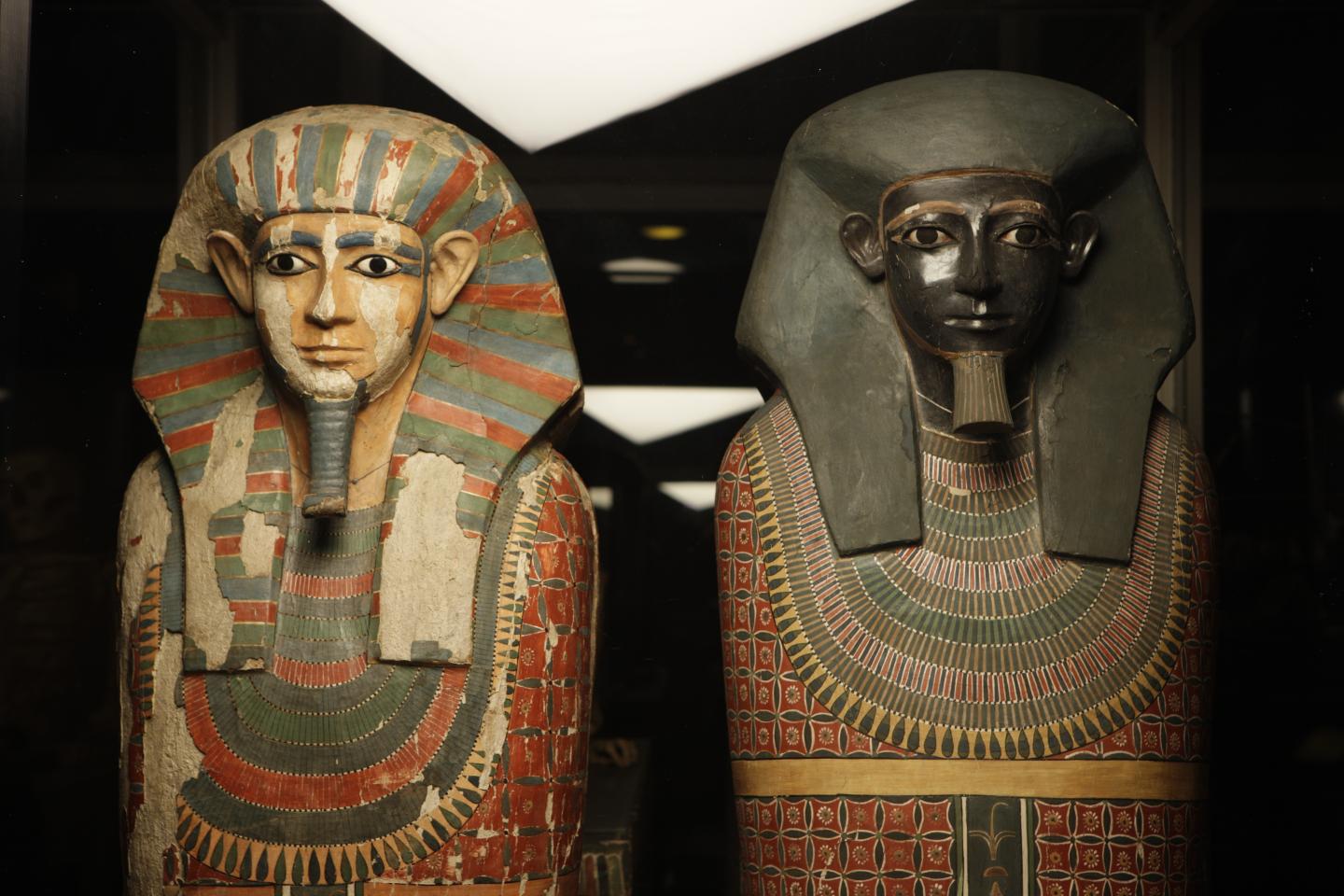
Featured Image: The Two Brothers are the Museum’s oldest mummies and amongst the best-known human remains in its Egyptology collection. They are the mummies of two elite men — Khnum-nakht and Nakht-ankh — dating to around 1800 BCE. Credit: Manchester Museum, The University of Manchester]]>