Categories
Breaking News

History News of the Week – St. Francis of Assisi Myth, Neanderthal Children, and the Rapa Nui

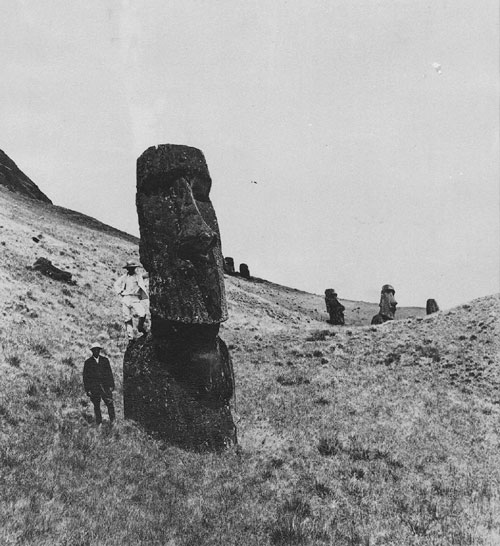
Saint Francis of Assisi Myth Proven true? For more than seven centuries the Friary of Folloni near Montella in Italy has gone to great lengths to protect some small fragments of textile. This is because of a myth claiming the fragments originate from a sack of bread that appeared on the doorstep of the friary in the winter of 1224, a sack allegedly sent from Francis of Assisi and carried to the friary by an angel. Now, an international team of scientists has determined that at least part of this myth is true. C-14 analysis has confirmed that the textile can be dated to between 1220-1295, while there is also evidence that bread had been kept in the sack. “Our studies show that there was probably bread in the sack. We don’t know when, but it seems unlikely that it was after 1732, where the sack fragments were inmured in order to protect them. It is more likely that bread was in contact with the textile in the 300 years before 1732; a period, where the textile was used as altar cloth — or maybe it was indeed on the cold winter’s night in 1224 — it is possible,” said research leader Kaare Lund Rasmussen, a specialist in archaeo-chemical analysis from the University of Southern Denmark, and the leader of the research team. Unfortunately, the researchers have not been able to address the question of how the bread sack ended up at the friary. “This is maybe more a question of belief than science,” said Rasmussen, in a statement. The results of the study have been published in the journal Radiocarbon. New Insights Into How Neanderthals Grew Pioneering research has shed light on how Neanderthals, the closest extinct evolutionary cousins to modern humans, grew. A study led by Antonio Rosas, researcher at the Spanish National Research Council (CSIC), looked at the fossilised remains of an eight-year-old Neanderthal child’s skeleton to establish whether there are any differences in the growth of Neanderthals and Homo sapiens. Published in the journal Science, the study determined that both species do indeed regulate their growth differently. Neanderthals had a greater cranial capacity than modern humans, an intracranial volume of 1,520 cubic centimetres for a Neanderthal adult compared to 1,195 cubic centimetres for a modern human. Tellingly, the intercranial volume of the Neanderthal child had already reached 1,330 cubic centimetres at the time of his death. In other words, it had reached 87.5% of the total by around eight years of age. For a modern human child, the full development of cranial capacity would already have been reached by that age. “Developing a large brain involves significant energy expenditure and, consequently, this hinders the growth of other parts of the body. In sapiens, the development of the brain during childhood has a high energetic cost and, as a result, the development of the rest of the body slows down,” Rosas explained. According to the research, the skeleton and dentition of the young Neanderthal present a physiology which is similar to that of a sapiens of the same age, except for the thorax area, which corresponds to a child between five and six years, in that it is less developed. “The growth of our Neanderthal child was not complete, probably due to energy saving”, explains CSIC researcher Antonio Rosas. It was also determined by the study that the maturation of the Neanderthal child’s vertebral column occurred around two years later than it would in an anatomically modern human. In all hominids, the cartilaginous joints of the middle thoracic vertebrae and the atlas are the last to fuse, but in this Neanderthal, fusion occurred about two years later than in modern humans. “The delay of this fusion in the vertebral column may indicate that Neanderthals had a decoupling of certain aspects in the transition from infancy to the juvenile phase. Although the implications are unknown, this feature could be related to the characteristic enlarged shape of the Neanderthal torso, or slower brain growth”, says Rosas. New Insight into the Size of Rapa Nui’s Population When Europeans first arrived on Rapa Nui (aka Easter Island), they estimated the population to be between 1,500 and 3,000, numbers which seemed strikingly low considering the nine hundred giant stone statues located around the island. Now, a new study hopes to give a new estimation of the population of Rapa Nui, based on the island’s farming potential, and hopefully provide some explanation as to how the spectacular statues could have been built. “Despite its almost complete isolation, the inhabitants of Easter Island created a complicated social structure and these amazing works of art before a dramatic change occurred,” said Dr. Cedric Puleston, lead author of the study, from the Department of Anthropology, University of California, Davis, USA. “We’ve tried to solve one piece of the puzzle – to figure out the maximum population size before it fell. It appears the island could have supported 17,500 people at its peak, which represents the upper end of the range of previous estimates.” He added: “If the population fell from 17,500 to the small number that missionaries counted many years after European contact, it presents a very different picture from the maximum population of 3,000 or less that some have suggested.” Rapa Nui’s history has long been a source of controversy. Much archaeological evidence has suggested that the population had been much higher than the small number encountered by the first Europeans to arrive at the island. What caused this massive population drop-off however, has remained shrouded in mystery, with theories ranging from war to the island’s resources being exhausted through over use. Puleston and colleagues examined the agricultural potential of the island, to calculate how many people the island could have sustained. “We examined detailed maps, took soil samples around the Island, placed weather stations, used population models and estimated sweet potato production. When we had doubts about one of these factors we looked at the range of its potential values to work out different scenarios,” Puleston explained. “The result is a wide range of possible maximum population sizes, but to get the smallest values you have to assume the worst of everything. If we compare our agriculture estimates with other Polynesian Islands, a population of 17,500 people on this size of island is entirely reasonable.” ]]>
Categories
Breaking News

History News of the Week: A Discovery to Rewrite the Story of Mankind?

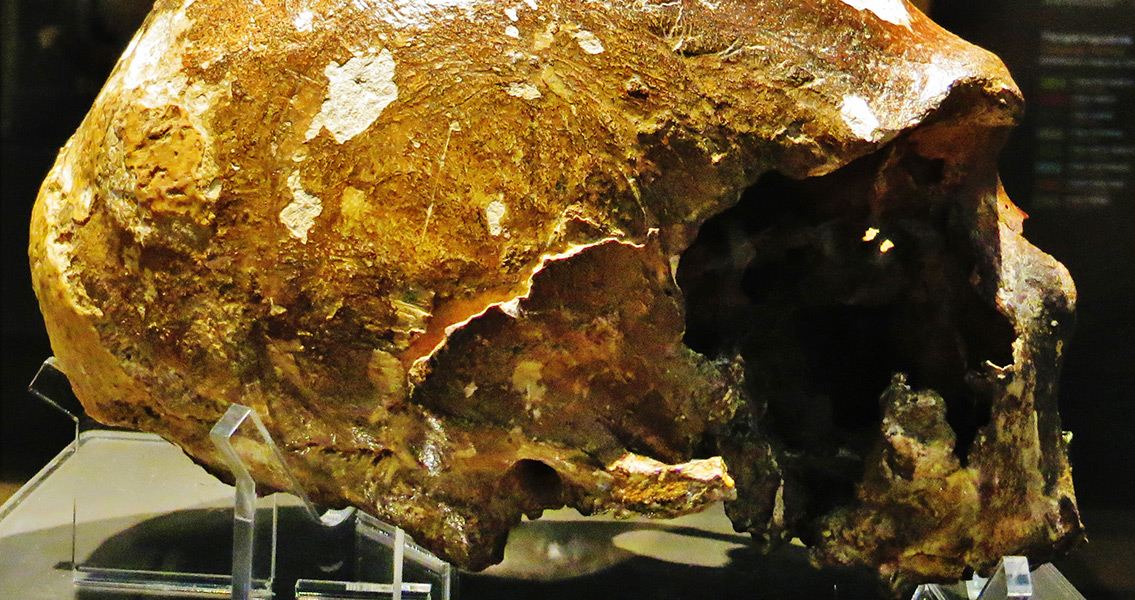
Shock as oldest Homo sapiens are found in an unexpected place Fossil remains of Homo sapiens, along with stone tools and animal bones, have been found in Jebel Irhoud, Morocco. The three hundred-thousand-year-old bones are the oldest Homo sapiens remains ever discovered, and could drastically rewrite our understanding of humanity’s origins. A hundred thousand years older than the next oldest securely dated Homo sapiens remains, the discovery suggests that the evolution of mankind was far more complicated than traditionally thought, and involved the entire African continent. Until now, the oldest Homo sapiens remains had all been found in East Africa, in the area around that is now Ethiopia, leading scientists to conclude that modern humans all descended from a population living in that region. “We used to think that there was a cradle of mankind 200 thousand years ago in east Africa, but our new data reveal that Homo sapiens spread across the entire African continent around 300 thousand years ago. Long before the out-of-Africa dispersal of Homo sapiens, there was dispersal within Africa,” said palaeoanthropologist Jean-Jacques Hublin, one of the authors of two papers appearing in the journal Nature that detail the discovery. The fact that Homo sapiens had spread to North Africa by three hundred thousand years ago suggests the origins of our species happened much earlier than previously thought. Japan’s largest dinosaur skeleton discovered The complete, eight-metre-long skeleton of a dinosaur has been excavated from 72-million-year-old marine deposits on Japan’s northern island, Hokkaido. It is the largest dinosaur skeleton ever discovered in Japan, according to researchers. A member of the duck-billed hadrosaurid family, excavations to uncover the spectacular skeleton started in 2013, in the Hobetsu district of Mukawa Town. According to the research team from Hokkaido University and Hobetsu Museum in Mukawa, it is only the third time in history a complete hadrosaurid skeleton has been found in marine deposits, and the first time such a finding has been made in Japan. Nicknamed Mukawaryu (Mukawa Dragon), it is only the second complete dinosaur skeleton to have been unearthed in Japan. Dr. Yoshitsugu Kobayashi of the research team said: “We first discovered a part of the fossilized Mukawaryu skeleton in 2013, and after a series of excavations, we believe we have cleaned more than half of the bones the dinosaur had, making it clear that it is a complete skeleton.” There are more than 50 kinds of dinosaur in the hadrosaurid group, divided into two categories: crested (Hadrosaurinae), and uncrested (Lambeosaurinae). “Although Mukawaryu has some characteristics of both groups, our preliminary analysis indicated it might belong to the Hadrosaurinae. Further cleaning of the fossils and detailed research should make it clearer which group the Mukawaryu skeleton belongs to,” said Kobayashi. Ancient Egyptians were closer to Europeans than modern Egyptians For the first time, scientists have successfully sequenced the DNA of Egyptian mummies. The findings reveal that the Ancient Egyptians had more in common genetically with the people of the eastern Mediterranean than those living in modern day Egypt. The research was carried out by scientists from the Population Genetics Group at the Max Planck Institute for the Science of Human History, in Jena, Germany, and has been published in the journal Nature Communications. Although there are thousands of sets of mummy remains worldwide, until now extracting the DNA has proven a challenge. “Researchers were generally skeptical about DNA preservation in Egyptian mummies, due to the hot climate, the high humidity levels in tombs and some of the chemicals used during mummification, which are all factors that make it hard for DNA to survive for such a long time,” Stephan Schiffels from the Max Planck Institute told Live Science. Schiffels and colleagues used an innovative new method called next generation sequencing, which allows human DNA to be extracted from other types to tell if a fragment is very old or suspiciously new. For this study, they focused on mummies from between 1380 BCE and 425 CE. When the mummy DNA was compared with genetic samples from modern Egyptians, they found that it had significantly less sub-Saharan ancestry than the modern samples. The scientists were only able to speculate on why this genetic change occurred. “One possible cause could be increased mobility down the Nile and increased long-distance commerce between sub-Saharan Africa and Egypt,” said Schiffels. Image courtesy of Philipp Gunz, MPI EVA Leipzig (License: CC-BY-SA 2.0) ]]>

Categories
Breaking News

Shock discovery that Homo naledi may have lived alongside modern humans

Homo naledi likely lived alongside modern humans, according to a newly published study. First discovered at the Rising Star Cave in South Africa in September 2015, Homo naledi quickly caused a stir in the scientific community. It is believed the creatures may be one of the earliest members of the homo genus, which includes our own species, homo sapiens, and our closest extinct relatives, the Neanderthals (Homo neanderthalensis). Professor Paul Dirks and Associate Professor Eric Roberts from James Cook University have been analysing Homo naledi fossils for the past few years, indeed, they were involved in the first paper describing Homo naledi. By using state-of-the-art techniques, they have now concluded that Homo naledi is between 236,000 and 335,000 years old. “The oldest dated fossils of Homo sapiens in Africa are around 200,000 years old. And now we have a very primitive looking hominid that probably existed at the same time as them. This is the first time one of these primitive hominids has been found in association with more modern humans in Africa,” Professor Dirks said in a press release from James Cook University. Dating was achieved using a combination of the fossil remains and their surrounding sediments. The team has since commenced work on studying a recently discovered second chamber in the cave system, distinct from the one where the initial Homo naledi discovery was made. The dates the team attribute to the fossils have the potential to be hugely significant. “When we first identified the fossils, most of the paleo-anthropologists on site were convinced that they would be a million or two million years old, but we have now shown they are much more recent. It means that a primitive hominid persisted on the landscape in Africa for a very substantial period of time. Well beyond what paleo-anthropologists predicted to be possible”, explained Prof. Dirks. The area around the cave where the Homo naledi fossils were found is littered with prehistoric tools which are typically thought to have been the work of Homo sapiens. The new dating of Homo naledi however, might lead to a rethink on the origins of those tools. “The new dating puts it on the landscape at a time from which we find lots of tools in Africa in the middle stone-age. One of the implications of the new dates is that it’s no longer automatically possible for us to assume that early homo sapiens were making these tools.” Professor Roberts said the team were confident about the new dates. “Much of the initial work on the age range was done here at JCU in our advanced analytic centre. But to get the final date range we used ten different labs and six different techniques which also involved double-blind testing.” Since Homo naledi’s first discovery, a number of figures have been suggested for the age of the remains with each subsequent study seeming to claim the hominid was more recent. A comparative skull study with other members of the Homo genus in December 2015 concluded Homo naledi was around two million years old. In July 2016, another study claimed Homo naledi was only around 900,000 years old. Dirks and Robert’s discovery will likely have far reaching consequences for the study of evolution. “We have many different branches on the family tree and it is only fairly recently that there is only one survivor on the landscape. The new dating of the fossils opens up all sorts of possibilities for an interchange of tool use, cultural activities and behaviours between Homo naledi and homo sapiens,” concluded Dirks. ]]>

Categories
Breaking News

Could Neanderthals Speak Like Modern Humans?

producing jewelry. Following the discovery of the first Neanderthal fossils at the the start of the twentieth century, archaeologists dismissed our closest extinct cousins as primitive; the latest discoveries are increasingly challenging this assumption. Published in the Proceedings of the National Academy of Sciences, the study led by Alexander Stoessel and Jean Jacques Hublin from the Department of Human Evolution, Max Planck Institute for Evolutionary Anthropology, analysed ossicles in both Neanderthals and Homo Sapiens. The three tiniest bones in the body, ossicles are the coupling between the ear drum and the oval window of the inner ear. Until now, it was considered impossible to perform detailed comparisons of Neanderthal ossicles due to an extremely limited sample size, and the unavailability of methods to analyse the relationship between the bones and other parts of the ear structure. For their study, the authors present the largest sample of Neanderthal ossicles unearthed to date, from a variety of different geographic regions, and times. Using detailed ‘Micro CT scans’, the team were able to quantify the shape and functional properties of Neanderthal ossicles. From this, they were able to make comparisons with AMHs, as well as African Apes. “Based on microcomputed tomography images, our comparative 3D shape analysis of Neandertal ossicles shows striking shape differences between Neandertals and anatomically modern humans. However, these morphological differences do not affect the functional properties of the ossicles, potentially indicating consistent aspects of vocal communication in Neandertals and AMHs.” the team write in the study. Scientists have previously suggested that Neanderthals were so primitive they were only able to speak in grunts and groans. The new research adds to other recent studies arguing Neanderthals may in fact have had the ability to speak. The team’s findings suggest that despite some clear anatomical differences between the ears of Neanderthals and modern humans, they essentially functioned in the same way, giving Neanderthals similar auditory sensitivity to humans. When compared to the African apes however, the human and Neanderthal ear anatomies have little in common. “These functionally equivalent solutions could indicate selective pressures acting on the middle ear for conserving a similar auditory sensitivity inherited from the last common ancestor of anatomically modern humans and Neanderthals.” It’s a conclusion that suggests the differences between humans and Neanderthals could be more down to the species taking separate evolutionary paths than one being more advanced than the other. The study also raises fascinating questions about the origins of the complex languages humans use today For more information, the study itself can be found here]]>

Categories
Breaking News

High Protein Diet Caused Differences Between Neanderthals and Humans

homo sapiens‘ closest extinct relatives. Although bearing many physical similarities to a modern human, there is no doubt that the two species are markedly different in appearance. Neanderthals were shorter and stockier than humans, with significantly wider rib cages and larger pelvises. Published in the July edition of the American Journal of Physical Anthropology, the new study argues that these differences were the result of Neanderthals having to adapt to a high-protein diet. The conclusion was reached using a model the researchers developed to detect dietary stress. Neanderthals lived in Ice-Age Europe, demonstrating remarkable resilience by surviving the brutally cold conditions. The authors of the study, from the Tel-Aviv University (TAU) in Israel, suggest that Neanderthals changed their diets during the coldest periods of the Ice Age, taking between 74% and 85% of their caloric intake from animal fat when carbohydrates weren’t available. However, during winter, large animals shed some of their fat content, a fact which according to the model developed by the researchers would have led to a “significant stressful dietary fat deficit” for the Neanderthals. The authors suggest that this deficit could have been ameliorated by an increased capability to convert protein into energy. “Given that high protein consumption is associated with larger liver and kidneys in animal models, it appears likely that the enlarged inferior section of the Neandertals’ thorax and possibly, in part, also his wide pelvis, represented an adaptation to provide encasement for those enlarged organs.” the authors write, in the abstract to their study. “During harsh Ice-Age winters, carbohydrates were scarce and fat was in limited supply. But large game, the typical prey of the Neanderthal, thrived,” explained study coauthor Miki Ben-Dor, of the Department of Archaeology and Ancient Near Eastern Cultures at TAU, in an interview with the Pakistan Observer. “This situation triggered an evolutionary adaptation to a high-protein diet – an enlarged liver, expanded renal system and their corresponding morphological manifestations. All of these contributed to the Neanderthal evolutionary process.” Ben-Dor continued. The liver is the organ responsible for converting protein into energy, and is therefore likely to enlarge with a high protein diet. Such a diet also increases metabolism, placing a greater demand on the kidneys and bladder to remove toxic urea, and in turn leading to their enlargement. Consequently, the study reasons, Neanderthal pelvises and rib cages had to evolve to house these larger organs. Protein only makes up 30% of the diet for homo sapiens on the other hand, meaning humans have a limited ability to convert protein to energy. Homo sapiens therefore increase their intake of fat and carbohydrates to meet their nutritional needs. ]]>

Categories
Breaking News

Fossilized Teeth Reveal Ancient Human Habitation

www.nature.com

Categories
Breaking News

50,000-Year-Old Bones Found in Altai

Categories
Breaking News

More Evidence of Human-Neanderthal Interbreeding in Europe

Vulnerable Apes hypothesis, added another perspective to the question of interbreeding: it may well be the case that the Neanderthal who passed his or her genes to the Oase man also had Homo sapien genes from an earlier hybridisation. This suggestion points to a greater than traditionally believed complexity of human evolution, especially in light of other recent studies that have revealed the Neanderthals were far from the primitive cavemen we used to think they were. For more information: An early modern human from Romania with a recent Neanderthal ancestor Image courtesy of Wikimedia Commons user: Gregory F. Maxwell]]>

Categories
Breaking News

Jawbone Fossil Analysis Could Push Back Human Origins

Categories
Breaking News

Stone Age Skull Shows Striking Diversity

H. sapiens of the time. Interestingly, the skull was relatively thick, possibly as a result of damage, nutritional stress, or a very active childhood. “It looks like nothing else, and so it shows that original diversity that we’ve since lost,” said study co-author Christian Tryon, archaeologist at Harvard University’s Peabody Museum. “It’s probably an extinct lineage.” There is not enough evidence, however, to suggest this fossil is a new subspecies of H. sapien, Tryon stressed. The skull fragment was originally found in the 1970s, at the Lukenya Hill site in Kenya. Tryon and his team analysed the skull which is now part of the collection at the National Museum of Kenya, in Nairobi. The findings are described in the journal ‘Proceedings of the National Academy of Sciences’. Lukenya Hill has also revealed artefacts that are more than twice the age of the skull; 46,000-year-old ostrich eggshells have been found which were probably used to make beads. The Lukenya Hill excavations could offer clues about how human culture shifted when the ancestors of modern humans left Africa, about 50,000 years ago. Relatively little is known about humans before they settled down into farming communities. Only a handful of human burials have been found which are older than 12,000-years-old, said Stanley Ambrose, an archaeologist and paleoanthropologist at the University of Illinois, who was not involved in the study. Modern-day Africans have a tremendous amount of genetic diversity when compared to other populations. The new findings suggest that during a very early period of human history, Africa may have supported even greater human diversity, Tryon said. The finds from Lukenya Hill come from a very important moment in human history. The artefacts there originate from the time that many scientists believe a ‘light switch moment’ occurred, when early humans became smarter. In the period between 20,000 and 50,000 years ago, early humans began to trade over vast distances; they also fashioned decorative beads and made lightweight stone points, not much different from arrow blades. “They’re very simple little segments of blades that are easy to make, but they’re very small and lightweight and they fit into little slots on the ends and sides of arrows,” Ambrose said. “We know that the [ancient] Egyptian ones had traces of poison on them.” The Lukenya Hill fragments provide a very important piece of evidence of human culture at a highly critical juncture. For more information: www.pnas.org Image courtesy of Wikimedia commons user: Citron]]>