Categories
Book Reviews

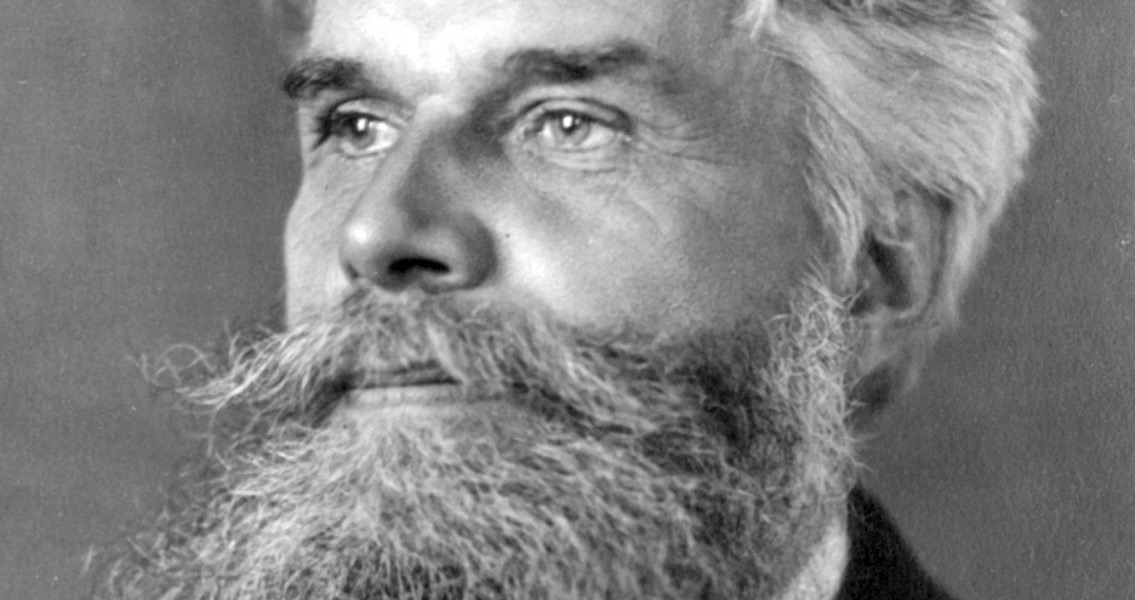
Sex, Health and Government – The Work Of Havelock Ellis

The Nationalisation of Health suggested that the state held responsibility for the health of its citizens. Coming over fifty years before the foundation of the NHS, it was a revolutionary suggestion for its time. The book describes the hospitals of the future, the role of private practitioners, and the need for a Health Minister. Two years later, Man and Woman: A Study of Human Secondary Sexual Characters was published. It was Havelock Ellis’ first study of sexology, coming as the result of over 12 years of research. Attempting to ground the study of gender in biology, the work was in some ways symptomatic of its time. The book traces the history of women’s position in society, from the prehistoric period through medieval times and into the Victorian era, and attempts to analyse the social and economic problems connected to womanhood in the still deeply patriarchal societies of the late nineteenth century. Although some of the conclusions the book reaches about the physical and mental differences between men and women may seem at best overly simplistic and at worse downright sexist now, it was groundbreaking in stressing that men and women had complementary abilities crucial to society, rather than one being more valuable than the other. “Woman is not undeveloped man, but diverse.” ‘Man and Woman’ laid the basis for what is perhaps Havelock Ellis’ best known work, and certainly the most important – ‘Studies in the Psychology of Sex’. The first of the seven volume work, ‘Sexual Inversion’, is perhaps the most significant. Published in 1897, just two years after Oscar Wilde’s conviction for sodomy, the book is the earliest serious study of homosexuality (what Havelock Ellis referred to as ‘Inversion’) and truly innovative considering its context. Highlighting that homosexuality was present in both the animal kingdom and throughout history, ‘Sexual Inversion’ argued that it was a natural occurrence rather than a symptom of social decay, mental illness, or moral degeneracy. Unsurprisingly, the book caused an uproar and was quickly banned. In 1898 George Bedborough was charged with selling copies, the prosecution claiming he “sold and uttered a certain lewd wicked bawdy scandalous and obscene libel in the form of a book entitled Studies in the Psychology of Sex: Sexual Inversion.” Authorities associated the book with anarchism, showing just how dramatically it had shocked a still incredibly reactionary society. For years, the groundbreaking work was only available to the medical profession. Subsequent volumes of ‘Studies in the Psychology of Sex’ would go on to discuss issues such as masturbation and the physiology of sexual behaviour. Throughout, the unifying theme was an attempt to dispel fear and ignorance with open discussion, portraying sexuality as a natural expression of love. In that sense, Havelock Ellis’ works were crucial in defying the rigid repression of Victorian Society.

Related Books


Studies in the Psychology of Sex book

Studies in the Psychology of Sex
The Evolution of Modesty the Phenomena of Sexual Periodicity Auto-Erotism Vol. 1Vol. 1
by Havelock Ellis

[gap height=”20″] ]]>

Categories
Editorial

'Viral' Photo Points to Changing Attitudes on Homosexuality

Obergefell vs. Hodges that state level bans on same-sex marriage were unconstitutional. In Europe, the 2015 Europride – a pan-European international event dedicated to LGBT pride on the continent – was held in Riga, Latvia, marking the first time in the annual event’s twenty-three year history that it was held in a former communist country on the EU’s eastern border. Just last week a photo of a tearful teenage boy by renowned “Humans of New York” photographer Brandon Stanton, captioned “I’m homosexual and I’m afraid about what my future will be and that people won’t like me”, went viral, resulting in an international outpouring of support for the teenage boy. The post even grabbed the attention of Hilary Clinton. Undoubtedly there are still places in the world where Lesbian, Gay, Bi-sexual and Transgender people face persecution, from both their fellow citizens and their own governments. The image, and the response to it, highlight the continued concerns and anxieties for LGBT people, but also how much attitudes have changed in a comparatively short space of time. A look at the history of perceptions of homosexuality in Britain and the USA can provide clear examples of just how drastically ideas have changed, at least politically and legally, over the last seventy years. Just 130 years ago, in 1885, the Labouchere Amendment was passed in Britain which created the offence of gross indecency. This made all sex acts between men illegal, the law clearly targeted at criminalising homosexuality. A decade later Oscar Wilde, author of ‘The Picture of Dorian Grey’, was prosecuted under indecency laws and sentenced to two years imprisonment. The judge at the trial stated that he thought the punishment he’d administered, the harshest he legally could, was inadequate for Wilde’s ‘crime’. In 1952, Alan Turing, the key figure in the cryptoanalytic work at Bletchley Park which cracked the Enigma codes, and a pioneering engineer in the development of the computer, was brought to trial on charges of having a sexual relationship with a man. Turing made no attempt to deny or defend his actions, instead making clear that he felt that there had been nothing wrong in his actions. Inevitably found guilty, Turing opted to receive sterilising injections for a year instead of facing a lengthy prison sentence. After the Second World War had ended, Turing worked at the secretive intelligence agency, GCHQ, (Government Communications Headquarters). Following the revelations about his sexuality however, Turing lost his security clearance to work at GCHQ, highlighting Cold War fears that homosexuals presented a security risk. A similar pattern occurred in the USA. Throughout the 1940s and 1950s countless reports were published arguing that homosexuality was a serious threat to society. The 1950 Senate Commissioned report “Employment of Homosexuals and Other Sex Perverts in Government”, argued that homosexuality was a mental illness which constituted a national security risk. Most shockingly, this report openly admitted that the federal government had covertly monitored its employees sexual persuasion in the early years of the Cold War. Highlighting just how seriously these views on sexuality could affect people’s lives, some 4,380 gay men and women had been discharged from the military, and 500 fired from their jobs in the US government in the years leading up to the publication of the report. In April 1953, President Dwight D. Eisenhower signed a bill prohibiting homosexuals from working in the federal government or for any of its contractors. Britain only decriminalised homosexuality in 1967, through the Sexual Offences Act. Even then, homosexual relationships were still burdened with strict restrictions when compared to heterosexual relationships. It would be decades for example, until the same age of consent was applied to homosexual relationships as heterosexual. In the USA reform started in 1962, when the state of Illinois decrimininalised same sex relationships. From there a gradual process started, as other states slowly implemented similar reforms. It wasn’t until 2003 that the Supreme Court struck down the sodomy laws in the fourteen states that still had them. Of course, throughout this period and before, in both the UK and the USA, there were a plethora of campaigners working tirelessly to win acceptance for LGBT rights and to push for legal reforms, laying the groundwork for the increased acceptance we can see today, most explicitly in the response to Stanton’s photograph. It is of course vital to celebrate and acknowledge these campaigners endeavors. Attitudes to homosexuality have had varied histories around the world. In the case of the USA and UK however, the legal, political and social acceptance of homosexuality just seventy years ago was almost unrecognisable to what it is today. Image courtesy of Wikimedia Commons user: Nikodem Nijaki ]]>

Categories
News

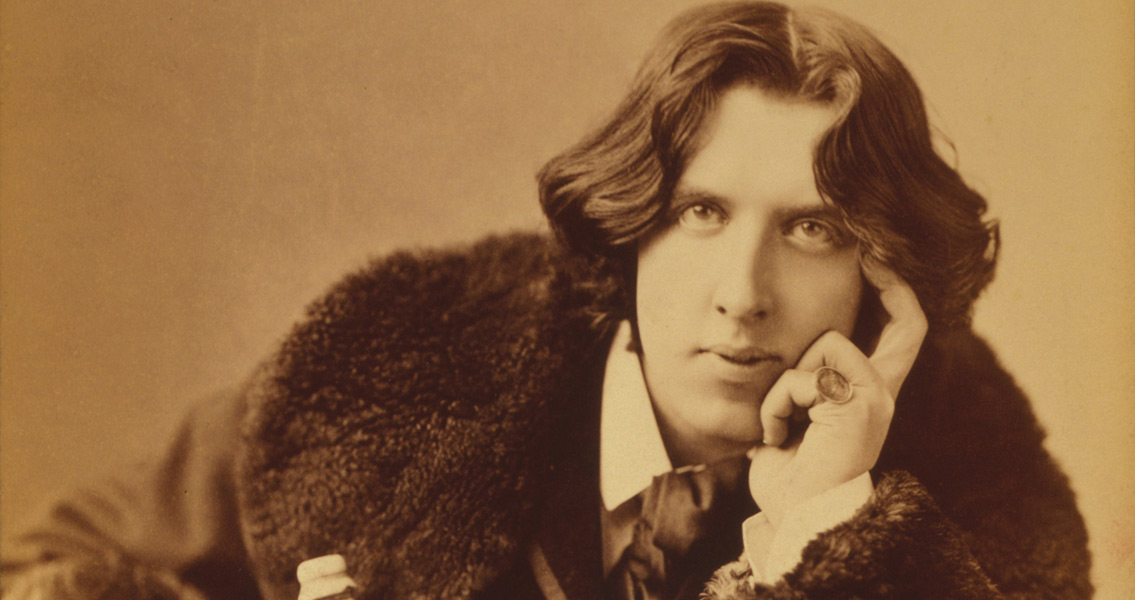
Oscar Wilde Released from Prison

Picture of Dorian Grey, was published in 1891, the same year that he wrote his first play: The Duchess of Padua. In 1895, John Sholto Douglas, 9th Marquess of Queensberry, denounced Wilde as a homosexual. The Marquess suspected that Wilde was in a relationship with his son, Lord Alfred Douglas, and started to publicly label Wilde a sodomite. Famous for the ‘Marquess of Queensbury Rules’ which are the basis of modern boxing, the Marquess was a well known atheist who had been ousted from the House of Lords as a madman for his controversial views. His personal life was also beset with chaos and tragedy. His father and brother had died while he was still in his youth, his first wife had left him because of his adultery, and his second wife had their marriage annulled on the basis that the Marquess’ impotence prevented consummation. Most pertinently, his heir, Lord Drumlanrig, was killed in a shooting accident in 1894. It was speculated at the time that Drumlanrig had been involved in a homosexual relationship with Lord Roseberry, the Liberal Prime Minister, with some even suggesting Drumlanrig had been killed to cover up what would have been an illegal relationship. Wilde responded to the accusations, ignoring the advice of his friends, by suing the Marquess of Queensbury for libel. Obviously, Wilde knew that the Marquess’ accusations were not libelous, but he seems to have assumed that it would be impossible for the claims to be proven. The plan backfired. The Marquess was able to supply evidence that Wilde had solicited twelve boys to commit sodomy between 1892 and 1894, and Wilde withdrew his case. The crown, obliged by the fact that homosexuality was still illegal in England, issued a warrant for Wilde’s arrest on charges of indecency. Some historians have suggested that a major reason Wilde’s case was so aggressively pursued was the lack of aristocratic privilege mentioned above, as well as anti-Irish sentiment in England making him an easy figure to use as an example to others. Preliminary hearings saw Wilde’s chambermaids and a hotel housekeeper state that they had seen young men in Wilde’s bed. A first trial saw Wilde escape conviction after a single juror refused to convict, but the crown opted to prosecute again (some have speculated this was under pressure from the Marquess, who threatened to reveal details of Lord Roseberry’s alleged homosexuality). Wilde was found guilty of gross indecency, and sentenced to two years of hard labour. Revealing the attitude towards homosexuality of the time, the judge remarked at the trial that he felt this punishment, the maximum he could give, was “totally inadequate.” Upon his release, Wilde fled to Paris, a country which had no laws against homosexuality, and tried to resume his writing career. He died of meningitis in 1900. For decades, his writing and plays were largely ignored, revealing the powerful stigma associated with homosexuality in the late nineteenth and early twentieth century. Image courtesy of Wikimedia Commons user: Library of Congress]]>