Categories
Book Reviews

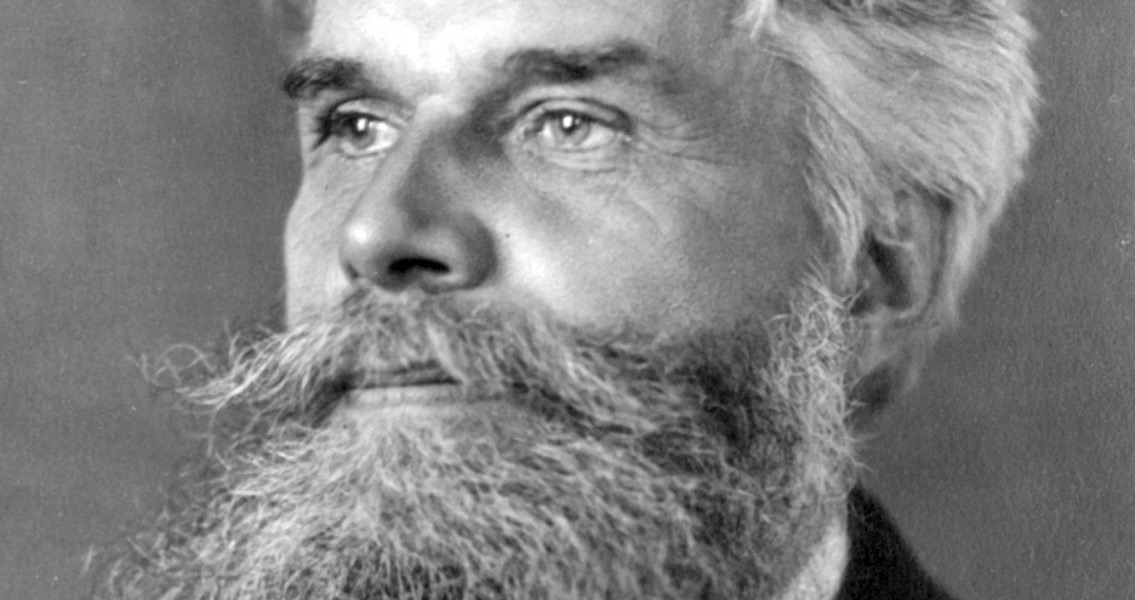
Sex, Health and Government – The Work Of Havelock Ellis

The Nationalisation of Health suggested that the state held responsibility for the health of its citizens. Coming over fifty years before the foundation of the NHS, it was a revolutionary suggestion for its time. The book describes the hospitals of the future, the role of private practitioners, and the need for a Health Minister. Two years later, Man and Woman: A Study of Human Secondary Sexual Characters was published. It was Havelock Ellis’ first study of sexology, coming as the result of over 12 years of research. Attempting to ground the study of gender in biology, the work was in some ways symptomatic of its time. The book traces the history of women’s position in society, from the prehistoric period through medieval times and into the Victorian era, and attempts to analyse the social and economic problems connected to womanhood in the still deeply patriarchal societies of the late nineteenth century. Although some of the conclusions the book reaches about the physical and mental differences between men and women may seem at best overly simplistic and at worse downright sexist now, it was groundbreaking in stressing that men and women had complementary abilities crucial to society, rather than one being more valuable than the other. “Woman is not undeveloped man, but diverse.” ‘Man and Woman’ laid the basis for what is perhaps Havelock Ellis’ best known work, and certainly the most important – ‘Studies in the Psychology of Sex’. The first of the seven volume work, ‘Sexual Inversion’, is perhaps the most significant. Published in 1897, just two years after Oscar Wilde’s conviction for sodomy, the book is the earliest serious study of homosexuality (what Havelock Ellis referred to as ‘Inversion’) and truly innovative considering its context. Highlighting that homosexuality was present in both the animal kingdom and throughout history, ‘Sexual Inversion’ argued that it was a natural occurrence rather than a symptom of social decay, mental illness, or moral degeneracy. Unsurprisingly, the book caused an uproar and was quickly banned. In 1898 George Bedborough was charged with selling copies, the prosecution claiming he “sold and uttered a certain lewd wicked bawdy scandalous and obscene libel in the form of a book entitled Studies in the Psychology of Sex: Sexual Inversion.” Authorities associated the book with anarchism, showing just how dramatically it had shocked a still incredibly reactionary society. For years, the groundbreaking work was only available to the medical profession. Subsequent volumes of ‘Studies in the Psychology of Sex’ would go on to discuss issues such as masturbation and the physiology of sexual behaviour. Throughout, the unifying theme was an attempt to dispel fear and ignorance with open discussion, portraying sexuality as a natural expression of love. In that sense, Havelock Ellis’ works were crucial in defying the rigid repression of Victorian Society.

Related Books


Studies in the Psychology of Sex book

Studies in the Psychology of Sex
The Evolution of Modesty the Phenomena of Sexual Periodicity Auto-Erotism Vol. 1Vol. 1
by Havelock Ellis

[gap height=”20″] ]]>

Categories
Breaking News

Dinosaurs Used Horns and Frills For Sexual Display

Protoceratops andrewsi being greater than the overall growth of the animal by demonstrating positive allometry.” As well as changing in shape, the frill also changed in size, becoming proportionately wider as the dinosaur got older. This has been taken by the QMUL team as evidence that the frills were connected to sexual selection. As they explain in the study, although there are some exceptions in the animal kingdom where positive allometric traits are not connected to sexual selection, they are incredibly rare. “If a trait is shown to be positively allometric then, in the absence of a plausible alternative regarding its evolution, we can take this as evidence supporting a hypothesis of evolution via sexual selection or socio-sexual dominance signals.” Other explanations for the horns and frills on Ceratopsian dinosaurs exist. Some palaeontolgists have argued that the horns and frills were merely a means of defence against predators, while others have suggested that the ornamental bone structures were a means for the animals to identify other members of their herd. These explanations are not mutually exclusive, and it is possible that the structures had multiple functions. Meanwhile, the authors of the study argue that the findings provide further evidence of the importance of sexual selection in shaping biodiversity. “Biologists are increasingly realising that sexual selection is a massively important force in shaping biodiversity both now and in the past. Not only does sexual selection account for most of the stranger, prettier and more impressive features that we see in the animal kingdom, it also seems to play a part in determining how new species arise, and there is increasing evidence that it also has effects on extinction rates and on the ways by which animals are able to adapt to changing environments.” said Dr Rob Knell, Reader in Evolutionary Ecology, also from QMUL’s School of Biological and Chemical Sciences. Image courtesy of Wikimedia Commons user: Luis Miguel Bugallo Sánche]]>

Categories
Breaking News

Mating Rituals of Dinosaurs Like Those of Birds

Scientific Reports. Evidence of the mating ceremony has been left behind in 100 million year old fossils, according to Martin Lockley, a professor of geology at the University of Colorado Denver and the author of the study. Modern male birds perform a mating ritual known as ‘nest scrape display’ or ‘scrape ceremonies’, where they show off their prowess as a provider by excavating pseudo nests for potential mates. An international research team led by Lockley discovered large ‘scrapes’ in the prehistoric Dakota Sandstone of western Colorado, which they’ve interpreted as evidence of scrape ceremonies among Cretaceous Dinosaurs. “Thus, these scrapes represent a hitherto unrecognised category of physical trace fossil evidence ostensibly associated with early behavioural phases in the breeding cycle of non-avian theropod dinosaurs”, Lockley writes in the study itself. The findings make a significant addition to what is currently a major focus of paleobiological research: the connection between dinosaurs and modern bird species. Despite extensive phylogenetic and morphological evidence highlighting physical and biological similarities, the latest discovery provides a rare example of behavioural evidence preserved in the fossil record. Four sites in the Cretaceous Dakota Sandstone of Colorado have been identified by the team as containing traces of large nest scrape display. Significantly, the traces are spread out over a broad area, with three sites discovered in the west of the state and one in the east, suggesting nest scrape display rituals were widespread among the dinosaurs that inhabited the region. In a press release, Lockley explained the significance of the find: “These are the first sites with evidence of dinosaur mating display rituals ever discovered, and the first physical evidence of courtship behavior,” he said. “These huge scrape displays fill in a missing gap in our understanding of dinosaur behavior.” Over 50 examples of substrate scraping measuring up to two metres in diameter have been discovered, in an area rich in footprints from both carnivorous and herbivorous dinosaurs. Lockley, a paleontologist specialising in dinosaur tracks, insists the scrapes are compelling evidence of leks (display arenas), “consistent with “nest scrape display” behaviour among many extant ground-nesting birds.” He provides evidence in the study that the scrape marks are not from actual nests, nor simply examples of digging for shelter, food or water. The discovery confirms what paleontologists could previously only speculate about: the evolutionary driver known as ‘sexual selection’ was present among dinosaurs. Both birds and mammals since prehistoric times have used male competitiveness as a basis for reproduction. Males looking for a mate compete with their rivals to win the affections of females, who choose the most impressive performers to reproduce with. In the case of nest scrape display, the model nests are the means for the males to demonstrate their suitability as a mate. “This is physical evidence of pre-historic foreplay that is very similar to birds today. Modern birds using scrape ceremony courtship usually do so near their final nesting sites. So the fossil scrape evidence offers a tantalizing clue that dinosaurs in ‘heat’ may have gathered here millions of years ago to breed and then nest nearby.” said Lockley, in the University of Colorado Denver press release. For more information: www.nature.com Image courtesy of University of Colorado Denver ]]>

Categories
Breaking News

African American Women and Sex Education in the 1940s

Journal of Women’s History – African American girls faced a particularly stony silence about sex. “One large study in Maryland in the late 1930s (with 15 percent African Americans) found that whites “were twice as likely to discuss sex at home” as African Americans,” Simmons writes. The reticence of African American parents to discuss sex with their children, Simmons argues, stemmed from a history of racist sexual violation and stigma. “African American women endured frequent rape and pervasive sexual stigmatization during and after slavery. Whites blamed “lascivious” black women for white men’s sexual predations and made black women a foil to white women, whose purity Victorian culture idealized,” Simmons writes In opposition to this social stigma, many African American women adopted a culture of dissemblance where women kept silent about sexuality in order to protect themselves. The fallout of this dissemblance was a new generation of African American women who were uninformed about their bodies and sexual relationships. “African American women confronted a particularly insidious and racially charged form of the virgin-whore dilemma that all women faced,” as Simmons puts it. One of the few voices to emerge from this period who championed full sex education was Gladys Hoagland Groves. Groves was a white instructor at the segregated North Carolina College in Durham. Groves’ moderate sexual modernism, Simmons argues, was a wonderful fit for middle-class African American sensibilities. She taught that sex belonged ostensibly within marriage, but also tolerated a less repressive style for youth; premarital sex was, for Groves, ill-advised rather than absolutely wrong. Moreover, she criticised Victorian repressive ideas surrounding sex. Modern marriage, for Groves, should have incorporated women’s equality. “[Groves] hoped to reduce outmoded sexual repressiveness, help couples to keep love and sexual desire together, and promote solid, enduring heterosexual relationships and marriages,” Simmons explains. Simmons has focused on papers written by Groves’ students. In particular, these sources represent a new perspective for researchers as they are not sociological interviews or prison records. “These student essays do enable us to hear in some form the voices of black women wrestling with sexual regulation and attempting to construct a “modern” sexual subjectivity as teachers, single women, and wives,” Simmons notes. Simmons’ exploration of these previously unknown sources allows us a glimpse of a specific period in the sex education of young African American women. By revealing thoughts and attitudes of real women, Simmons has shown the repressive social environment these women were brought up in and how, through proper education, they could become better informed about their bodies. For more information: www.muse.jhu.edu Image courtesy of Wikimedia Commons user: SLQbot ]]>