here Image courtesy of Wikimedia Commons user: AA]]>
here Image courtesy of Wikimedia Commons user: AA]]>
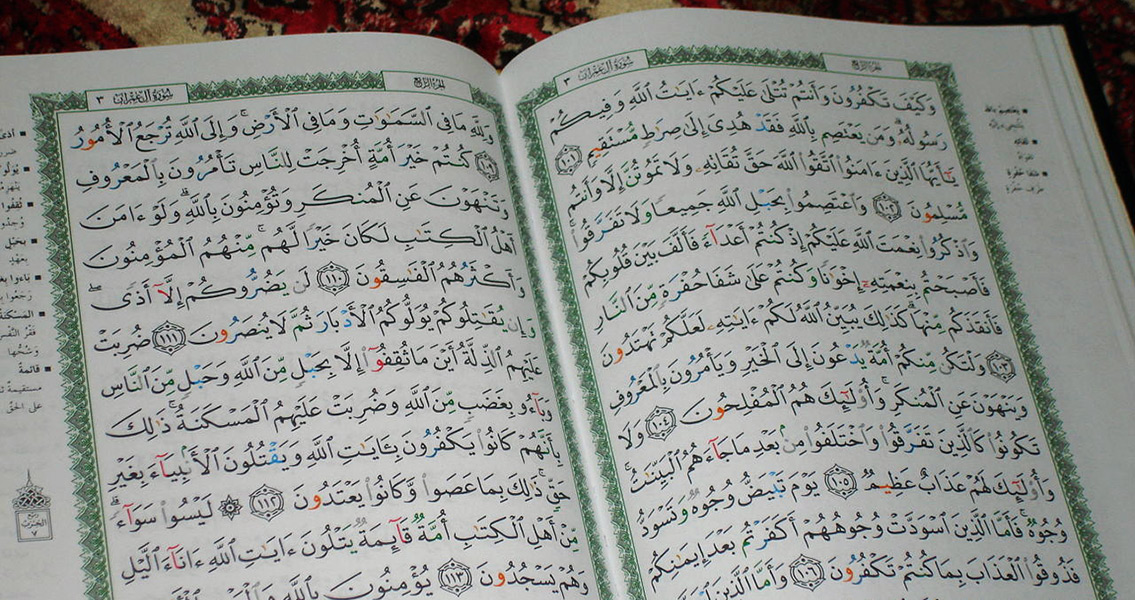
reported when the find was announced, the two pages were initially believed to have been part of a codex, whose other parts are kept in France. Initially, the hypothesis was that the fragments were contemporaneous with Muhammad, pushing the date of the first written copy of the Quran back, but not too much. Now, further research is suggesting that, in the words of Keith Small, some non-mainstream views of the origins of the book may have more ground than previously believed. Specifically, he told the Times of London, the carbon dating of the manuscript suggests that Muhammad and his early followers based the new religion on an already existing text, which they “shaped … to fit their own political and theological agenda, rather than Muhammad receiving a revelation from heaven.” According to traditional belief, Muhammad received the revelation that was to become the Qur’an some time between 610 and 632 CE. Initially, however, the information was only part of the oral tradition of the region. The first Muslim community, Discovery News writes, was set up in Medina in 622 CE but the first written copy of the Quran only appeared thirty years later, during the rule of the third caliph, Uthman, after Muhammad’s death. In the years before that, only fragments of the holy book were written on animal skin, bones, leaves, and parchment. The fragments found in the University of Birmingham are written on what is either sheepskin or goatskin, suggesting one of these animals was sacrificed especially for the manuscript. Image courtesy of Wikimedia Commons user: Amr Fayez ]]>
This article was edited on 9th June, 2015. The original wrongly suggested that the Qur’an was a depiction of Muhammad’s life.]]>
www.hortulus-journal.com Image courtesy of Wikimedia Commons user: DrFO.Jr.Tn ]]>