Categories
Breaking News

New Evidence There Was Life Before Oxygen

Geology, looks like it could change that. The team of researchers, including Andrew Czaja; an assistant professor of geology at University of Cincinnati, Nicolas Beukes from the University of Johannesburg and Jeffrey Osterhout; a recently graduated master’s student from UC’s department of geology, present new evidence for bacteria found fossilised in two separate locations in the Northern Cape Province. “These are the oldest reported fossil sulfur bacteria to date,” said Professor Czaja in a press release. “And this discovery is helping us reveal a diversity of life and ecosystems that existed just prior to the Great Oxidation Event, a time of major atmospheric evolution.” The 2.52 billion year old sulfur oxidising bacteria were abundant in deep water areas of the ocean in a geologic time known as the Neoarchean Eon. Described by Czaja as large and spherical shaped, the smooth walled microscopic structures were much bigger than most modern bacteria, but similar in size to some modern single-celled organisms that live in deep water, sulfur-rich ocean settings today. “These fossils represent the oldest known organisms that lived in a very dark, deep-water environment,” explains Czaja in the University of Cincinnati press release. “These bacteria existed two billion years before plants and trees, which evolved about 450 million years ago. We discovered these microfossils preserved in a layer of hard silica-rich rock called chert located within the Kaapvaal craton of South Africa.” The oxygen deficiencies in the earth’s atmosphere billions of years ago have led scientists to presume that any life would have had to live in mud at the deepest reaches of the ocean. Such lifeforms would have been able to survive without oxygen or sunlight. According to Czaja, the discovery made by his team marks the first direct evidence for these earliest life forms. Scientists have theorised previously that South Africa and Western Australia were once joined together in a supercontinent called Vaalbara. Based on radiometric dating and geochemical isotope analysis, Czaja suggests the fossils could have formed in this early Vaalbara supercontinent in an ancient deep seabed containing sulphate from continental rock. Based on this dating, the fossil bacteria would have been thriving just before the time other shallow water bacteria began creating more oxygen through photosynthesis. “We refer to this period as the Great Oxidation Event that took place 2.4 to 2.2 billion years ago,” said Czaja. Just as modern bacteria recycle decaying plant matter into minerals and gases, Czaja and his team suggest the Neoarchean bacteria could have performed a similar role, consuming volcanic hydrogen sulfide and emitting sulfate. “While I can’t claim that these early bacteria are the same ones we have today, we surmise that they may have been doing the same thing as some of our current bacteria,” explained Czaja. “These early bacteria likely consumed the molecules dissolved from sulfur-rich minerals that came from land rocks that had eroded and washed out to sea, or from the volcanic remains on the ocean’s floor.” Scientists believe that the origin of sulfur-oxidising bacteria was a pivotal moment in the evolution of life on earth. Determining exactly when these bacteria came into existence therefore has the potential to be hugely informative. “…these fossils tell us that sulfur-oxidizing bacteria were there 2.52 billion years ago, and they were doing something remarkable.” Image courtesy of Aaron Satkoski, UWM postdoc on the excursion.]]>

Categories
Breaking News

New Insights into Origins of Multicellular Life

Gonium pectorale, a simple green algae comprising only sixteen cells. Following an international collaboration between Kansas State University, the Universities of Arizona and Tokyo, and Wits University, the genome of the algae has been sequenced, allowing an in depth study of its DNA. Volvocine green algae, the group to which G.pectorale belongs, is an invaluable model system for studying multicellularity. As Durand explained, “The evolutionary transition to multicellularity has occurred numerous times in all domains of life, yet the evolutionary history of this transition is not well understood. However, the volvocine green algae include a diverse variety of unicellular, colonial, and multicellular species.” The volvocine group is a diverse one, meaning it is possible to study members of varying degrees of complexity. They also evolved relatively recently, during the Triassic period, meaning there is enough evidence to study their origns. According to the study, group formation in the algae evolved by co-option of the retinoblastoma cell cycle regulatory pathway. “Significantly, expression of the Gonium retinoblastoma cell cycle regulator in unicellular Chlamydomonas causes it to become colonial. The presence of these changes in undifferentiated Gonium indicates extensive group-level adaptation during the initial step in the evolution of multicellularity.” the authors write, in the abstract to the study. Although only scraping the surface of the complicated transition from single to multicellular organisms, the team have succeeded in uncovering some of the genes that regulate cellular growth and division within the G.pectorale. It helps explain how single cells lived in groups, and could prove a vital starting point in shedding light on other aspects of multicellular transition. For more information: www.nature.com Image credit: The Volvocales Information Project by Aurora Nedelcu]]>

Categories
Breaking News

Dinosaur Extinction Opened the Door for Mammal Evolution

Categories
Breaking News

Life on Earth Started Much Earlier Than Thought

3.8-Ga zircon that contains primary graphite inclusions”, states the study. The presence of graphite – pure carbon – is hugely significant. The zircon was completely crack free until the scientists opened it, meaning the carbon could not have come from contamination during another geological process. The distinctive signature of the carbon contained in the zircon, a specific ratio of carbon -13 and carbon 12, is one typically associated with the presence of photosynthetic life, giving an insight into the complexity of the organisms that might have existed over 4 billion years ago. “There is no better case of a primary inclusion in a mineral ever documented, and nobody has offered a plausible alternative explanation for graphite of non-biological origin into a zircon”, Harrison said in the UCLA press release. The ratio of uranium to lead in the zircon told the scientists that the zircon was 4.1 billion years old. The graphite must be older than the zircon itself, but it is impossible to determine exactly how much older. The results of the study, which has been published in the Proceedings of the National Academy of Science, could have far reaching consequences for the understanding not just of the development of life, but the history of the planet in general. It’s traditionally believed that around 4 billion years ago the world was a boiling, molten, hellish place. As Harrison explained in the UCLA press release, this assumption now seems increasingly unlikely, “The planet was probably much more like it is today than previously thought.” For more information: www.pnas.org]]>

Categories
News

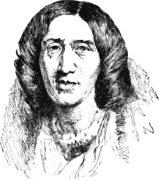
The Life of George Eliot (Mary Ann Evans)

 Literary Beginning Now Mary Ann Evans became independent with an income of a hundred pounds a year bestowed on her from her father’s estate. It was far from a fortune but more than enough to meet her needs. Now she faced the challenge of what course to follow in life. She was already well beyond the normal marriageable age for women in her society. Her marriage prospects were discouraging. It was at this time that she started to have her writings published. The well-known Westminster Review began publishing her stories. In 1851 she became Assistant Editor of this publication. It was very unusual at the time for a publication to have a woman in such an important position but Evan’s literary skills were too good to forgo. Private Scandal There may well have been other reasons for Evan’s acceptance onto the staff of the Westminster Review. Her editor, Henry Lewes took a romantic interest in the young authoress. His wife had deserted him and his three children. Mary Ann Evans came to fill her place but their relationship was never formalised in the church wedding social norms at the time expected. Evans’s very respectable mid-Victorian family circle were scandalised by the life she was leading. Lewes encouraged Mary Ann’s creative writing by offering ideas for themes and editing the manuscripts. She decided to use a male penname since she thought that in that way her words would receive the serious attention she believed they deserved. Literary Fame  In 1857 Blackwood’s Magazine published her “Scenes from Clerical Life” In 1859 she enjoyed her first major literary success when her novel “Adam Bede” became a best seller. The character of Adam Bede was based in part on her recollections of her father. She also worked into the novel her religious and artistic views. The historical background of the Chartist political unrest of the late 1830s and 1840s would have been familiar to most of readers. In her subsequent novels she continued to explore the religious and moral issues of the day that occupied her mind. For example, “Middlemarch” (1872) is set in the period of conflict surrounding the passing of the 1832 Reform Act. The heroine of the novel finds herself trapped in a loveless marriage and contending with the social limitations women faced at this time. In perhaps the most famous of all her novels, “the Mill on the Floss” (1860), the tragic tale of the miller’s daughter is viewed by literary experts as representative of Evan’s own struggles and conflict with her own family. The death of Maggie and her brother in the flood is also viewed as symbolic of the way the authoress viewed her own life. In her last major work, “Daniel Deronda” (published in 1876) she chose again to explore the frustrations of an unhappily married society lady while also finding a way to attack religious prejudices of the day. Following the death of Henry Lewes, Mary Ann Evans married a friend who was 20 years younger than her – John Cross. She died on 22 December 1880 and was buried in London. ]]>