Categories
Breaking News

Humans left Africa 270,000 years earlier than we thought

One of the tools from the discovery site in Shangchen, China. Credit: Professor Zhaoyu Zhu[/caption] Prior to this discovery, the earliest evidence of humanity outside Africa was a collection of skeletal remains and stone tools found in Dmanisi, Georgia, which have been dated to 1.85 million years ago – 270,000 years after the new discovery in Shangchen in the southern Chinese Loess Plateau. The research, published in the journal Nature, also suggests that the ancient humans returned to the same site repeatedly, possibly for hunting. The collection includes a notch, scrapers, cobble, hammer stones and pointed pieces. Each item shows sign of human use. The hammer stones, for instance, had been intentionally flaked. Fragments of animal bones that would have been contemporaneous with the items were also found. Most of the artefacts were made of quartzite and quartz, suggesting that the materials were sourced from the foothills and streams of the Qinling Mountains around 5 to 10 kilometres from the site. [caption id="attachment_8815" align="aligncenter" width="425"] The extensive collection of 2.1 million years old artefacts is causing archaeologists to reconsider the overall story of human migration. Credit: Professor Zhaoyu Zhu[/caption] Because the 96 stone artefacts were found in 17 different layers of fossil soils that had developed over a period of one million years, we now know that early humans occupied the Chinese Loess Plateau under varying climatic conditions between 1.2 and 2.12 million years ago. Professor Dennell says: “Our discovery means it is necessary now to reconsider the timing of when early humans left Africa.” The find “may add a new chapter to the story of hominin evolution, suggesting that some of these species left Africa far earlier than once believed and managed to travel over 8,000 miles east of their evolutionary birthplace,” The New York Times reports. The age of the tools “suggests that the hominins who made them were neither tall nor big-brained. Instead, they may have been small bipedal apes, with brains about the size of a chimpanzee’s.” Michael Petraglia, a paleoanthropologist at the Max Planck Institute for the Science of Human History comment:S “The implications of all this are large. We must re-evaluate our understanding of human prehistory in Eurasia.”]]>

Categories
Breaking News

3-million-year-old skeleton reveals the story of ancient toddlers’ lifestyles

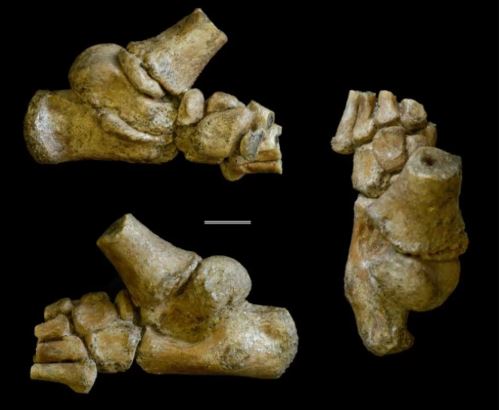
The 3.32 million-year-old foot from an Australopithecus afarensis toddler shown in different angles. Credit: Jeremy DeSilva & Cody Prang[/caption]

A complete 3-million-year-old skeleton

Discovered in 2002 by Zeresenay Alemseged, a professor of organismal biology and anatomy at the University of Chicago, the foot is about the size of a modern human’s thumb. Astonishingly, it is part of an almost complete skeleton of a young female Australopithecus afarensis living 3.32 million years ago in the Dikika region of Ethiopia. “This is the most complete foot of an ancient juvenile ever discovered,” Desilva says. “For the first time, we have an amazing window into what walking was like for a two-and-a-half-year-old, more than 3 million years ago.”

 “On the cusp of being human”

Alemseged is a world leader in palaeontology, specialising in the study of human origins and our evolution. He contributed to the study as a senior author. “Placed at a critical time and the cusp of being human, Australopithecus afarensis was more derived than Ardipithecus (a facultative biped) but not yet an obligate strider like Homo erectus. The Dikika foot adds to the wealth of knowledge on the mosaic nature of hominin skeletal evolution” explains Alemseged. The fossil record shows that these ancient ancestors were adept at walking upright. Desilva adds: “Walking on two legs is a hallmark of being human. But, walking poorly in a landscape full of predators is a recipe for extinction.” [caption id="attachment_8792" align="aligncenter" width="230"] The child’s foot (bottom) compared with the fossil remains of an adult Australopithecus foot (top). Credit: Jeremy DeSilva & Cody Prang[/caption]
A relative of the Lucy fossil?

The fossil of the toddler’s foot is not only the same species as the famous Lucy fossil, but was also found in the same vicinity in Ethiopia. Unsurprisingly, this led to it being erroneously called ‘Lucy’s baby’ by the popular press – despite this toddler having been around 200,000 years before Lucy.

What we know about the toddler’s lifestyle

With a remarkably preserved anatomy, the fossil foot has given the research time invaluable insight into the daily lifestyle of this toddler. After an examination into how the foot developed and what this tells us about human evolution, it can even start to tell the story of how our ancestors survived. At just two and a half years of age, this Dikika child was already walking on two legs. However, findings also suggest that she was still spending time in the trees, foraging for food while clinging to her mother. “If you were living in Africa 3 million years ago without fire, without structures, and without any means of defence, you’d better be able get up in a tree when the sun goes down,” adds DeSilva. Accordingly, the base of the big toe and the skeletal structure surrounding it suggests that vulnerable children spent more time in the trees than their adult carers. “These findings are critical for understanding the dietary and ecological adaptation of these species and are consistent with our previous research on other parts of the skeleton especially, the shoulder blade,” Alemseged notes.]]>

Categories
Breaking News

Ancient Tick Engorged with Mammal Blood Found Fossilized in Amber

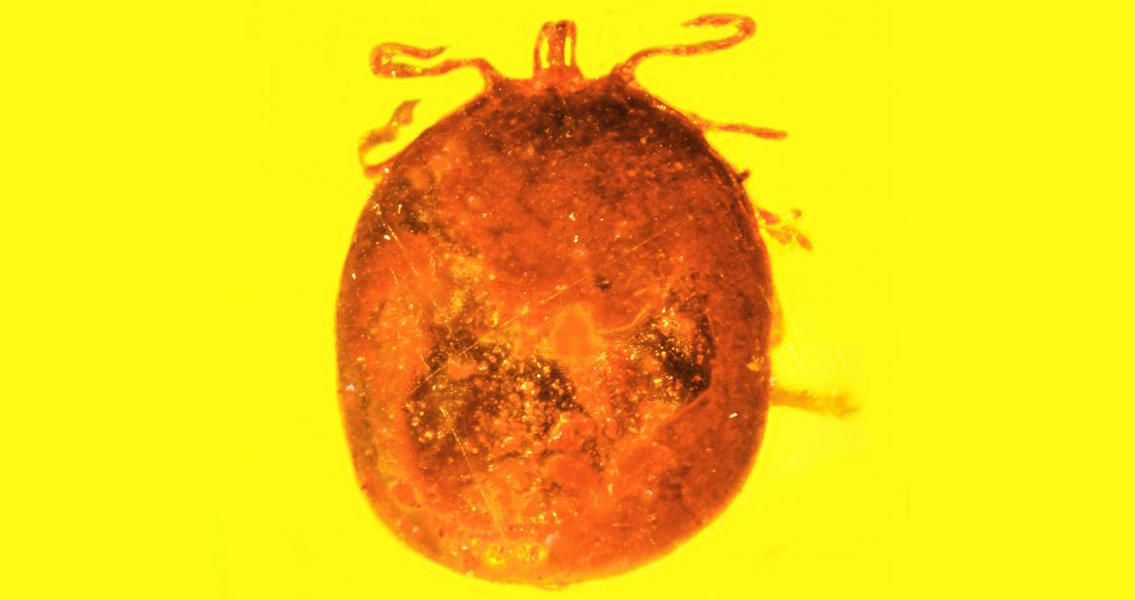
Babesia microti, a parasite that has survived to this day and is still transmitted by ticks to humans and other mammals. With its stomach distended by its last meal, the engorged tick looks as if it tumbled into a patch of tree sap after it was freshly plucked from a mammal sometime between 20 and 30 million years ago. Two small holes on its back, likely indicative of a primate pulling it off itself or a mate during grooming, were even oozing blood at the time the tick became encased in what would eventually become the piece of amber. Study author George Poinar, Jr., professor emeritus of Oregon State University’s College of Science, says the state of the tick speaks volumes of life millions of years ago in what would have been a tropical jungle in the modern Dominican Republic. The professor, an international expert on fossilized amber, added that the fossilized blood cells within the tick, which were infected with the B. microti parasite, are so detailed as to be “amazing.” B. microti can lead to a disease in humans known as babesosis, which mimics malaria in its symptoms and can be just as fatal. A genetically similar parasite is well-known for causing Texas cattle fever in live stock, a problem that has plagued plains states in the past. More than 500,000 acres of land in Texas have already been quarantined this spring because of an outbreak of the disease. Today, B. microti can be carried by the common deer tick, which is also known to carry Lyme disease. In a press release from Oregon State University, Poinar says that the life forms discovered in amber can unveil untold wonders concerning the evolution and history of diseases that modern humans are still plagued with to this very day. It’s now clear, thanks to the newly-discovered amber fossil, that B. microti was around well before humans ever evolved, and had adapted to flourish in our primate ancestors and other hosts, the scientist added. One of the unique facets of this find is how remarkably well-preserved the parasites and blood cells are within the amber-fossilized tick, Poinar said. The researcher likened it to a professional job, remarking that it was almost if they had been prepared in a laboratory in order to be subjected to study. In fact, the amber embalming process showcased the texture and the density of the parasites, which were different enough from the red blood cells harboring them to make them clearly identifiable. The new research study, which appears in the Journal of Medical Entomology, can be found online here Photo by George Poinar, Jr., courtesy of Oregon State University]]>

Categories
Breaking News

Rare Fossil Discovered in remnants of Trench From WWI

here Image courtesy of Ohio State University]]>

Categories
Breaking News

Amber From the Cretaceous Preserves Damselfly Courtship Ritual

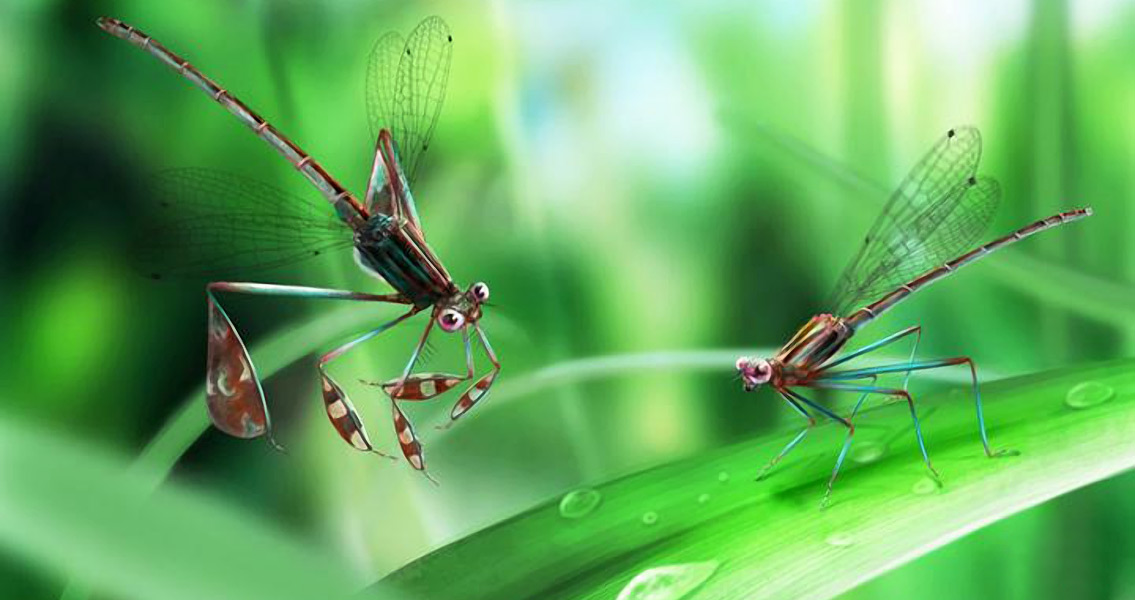
Yijenplatycnemis huangi in honor of the donor of the amber, Huang Yijen from Taiwan. The preserved Y. huangi specimens showcased large, expanded pod-like forelegs that would have improved chances of mating successfully by both attracting females as well as helping to fend off other suitors. These characteristics are commonly found in similar modern insects, the most common being the male Platycypha caligata damselfly found in Africa, who use their enlarged forelegs in an almost identical manner. East Asian damselfly species also exhibit similar traits as well, including feather-like legs that are only apparent in males. These modern East Asian damselfly males put on a display with their legs in front of females, and Dr. Zheng and Professor Wang believe the legs of Y. huangi would have been used in a similar manner. The fossil specimens have legs that are much more expanded than any other modern damselfly species, which could be an indication that Y. huangi’s forelegs were an extreme adaptation for courtship behavior. The excessively large forelegs of Y. huangi could have also played other crucial roles – both making males more easily noticeable by females of the species and also in warding off predators. The researchers say that Y. huangi’s forelegs were so large that they would have moved slower due to air resistance, attracting female attention more efficiently and increasing mating opportunities. Meanwhile, the pod-like shape and coloration of the ancient damselfly’s legs could have been used to distract or intimidate predators. The pigmentation of the legs, which are partially covered with a pair of brown bands and feature an eye-shaped spot, are similar to the wing spots on some modern butterfly species. These wing spots were also present on a species of extinct lacewings from the Early Middle Cretaceous. Dr. Zheng and Prof. Wang state in their study that the spots on Y. huangi’s legs were likely too small to do much in the way of deflecting predators. Instead, these dots may have been more similar to the “eyespots” on peacock feathers, providing yet another way to garner the attention of the females of the species. The research paper, recently published in the journal Scientific Reports, can be found here Image courtesy of Image by YANG Dinghua]]>

Categories
Breaking News

Evidence of Oldest Known Human Ancestor Discovered

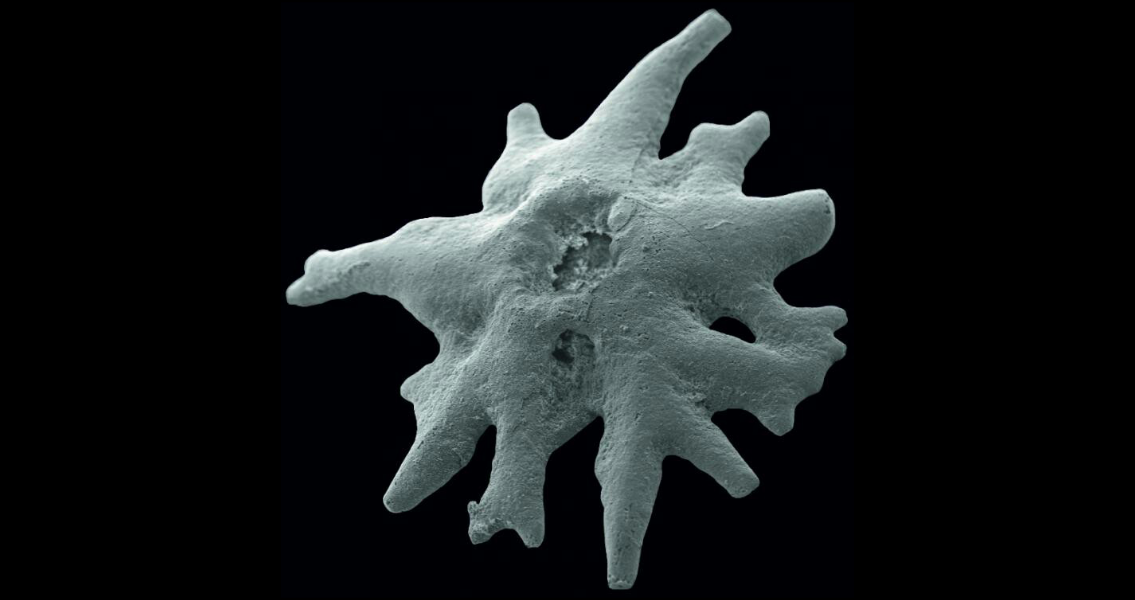
Saccorhytus, the miniscule sea creature that resembles nothing so much as a tiny, microscopic sack with a large mouth – a characteristic that some of its descendants today certainly share. The diminutive creature, according to a press release from the University of Cambridge, is the most primitive example to date of a broad biological category of creatures known as deuterostomes. There are several sub-groups under the deuterostome category, including vertebrates. In a recently published research study, scientists from Cambridge, Xi’an China’s Northwest University and other international locations say that Saccorhytus has the honor of being a common ancestor of a massive range of species. Additionally, the deuterostome represents the earliest stage ever discovered regarding the evolution of humans over the course of hundreds of millions of years. There is, of course, nothing even vaguely human when it comes to Saccorhytus. Measuring around a millimeter in size, its habitat was likely the seabed, being small enough to live between individual grains of sand. The microfossil that contained the creature proved to be well-preserved enough for the scientists to make several determinations – including the lack of any orifice for removing waste, such as an anus. In other words, our far-advanced evolutionary predecessor would have expelled waste the same way it came in – unappealing to say the least. One of the main authors of the study, Professor Simon Conway Morris from Cambridge’s St. John’s College, remarked that Saccorhytus looked like nothing so much as tiny black grains to the naked eye. However, under microscope magnification the level of detail preserved by the fossil was nothing less than “jaw-dropping,” the researcher added. Northwest University’s Degan Shu also commented, stating that the research team has a wide array of discoveries to its credit, including a variety of other early deuterostomes like Saccorhytus and also the earliest known instance of what could be classified as a fish. The discovery of the new sea creature, however, provides scientists a glimpse into the very first known evolutionary step of not just humans but also a wide range of related animals, the researcher said. Discovered in China’s central Shanxi Province, the Saccorhytus microfossils have been dated to 540 million years old, a good 20 to 30 million years earlier than the majority of other early deuterostome finds. Researchers were able to construct a picture of how the creature might have looked by isolating the fossils from the surrounding rock and then subjecting them to CT scans and electron microscopy. The amount of limestone the team needed to process in order to access these fossils was massive – approximately three tons, according to co-author Dr. Jian Han, Degan Shu’s colleague at Northwest university. The new research study, which was recently published in the journal Nature, can be found online here Image courtesy of S Conway Morris / Jian Han]]>

Categories
Breaking News

Radiocarbon Method Still A Reliable Tool for Dating Fossils

Environmental Research Letters argues that the level of distortion caused by anthropogenic emissions can actually be precisely identified. He believes this can be done by measuring the carbon isotope C13. For a long time radiocarbon dating has been widely considered the best method for determining the age of organic materials. It is believed to be accurate for objects with a biological origin dating to up to 50,000 years old. All living things contain a mixture of carbon 14 and carbon 12 atoms, with the ratio between the two remaining close to constant. Although carbon 14 atoms are constantly decaying, they are replaced by new carbon 14 atoms at a constant rate. As soon as an organism dies, the carbon 14 atoms stop being replaced. As the carbon 14 decays the ratio between it and carbon 12 starts to change, because the amount of carbon 12 remains constant. As scientists know the half life of carbon 14 (5,700 years), they can work out the age of any dead organism by comparing the ratio of carbon 12 to carbon 14 in it with the ratio in a living thing. Last year however, a problem was found which threatened the long term reliability of the radiocarbon dating method. Scientists discovered that humanity’s use of fossil fuels such as oil, natural gas and coal was significantly altering the balance between the two carbon isotopes. They concluded radiocarbon dating could become inaccurate within decades. “If the global emissions of fossil carbon dioxide continue to rise in the near future, as is proposed by the business-as-usual scenario of the Intergovernmental Panel on Climate Change, the results of our age readings of new organic material in 2050 will be identical to 1000-year-old samples. In 2150 new samples will appear to be the same age as 3000-year-old carbon, and in extreme cases even the same as 4300-year-old material,” explained Dr Peter Köhler, geoscientist at the Alfred Wegener Institute, Helmholtz Centre for Polar and Marine Research (AWI). “This means that fresh samples, for example of a tree felled within the next century, when measured using radiocarbon dating will appear to be the same age as wood that is several thousand years old.” This process is known as the Suess effect, named after the physicist Hans E. Suess. Köhler, the author of the new study, set himself the task of finding a way to determine if material had been distorted, and how significantly. “If we determine the 13C value of the sample as well as using the radiocarbon method, we can find out whether the age is trustworthy. That’s because the 13C value tells us whether the carbon of the sample has been affected by fossil carbon dioxide,” he said in a press release from the Alfred Wegener Institute. Put simply, the factors that affect carbon 14 also affect carbon 13. Carbon 13 however, is a stable isotope like carbon 12. “The burning of oil, coal and gas not only changes the 14C signal in the atmosphere, but also the stable 13C signal. This means: If my measurement shows a distorted 13C signal, then this also tells me that the 14C-based age has been affected by fossil carbon. If, on the other hand, my 13C signal is within the expected range, then the fossil carbon has not had an effect and the 14C dating method shows the correct age,” Using a range of computer models which simulate global carbon cycles, Köhler calculated the Suess effect of carbon 13 and carbon 14 up to the year 2500. He then tested a number of scenarios where mankind managed to reduce the amount of carbon dioxide. In all of the scenarios, he found that any distortions in the dating method could be detected and calculated with the 13C Suess effect. ]]>

Categories
Breaking News

Bandicoot Fossils Show Marsupials were Ancient Survivors

Lemdubuoryctes aruensis however, the remarkably archaic new bandicoot fossil discovered by Alpin, didn’t live in a rainforest but on an expansive savannah plain stretching from Australia to New Guinea at the time of the last glacial maximum. “While retreating rainforests and spreading grasslands did provide a backdrop for ecosystem change 5-10 million years ago. The Australian fauna likely adapted via changing its distribution rather than undergoing wholesale extinction and replacement,” Michael Westerman, with La Trobe University in Australia, says in the article, adding, “This agrees with our results from DNA, which indicate that modern desert-living bandicoot groups pre-date the onset of aridity by as much as 40 million years.” These timeframes coincide with the proliferation of Eucalyptus woodlands in Australia’s interior. “Bandicoots, like other Australasian marsupials, probably occupied a range of different habitats over many millions of years. However, our study has further implications for future conservation. Arid zone bandicoots are amongst the most vulnerable mammals in Australasia today, with multiple species having gone extinct within the last 100 years. By demonstrating their profound evolutionary antiquity, we can thus serve to highlight how extremely urgent it is to protect these living fossils as part of Australia’s unique biodiversity”, Dr. Kear is quoted as saying in the Heritage Daily article. The study has been published in Scientific Reports. ]]>

Categories
Breaking News

Earliest Evidence of Right-Handedness Discovered

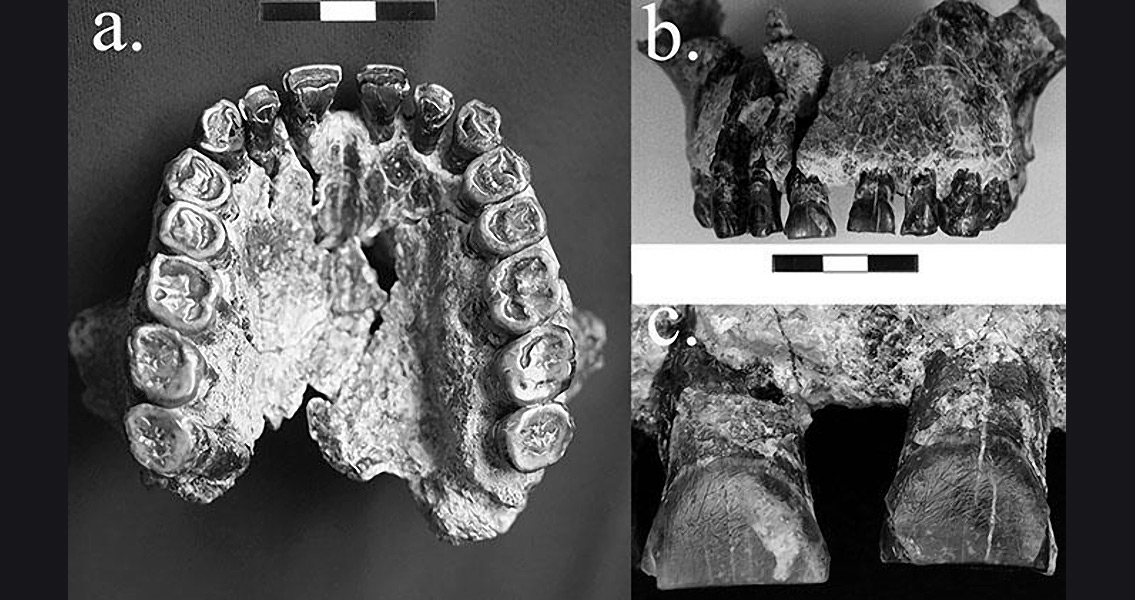
Homo habilis fossil. Although scientists have learnt a lot about “handedness”, they still haven’t been able to precisely explain why humans favour using one hand over the other, or why human populations are biased towards right handedness over left handedness. The lack of a standard, empirical definition for measuring handedness means scientists disagree on what percentage of the human population are left or right handed. However, it is agreed that the majority of humans are right handed (between 70 and 95 percent) and the minority left handed (30 to five percent). By comparison, the ratio among apes is 50:50. At 1.8 millions years old, the Homo habilis fossil studied by the University of Kansas researchers marks the oldest known evidence of right handedness in the fossil record. “We think that tells us something further about lateralization of the brain,” said David Frayer, a KU professor emeritus of anthropology and the lead author of the study, in a press release. “We already know that Homo habilis had brain lateralization and was more like us than like apes. This extends it to handedness, which is key.” Brain lateralisation refers to the fact that the left and right hemispheres of the brain are not exactly alike, leading to certain neural processes and cognitive functions being more dominant in one hemisphere than the other. Scientists have long theorised that this brain lateralisation has some correlation to a person’s handedness. Frayer and team made their discovery by analysing labial striations – small cut marks, which are lip side of the anterior teeth in the intact Homo habilis jaw fossil. Known as OH-65, the fossil was found in a stream channel of the Olduvai Gorge in Tanzania. Most of the deep cuts on the lip face of the upper front teeth veered downwards from left to right. After analysing the marks, Frayer and his team believe they most likely came from OH-65 using a tool with its right hand to cut food it was holding in its mouth while pulling at it with its left hand. The scratches can be seen with the naked eye, but the team used a microscope to accurately determine their alignment. “Experimental work has shown these scratches were most likely produced when a stone tool was used to process material gripped between the anterior teeth and the tool occasionally struck the labial face leaving a permanent mark on the tooth’s surface,” said Frayer. The direction of the marks strongly suggests that the Homo habilis specimen was right handed. Of course, OH-65 is only one sample but it could be the first evidence of a dominant handed pre-Neanderthal. As such, it could lead to the search for similar marks in other Homo fossils, allowing scientists to gain further insight into the development of handedness. “Handedness and language are controlled by different genetic systems, but there is a weak relationship between the two because both functions originate on the left side of the brain,” explained Frayer. “One specimen does not make an incontrovertible case, but as more research is done and more discoveries are made, we predict that right-handedness, cortical reorganization and language capacity will be shown to be important components in the origin of our genus.” A host of different studies have pointed towards brain reorganization, the use of tools and use of a dominant hand all occurring early in the human lineage. This latest study, published in the Journal of Human Evolution, is the first to look into the directionality of striations in the earliest specimens of our evolutionary lineage. It shows how something seemingly as basic as the dominance of one hand over the other is well embedded in our evolutionary history. “We think we have the evidence for brain lateralization, handedness and possibly language, so maybe it all fits together in one picture,” said Frayer. Image courtesy of David Frayer]]>

Categories
Breaking News

Beetles Discovered in Amber Pollinated Orchids 20 Million Years Ago

American Entomologist, the new study by George Poinar Jr. from Oregon State University describes beetles preserved in fossilised amber with orchid pollen in their mouths. Pollination is crucial to the reproduction of plants. Pollen grains produced in the anther, the male part of a flower, must be transferred to a stigma: the female part of a flower, of a plant from the same species. Central to this process are pollen vectors, creatures which play a key role in pollination by transporting the pollen between the flowers. Insects are the most common pollen vectors, with bees and butterflies the ones most likely to spring to mind, but certain beetles are also known to pollinate plants. “My paper points out that beetles may play a more important role in pollinating orchids than originally thought, and that they have been doing so for some 20 million years,” said Poinar, in a press release from the Entomological Society of America. Although it is already known that some present day beetles use orchids for nectar, no fossil evidence has ever been found showing beetles pollinating orchids in their evolutionary past. The evidence presented by Poinar’s study is therefore hugely significant. The first specimen in the study was a hidden-snout beetle discovered in amber from the Dominican Republic. After closer analysis, it was found the beetle had pollinaria from an orchid known as Cylindrocites browni attached to its thorax. A second specimen, a toe-winged beetle, was found in amber from Mexico. This time, pollinaria from an orchid described as Annulites mexicana was found attached to the beetle’s mouth parts. It is estimated that the beetle in Dominican amber was alive between 20 and 45 million years ago, while the beetle in Mexican amber is thought to date to between 22 million and 26 million years ago. Curiously, the current day descendants of the two beetles under study are not among the species of beetle usually associated with orchid pollination. No modern day hidden-snout beetles have been seen visiting orchid plants and no toe-winged beetles have been seen with pollinaria. Poinar says that this doesn’t necessarily mean the current-day toe-winged and hidden-snout beetles aren’t involved in pollination. Rather, it’s an anomaly that could be explained by their secretive behaviour, and the difficulty this leads to when it comes to gathering data about them. “While no present-day cryptorhynchid weevils or ptilodactyline beetles are known to carry pollinaria, past and future collections of these and other beetles should be examined to search for attached pollinaria,” Poinar said. “Orchids may have evolved beneficial associations with a much wider range of beetles and other insects than we thought possible.” Image courtesy of Entomological Society of America]]>