Categories
Book Reviews

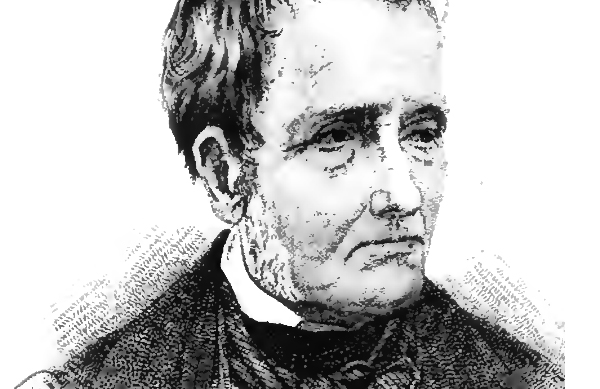
Thomas de Quincey’S Confessions

Related Books: The Confessions of an English Opium Book The Confessions of an English Opium – Eater Being an Extract from the Life of a Scholar by Thomas de Quincey PIBN: 1000534747 [gap height=”20″] Other Sources: Confessions of an English Opium Eater and Other Writings, Edited by Grevel Lindop, Oxford University Press 1998 [gap height=”20″]  ]]>

Categories
Book Reviews

How Reading the Classics Can Make You Smarter

Reviewed Book: Dicken's a Tale of Two Cities Book Dicken’s a Tale of Two Cities by Charles Dickens PIBN:1000028308 [gap height=”20″]  ]]>

Categories
News

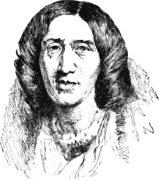
The Life of George Eliot (Mary Ann Evans)

 Literary Beginning Now Mary Ann Evans became independent with an income of a hundred pounds a year bestowed on her from her father’s estate. It was far from a fortune but more than enough to meet her needs. Now she faced the challenge of what course to follow in life. She was already well beyond the normal marriageable age for women in her society. Her marriage prospects were discouraging. It was at this time that she started to have her writings published. The well-known Westminster Review began publishing her stories. In 1851 she became Assistant Editor of this publication. It was very unusual at the time for a publication to have a woman in such an important position but Evan’s literary skills were too good to forgo. Private Scandal There may well have been other reasons for Evan’s acceptance onto the staff of the Westminster Review. Her editor, Henry Lewes took a romantic interest in the young authoress. His wife had deserted him and his three children. Mary Ann Evans came to fill her place but their relationship was never formalised in the church wedding social norms at the time expected. Evans’s very respectable mid-Victorian family circle were scandalised by the life she was leading. Lewes encouraged Mary Ann’s creative writing by offering ideas for themes and editing the manuscripts. She decided to use a male penname since she thought that in that way her words would receive the serious attention she believed they deserved. Literary Fame  In 1857 Blackwood’s Magazine published her “Scenes from Clerical Life” In 1859 she enjoyed her first major literary success when her novel “Adam Bede” became a best seller. The character of Adam Bede was based in part on her recollections of her father. She also worked into the novel her religious and artistic views. The historical background of the Chartist political unrest of the late 1830s and 1840s would have been familiar to most of readers. In her subsequent novels she continued to explore the religious and moral issues of the day that occupied her mind. For example, “Middlemarch” (1872) is set in the period of conflict surrounding the passing of the 1832 Reform Act. The heroine of the novel finds herself trapped in a loveless marriage and contending with the social limitations women faced at this time. In perhaps the most famous of all her novels, “the Mill on the Floss” (1860), the tragic tale of the miller’s daughter is viewed by literary experts as representative of Evan’s own struggles and conflict with her own family. The death of Maggie and her brother in the flood is also viewed as symbolic of the way the authoress viewed her own life. In her last major work, “Daniel Deronda” (published in 1876) she chose again to explore the frustrations of an unhappily married society lady while also finding a way to attack religious prejudices of the day. Following the death of Henry Lewes, Mary Ann Evans married a friend who was 20 years younger than her – John Cross. She died on 22 December 1880 and was buried in London. ]]>

Categories
Book Reviews

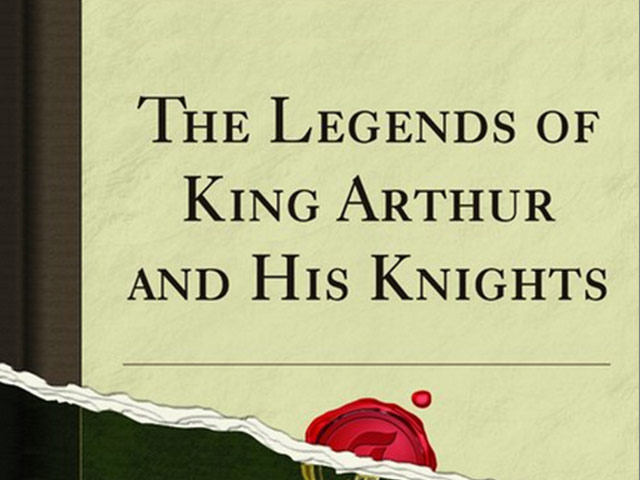
The Struggle Of King Arthur And Mordred

The Origins of the Legend Historians continue to speculate if King Arthur, Mordred and the other scenes and players in the legend have any historical basis. For the most part the story is associated with fifth or sixth century Wales. If a prototype for Arthur did exist he might have been a Celtic chieftain rallying his forces to fight off the Saxon invaders. References have been found to figures that might have been the model for King Arthur in some of the scare writings that survive from the Saxon period in British history, but none of the associations made are conclusive. Two Medieval writers share the responsibility for publicising the tale and incorporating in it many of the elements familiar to us today. In 1138 Geoffrey of Monmouth wrote a history of the Kings of Britain. Many allege that he drew more on his imagination than on any older records that had come to his notice. Others claim that some of what he wrote corresponds with information in earlier documents that have now come to light. Whatever the authenticity of his facts, Geoffrey introduced his readers to a King Arthur, Queen Guinevere, Merlin the Wizard and of course, King Arthur’s arch enemy Mordred. In this version of the tale King Arthur goes to fight against the Roman Empire in Gaul (France of today). The evil Mordred takes advantage of the opportunity to usurp Arthur’s throne and take Queen Guinevere as his wife. The news reached King Arthur on campaign. He returns to his kingdom and fights a fierce battle with Mordred at a place called Camlann, Mordred is killed but Arthur is mortally wounded. In the late medieval period Thomas Malory published a revised and comprehensive version of the Arthur stories, entitled “The Death of Arthur” (Le Morte d’Arthur). The publication of this work coincided with the introduction of the printing press. Malory’s work became one of the first books printed in England and standardised many aspects of the Arthur legend, for example, the idea of Arthur and his knights sitting at the Round Table dates from this publication. The bitter enmity between Arthur and Mordred continues to form a key part of the story but in a key change from Geoffrey of Monmouth’s narrative Queen Guinevere remain loyal to King Arthur. Why have these tales survived the years? The fact that the reader of this article is likely to be familiar with tales of Arthur and Mordred is a testimony to their enduring power. Yet they are more than simple stories. The Arthur tales have contributed culturally to the shaping of Britain’s identity. Over all these years they continue to serve a useful purpose. People are attracted by the idea that there was once an age when chivalrous knights rode about the British countryside fighting treacherous enemies like Mordred, or even supernatural dragons and other monsters. During World War Two, tales of Arthur’s bravery against the country’s enemies provided a rallying point for resistance to German aggression. Today the interest is probably largely of an escapist nature. Regardless of whether or not there is a basis in history, it seems that tales of Arthur and Mordred still serve a purpose in our hi-tech age. References  The Legends of King Arthur and His Knights by James Knowles The Legends of King Arthur and His Knights by James Knowles PIBN:  1000104500 [gap height=”20″] Wikipedia King Author [gap height=”20″]  ]]>

Categories
Editorial

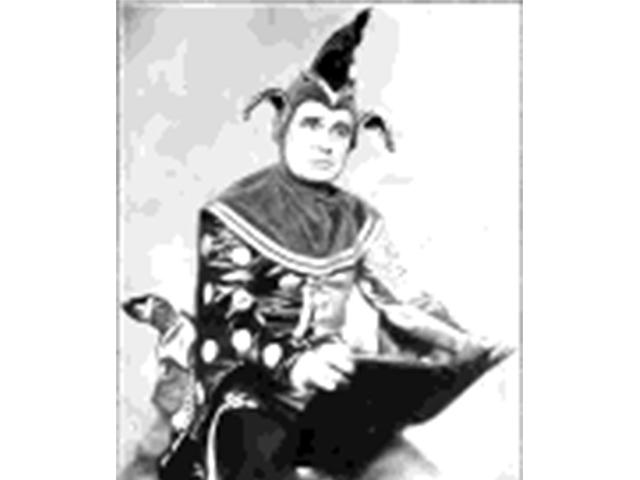
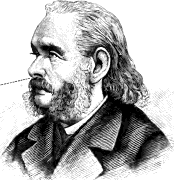
Sir Henry Lytton (1867-1936)

A Youthful Love Sir Henry Lytton’s path to the footlights started with a crush he developed on a young actress. In 1884 seventeen year old Henry Lytton was a student at St. Mark’s College in Chelsea, London. On a visit to the theatre his eye was caught by an attractive young actress called Louie Henri. He courted Ms. Henri and the feelings proved mutual. He took a holiday from school and got married. When he returned to resume his schooling the headmaster wanted to administer the customary punishment for a truant in those days – a sound caning. Lytton thought that he could escape the pain and told the headmaster that if he brought done the can he would be “thrashing a married man.” The headmaster thought for a second and then decided to beat him even harder than he originally planned because of his insolence. Although Lytton might have regretted playing truant he certainly did not regret his choice of partner. Louie became his faithful companion until his death over half a century afterwards. My Wife’s Brother While Louie Lytton did not fear the kind of punishment her husband received for marrying while still at school, she did fear for her job. She had just begun touring with the D’Oyly Carte Opera Company. In those times an actress getting married so young was not the accepted practice. She did want to be parted from her new husband but at the same time she felt the need to hide her married status from other members of the company. She came up with an ingenious solution. She introduced her husband to the company as her brother and asked if he could be given an audition for the chorus. Lytton did well in this trial and was offered two pounds a week to sing in the chorus. Thus he began his acting career using the name of H. A. Henri and posing as his wife’s brother. In the Right Place at the Right Time Lytton’s first tour was with the opera Princess Ida. He was given the job of understudy to the actor playing King Gama but he was not called upon to perform. Lytton’s first opportunity to take on a leading role came in 1887. The famous George Grossmith was playing Robin Oakapple in a production of Ruddigore at London’s Savoy Theatre. His understudy was an actor named Eric Lewis. Lewis was eager to show his skills in a leading Gilbert and Sullivan operatic role but Grossmith never failed to miss a performance. Lewis was continually waiting in the wings but never called to perform. Finally he lost his patience and decided to seek his dramatic fortunes elsewhere. Just after he left Grossmith took ill and Henry Lytton was asked to take his role. From this point onwards there was no turning back in his career. Although Lytton left the D’Oyly Carte Company for a period to try his hands at theatre management, he soon returned. He played a large number of different roles in the Savoy operas. Interestingly enough for a person who could not read music he had a fine ear for rhythm and excellent sense of timing. He was not shy to give his own interpretation to roles. For example, Grossmith had adopted a comic interpretation of role of the jester Jack Point in the Yeoman of the Guards (1888). Lytton thought it better to play Jack Point as a tragic figure and this was much closer to Gilbert’s intention when he wrote the script. Honour and Sadness In 1930 Henry Lytton’s services to theatre were recognized when King George V bestowed a knighthood on him. The following years brought a tragedy. Sir Henry was driving from Manchester to Cambridge when his car skidded and crashed. Although he was not seriously injured, his passenger, Bertha Lewis, died shortly afterwards from her injuries. Ms. Lewis was one of the leading actresses and singer of the D’Oyly Carte Company and her death was a serious blow. Sir Henry recovered from his injuries to celebrate fifty years in theatre in 1934. A special fund was set up by his admirers and he was presented with a testimonial album. The album was signed by the then Prime Minister, Ramsay MacDonald. Previous Prime Ministers Stanley Baldwin and David Lloyd George also signed. Sir Henry Lytton died in 1936.]]>

Categories
Editorial

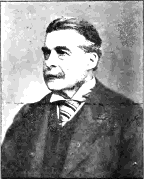
Sir Arthur S. Sullivan (1842-1900)

The Beginnings of a Great Composer Arthur Seymour Sullivan was born in London on 13th May 1842. Music was part of his life from his earliest years since his father, Thomas, served as Bandmaster at the Royal Military College in Sandhurst. Although the family financial means were stressed the relationships between family members were very warm. As his surname suggests, Thomas Sullivan was of Irish origin but his wife was Italian. Arthur was close to both his parents and to his talented older brother, Frederick. Everything was in place for a happy childhood but Arthur Sullivan had health problems from an early age. He was also burdened with a second name that he detested. If you see what the initial of his names spell out it is easy to understand why Sullivan wished his middle name forgotten! Coming from such a musical family it is hardly surprising that Arthur Sullivan learned to play the flute and most other wind instruments as a young child. He also had a fine voice. He was appointed “first boy” in the choir of Queen Victoria’s Chapel Royal. Albert, the Prince Consort, was so delighted with Sullivan’s singing that he rewarded him with a gold half sovereign coin. This was a most generous present at the time. In twenty-first century terms it might have been worth as much as 100 pounds in purchasing power terms. Even before the young Arthur Sullivan had made his name for himself in the Chapel Royal Choir he had published his first musical composition. Sullivan was not even twelve years old when he composed the piece of religious music named “O Israel.” It is easy to understand how this young musical genius won the prestigious Mendelssohn Scholarship to the Royal Academy of Music. He continued his musical education in Germany where he became acquainted with the composer Franz Listz. While studying at Leipzig 18 year old Sullivan’s music first came to public attention with a performance of his composition for Shakespeare’s “The Tempest”. The performance was repeated the following year at London’s Crystal Palace. Now back resident in London Arthur Sullivan supported himself as a church organist while at the same time writing classical music such as the Prince of Wales march. The death of his father caused him great distress but he turned his feelings in a creative direction to write a work called In Memoriam. On a happier note Sullivan became friendly with Sir George Grove who later became a famous figure in his own right through his Dictionary of Music. Grove and Sullivan travelled together to Vienna in a search for a lost score of Schubert. They were about to give up their search and return to England. Before packing their bags and leaving an old cupboard caught their attention. In a dramatic moment in musical history they discovered the manuscript of Schubert’s Rosamunde in this cupboard! Gilbert and Sullivan At the time of Gilbert and Sullivan’s first meeting in 1869 the latter had already established a reputation as a star of London’s serious music scene. In truth he had also turned his hands to writing light music for the playwright F.C.Barnand but he certainly had no intentions of focusing on this area of music. Sullivan and Gilbert were first introduced by their mutual friend, dramatist and musician Frederick Clay. Clay was working with Gilbert on a play entitled “Ages Ago” and he invited Sullivan to see it. Although they made each other’s acquaintance at this time it took another 6 years before they first worked together. London theatre promoter John Hollinshead brought Gilbert and Sullivan together in 1871 to produce the one act comedy “Thespsis.” This comedy based on an Ancient Greek theme ran for 64 performances. This was a reasonable run for a production put together so quickly but with this play behind them, Gilbert and Sullivan continued their separate careers. In Sullivan’s case this included writing music for Shakespeare’s “Merry Wives of Windsor”, and a hymn of thanks for the recovery of the Prince of Wales from a serious illness. The man who finally brought Gilbert and Sullivan into their famous partnership was theatre impresario Richard D’Oyly Carte. In 1875 D’Oyly Carte encouraged Gilbert to approach Sullivan to write a score for his comic opera “Trial for Jury”. Gilbert was confident that the serious composer Sullivan would not be interested in writing music for his work, but Sullivan found the script hilarious and was happy to co-operate. Arthur Sullivan’s older brother Frederick played the role of the Judge and was a great hit. The opera ran for over three months and would have continued longer but Frederick Sullivan took ill and died. Arthur was close to his brother and his early death delivered him a heavy blow. As with the death of his father years earlier he expressed his grief through his music. Sullivan’s composition “The Lost Chord” remains very popular to this day although not everyone knows the sad background behind its composition. Sullivan was very sensitive over this work. When he found out someone was making a parody of it he wrote to them to explain how he came to write the ‘Lost Chord” and he urged the parodist not to proceed with something he would consider disrespectful of his brother’s memory. Although saddened by his brother’s death, Sullivan must have found some consolation in the success of his music. The popularity of Trial by Jury convinced Richard D’Oyly Carte that the partnership between Gilbert and Sullivan was a potential gold mine. Their co-operation on the comic operas HMS Pinafore (1878) and the Pirates of Penance (1879) proved that D’Oyly Carte had correctly assessed public taste. The operas quickly became very popular in England and also in the United States. Sullivan’s light music reached a far greater audience than his serious music ever reached with even the delivery boys in the streets of London humming tunes from the operas. He became one of the pioneers of style of opera that gently poked fun at while at the same time became an integral part of British culture. His fame resulted in the bestowal of a knighthood by Queen Victoria. It is interesting to note that these D’Oyly Carte productions were also pioneers in the use of the latest technology. When a scene in the opera Ruddigore (1887) demanded the theatre to be darkened, the question arose how could Sullivan possibility conduct the orchestra when they would no longer be able to see him gesturing with his baton? The ingenious solution was to provide him with a baton lit by electricity. A Difficult Partnership The success of the series of Gilbert and Sullivan operas throughout the 1880s elevated Gilbert and Sullivan into the mega-stars of the late Victorian entertainment scene. It also made them both into very wealthy men. Sullivan’s addiction to gambling at the tables of Monte Carlo meant that the income from the operas became indispensable to the kind of lifestyle he aspired to lead. He certainly realised that he was earning far more than he might hope to get as a classic composer but his sense of artistic self-esteem was damaged. He did not want his reputation to rest on comic opera but wanted to take his place alongside Franz Listz and the other highly-respected classic composers of the era. He regularly struggled with his need for funds that his partnership with Gilbert answered and his desire to break away and make his name as a classical composer. Gilbert’s contentious personality did not make their co-operation any easier. It took all the diplomatic skills of Richard D’Oyly Carte and his wife Helen to put the partnership back together after a serious of quarrels and breakups. At one point he wrote angrily to Gilbert about how he had become burned out writing music for comic opera and was angry how he thought that the emphasis is always on Gilbert’s words with his music “never allowed to rise and speak for itself.” The most famous dispute between them over the expenses of a production ended up in a legal case when Gilbert took Sullivan and D’Oyly Carte to court in a dispute over 200 pounds spent on a carpet for theatre auditorium. The Closing Curtain Gilbert and Sullivan came together for the last time in 1896 for the light opera the Grand Duke. Although it was nowhere near the success of their earlier operas, the audience gave them enthusiastic applause when they came out and took their bows from the opposite end of the stage. Sullivan resumed writing music on more serious themes working on a score for a ballet to mark Queen Victoria’s Diamond Jubilee. The liver complaint that he had suffered from since his earliest years became increasingly serious. He had almost died from this on previous occasions and finally on November 22nd 1900 he succumbed. He was buried in St.Paul’s Cathedral. Sir William Gilbert expressed genuine sadness at his death and chose to focus on all they had accomplished together and ignore the ill-feeling that had often been expressed between them.]]>

Categories
Book Reviews

Lessons from the Past

Samuel Smiles “Self-Help with Illustrations of Conduct and Perseverance” – A Victorian ethical work While Samuel Smiles cannot be considered amongst the most famous of Victorian writers, he certainly was one of the most influential. His ideas both reflected and shaped the era in which he lived. By the time of his death at the start of the twentieth century his classic work “Self-Help with Illustrations of Conduct and Perseverance” had sold over a quarter of a million copies. Even in distant Japan the translated version had become very popular. While the works of Dickens, Thackeray, Conan Doyle and other great literary figures of this period are still read today for pleasure, Smiles has the distinction that his writings continue to provide a doctrine of life that still manages to inspire. In the 1980’s Smiles Self help philosophy combined with economic ideas of Milton Freedman to shape the social policies of Britain’s ruling Conservative party. It is very significant that a 1986 reprint of Self Help carried an introduction written by Education Secretary Keith Joseph. Yet for all the appeal the modern reader finds in his ideas, they are without doubt solidly rooted in the world of 150 years ago, and in the background and upbringing of the author. To understand Self Help and its impact it is essential to appreciate popular attitudes around the time this book was first published, and how Samuel Smiles both reflected and articulated the ideas of his time. The Deserving Poor The introduction and expansion of government welfare programmes in the twentieth century has encouraged people to consider that the state has obligations to provide its citizens with a certain standard of living, health care, education and other benefits. This attitude is a radical departure from how our ancestors viewed the role of the state.  The Victorian era was characterised by a belief that the less the state intervened in the lives of ordinary people the better it would be for everyone. Economists argued that free trade was the best economic policy to follow, and industrialists and farmers needed to have the freedom to set prices and hire labour according to supply and demand. Political thinkers and philosophers such as John Stuart Mills argued for minimum government intervention and regulation of the lives of ordinary people. Social policy was strongly influenced by opinions that everyone should be encouraged to stand on their own two feet. While these attitudes had their roots in the Protestant “Work Ethic” they were also in accord with the opinion of Jeremy Bentham and other popular opinion-formers of this time. A classic example of this attitude was the Poor Law legislation introduced in the UK in 1834. This law gave legislative expression to the idea that people turn to the state for assistance because it is more comfortable for them to receive funds in this manner than to go out to work. The authors of this law believed that by offering the poor assistance only in a workhouse environment (most famously portrayed by Charles Dickens in “Oliver Twist”) only the really needy would seek help. All the able-bodied poor would be deterred by the harsh workhouse conditions and go and find work. Poverty was ascribed to reckless spending, alcoholism and other human failings, consequently it was considered eminently reasonable to argue that the state should not have to pay the bill for a person’s irresponsibility. Only the deserving poor – those who poverty could not be ascribed to a corrupt lifestyle – should be assisted. The Man behind the Book Samuel Smiles was born in Haddington, Scotland in 1812. His family belonged to a particularly strict Protestant sect called the Cameronians. From an early age he was brought up to believe in concepts of sin and virtue, rewards and punishment and of course the famous Protestant Work ethic. These childhood influences certainly shaped his manner of thinking and contributed to the quasi-religious tone of his writings. After training as a doctor, Smiles turned his hand to journalism. In the 1840s he edited a northern English newspaper, the Leeds Times. Moved by the injustices he saw generated by England’s rapid industrialisation and urbanisation Smiles turned to radical politics. He supported a political movement known as Chartism. They advocated political reform including one man one vote (Smiles personally also supported female suffrage) and annual elections as the best way of improving the lot of the average Englishman. When more militant figures took control of the Chartist movement, Smiles withdrew his support. In the 1850s he began to seriously explore other paths to improve life for the ordinary person and so he began to develop his philosophy of Self-Help. One of the pivotal moments in Smile’s life was his meeting with the famous railway engineer George Stephenson in the mid-1840s. Smiles drew inspiration from the humble beginnings of Stephenson and other inventors, engineers and entrepreneurs who were spearheading Britain’s Industrial Revolution. In earlier years aristocratic families had been in the forefront of the country’s economic development. In the late eighteenth and early nineteenth ordinary people seemingly suddenly became empowered to become astoundingly successful businessmen on the basis of their hard work and determination. Smiles saw Stephenson, Wedgwood and other key figures of Britain’s economic takeoff as valuable sources of inspiration, especially for young people. The examples they provided showed how you did not need to be born with the proverbial silver spoon in the mouth to achieve. The study of the lives of the engineers found expression in the approach to life advocated in Self-Help, and also in a number of biographies. A few years before Self Help appeared Smiles published a biography of George Stephenson. In 1861 he authored another very successful book of biographies of famous engineers. Although the historical accuracy of all the information he presented might have been questioned by later historians, the book admirably served is purpose of inspiring a generation of Victorian schoolboys to take an interest in technical professions. Smile’s Self Help Formula The origins of Self Help can be traced to an 1845 lecture delivered to a March 1845 speech that Smiles was asked to deliver to a self-improvement society. These organisations were formed to assist ordinary working people to advance their education and better the quality of their lives. In the opening pages of Self Help Samuel Smiles sets the tone of his outlook on life, and it is certainly attuned with the philosophy that prompted the establishment of self-improvement societies, and mechanics institutes across Great Britain. On the book’s first page he quotes the popular saying that “Heaven Helps Those who Help Themselves.”  He clearly sets out the key role of self-help in promoting the welfare of the society and he gives us a clear idea of the theme around which he builds his work. To quote Mr. Smiles, “The spirit of self-help is the root of all genuine growth in the individual; and, exhibited in the lives of many, it constitutes the true source of national vigour and strength. Help from without is often enfeebling in its effects, but help from within invariably invigorates.” Yet if this introduction leads the reader to anticipate they a long and boring sermon lies ahead they are invariably presently surprised. This is no philosophical treatise aimed at Ivory Tower academics but an exercise in encouraging the ordinary person to get ahead in life drawing upon their own resources. The writing is simple and makes plenty of use of examples of people who helped themselves to achieve success in various fields. In a sense the approach adopted might even be classed as anti-intellectual. Thus in the first chapter Smiles compares unfavourably formal college education to the practical education a man can gain from the honest pursuit of a trade or profession. Smiles writes, “Far more influential is the life-education daily given in our homes, in the streets, behind counters, in workshops, at the loom and the plough, in counting-houses and manufactories, and in the busy haunts of men…..—all that tends to discipline a man truly, and fit him for the proper performance of the duties and business of life,—a kind of education not to be learnt from books, or acquired by any amount of mere literary training.” Part of the enduring appeal of Self Help is the simple English and the abundance of anecdotes and biographical snippets of people whose success in life held lessons of value for his reasons. Although many of the individuals mentioned are now forgotten, there are many others that are instantly familiar to the modern reader. For example, Smiles brings William Shakespeare the playwright and Livingstone the explorer as typical examples of people from poor backgrounds who overcome many challenges to achieve great personal success. While these inspiring stories occupy a significant portion of the book there are interwoven with sound practical advice on how the reader can achieve in their own right. Discipline and training are praised as traits that allow even those of mediocre talents to become top achievers. Hard work is another quality that Smiles sees as essential for personal progress, as he comments in regard to artistic success, “Excellence in art, as in everything else, can only be achieved by dint of painstaking labour.” Another area where Smiles chooses to focus is prudence in handling monitory affairs. He remarks “How a man uses money—makes it, saves it, and spends it—is perhaps one of the best tests of practical wisdom.” He then proceeds through quotations and examples to illustrate all that is to be gained by avoiding spendthrift habits and practicing the virtues of self-denial. In his final chapter he attempts to define the English gentleman and provide his readers with guides how they refine their character through the practice of honest and other virtues and so win this coveted title. He comments on the worthlessness of intellect without character as follows: “That character is power, is true in a much higher sense than that knowledge is power.  Mind without heart, intelligence without conduct, cleverness without goodness, are powers in their way, but they may be powers only for mischief.  We may be instructed or amused by them; but it is sometimes as difficult to admire them as it would be to admire the dexterity of a pickpocket or the horsemanship of a highwayman.” Maybe some modern readers might find the author’s tone in places too sermonic, but the values he was seeking to promote are still as worth attaining now as they were one hundred years ago. The number of recent editions attests to this work’s continued appeal. Although the language sounds a little antiquated and the style dated, the sincerity with which he delivers his message continues to shine through. Self-Help with Illustrations of Conduct and Perseverance        Source Self-Help with Illustrations of Conduct and Perseverance PIBN: 1000149101 Stevenson biog: 1000632707 Lives of engineers: 1000137590 Other sources http://en.wikipedia.org/wiki/Samuel_Smiles http://www.economist.com/node/2610260 http://infed.org/mobi/samuel-smiles-and-self-help/e]]>

Categories
Book Reviews

The Scarlet Letter; A Criticism of Puritan Beliefs

th century, Nathaniel Hawthorne presents the society as strict with Christian-like rules and principles to abide by. This was a close representation of the actual society. The town of New England consisted mostly of migrants who came into the US from England. Their numbers were so large they ended up forming what is known today as the Massachusetts Bay Colony. The puritans had varying degrees of beliefs where society, religion and the family structure is concerned. They believed men were head of the household and made all important decisions, while women were just there to take care of housework. This great family structure kept everyone in line with God, and adultery or any kind of sexual sin was shunned severely. There are many reasons why Hawthorne’s novel can be seen as criticism of puritan beliefs. Maybe he believed that women contributed more to society than their role as good housewives and child bearers, or maybe he was trying to point out the injustice of punishing women who commit adultery. Hawthorne uses the symbol of the scarlet letter in his three main characters to criticize the puritan world and to question whether their beliefs and punishments are justified. The Scarlet Letter The novel begins with Esther emerging from prison holding Pearl, her illegitimate baby whom she had borne out of an act of adultery. She had a smile on her face and the Letter “A” was delicately embroidered on her bosom. She had embroidered it beautifully and had made it into a “gorgeous luxuriance of fancy that it had all the effect of a last and fitting decoration”. What should be a symbol of shame for her is portrayed as a symbol of resilience. Esther does not hold her head in shame or seem remorseful, leading many of her critics to believe that she did not see the need to be sorry for her actions. She turns a potentially degrading symbol into something that helps her to earn her keep even during a time when women had little or no power and were seen as the inferior sex. In the 17th century some women who were found guilty of this kind of crime were punished by flogging, and in extreme cases were put to death. Men on the other hand were normally handed down a less severe punishment, as the blame was given only to women. Had Reverend Dimmesdale been revealed as Pearl’s father, his level of punishment might have been lesser than Esther’s. In fact, Dimmesdale being exposed as Pearl’s father might not have made a difference in his own life at all. Dimmesdale hides behind his deeds and suffers in silence. He turns out to be the opposite of what puritan men should be like; headstrong. Puritans believed that men should lead yet Hawthorne had Esther leading Dimmesdale by providing a shoulder for him and by having her formulating all their plans. The author uses the reverend to represent a flaw within Puritan authority figure. He submits to sins with Esther when he should be helping her stay on the right path. Many believe Hawthorne mocks the church by presenting the male religious figure, as weak and desolate. That Dimmesdale’s and Esther’s daughter Pearl is the manifestation of the actual act of adultery was also seen as an important contribution to The Scarlet Letter’s representation. For puritans, children were born into the sins of their parents and Pearl, born out of an act of sin was the perfect example. Women were educated from very young and prepared to take over the domestic duties. They were expected to be, like their mothers, good wives and mothers and to uphold the puritan belief systems. Esther however, did not instill these rules into Pearl. The church believes that it is their duty to interfere and does, only to no avail; Esther has no intention of allowing the church to take her child away. This again demonstrates the authority that Hawthorne gives to Esther. The fact that Hawthorne made Esther into a heroine gives the impression that he wanted to point out that females can be authority figures and that some of rules the puritans meted out were as harsh as they were silly. No amount of punishment, ridicule and disgrace could make Esther crumble under the watchful eyes of the Puritans making Esther one of the most popular heroines of classic literature. [caption id="attachment_8458" align="alignleft" width="307"] The Scarlet Letter by Nathaniel Hawthorne[/caption]         Source The Scarlet Letter Nathaniel Hawthorne ISBN 978-1-330-32145-4 [gap]      ]]>