Categories
Breaking News

Police are on the Case of 1,000-year-old Whodunit

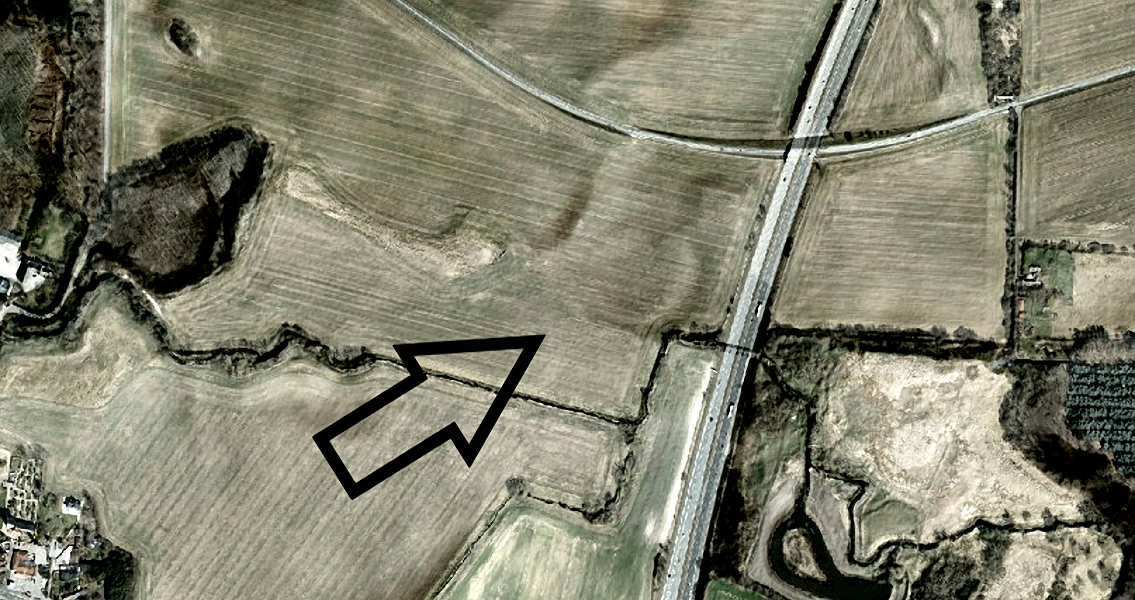
Copenhagen Post. Harald “Bluetooth” Gormsson, the king of Denmark during the late 900s, was likely the master builder of the half-completed structure, as he had been for four fortresses constructed in this unique style during his lifetime. King Harald had powerful enemies, a consequence of him having worked his army too hard, and one theory held by Ulriksen and his team is that the ring fortress had been attacked. “Our theory right now is that other powerful men in the country attacked the castle and set fire to the gates,” said Ulriksen. King Harald is probably most famous for erecting the Jelling Stones, considered by Encyclopedia Britannica as the best known runic inscriptions in Denmark, in honor of his parents. His biography can be summed up by the stone’s inscription: “King Harald bade these memorials to be made after Gorm, his father, and Thyra, his mother. The Harald who won the whole of Denmark and Norway and turned the Danes to Christianity.” King Harald’s conversion to Christianity is a contested bit of history, most likely because of the conflicting accounts of how it occurred given by medieval writers like Adam of Bremen and Widukind of Corvey. Widukind of Corvey, who wrote during the lifetime of King Harald, claims that he was converted by a cleric named Poppa who, as the story goes, carried a “great weight” of heated iron without suffering any burns when the king asked him to prove his faith in Christ. Adam of Bremen wrote his account of the event 100 years after the king’s death and described Harald’s forced conversion at the hands of Otto I, the German king and emperor of the Roman Empire from 962, after being defeated in battle. Widukind’s account makes no mention of this event. Furthermore, four hundred years later the Heimskringla (the best known saga of the Old Norse kings) tells of how King Harald, along with Earl Haakon, was converted willingly by Otto I. How King Harald acquired his nickname, Bluetooth, is another contested aspect of his life. Bluetooth first appears in the Chronicon Roskildense (the first comprehensive account of Danish history) accompanied by the explanation that Harald must have had a conspicuously bad tooth which appeared “blue” (black in other words, as blue meant dark). However, according to a curator at the Royal Jelling Hans Ole Mathiesen, King Harald was often, if not always, clothed in blue, the blue color being the most expensive during this period. Harald was killed while fighting off a rebellion which his son Swein led, in either 985 or 986. Researchers are hopeful the police investigator will bring in dogs to help sniff out unearthed bones and other evidence at Vallø Borgring. Image courtesy of Danskebjerge]]>

Categories
Editorial

April History News Round-Up

Neanderthals The fate of our closest, extinct relatives: the Neanderthals, as well as the relationship modern humans had with them, have been a constant source of fascination. This month, intriguing new ideas and considerations have been added to the ongoing discussion of what happened to the Neanderthals. A study by Anna Goldfield, an archaeologist from Boston University, and Ross Booton, a mathematical biologist from Sheffield University, used mathematical modelling to determine the impact of the mastery of fire on both human and Neanderthal populations. Although there is evidence that Neanderthals used fire, it is clear that they did not use it as consistently as humans. Mastery of fire has a number of major benefits. Firstly, of course, cooking food kills bacteria, making it safer to eat. It also increases the amount of processable protein that can be taken from the food. Therefore, the populations that mastered fire had a much better chance of survival. Based on the model, Booton and Goldfield concluded that modern humans using fire consistently would have allowed their populations to grow, while the Neanderthals would have declined. Fire mastery allowed modern human populations to flourish, which in turn led to them depriving Neanderthals of crucial resources. Other studies released this month have added further theories to the discourse about why the Neanderthals became extinct. A study by authors from Cambridge and Oxford Brookes Universities has used genetic analysis to conclude that disease spread could have led to the Neanderthal’s extinction. The authors argue that humans migrating out of Africa brought new diseases with them which the Neanderthals would have lacked immunity to. Elsewhere, a study by researchers at the University of Bologna, in Ravenna, analysed various hominin and Neanderthal teeth fossils and concluded that the Neanderthal decline started shortly after modern humans had first arrived in Europe. This adds significant weight to theories which argue humans played a part in the Neanderthal’s decline. Connections Between the Past and Present Other studies have focused on issues from the past that remain poignant in the present. Data collection by governments or private institutions, whether on their own citizens or those of other countries, is a civil liberties concern that has remained at the forefront of public discourse for the last few years. A study by Margo Anderson, Professor of History and Urban Studies at the University of Wisconsin, has shown that government collection and use of ‘Big Data’ is far from just a recent development. Anderson argues that following the Japanese attack on Pearl Harbour, the US government used 1940 census data to round up the Japanese ancestry population living on the West Coast of the USA. In total, some 100,000 people were held in US concentration camps for the duration of the war. In 1790, Congress had forbid the use of census data to ‘harm’ US citizens. The treatment of Americans of Japanese ancestry shows how perceived ‘national security threats’ could lead to reinterpretations of exactly what government collected information could legitimately be used for. Recent riots in Baltimore, as well as last year’s in Ferguson, have highlighted the continued controversies over policing in the United States. Undoubtedly, there are a host of complicated social, political and economic issues behind the riots in these two cities, that cannot be fairly analysed here. What is clear however, is that a sense of racial discrimination by various police forces has been an important factor. An article by Themis Chronopoulos, from the University of East Anglia, has argued that a reaction against police misconduct was a major theme in the African American Civil Rights Movement of the 1960s. Histories of the Civil Rights Movement tend to focus on discrimination in schools, voting rights, public housing and employment law as the major causes for protest. Chronopolouos claims, “Survey after survey during the period revealed that one of the overriding concerns of urban blacks was police misconduct and that this issue functioned as one of the primary causes of riots.” This conclusion can perhaps help us frame the riots in Baltimore into a wider historical context. Both the study on the Civil Rights Movement, and the one on state use of data, provide a valuable reminder of the constant connetion between history and the present. ]]>

Categories
Breaking News

History of NYPD Police Misconduct Traced

www.juh.sagepub.com Image courtesy of Wikimedia Commons user: Slowking4]]>

Categories
News

The Boston Police Strike