Categories
Breaking News

800-year-old 'massive' Viking skeletons found in Sicily

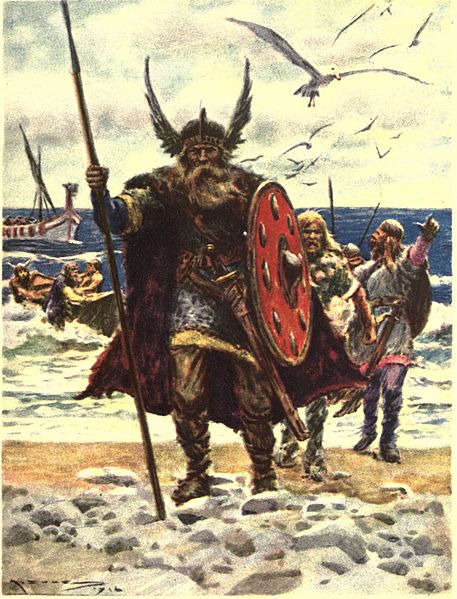
Credit: Henrietta Elizabeth Marshall, born 1876, interprets the Vikings[/caption]

‘Massive’ skeletons

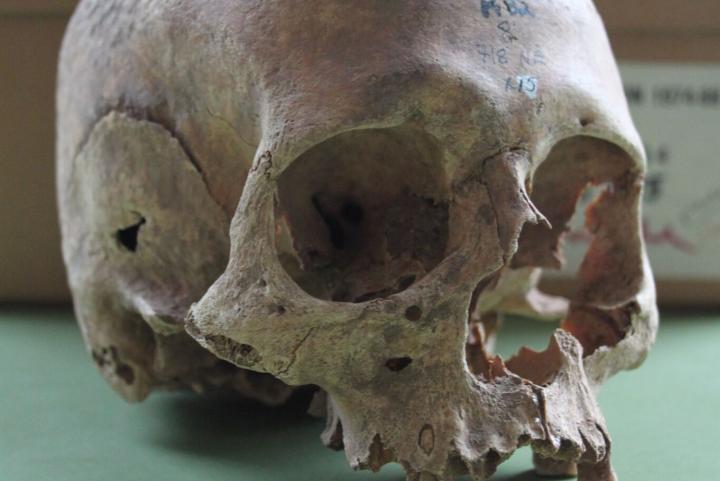
An examination of the burials determined that three of the graves belonged to women, and another two to children. The remaining skeletons are still in the process of being identified. As no grave goods were found, the researchers were not initially sure of their heritage; but an anthropologist was able to inform the team that they were likely from Western Europe – meaning that they were probably Normans from northern France. Moździoch, who comes from the Institute of Archaeology and Ethnology of the Polish Academy of Sciences in Warsaw, says: “According to the local anthropologist, the tallness and massive build of skeletons of people buried here indicate this origin.”

Why were Vikings in Sicily?

So what were the Normans doing in Sicily? During the second half of the 11th Century, the island was recaptured by a Norman nobleman, Roger de Hauteville, after having been occupied by the Arabs. It was quite usual for the Normans to send out expeditions to southern Italy, Sicily, and of course, England, Wales, Scotland and Ireland. Vikings about to invade England (4)

Western European architecture

The cemetery where the bodies were found was associated with a church hospital mentioned in a 12th Century document; but no medical equipment was found on the site. They did, however, find coins that were minted in Champagne and Lucca, indicating that the builders and users of the church would have from the north of the Apennine peninsula. At the time of the church’s construction, nearby Palermo was held by Arabs. Moździoch says that the church was fortified and built on a hill so as to provide a strategic position for battle. The architecture of the church backs up the theory that these bodies were those of Viking descendants. “The Western European form of the church… [indicates] that its builders and users could have come from Normandy,” Moździoch says. “Our research has changed the previous theories concerning the church structure. It indicates that its form referred more to the western European churches of the 11th and 12th centuries than to the buildings of this type erected in Sicily during that period. To put it simply, the concept of construction was directly transferred from the north by the craftsmen brought from there,” he concluded.]]>

Categories
Breaking News

Revealed: the secrets of pre-Viking whaling

Credit: Wikimedia Commons[/caption]

Toys and games as evidence for early whaling

A visit to a typical Swedish museum will expose visitors to extensive collections of Iron Age board game pieces. Thousands of pieces have been found, helping to paint a picture of early Scandinavian culture and communication. But new studies from the University of York and Uppsala University have analysed the raw materials, showing that these toys were commonly made out of whale bone from the mid 6th Century. Suggesting an advanced method of production, they were created in large volumes and had standardised forms. As a result, researchers believe that a steady access to whale bone would have been necessary; and since it is unlikely that the carcasses of beached whales would have been in rich supply, we’re able to interpret this as evidence for early whaling. Adding to the theory, gaming pieces and toys made from whale bone appear at around the same time as larger boathouses, as well as production features for blubber, were becoming more common in Norway. It’s likely that the toys were made in this region, before being transported southwards and ultimately being used as playthings and burial gifts in Sweden.  

Whaling in folklore

Despite northern Europe’s large-scale whaling being discussed frequently, its origins have long been shrouded in mystery. Alleged sources have been controversial: 9th Century sagas about the Norwegian merchant Ohthere or Ottar, who was a guest and informant at the court of King Alfred the Great, mention his penchant for hunting large whales. Similarly, there are written sources that detect large-scale whaling during the Viking Age in Scandinavia. Neither source is unanimously regarded as true.  

Determining the species

The team was able to determine the materials for a number of game pieces using Zooarchaeology by Mass Spectrometer, or ZooMS. The method revealed that all of the analysed pieces came from the North Atlantic right whale, the Eubalaena glacialis: a huge whale that typically weighs around 50 to 80 tonnes. The animal got its name because it was the ‘right whale’ to hunt. It was known for swimming slowly and close to the shore, and it contained so much blubber that it would float after being killed. With only 300 in known existence, the North Atlantic right whale is one of the world’s most endangered large whales. By shedding a light on the history of its hunt, this research could certainly affect calculations on the development of its population. [caption id="attachment_8733" align="aligncenter" width="500"] Atlantic Northern Right Whale mother and calf. Credit: Wikimedia Commons[/caption]

Pre-urban, pre-Viking trading networks

As well as shedding light on early whaling, the archaeologists believe these findings are an important component for researching extensive early trading networks. Alongside other goods such as bear furs, birds of prey, and an increased iron and tar production, whale bone products indicate that Scandinavia had developed strong, pre-urban trading routes – 200 years before the Viking Period. To complement the research, an in-depth supplementary study will analyse human influence on the marine ecosystems in relation to the population of whales in European waters, since the story of whaling goes back much further than we previously thought.]]>

Categories
Breaking News

Mass Grave Revealed to be Viking Army Burial – The History News of the Week

Mass Grave Could be Viking Army Burial A mass grave discovered in the 1980s could be a burial site for the war dead of the Viking Great Army, according to new research. Initial excavations at the site at St Wystan’s Church in Repton, Derbyshire, UK unearthed several Viking graves and a charnel deposit of nearly 300 people underneath a shallow mound in the vicarage garden. Later radiocarbon dating seemed to suggest that the grave consisted of bones collected over several centuries, throwing doubt on whether it was a mass Viking burial. However, the new scientific research, led by Cat Jarman from the University of Bristol, shows that in fact all the bones are consistent with a date in the late ninth century. The mound appears to have been a burial monument linked to the Great Viking Army. According to historical records, the Great Viking Army wintered in Repton in 873 CE, driving the Mercian king into exile. One room of the burial site was packed with the remains of a minimum of 264 people, around 20% of whom were women. Viking weapons and artefacts were found among the remains, including knives, axes and pennies. Mostly aged between 18 and 45 when they died, several of the male sets of remains showed signs of violent trauma. Viking Swords at Bergen museum (2) Jarman and team re-dated the remains, showing that contrary to what the previous carbon dating had suggested, the remains were all consistent with a single date in the ninth century, and the Great Viking Army. Jarman said: “The previous radiocarbon dates from this site were all affected by something called marine reservoir effects, which is what made them seem too old. “When we eat fish or other marine foods, we incorporate carbon into our bones that is much older than in terrestrial foods. This confuses radiocarbon dates from archaeological bone material and we need to correct for it by estimating how much seafood each individual ate.” The study has been published in the journal Antiquity. According to Jarman, the research could be a starting point for learning more about the Great Viking Army. “The date of the Repton charnel bones is important because we know very little about the first Viking raiders that went on to become part of considerable Scandinavian settlement of England. “Although these new radiocarbon dates don’t prove that these were Viking army members it now seems very likely. It also shows how new techniques can be used to reassess and finally solve centuries old mysteries.” Prehistoric Weapons Recreated Archaeologists from the University of Washington have recreated the weapons used by hunter-gatherers in the post-Ice Age Arctic up to 14,000 years ago. Janice Wood, a recent anthropology graduate, and Ben Fitzhugh, a professor of anthropology, reconstructed projectiles and points from ancient sites in what is now Alaska, and studied the qualities that made them effective hunting weapons. Their study, published in the Journal of Archaeological Science, focused on hunting weapons from the earliest archaeological records of Alaska (10,000 to 14,000 years ago), when a range of different projectiles and points were in use. Their study has provided insights into the technological choices made by prehistoric Alaskans. “The hunter-gatherers of 12,000 years ago were more sophisticated than we give them credit for,” Fitzhugh said. “We haven’t thought of hunter-gatherers in the Pleistocene as having that kind of sophistication, but they clearly did for the things that they had to manage in their daily lives, such as hunting game. They had a very comprehensive understanding of different tools, and the best tools for different prey and shot conditions.” Wood travelled to the area around Fairbanks, Alaska, and crafted 30 projectile points of various kinds, staying as close to the original materials and manufacturing processes as possible. Projectiles were made from poplar, with birch tar used as an adhesive to affix the points to the tips of the projectiles. The anthropologist then tested how well each point could penetrate and damage two different targets: blocks of ballistic gelatin (a synthetic gelatin meant to mimic animal muscle tissue), and a fresh reindeer carcass purchased from a local farm. Instead of an atlatl, a kind of throwing board used by ancient Alaskans, Wood used a maple recurve bow to shoot the arrows. Three different types of point were tested: composite microblades, stone and bone. It was found that the microblades were more effective on smaller prey, due to their versatility and ability to inflict more damage. The bone points penetrated more deeply and created narrower wounds, suggesting they could be used to stun larger prey such as bison. The stone points could have cut wider wounds, especially on larger prey, resulting in quicker kills.Iceage Weapon or Tool For Wood, these findings show that the hunter-gatherers were sophisticated enough to recognise which points to use and when. “We have shown how each point has its own performance strengths. It has to do with the animal itself; animals react differently to different wounds. And it would have been important to these nomadic hunters to bring the animal down efficiently. They were hunting for food.” The authors believe that the research could also shed new light on debates over whether human hunting practices could have led to the extinction of certain species. “I see this line of research as looking at the capacity of the human brain to come up with innovations that ultimately changed the course of human history,” she said. “This reveals the human capacity to invent in extreme circumstances, to figure out a need and a way to meet that need that made it easier to eat and minimised the risk.” History of Dice Revealed in New Study New research has charted the history and development of dice, revealing how they’ve changed over the last 2,000 years to become unbiased, with every number having an equal probability of being rolled. The research was led by Jelmer Eerkens, professor of anthropology at the University of California, Davis. It reveals that in the Roman era, many dice were lopsided, in contrast to the perfect cubes seen today. It also highlights that Roman dice varied drastically in shape, size, material and the configuration of numbers. Between 400 CE and 1100 CE, dice are apparently extremely rare in the archaeological record, corresponding with the Dark Ages. According to Eerkens and colleagues’ research, a new awareness of the importance of form in dice became apparent around 1450, reflecting the onset of the Renaissance. “A new worldview was emerging — the Renaissance. People like Galileo and Blaise Pascal were developing ideas about chance and probability, and we know from written records in some cases they were actually consulting with gamblers,” he said. “We think users of dice also adopted new ideas about fairness, and chance or probability in games.” “Standardising the attributes of a die, like symmetry and the arrangement of numbers, may have been one method to decrease the likelihood that an unscrupulous player had manipulated the dice to change the odds of a particular roll,” Eerkens continued. Eerkens and his co-author, Alex de Voogt of the American Museum of Natural History, looked at hundreds of dice in museums and archaeological depots across the Netherlands, assembling a set of 110 carefully dated, cube shaped dice to analyse. For Eerkens, dice present a fascinating artefact for archaeologists, embodying shifting worldviews. “In this case, we believe it follows changing ideas about chance and fate.” The study has been published in the journal Acta Archaeologica. Featured image is one of the female skulls from the Repton charnel. Image credit: Cat Jarman]]>
Categories
Breaking News

History News of the Week – Viking Women, Cultural Exchange in the Bronze Age and a Discovery at Hadrian’s Wall

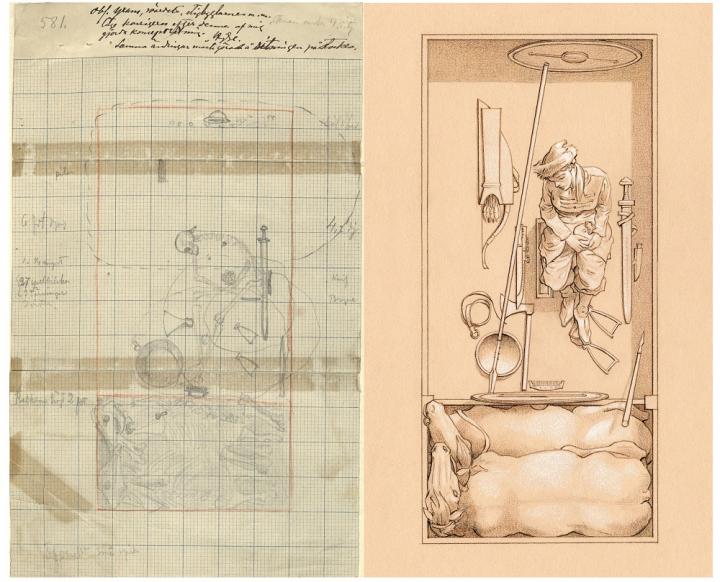
Viking Woman was a Warrior and a Leader Viking society was not as male dominated as one might expect, a new study claims. According to new research from the universities of Stockholm and Uppsala, Viking women took on leadership roles on the battlefield. Charlotte Hedenstierna-Jonson, who led the study, explained: “What we have studied was not a Valkyrie from the sagas but a real life military leader, that happens to be a woman”. At the heart of the research, published in the American Journal of Physical Anthropology, is the grave of a woman Viking warrior, complete with the remains of two horses and a selection of weapons. Significantly, the burial also contained a set of gaming pieces and a gaming board among the remains. “The gaming set indicates that she was an officer,” said Hedenstierna-Jonson. “Someone who worked with tactics and strategy and could lead troops in battle”. Buried in the Viking town of Birka during the mid-tenth century, isotope analysis has shown that the woman had an itinerant lifestyle, commonplace in the martial society that was prevalent throughout Europe between the eighth and tenth centuries. First discovered in the 1880s, it was long assumed that the Viking warrior in the burial had been a man. Thanks to new research techniques however, that assumption has been comprehensively put to bed, allowing the remains to present a fascinating new dimension to Viking culture. Anna Kjellström, who also participated in the study, said: “The morphology of some skeletal traits strongly suggests that she was a woman, but this has been the type specimen for a Viking warrior for over a century, [which was] why we needed to confirm the sex in any way we could.” The team turned to genetics to confirm the Viking woman’s sex, retrieving a molecular sex identification based on X and Y chromosomes. “This burial was excavated in the 1880s and has served as a model of a professional Viking warrior ever since. Especially, the grave-goods cemented an interpretation for over a century,” said Jan Storå, lead author of the study. “The utilisation of new techniques, methods, but also renewed critical perspectives, again, shows the research potential and scientific value of our museum collections”. Women drove Bronze and Stone Age Cultural Exchange A new study has shown the importance of female social mobility for cultural exchange in Bronze Age Europe. Findings published in the Proceedings of the National Academy of Sciences reveal a fascinating trend among Bronze Age families in the Lechtal, south of Augsburg in what is now Germany. While the men in these families had tended to stay in the region of their birth, many of the women came from outside the area, possibly from Bohemia or Central Germany. According to the findings, the pattern of female mobility was not a short-term trend, but one that can be observed over an 800-year period during the transition from the Neolithic to the Early Bronze Age. “Individual mobility was a major feature characterising the lives of people in Central Europe even in the 3rd and early 2nd millennium,” stated Philipp Stockhammer from the Institute of Pre- and Protohistoric Archaeology and Archaeology of the Roman Provinces of the Ludwig-Maximilians-Universität München, the leader of the collaborative research project. The researchers suggest in their study that this mobility was significant in the exchange of ideas and objects, something which increased significantly in the Bronze Age and in its wake encouraged the development of new technologies. For this study, the researchers examined the remains of 84 individuals using genetic and isotope analyses in conjunction with archaeological evaluations. The individuals were buried between 2500 and 1650 BCE in cemeteries that belonged to separate homesteads, and that contained between one and several dozen burials made over a period of several generations. “We see a great diversity of different female lineages, which would occur if over time many women relocated to the Lech Valley from somewhere else,” remarked Alissa Mittnik from the Max Planck Institute for the Science of Human History, a contributor to the study. Corina Knipper, from the Curt-Engelhorn-Centre for Archaeometry explained: “Based on analysis of strontium isotope ratios in molars, which allows us to draw conclusions about the origin of people, we were able to ascertain that the majority of women did not originate from the region.” The burials of the women did not differ from that of the native population, suggesting that the formerly foreign women were integrated into the local community. As well as shedding new light on the role female mobility played in cultural exchange in the Bronze Age, the new findings point to the immense scale of human mobility in general in the period. “It appears that at least part of what was previously believed to be migration by groups is based on an institutionalised form of individual mobility,” concluded Stockhammer. Roman Barracks Unearthed Near Hadrian’s Wall Archaeologists have unearthed a 2,000-year-old Roman Barracks near Hadrian’s wall, the Guardian reports. Over the course of the last two weeks a “treasure trove” of thousands of artefacts has been unearthed, including military and personal possessions from Roman soldiers and their families, according to the Guardian. Remarkably, the barracks itself actually predates Hadrian’s Wall, allowing the findings to provide unique insight into the military build-up in the area prior to the Wall’s construction. Cavalry lances, arrowheads and ballista bolts are among the weapons found at the site, alongside combs, bath clogs, hairpins, brooches and stylus pens. The barracks, which date from 105CE, were discovered under the fourth century fort of Vindolanda, south of Hadrian’s near Hexham in Northumberland. According to the Guardian, the artefacts survived because they were concealed beneath a concrete floor laid by the Romans about 30 years after the barracks was abandoned, shortly before 120CE. The concrete created oxygen-free conditions that helped preserve materials such as wood, leather and textiles. Featured Image: Reconstruction of the Grave in Birka – The drawing is a reconstruction of how the grave with the woman originally may have looked. Credit:The illustration is made by Þórhallur Þráinsson (© Neil Price).]]>

Categories
Breaking News

Spectacular Viking Age Manor Discovered in Sweden

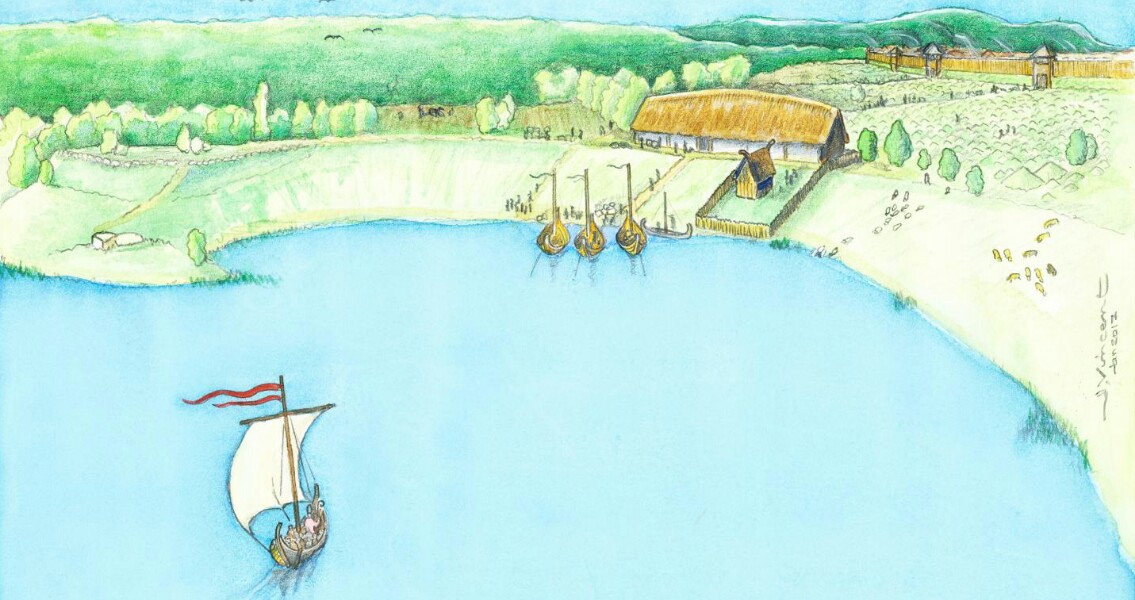
Archäologisches Korrespondenzblatt volume 2017/1. Featured Image: Reconstruction by Jacques Vincent ]]>

Categories
Breaking News

Vikings, Ancient Egyptians and the Spread of the House Cat

in up to 37% of homes in the USA. However, until now, little was known about the history of cat domestication. Indeed, scientists still debate whether the house cat can truly be called a domesticated animal, debating whether its behaviour and anatomy are truly that different from its wild relatives. “We don’t know the history of ancient cats. We do not know their origin, we don’t know how their dispersal occurred,” Eva-Maria Geigl, an evolutionary geneticist at the Institut Jacques Monod in Paris, told Nature. Geigl presented the study, along with her colleagues Claudio Ottoni and Thierry Grange. The team carried out the first ever large scale study of ancient feline DNA, taking specimens excavated from thirty archaeological sites in Europe, the Middle East and Africa. All together, they sequenced the DNA of 209 cats, dating from 15,000 years ago to the eighteenth century CE. Tellingly, a 9,500 year old human burial in Cyprus contained the remains of a cat. According to the authors of the study, this suggests that the connection between humans and felines dates back at least as far as the dawn of agriculture, which began in the nearby fertile crescent around 12,000 years ago. Geigl and colleagues’ results suggest that cat populations grew in two distinct waves. As early farming communities expanded into the Eastern Mediterranean they brought Middle Eastern wildcats with a particular mitochondrial lineage with them. Geigl suggests that the grain stockpiles of these early farming communities attracted rodents, which in turn attracted wild cats. Humans might have started to domesticate cats after seeing the benefits they offered in keeping stores free of rats and other rodents. Meanwhile, around 6,000 years ago wild cats started to be tamed in ancient Egypt, the civilisation’s feline fixation deepening to the point that millions of cats were mummified. Thousands of years after the Middle Eastern cat lineage had entered the Mediterranean, cats descended from Egypt started to spread across Eurasia. A mitochondrial lineage present in cat mummies from the fourth century BCE to the fourth century CE was also found in cats in Turkey, Bulgaria and Sub-Saharan Africa. Again, rodents were likely responsible for the spread of cats. The study suggests that sea-faring people likely used them to keep rodents in check on ships. Fascinatingly, the team also found cat remains from the Egyptian lineage at a Viking site in northern Germany dating to between the eighth and eleventh century. “There are so many interesting observations” in the study, Pontus Skoglund, a population geneticist at Harvard Medical School in Boston, told Nature. “I didn’t even know there were Viking cats.” Geigl’s team also analysed the DNA mutation responsible for the blotched coats found on tabby cats. They found the unique mutation didn’t occur until the Medieval period. The scientists now hope to sequence more nuclear DNA from ancient cats, to further our understanding of the mysterious, under studied history of our feline friends. This article was corrected on 25th September 2016. The original said that cats were kept as pets in over 75% of homes in the US. The correct figure is in fact between 30% and 37%.]]>

Categories
Breaking News

Grave of Axe-Wielding Viking Berserker Found in Denmark

News Corp Australia, Kirsten Nelleman Nielsen, the leader of the excavation, says that the axe is exceedingly large, and would have been the kind of weapon that would have struck fear into the hearts of the wielder’s enemies. Known as the “Dane Axe”, the weapon would have been analogous in the Viking Age to the machine gun of the modern era, the researcher added. The weapon was likely not a ceremonial one, as it is simple and without adornment. Additionally, as it was the only object buried with the man, it is likely to have been a prized possession in life, leading Nielsen and his team to surmise that the tomb contains the remains of a warrior. Nielsen said the find was more than a little extraordinary, as this particular axe is much larger and heavier than other axes found in similar graves. The handle of the weapon would have been very long, requiring the use of both hands to wield effectively. Originally discovered in 2012, the multi-roomed dødehuse was stumbled upon during the construction of a highway in the district of Harup; the timber structure measures 13 meters by 4 meters and is part of an extensive burial ground. Within were found a trio of graves, which have all been dated to 950 CE. The front of the tomb held a man and a woman, seemingly buried together, while the back was the final resting place of the axe-wielding warrior. The couple seem to have been highborn or otherwise people of import, as their grave goods were sourced from across Europe. According to University of Copenhagen, Denmark archaeologist Henriette Lyngstrøm, silver coins originating from ancient Afghanistan and ceramics from the Baltic point to an international reach. Additionally, the female was found with a set of keys, thought to have been symbolic of her power, and the two were found within a wagon that is thought to have been used by Danes of noble birth during the time they were alive. The man, perhaps her husband, was found with a more modestly-sized battle axe. Nielsen remarked that finding a male and a female buried together in such pomp and circumstance is noteworthy, as it explodes the myth of the male-dominated nature of Viking society by affording equal status between the two. ]]>

Categories
Breaking News

Police are on the Case of 1,000-year-old Whodunit

Copenhagen Post. Harald “Bluetooth” Gormsson, the king of Denmark during the late 900s, was likely the master builder of the half-completed structure, as he had been for four fortresses constructed in this unique style during his lifetime. King Harald had powerful enemies, a consequence of him having worked his army too hard, and one theory held by Ulriksen and his team is that the ring fortress had been attacked. “Our theory right now is that other powerful men in the country attacked the castle and set fire to the gates,” said Ulriksen. King Harald is probably most famous for erecting the Jelling Stones, considered by Encyclopedia Britannica as the best known runic inscriptions in Denmark, in honor of his parents. His biography can be summed up by the stone’s inscription: “King Harald bade these memorials to be made after Gorm, his father, and Thyra, his mother. The Harald who won the whole of Denmark and Norway and turned the Danes to Christianity.” King Harald’s conversion to Christianity is a contested bit of history, most likely because of the conflicting accounts of how it occurred given by medieval writers like Adam of Bremen and Widukind of Corvey. Widukind of Corvey, who wrote during the lifetime of King Harald, claims that he was converted by a cleric named Poppa who, as the story goes, carried a “great weight” of heated iron without suffering any burns when the king asked him to prove his faith in Christ. Adam of Bremen wrote his account of the event 100 years after the king’s death and described Harald’s forced conversion at the hands of Otto I, the German king and emperor of the Roman Empire from 962, after being defeated in battle. Widukind’s account makes no mention of this event. Furthermore, four hundred years later the Heimskringla (the best known saga of the Old Norse kings) tells of how King Harald, along with Earl Haakon, was converted willingly by Otto I. How King Harald acquired his nickname, Bluetooth, is another contested aspect of his life. Bluetooth first appears in the Chronicon Roskildense (the first comprehensive account of Danish history) accompanied by the explanation that Harald must have had a conspicuously bad tooth which appeared “blue” (black in other words, as blue meant dark). However, according to a curator at the Royal Jelling Hans Ole Mathiesen, King Harald was often, if not always, clothed in blue, the blue color being the most expensive during this period. Harald was killed while fighting off a rebellion which his son Swein led, in either 985 or 986. Researchers are hopeful the police investigator will bring in dogs to help sniff out unearthed bones and other evidence at Vallø Borgring. Image courtesy of Danskebjerge]]>

Categories
Breaking News

Skeleton Proves an 800-Year-Old Viking Saga

Categories
Breaking News

More Details Revealed About Iceland’s “Woman in Blue”

American Association of Physical Anthropologists, researchers presented the results of their ongoing examination and testing of the girl’s remains and the objects found buried with her. The incomplete and poorly preserved skeletal remains belong to a young woman determined to have been between 17 and 25 years old (radiocarbon testing of the fabric and tooth show she was born around the year 900 CE and the time of her death was sometime around the year 920 CE). Based on the chemical analysis of one of her teeth, the Woman in Blue moved from the British Isles or Scandinavia to Iceland when she was between five and ten years old, a fact indicated by her change in diet from mostly land animals and plants to one that included a large amount of seafood and fish. It’s unclear if the young woman was a Viking or Northern European, although she was dressed in traditional Viking garb which had been made with Icelandic wool and dyed blue using herbs that were probably brought to Iceland from abroad. The indigo blue plant-based dye is typical of female Viking garments. Buried along with her were an extravagant pearl necklace and two oval Scandinavian brooches made with a copper alloy. Amazingly, a piece of her skin had been preserved underneath one of the Scandinavian brooches which had been pressed against the young woman’s body at the time of her burial. The skin has allowed researchers to determine, among other things, her age and origin. Iceland’s history starts with Viking explorers (and their slaves) settling there in the ninth century – Iceland remained uninhabited even after western Europe had long-been settled. These first permanent settlers and the vast majority of the settlers (but not all) who arrived in Iceland over the following decades were Norwegian. The traditional story for this Norwegian exodus is that it was instigated by people escaping the overly strict rule of then Norwegian king Haraldr Hárfagri (Harold the Fair-haired). Alternatively, people may have simply been leaving Norway because of overcrowding in the western fjords. Seagoing Vikings from Norway, Denmark, and Sweden arrived and settled in several different countries, Iceland being one of them between the year 700 CE and the year 1100 CE, supporting the possibility the “Woman in Blue” came with the Vikings to Iceland. Skin and bone remains from the Woman in Blue were inadvertently stained green by the preservation solution used in the jars they were stored in. These items were transferred recently into jars containing a light paraffin oil in order to maintain their preserved state without staining them further. DNA from the young women is currently being studied by a team of researchers led by Joe and Jakob Walser, both with the University of Iceland in Reykjavik.]]>