Categories
Editorial

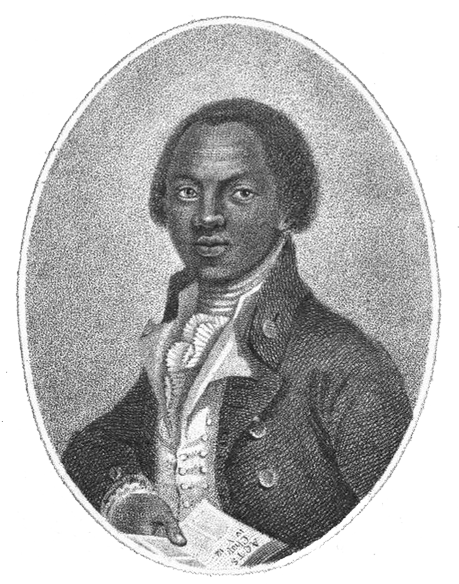
Olaudah Equiano – From Slave to Abolitionist

The Interesting Narrative of the Life of Olaudah Equiano or Gustavus Vassa, the African, Equiano’s autobiography, published in 1789, marked a significant turning point in the fight to abolish slavery. Describing his capture in Africa and subsequent life as a slave, the autobiography shone a light on the horrors of the slave experience, making its brutality tangible to those who had been born free. It became a rallying point for the abolitionist cause. It began with a petition for abolition addressed to the British parliament, and ended with an antislavery letter to the Queen. In between it detailed Equiano’s life, providing a rare insight into slavery through the eyes of one of its former victims. Translated into several different languages, The Interesting Narrative… would go on to be read by tens of thousands. Just as significantly, Equiano himself worked tirelessly to promote the book and the abolitionist cause. He embarked on extensive lecture tours across Britain and Ireland, and spent much of the 1790s passionately campaigning for abolition – drawing more and more attention to the issue, notably working closely with Granville Sharp and Thomas Clarkson in the Society for the Abolition of the Slave Trade. Olaudah Equiano’s life was a remarkable one, even before he became a leading figure in the battle to abolish slavery. Born in what is now Nigeria, Equiano was kidnapped and sold into slavery as a child – forcibly transported across the globe, to Barbados and then Virginia. In 1757, Equiano was bought by a naval captain named Henry Pascal, who named him Gustavus Vassa and brought him back to England. For years he served as Pascal’s slave on navy ships, participating in major battles of the Seven Years’ War. The period proved deeply influential on Equiano’s life. Fellow soldiers taught him to read and write, and the basics of mathematics, while Equiano also converted to Christianity, getting baptised in 1759. Freed by Pascal at the end of the Seven Years’ War, Equiano was again enslaved in 1762, shipped from London to the West Indies and taken on by a merchant shipping company. Again, the experience proved hugely influential on Equiano, his relatively high rank meaning he was actually involved in organising the sale and transportation of other slaves. “I was often a witness to cruelties of every kind, which were exercised on my unhappy fellow slaves. I used frequently to have different cargoes of new Negroes in my care for sale; and it was almost a constant practice with our clerks, and other whites, to commit violent depredations on the chastity of the female slaves; and these I was, though with reluctance, obliged to submit to at all times, being unable to help them.” Shrewdly, Equiano traded and saved hard during his time in the West Indies, and by 1766 had raised enough to buy his freedom. After working for several years as an able seaman, he eventually returned to London where he first met anti-slavery campaigner Granville Sharp. It marked the beginnings of Equiano’s career as one of the most influential, if seldom acknowledged, anti-slavery campaigners. He became involved in the Sierra Leone Resettlement Project, which aimed to provide a safe place for freed slaves to live and work; founded the Sons of Africa, which campaigned for abolition through public speaking, letter writing and lobbying; and even appeared in the House of Commons to call for improved conditions on slave ships. Soon, he realised that one of the most potent arguments for abolition he could offer however, was his own life story…]]>

Categories
News

Jamaican Independence Day

Categories
News

Slavery Abolition Act Comes into Force

Categories
Breaking News

Explaining Ethiopia's Long History of Slavery

Fiteha Negest, the traditional legal code of Ethiopia, officially enshrined slavery in the structure of Ethiopian society. In the early twentieth century, Ethiopia had between two and four million slaves, out of a total population of about eleven million people. This huge proportion of the population were considered the property of their owners, and deprived of any form of property ownership. Slavery was so rife that Abba Jifar II, king of Jimma (r.1878-1932), an independent kingdom in Ethiopia with a slave-based economy, exchanged two slaves for two dogs, and paid his dentist five slaves for a treatment. One reason for this continuation of slavery, Mohammed suggests, was warfare. The southward expansion of the Ethiopian state under the military campaigns of Menilek II (ruled 1889-1913) had created numerous prisoners of war. Slavery reached its zenith in this period, as thousands of prisoners were sold in slave markets. “In other words, warfare resulted in the continuation of slavery in Ethiopia,” Mohammed writes in his study. At the beginning of the twentieth century, “many states and kingdoms were at war for slave raiding.” Constant warfare meant a constant need for weapons. Foreign traders were the only source of firearms and ammunition in Ethiopia. These traders operated through coastal chiefs who collected taxes and tribute on slaves. Many Ethiopian rulers, such as Menilek, tried to outlaw slavery, but were unwilling to interfere with anything that could disrupt the importation of firearms. There was also little pressure to stop the slave trade from the international community, Mohammed argues. He states that Britain, “the champion of the Trans-Atlantic Slave Trade” as he describes the country, had little desire to suppress slavery in eastern Africa, and therefore did not get involved. Only when Ethiopia sought to join the League of Nations in 1923, did real change occur. The League required Ethiopia to abolish slavery, in accordance with its conventions. In response to this demand, Ethiopia’s regent, Tafari Mokonnen Woldemikael, declared the trading of slaves in Ethiopia a crime punishable by death. Tafari became Emperor Haile Sellasse I, and continued his programme of abolishing slavery. With the abolition of slavery in Ethiopia, the kingdom of Jimma ceased to exist as an independent entity. As such, it became integrated with the rest of Ethiopia. Mohammed’s study effectively traces the long history of slavery in Ethiopia, and offers clear explanations of why it had such deep roots. Although much has been written about the abolition of slavery in Europe and the United States, Mohammed’s work provides a unique insight into the anomalies behind its persistence in Ethiopia. Image courtesy of Wikimedia commons user: Antoinetav For more information: www.academicjournals.org]]>

Categories
News

The Amistad Slave Rebellion

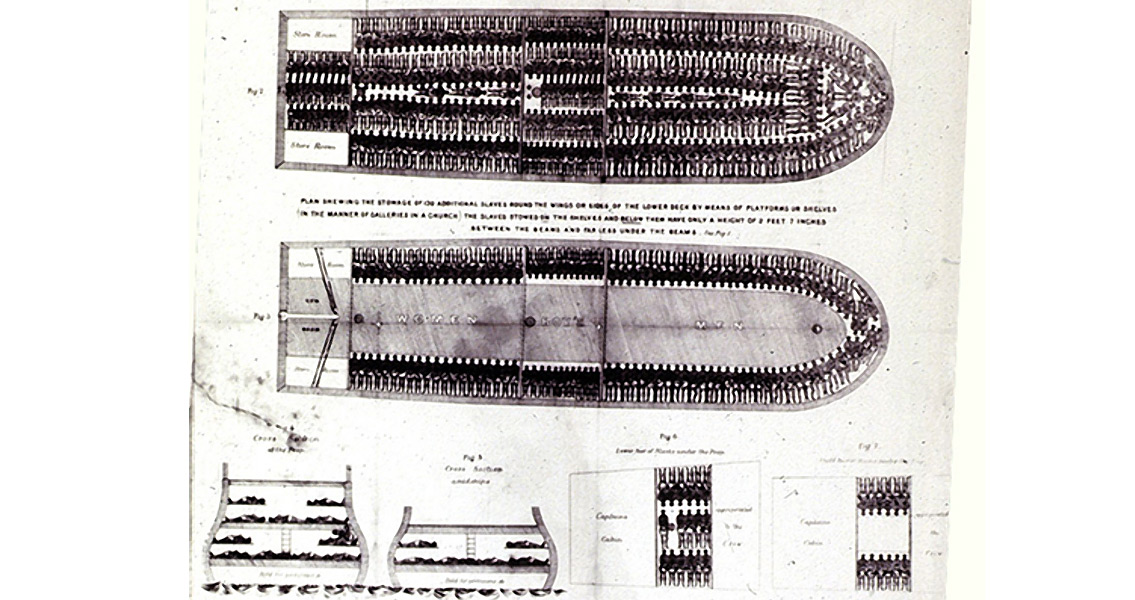
th anniversary of the Amistad Slave Rebellion. In 1838, on the 2nd of July, about 53 Africans aboard the Amistad, a slave carrier, managed to break out of their chains, kill two crew members and disarm the rest of the crew. After seizing control of the vessel, the slaves tried to sail all the way back to their homeland, but ended up sailing North instead. These slaves travelled approximately 1400 miles from Cuba all the way to Long Island in New York, where the navy finally picked them up. This rebellion was termed as the Amistad Rebellion and despite its popularity, it was just one of the thousands of rebellions that have been recorded. About 12 million Africans were forced to become slaves as they were shipped off to the New World between the 16th – 19th centuries. It is believed that almost 1.5 million Africans perished even before reaching land, due to the horrifying conditions present on-board. At the time of the Amistad Rebellion the United States, as well as most other major slave destinations in North and South America, had abolished the process of importing slaves. However, since slavery itself was legal unlawful activities were the norm. For example, a Spanish slave trader by the name of Pedro Blanco was believed to live like an aristocrat along the coast of Sierra Leone and was said to have continued the slave trade with the help of a local leader. The 53 Africans who found themselves aboard the Amistad were rounded up at Lomboko, Blanco’s slave depot. They were then marched all the way through the interior and kept in slave barracks where diseases and beatings were common. According to the testimony of these slaves, they were also shackled around the neck, ankles and wrists and were forced to sleep in contorted positions without even being offered enough room to stand straight. Whippings and beatings on flimsy grounds were common and dead bodies were thrown into the ocean almost every single day. What made this rebellion so famous was that despite being from 9 different ethnic groups, the slaves joined hands towards a common cause – freedom. This was something that was relatively unseen in Africa. The rebellion was led by Cinque, a rice farmer before he was turned into a slave. The captain of the ship was slashed to to death and two other crew members threw themselves overboard. However, to the dismay of the slaves, they had to depend on the Spaniards to set the course since they had no idea about charting out directions on the sea. The Amistad stopped on a number of islands in the Bahamas before it finally reached the United States. It was on August 26 that a US Navy brig entered the ship and imprisoned the Africans in Connecticut, a slave state at the time. These Africans received immense media coverage and thousands of locals also paid “entry fees” to look at them. A few influential people against the slave trade helped them to set up a trial in Hartford. In what became a historic ruling, the Hartford Court ruled that since the Africans were brought in illegally, they were not slaves. Despite having lodged an appeal with the Supreme Court, the decision could not be overturned. Thus, these slaves were finally made free after spending 18 months in the US. During the journey back to Sierra Leone, the number of surviving Africans fell to 35  who at last arrived home on 26th November 1841. This is just one of the many stories of the horrors of the slave trade and the efforts of a few individuals who played a huge role in abolishing slavery and making the world a much better place to live in.]]>