Categories
Lithuania Takes Back its Independence


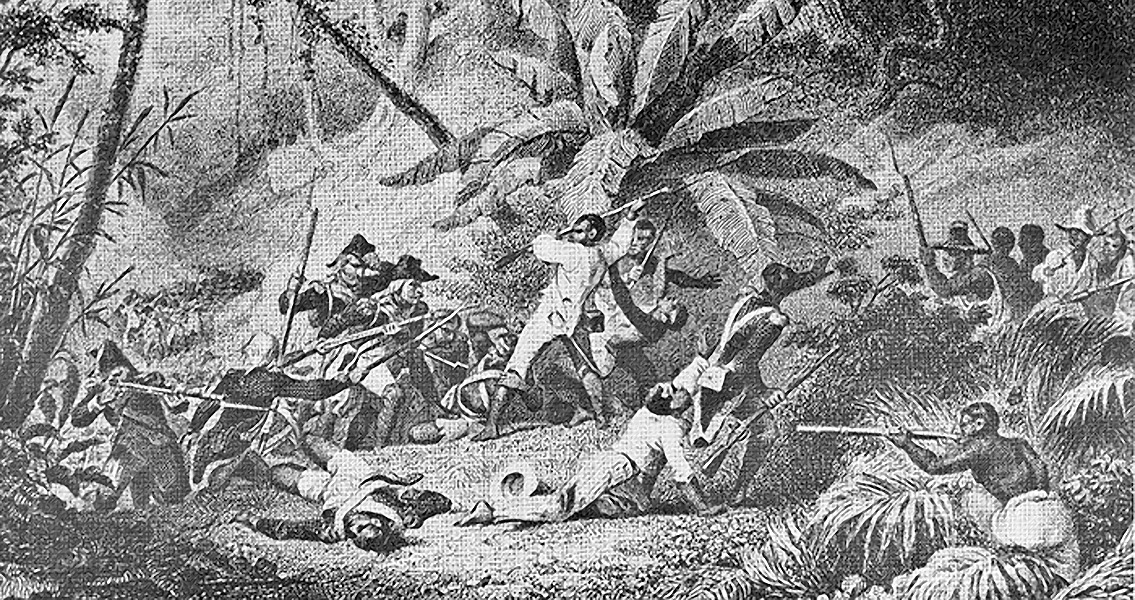
History Compass. The post-Revolution crash, Taber argues, does not necessarily reflect the policies of an independent Haiti. The expansion of Haiti’s plantation economy in the mid-eighteenth century and the importation of hundreds of thousands of slaves explains the colony’s economic productivity explosion. “It is probable that soil exhaustion and deforestation would have diminished Saint- Domingue’s economic role even without the revolution,” Taber writes. Taber argues that most slaves, who initially had little property, probably saw their living standards increase following the Haitian Revolution. Later scholarship, Taber writes, influenced by “Algerian independence from France, the USA civil rights movement, and general de-colonization coupled with the emergence of social history generated new interest around the Atlantic in the Haitian experience and its significance for understanding decolonization, black liberation, and structural racism.” There is still heated debate around the political ideas of Haitian slaves and the possible influence of Enlightenment ideas on their thinking. Taber notes that historians such as Laurent Dubois have argued that slaves further radicalised Enlightenment ideas as they adopted them. “In contrast, Geggus, Thornton, and Ogle show that most slaves followed a type of royalism that allowed an appeal to an authority higher than the planters,” Taber wrote. Most of the Haitian Revolution does not fit into easy narratives of racial solidarity or universal liberation. Numerous historians have argued over what caused the Revolution, with little concession. It is tempting, Taber writes, “to describe Saint-Domingue simply as the abyss of 18th-century slavery and colonialism and the Haitian Revolution as the universal triumph of human rights, but such easy narratives do a disservice to the women and men involved and mask Haiti’s complexity.” His conclusion is that further work needs to be done. Taber’s summary of Haitian history is impressive in scope and offers a wonderful synopsis for anyone wanting to understand Haiti’s complicated and nuanced past. For more information: www.onlinelibrary.wiley.com ]]>
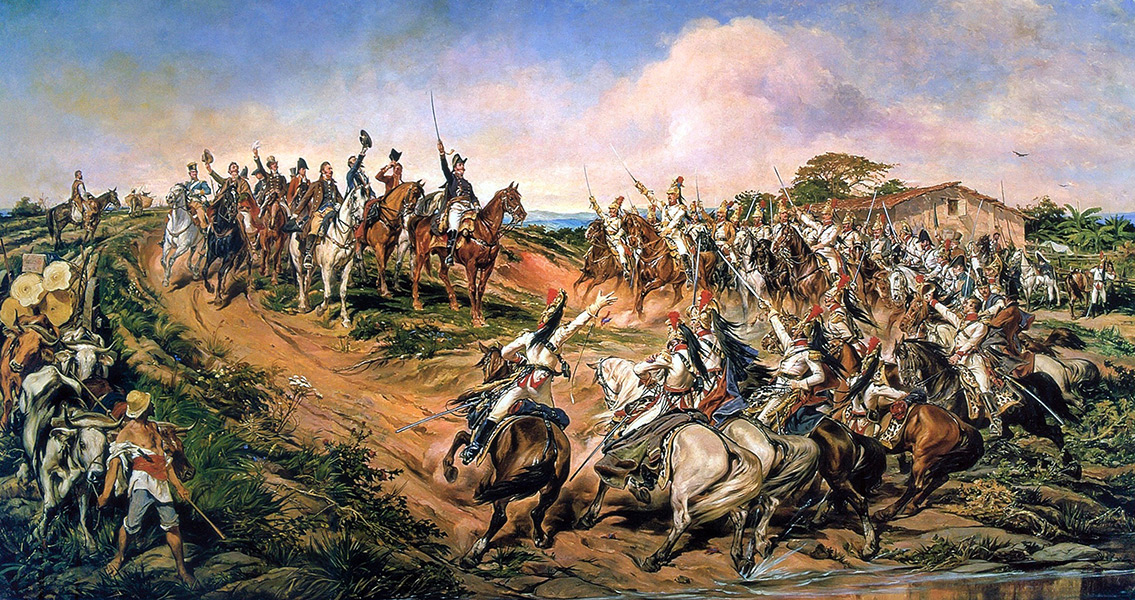
Journal of Global History. “Latin America, by virtue of its radically different history of colonialism from much of the ‘Third World’, resists many of the narratives of either Cold War historiography or postcolonial theory that have emerged from considerations of these regions.” Colonialism in Latin America happened earlier, endured longer, and became much more deeply embedded in society in comparison to other colonial countries. Latin America’s post-colonial movements did not, therefore, lead to the same anti-colonial nationalism which typifies independence movements in Africa and Asia. Brazilians were not averse to being considered ‘Western’, Chakravati argues, but they did not wish to be considered peripheral to the West. By studying several prominent Brazilian intellectuals, Chakravati has revealed that these thinkers examined Indian independence. “Despite their differences in personality, career, and ethical and political commitments, our Brazilian protagonists demonstrated,” Chakravati argues “[a] shared starting point of a self-identification with the West, including its imperial heritage, complicated by their own position as postcolonial figures from the global periphery.” By examining India’s independence, Brazil’s intellectuals saw a troubling mirror-image of their own peripheral position with regard to the West. Following independence, India was of less importance to the West as wide-ranging reforms decreased the profits foreign investors could make. By nationalising heavy industries such as steel, aviation, shipping, electricity and mining, India aligned itself very clearly as a post-colonial nation. In Brazil’s case, the newly-independent country did not oppose the colonial powers. Chakravati argues that one particular event shows this very clearly. After gaining independence in 1947, India requested Portugal cede its territories on the subcontinent to India. After more than a decade, India annexed Goa using military force in 1961. In response to this, Brazil – rather than condemning Portugal’s continued colonial policy around the world – declared the matter to be a bilateral issue between India and Portugal. Clearly, therefore, Brazil was attempting to portray itself as a pro-Western, independent nation. Chakravati has effectively shown that post-colonial countries should not be treated as entirely passive entities, wrapped up in the wider context of Cold War politics. They were independent nations which located themselves in world politics in nuanced and varied ways. Image courtesy of Wikimedia Commons user: Lmbuga For more information: www.journals.cambridge.org]]>
www.academicjournals.org Image courtesy of Wikimedia Commons user: AnonMoos]]>


Image courtesy of Magnus Manske]]>