Categories
Breaking News

Modern Malaria Parasite Found in Ancient Roman DNA

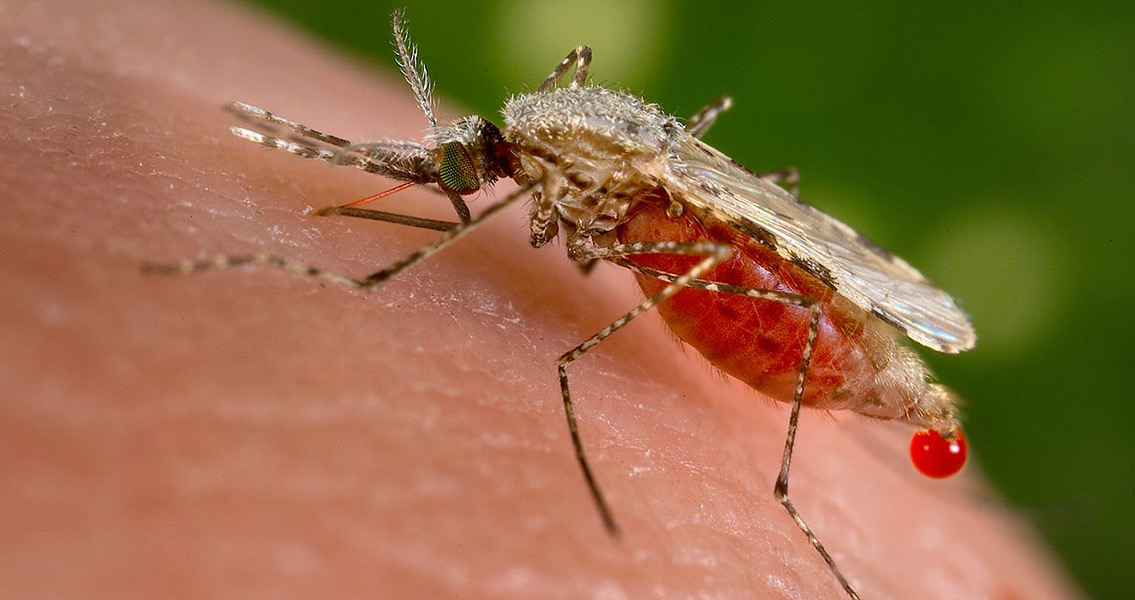
Plasmodium falciparum. Malaria, which can cause a flu-like illness, chills and fever in those it infects, was likely a significant force in ancient Rome resulting in widespread death, according to Hendrik Poinar, the director of McMaster University’s Ancient DNA Center in Canada. The evolutionary geneticist and one of the authors of the new research report said in an interview with CNN that the death toll from Malaria in ancient Rome could have been close to the toll it takes in modern Africa. There are approximately 438,000 fatalities a year from malaria, according to the World Health Organization, and the vast majority of these cases – a full 91 percent – originate from sub-Saharan Africa, despite the treatable and preventable nature of the disease. Prior to this new discovery, the only evidence of malaria – or illnesses with symptoms that matched malaria – was found in texts from the period. Poinar stated that there were difficulties classifying these illnesses as malaria. There were simply too many infections that cause fevers for a malaria diagnosis to be definitive. However, the clues were there, especially since the outbreaks seemed to be repeated at the same time each year. This indicated that the culprit could be malaria, as it’s possible to be re-exposed again and again without building immunity to the infection. However, without any sort of DNA evidence to back up the theory, there was no way to support it with raw data – until now. Malaria was found to be quite widespread, not only present on the coast of the Italian peninsula but also in deep inland rural regions as well. Normally it would be next to impossible to find evidence of malaria infection in 2,000-year-old remains as the parasites most often leave evidence behind in organs that decompose quickly, and do not cause changes in skeletal remains. New methods allow scientists to extract minute particles of DNA from dental pulp, purifying and enriching the remains enough to test for the presence of modern malaria. The researchers used an innovative method that has been employed in studying the plague and cholera which involves attaching molecules of a modern version of the pathogen with magnetic beads. These beads “pulled down” the low concentration of parasite DNA and found its signature. The new research study, which appears in the journal Current Biology, can be found here]]>
Categories
Breaking News

Malaria Was Around With The Dinosaurs

P. falciparum parasite. The first recorded instances of the disease in humans took place in China in 2,700 BCE. It has since had a constant, and dramatic effect on history, with some historians arguing that it played a leading role in the fall of the Roman Empire. Now, a new study argues that the origins of malaria go back much further than ancient China, to the time of the dinosaurs. Typically, malaria is thought to be of a reasonably modern origin, with estimates placing its beginnings to between 15,000 and 8 million years ago. The new study, published in the journal American Entomologist, argues that malaria evolved in insects at least 100 million years ago. George Poinar, a researcher from Oregon State University, claims that the disease may have begun in an insect such as the biting midge. His conclusions have been reached through careful analysis of the fossil record, including a one hundred million-year-old Protoculicoides biting midge preserved in Myanmar Amber, which contained numerous oocysts of the malarial parasite Paleohaemoproteus burmacis in its body cavity. “Scientists have argued and disagreed for a long time about how malaria evolved and how old it is,” Poinar explained in a press release from OSU. “I think the fossil evidence shows that modern malaria vectored by mosquitoes is at least 20 million years old, and earlier forms of the disease, carried by biting midges, are at least 100 million years old and probably much older.” Poinar and his wife Roberta garnered attention in 2007 with their book ‘What Bugged the Dinosaurs?’, in which they suggest that the evolution and development of blood sucking, disease spreading insects could have played a pivotal role in wiping out the dinosaurs. They argue that a single global event, such as a meteor strike, failed to explain dinosaur extinction. “There were catastrophic events known to have happened around that time, such as asteroid impacts and lava flows,” Poinar said in the OSU press release. “But it’s still clear that dinosaurs declined and slowly became extinct over thousands of years, which suggests other issues must also have been at work. Insects, microbial pathogens and vertebrate diseases were just emerging around that same time, including malaria.” In the new study, Poinar argues that insects must be considered the primary hosts of malaria, since the sexual reproduction stage of the parasites does not occur in the vertebrate animals they infect. In particular, he highlights Gregarinida as the parasite group which could have been the progenitor of the disease. “Based on the host range and life cycle of representatives of the Coccidia and Gregarinida, the progenitor for malarial organisms (Haemosporidia) is considered to have evolved from gregarine protozoa.” he writes in the newly published journal article. Based on the fossil evidence, he concludes that reptiles may have been the first vertebrate hosts of malaria, “Fossil evidence and molecular studies indicate that the original vertebrate hosts of malarial or plasmodid organisms were reptiles; thus, the mid-Cretaceous biting midge infected with P. burmitis could well represent an early prototype of a malarial vector–vertebrate association.” He writes in the study. Poinar’s research suggests that malaria is millions of years older than traditionally believed. By charting its ancient history, new insights could be gleaned into its effects on vertebrate survival millions of years ago, as well as providing new insights into its deadly modern day life-cycle. For more information: oxfordjournals.org Image by George Poinar, Jr., courtesy of Oregon State University]]>

Categories
Breaking News

200-Million-Year-Old Parasitic Interaction Uncovered

Categories
Breaking News

Medical Marijuana Smoking Linked to Parasite Prevention