Categories
Breaking News

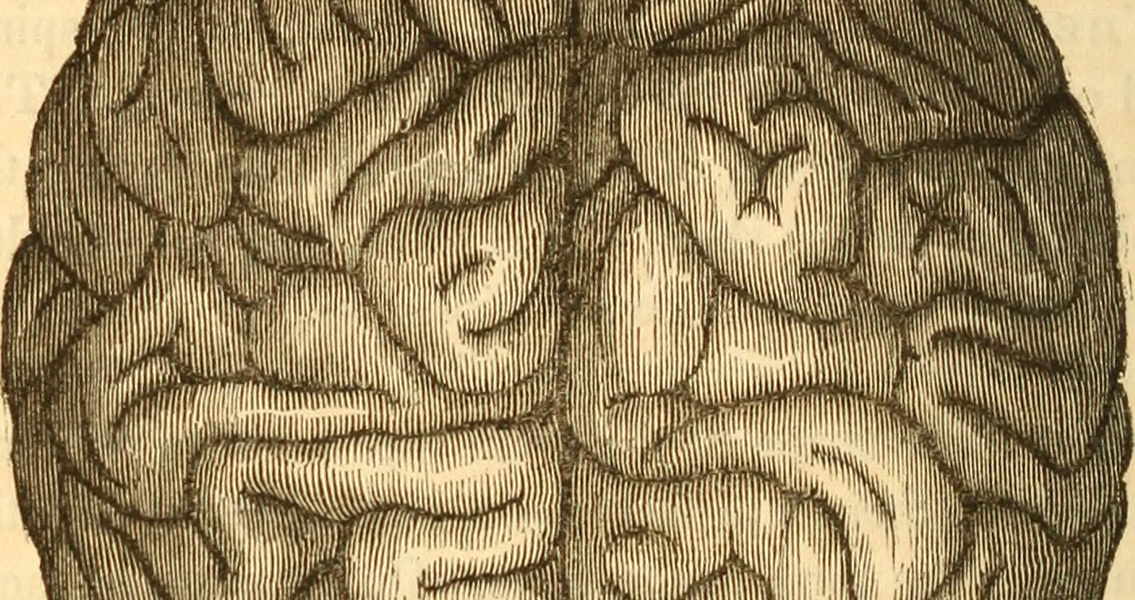
Scientists May Have Finally Answered Why We Have Such Big Brains

Scientific Reports, the newly released study suggests that the incredible development of the brain is connected to the formation of large, cooperative social groups. As humans started having to judge a person’s relative standing and making decisions about who to cooperate with, their brains’ were challenged like never before. The team of computer scientists from Cambridge believe it was this which promoted the rapid expansion of brain size over the last two million years. The authors also claim that their results show that evolution favours those who are willing to help and cooperate with others who are at least as successful as themselves. “Our results suggest that the evolution of cooperation, which is key to a prosperous society, is intrinsically linked to the idea of social comparison – constantly sizing each up and making decisions as to whether we want to help them or not.” explained lead author Roger Whitaker, from Cardiff University’s School of Computer Science and Informatics. “We’ve shown that over time, evolution favours strategies to help those who are at least as successful as themselves.” In comparison to almost every other animal, human brains are larger as a percentage of body weight. More remarkably, since the emergence of the first species of the Homo genus some two million years ago, the human brain has more than doubled in size. Compared to more distant ancestors such as the australopithecines, which lived between two and four million year ago, human brains have more than tripled in size. What accounted for this remarkable increase has long puzzled scientists. The Cardiff University team used computer modelling to run hundreds of thousands of simulations, or ‘donation games’, as a means to understand decision making strategies in simplified humans. From these simulations they attempted to understand why certain types of behaviour strengthened over time. For each round of the donation game, two simulated players were randomly selected from the population. The first player then made a decision on whether or not to donate to the second, based on a judgement of the second player’s reputation. If the player elected to donate, the first suffered a cost while the second received a benefit. Their reputation was then updated in light of their decision, before the next game was initiated. According to the team, the results suggest making relative judgments to help others has been important for human survival. They also claim that the complexity involved in having to regularly assess and reassess individuals has been difficult enough to promote the expansion of the human brain through the generations. Professor Robin Dunbar, an evolutionary psychologist from Oxford University who was involved in the study, previously proposed the social brain hypothesis. “According to the social brain hypothesis, the disproportionately large brain size in humans exists as a consequence of humans evolving in large and complex social groups.” he explained. “Our new research reinforces this hypothesis and offers an insight into the way cooperation and reward may have been instrumental in driving brain evolution, suggesting that the challenge of assessing others could have contributed to the large brain size in humans.” The implications of the study are not just limited to understanding our most ancient history, however. The authors suggest it could also be applied to engineering and in particular to the development of autonomous machines. “The models we use can be executed as short algorithms called heuristics, allowing devices to make quick decisions about their cooperative behaviour,” Professor Whitaker said. “New autonomous technologies, such as distributed wireless networks or driverless cars, will need to self-manage their behaviour but at the same time cooperate with others in their environment.” ]]>
Categories
News

'Angel Of Death' Josef Mengele Arrives At Auschwitz

Categories
News

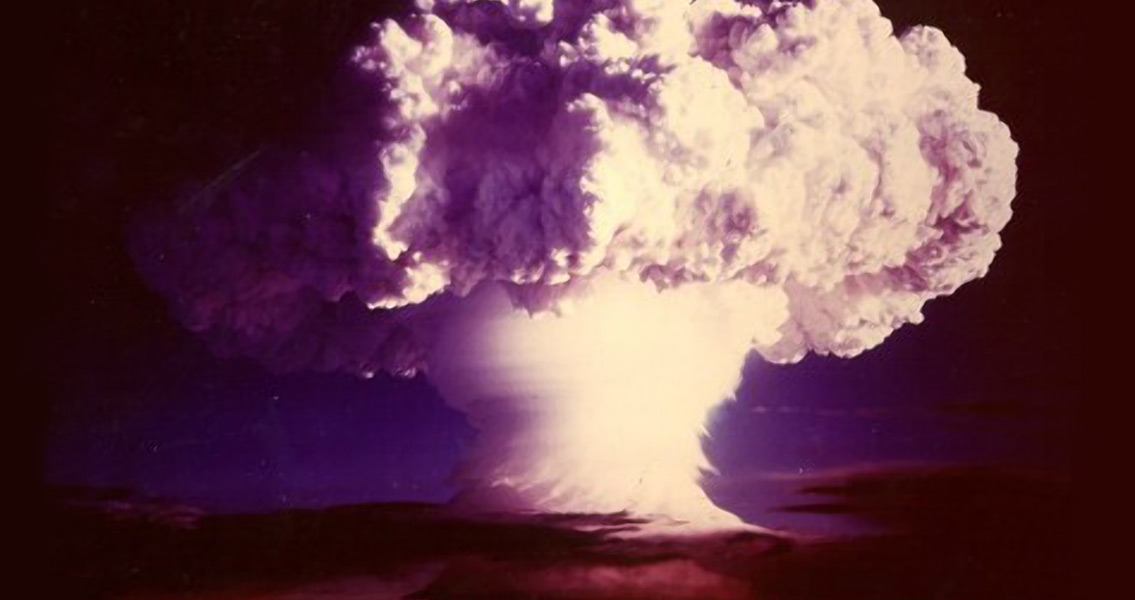
First Atomic Bomb Test

Enola Gay dropped an atomic bomb on Hiroshima, Japan. Less than a week later, the USA launched a second atomic attack on Nagasaki. The devastation caused by this frightening weapon ultimately led to Japan’s surrender in the Second World War, on 15th August. The death toll from the two attacks and their aftermath is estimated to have been between 129,000 and 246,000 people. Although the morality and necessity of the two atomic bomb attacks remain hotly debated, undoubtedly the work carried out by the Manhattan Project in developing the atomic bomb was hugely significant in the closing period of the Second World War. Even now, the consequences of the development of nuclear weapons are abundantly clear across the globe, as shown in the recent negotiations aimed at restricting Iran’s nuclear capability. Attempts to weaponise the fission process actually date back to 1939, when a group of scientists, many of them refugees from fascism in Europe, took steps to win support from the US government for the project. Enrico Fermi, an Italian emigre, met with representatives from the US Navy to discuss the military potential of fissionable material. It was the first such meeting with the US Government concerning what would become nuclear weapons. Later in 1939, Albert Eintein presented the potential of a fission reaction in a letter to President Franklin D. Roosevelt. By February 1940, $6,000 had been awarded to commence research into nuclear weapons. The USA’s entry into the Second World War in early 1942 saw its investment in the program increase dramatically, with all resource limits on the project removed. Taking in the work of scientists from across the USA in collaboration with those from Britain and Canada, the Manhattan project saw the USA divert huge sections of its industrial and economic might towards creating a weapon which could be decisive in the war. Named the ‘Manhattan Project’ in reference to the place where the research began, the first stages of the project involved months of theoretical research, with a key breakthrough taking place at the University of Chicago when Fermi set off the first fission chain reaction. Countless other scientists and engineers working across the USA made important progress in both harnessing radioactive material and developing the means by which it could be weaponised, helping turn the idea of the atomic bomb into a reality. The initial theoretical stage coalesced with the practical at a 428,000 acre industrial complex in the New Mexican desert. Here, a team led by Robert J. Oppenheimer had to develop a method to reduce fissionable materials to pure metals before fabricating them into shapes which could be used in a weapon. They then needed to develop means to bring the materials together quickly enough to trigger a nuclear explosion, and finally a system where this process could be executed within a bomb dropped from a plane. By the summer of 1945, sufficient quantities of plutonium for a nuclear explosion had been produced at the large scale production reactors at Hanford Engineering Works, and the team at the industrial facility in New Mexico had developed technology advanced enough to carry out the first bomb test. Two hemispheres of plutonium, which combined were about the size of a tennis ball, were moved to the test site. In the run up to the test, the scientists involved were unsure what would happen. Some speculated it wouldn’t work, and the bomb would fail to explode. Fermi had a much more apocalyptic view, believing the detonation would set fire to the earth’s atmosphere and create fires around the world. Of course, the test was a success, and the bomb generated an explosive power equivalent to 15,000 tons of TNT. By this point the US government’s investment in the Manhattan Project had risen to $2 billion, an incredible amount for the time. The first ever atomic bomb detonation on the 16th July, 1943, was significant for a number of reasons. It marked the start of a new era in history, and revealed the terrifyingly destructive power which could be achieved through modern technology, vast resources, and human ingenuity. Image courtesy of Wikimedia Commons user: U.S. Department of Energy]]>

Categories
Breaking News

Test Promises to Reveal Ancient Malaria Spread