Categories
Breaking News

Team Recreates Bronze Age Trepanation Step-by-Step

The Siberian Times that: “…the key to a successful surgery was the patient’s complete trust and confidence that the surgeon had the necessary skills and knowledge to carry out such an operation.” Another critical element was the patient’s ability to endure the pain. The plants that were being used as painkillers in other areas are not found in Siberia. Instead, the researchers identified other flora used by indigenous peoples to bring a person to an “altered state of mind.” They believe that magic mushrooms, cannabis and even ecstatic styles of dancing were all used for pain control during early brain surgery, 3,000 years ago in Russia. The team has been able to recreate the procedure based on the shape and inclination of the opening’s edges. It seems the patient was lying on his back with his head turned to the right, and that the surgeon likely stood to his left side. A wide cut through the skin and tissue to the bone was made, after which the skin and aponeurosis were peeled away. The shape of the hole suggests the bone was scraped rather than cut, to expose the dura mater. High survival rates following trepanation in ancient times were likely due to the fact that the operations were primarily extradural. After the operation, the opening would have been covered with skin; although it’s unclear if bandages or sutures were used, how the wound was drained, and how any bleeding was stopped. Of course, no written records are left, the experts however, theorize that ‘herbs or red-hot objects’ were used. The grave in which the skull was found had been looted in ancient times, and only a little more than the skull remained, including tubular bones fragments from the ribs and upper limbs. A traditional Karasuk-style knife was also found in the grave, but there is no indication it was used for the surgery. This study has been published in the International Journal of Osteoarchaeology. ]]>

Categories
Breaking News

Scientists May Have Finally Answered Why We Have Such Big Brains

Scientific Reports, the newly released study suggests that the incredible development of the brain is connected to the formation of large, cooperative social groups. As humans started having to judge a person’s relative standing and making decisions about who to cooperate with, their brains’ were challenged like never before. The team of computer scientists from Cambridge believe it was this which promoted the rapid expansion of brain size over the last two million years. The authors also claim that their results show that evolution favours those who are willing to help and cooperate with others who are at least as successful as themselves. “Our results suggest that the evolution of cooperation, which is key to a prosperous society, is intrinsically linked to the idea of social comparison – constantly sizing each up and making decisions as to whether we want to help them or not.” explained lead author Roger Whitaker, from Cardiff University’s School of Computer Science and Informatics. “We’ve shown that over time, evolution favours strategies to help those who are at least as successful as themselves.” In comparison to almost every other animal, human brains are larger as a percentage of body weight. More remarkably, since the emergence of the first species of the Homo genus some two million years ago, the human brain has more than doubled in size. Compared to more distant ancestors such as the australopithecines, which lived between two and four million year ago, human brains have more than tripled in size. What accounted for this remarkable increase has long puzzled scientists. The Cardiff University team used computer modelling to run hundreds of thousands of simulations, or ‘donation games’, as a means to understand decision making strategies in simplified humans. From these simulations they attempted to understand why certain types of behaviour strengthened over time. For each round of the donation game, two simulated players were randomly selected from the population. The first player then made a decision on whether or not to donate to the second, based on a judgement of the second player’s reputation. If the player elected to donate, the first suffered a cost while the second received a benefit. Their reputation was then updated in light of their decision, before the next game was initiated. According to the team, the results suggest making relative judgments to help others has been important for human survival. They also claim that the complexity involved in having to regularly assess and reassess individuals has been difficult enough to promote the expansion of the human brain through the generations. Professor Robin Dunbar, an evolutionary psychologist from Oxford University who was involved in the study, previously proposed the social brain hypothesis. “According to the social brain hypothesis, the disproportionately large brain size in humans exists as a consequence of humans evolving in large and complex social groups.” he explained. “Our new research reinforces this hypothesis and offers an insight into the way cooperation and reward may have been instrumental in driving brain evolution, suggesting that the challenge of assessing others could have contributed to the large brain size in humans.” The implications of the study are not just limited to understanding our most ancient history, however. The authors suggest it could also be applied to engineering and in particular to the development of autonomous machines. “The models we use can be executed as short algorithms called heuristics, allowing devices to make quick decisions about their cooperative behaviour,” Professor Whitaker said. “New autonomous technologies, such as distributed wireless networks or driverless cars, will need to self-manage their behaviour but at the same time cooperate with others in their environment.” ]]>

Categories
Breaking News

Scientists Able to Recreate the Brain of 17,000 year old Child

The Local, as the brain grows it applies pressure to the inside of the skull, which at this point in a child’s development is still very soft, allowing for an imprint of the particular pattern of crevices and ridges on the brain’s convoluted surface to be left on the inside. Computer technology, including 3D scanners, has been used to create an accurate 3D model of the ancient brain, giving paleontologists, anthropologists, and neuroscientists the unprecedented opportunity to make comparisons between the brains of a modern child and a young hunter-gatherer. For example, by looking at the stage of growth within different areas, like the language center, researchers will be able to determine how they developed. Around this age, modern 10-year olds begin exhibiting an increased attention span and the ability to complete detailed tasks, think logically and problem solve. This is the age when they begin to understand riddles, begin to collect things, show curiosity about how things work and care about fairness. By studying the specific areas of the brain that are responsible for social interaction, language and spatial coordination for example, researchers are hoping to learn more about the lives our ancient ancestors led. Grotta del Romito, (which translates as the Cave of Romito) dates back to the Palaeolithic and contains some of the oldest and most important evidence of prehistoric humans in Italy. To date, researchers have revealed a number of dwellings, ancient tombs and petroglyphs (which are 10,500 years old), all of which have contributed to what’s known of human history in Italy prior to the agricultural revolution. The Paleolithic era of human history is distinguishable by the development of the first and most primitive stone tools. It covers the time period from 2.6 million years ago until approximately 10,000 years ago. In another cave located near the site, which has been dated back to the Neolithic period, large quantities of obsidian have been found, leading researchers to theorize that the cave was an integral part of the obsidian trade between the Ionians and the Tyrrhenians. Excavations first began at Grotta del Romito in 1962, and are still in progress today across a variety of disciplines, including sedimentology, malacology, palynology, paleontology and archaeozoology and Paleontology. ]]>

Categories
Breaking News

Brain-Size Evolved with Body-Size Along for the Ride

Homo genus. “Over the last four million years, brain size and body size increased substantially in our human ancestors,” Mark Grabowski with the American Museum of Natural History and author of the paper is quoted as saying in a press release from the museum, “This observation has led to numerous hypotheses attempting to explain why observed changes occurred, but these typically make the assumption that brain and body size evolution are the products of separate natural selection forces.” That’s the very assumption now being questioned. There is significant evidence showing that the genetic variations (evolution’s kick starter) in some traits are a result of genes which are also causing simultaneous variations in other traits – leading to the conclusion that the natural selection experienced by either trait causes a correlated response in the unselected trait. For example, consider an elephant’s leg bone; as the bone grows longer, it also grows wider. If you used artificial selection to produce an elephant that was tall, it’s likely the elephant’s legs would also get wider as they get longer. This effect, in part, is because of shared genetic variations (co variations) among the traits of the leg bone. Likewise, researchers set out to investigate this type of genetic relationship between a human’s brain size and their body size and its impact, if any, on our evolution. Using the patterns of brain-size and body-size covariations from an assortment of modern humans and primates, researchers created several different models to examine exactly how these underlying genetic interactions and their associated selection pressures affected the evolution of our lineage. For the first time the findings demonstrate that the strong selection pressure to increase only brain size had a significant role in increasing body size at the same time, throughout our evolution. The phenomenon alone may also have been responsible for a major increase that occurred in both traits when our human ancestors (like Australopithecus) transitioned to Homo erectus. Selection undoubtedly played a role in fine tuning the physical changes inherent to bigger body size, this research suggests however, it was not the driving force and evolutionary models pertaining to Homo origins should be reconsidered. To put it another way, all of the scientific ideas and research done to explain why, over time, humans evolved bigger bodies may be moot; body size simply got pulled along with brain size. The work was published in the journal Current Anthropology.]]>

Categories
Breaking News

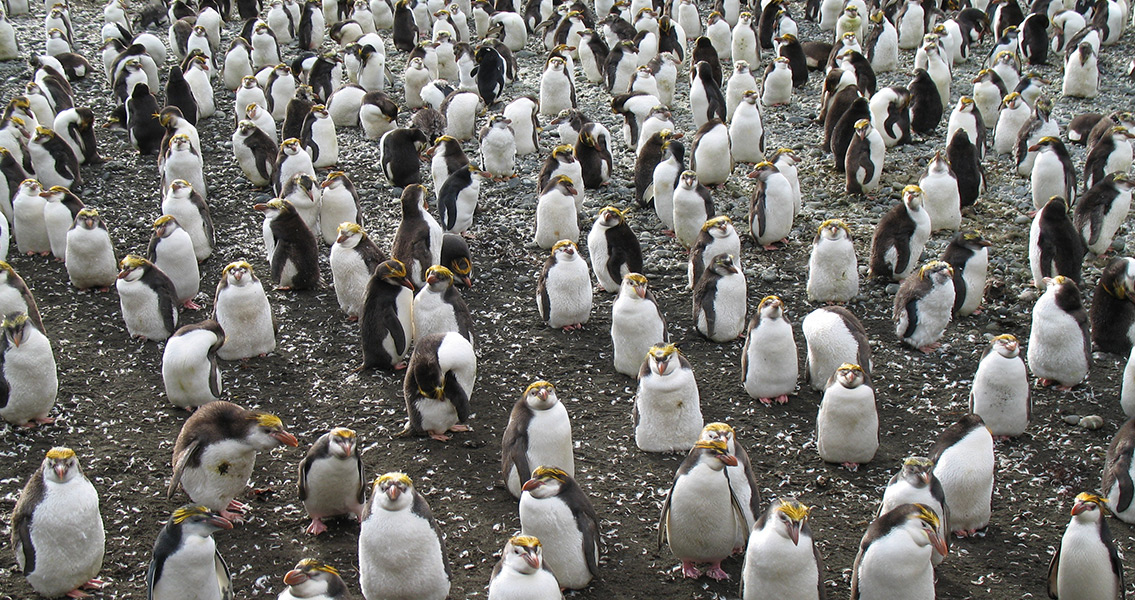
Penguin Brains Were Unaffected By Loss of Flight

Journal of Anatomy. Researchers from the University of Texas at Austin argue that although the loss of flight was responsible for modern penguins’ unique way of walking, it didn’t cause any major changes in the animals’ brain structure. The conclusions have been reached following examination of the skull of the world’s oldest known penguin fossil, from the mid to late Paleocene era in New Zealand. “What this seems to indicate is that becoming larger, losing flight and becoming a wing-propelled diver does not necessarily change the [brain] anatomy quickly,” said James Proffitt, a graduate student at University of Texas’ Jackson School of Geosciences and the leader of the research, in a press release from the University of Texas. Despite modern penguins exhibiting a unique brain, one remarkably different from those of their ancestors, these changes didn’t take place until long after the birds had evolved away from flying. “The way the modern penguin brain looks doesn’t show up until millions and millions of years later.” Proffitt explained. The 60 million year old penguin whose remains were used in the study was likely to have lived a life very similar to modern penguins. Its age, and its position in the line of penguin evolution meant it provided invaluable insights for the study. “It’s the oldest [penguin] following pretty closely after the loss of flight and the evolution of flightless wing-propelled diving that we know of”, Proffitt said. Exactly why penguins evolved to not fly is a mystery that plagued scientists for centuries. It seems massively impractical, Emperor penguins for example, have to walk distances of up to 60km from their rookeries to the sea, a journey which takes several days but could be achieved in a matter of days if the birds flew. Similarly, many penguins are the target of predators such as leopard seals at the point they enter the ocean – a problem which could be avoided if they were able to fly. A 2013 study by scientists from the University of Aberdeen used comparisons with Guillemots to conclude that there is no way for a bird to develop wings which are good for both flying and swimming. According to the scientists, as penguin wings evolved to make them better swimmers, the amount of energy they needed for flying became too great. Proffitt and his partners on the latest study, Julia Clarke; a professor in the Jackson School’s Department of Geological Sciences, and Paul Scofield; the senior curator of Natural History at the Canterbury Museum in Christchurch, New Zealand, assumed that the loss of flight would have impacted brain structure, making the brains of ancient and modern penguins similar in certain regions. Due to the fact the shape of a bird’s skull is influenced by the structure of its brain, the team were able to use X-ray CT scanning to capture digitally the minute details of the penguin skull’s anatomy before applying computer modelling software to form a digital mold of the brain, called an endocast. Their results showed that in reality the ancient penguin’s brain anatomy had more in common with petrels and loons than modern penguins. If the peculiarities of penguin brain structure were a consequence of its initial loss of flight, the changes would have been apparent in the Paleocene skull. Similarities between the ancient penguin and modern diving birds suggest that the actual act of diving could be responsible for the differences in brain structure. “The question now is do the old fossil penguins’ brains look that way because that’s the way their ancestors looked, or does it have something maybe to do with diving?” Proffitt said, in the press release. For more information: www.wileyonlinelibrary.com]]>

Categories
Breaking News

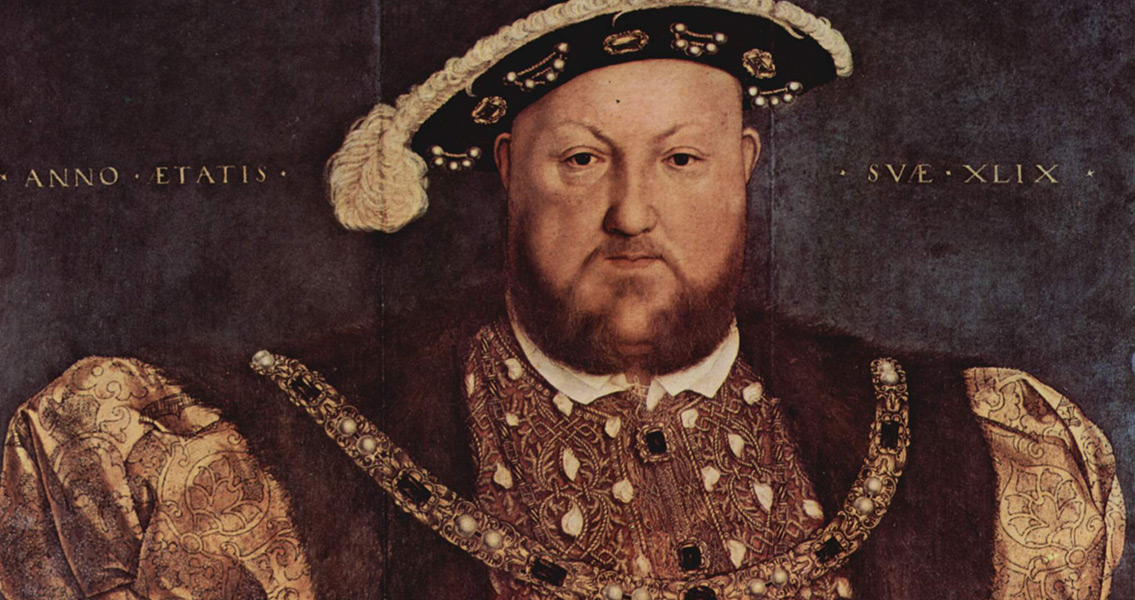
Henry VIII – Unseated and Unstable Due to Jousting Injury

Categories
Breaking News

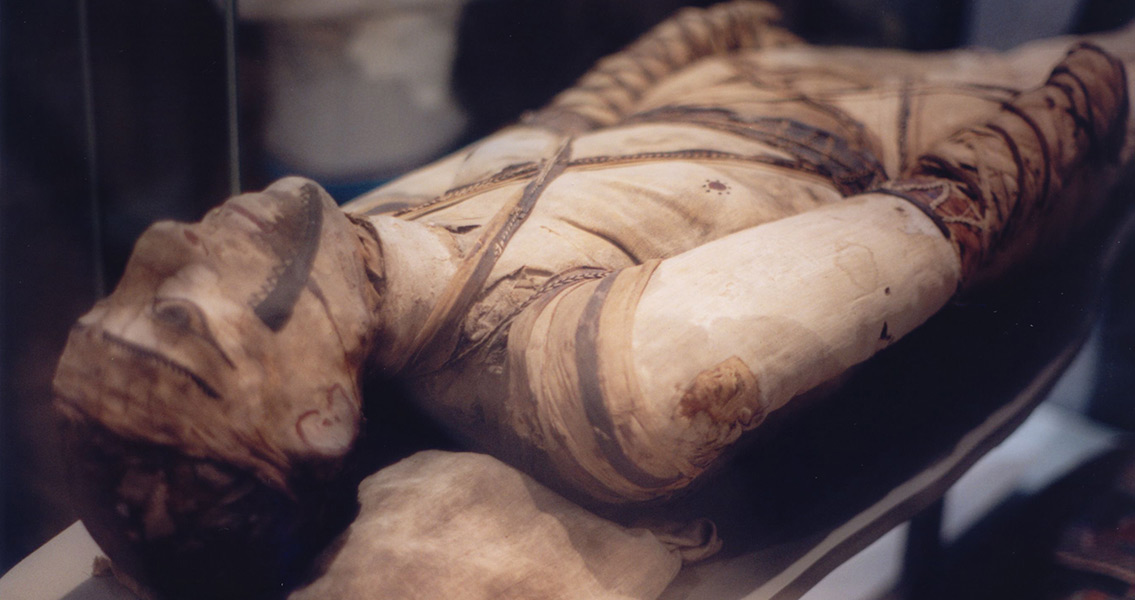
Scan Reveals New Method of Mummification

Categories
Breaking News

Homo naledi: Walker and Handyman

Homo naledi, has shown that the hominin was probably equally good at climbing trees as walking, even running, on the ground. What’s more, Homo naledi seems to have been handy with tools, media report. This new examination focuses exclusively on the anatomy of the hands and feet of the hominin and has found that the shape of the bones is very similar in many ways and distinctly different in others from our own. Among the similarities are the shape of the foot, specifically the ankle joint area, as well as the absence of a “grasping big toe”, the researchers say in their new paper, Still, the toes were more curved than ours, which suggests Homo naledi felt comfortable in the trees. Commenting on the paper, Jeremy Da Silva, an anthropologist from Dartmouth College, told Reuters that the foot and leg anatomy of Homo naledi revealed the species was well adapted for long-distance walking and running, with elongated bones, and ankles and knees like modern humans’. At the same time, however, Homo naledi had a lower arch than modern humans, and the toes were curved. Another commenter, William Harcourt-Smith from the American Museum of Natural History, told the BBC that the hominin’s lifestyle probably involved long periods of being on the ground, and going up in the trees to escape predators or to feed. All in all, however, Harcourt-Smith said the species was “much more bi-pedal than not, but not 100%.” The hand bone fossils found in the Rising Star cave in South Africa offered even more fascinating insight into this ancient ancestor of ours. The shape of the hand suggested that although the fingers were more curved than are ours, Homo naledi could manipulate tools. This suggestion could fuel a hypothesis that tool use is not as directly related to cognitive capacity as traditionally believed. Homo naledi’s brain was just a third of the size of ours, something that would usually make scientists think the species was unable to make and use tools, but apparently the case is the opposite. One palaeoanthropologist commenting on the paper, Tracy Kivell from the University of Kent, told Reuters that this discovery “causes us to perhaps rethink the cognitive requirements for tool use.” The Homo naledi fossils were found in August and the discovery was made public in September. Starting with one nearly complete skeleton, so far researchers working at the site have unearthed partial remains from around 15 individuals. Hand fossils alone number almost 150, with one almost complete specimen of the right hand of an adult, while foot bones total 107 so far, with one completely preserved right foot, again of an adult. Luckily for science, the bodies in the cave were not disturbed after they were put there or died there and they did not suffer the effects of the elements, such as floods, which would have dissolved some of the smallest bones, Tracy Kivell told the BBC. For more information: “The hand of Homo naledi”]]>

Categories
Breaking News

Stone Age Toolmaking Not As Simple As Believed

Categories
Breaking News

Medieval Skulls Reveal Brain Injuries

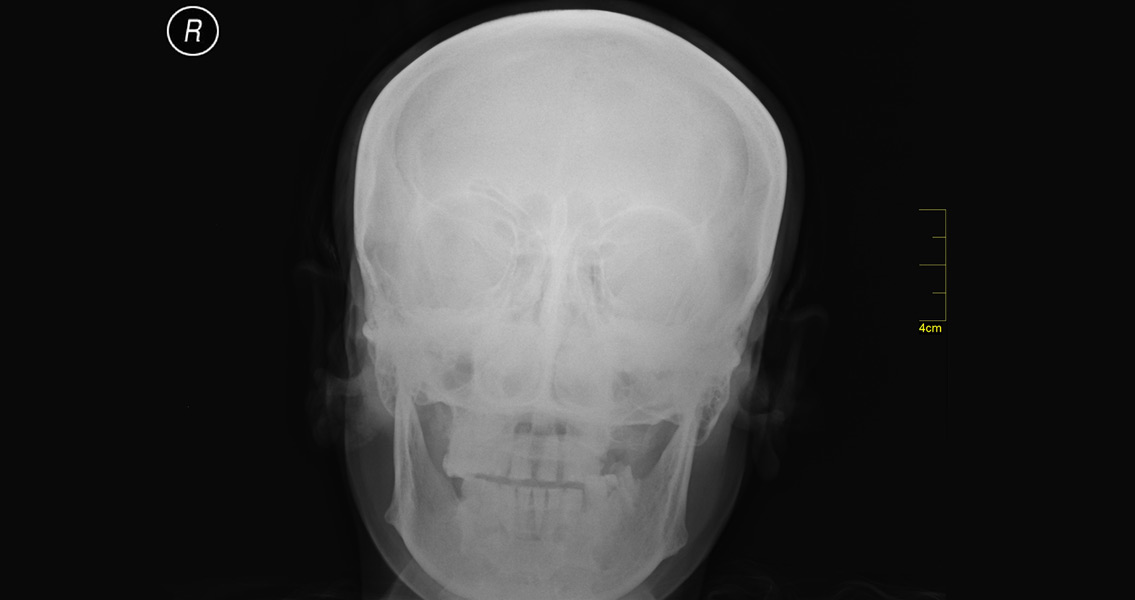
Image courtesy of Wikimedia commons user: Nevit Dilmen ]]>