Categories
Breaking News

Did the Romans hunt whales?

A gray area Due to centuries of whaling, the North Atlantic right whale (Eubalaena glacialis) is currently a threatened species, congregating off eastern North America. The Atlantic gray whale (Eschrichtius robustus) has completely disappeared from the North Atlantic and can only be found in the North Pacific. Neither is found in the Mediterranean today. In fact, it has long been assumed that the Mediterranean was outside the historical range for both species. You can read more about the history of whaling here. [caption id="attachment_8733" align="aligncenter" width="536"] Atlantic Northern Right Whale mother and calf. Credit: Wikimedia Commons[/caption]

Calving season in the Med

Due to the migratory nature of both species of whale, their presence east of Gibraltar means that they would have entered calving season in the Mediterranean Sea. Co-author of the study Dr Camilla Speller, from the University of York, says: “Our study shows that these two species were once part of the Mediterranean marine ecosystem and probably used the sheltered basin as a calving ground. “The findings contribute to the debate on whether, alongside catching large fish such as tuna, the Romans had a form of whaling industry.”

Roman scandal

The paper speculates that small rowing boats and hand harpoons could have been used to capture the creatures; similar to the medieval Basque whaling methods used in the following centuries. Lead author of the study Dr Ana Rodrigues, from the French National Centre for Scientific Research, adds: “[The] Romans did not have the necessary technology to capture the types of large whales currently found in the Mediterranean, which are high-seas species. But right and gray whales and their calves would have come very close to shore, making them tempting targets for local fishermen.”

The ripple effect: what this means for other research

If coastal whales were in fact present in the Mediterranean, some previously perplexing sources suddenly make a lot more sense. Anne Charpentier, lecturer at the University of Montpellier and co-author in the study, said: “We can finally understand a 1st-Century description by the famous Roman naturalist Pliny the Elder, of killer whales attacking whales and their new-born calves in the Cadiz bay. “It doesn’t match anything that can be seen there today, but it fits perfectly with the ecology if right and gray whales used to be present.” As a result, the authors of the study are urging historians and archaeologists to re-examine their material in light of the knowledge that coastal whales were once part of the Mediterranean marine ecosystem. [caption id="attachment_8812" align="aligncenter" width="500"] A Roman mosaic with fishing scene, found in Hippolytus House in greater Madrid, Spain. Credit: Alberto Paredes/Alamy Stock Photo[/caption]
The forgotten calving grounds

“It seems incredible that we could have lost and then forgotten two large whale species in a region as well-studied as the Mediterranean. It makes you wonder what else we have forgotten,” concludes Dr Rodriguez.]]>

Categories
Breaking News

History News of the Week – Roman Construction Lessons

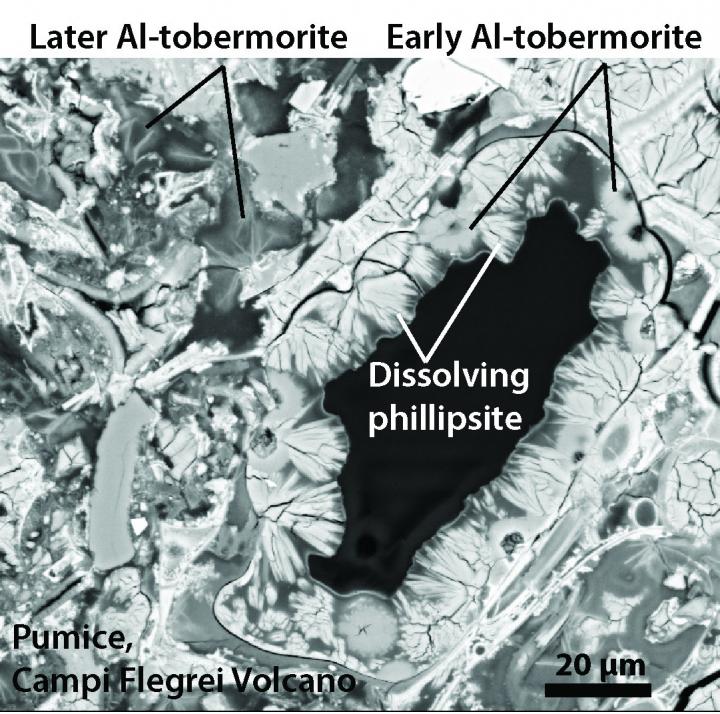
Building Lessons from the Romans New research is providing insights into how Roman harbours that are thousands of years old have withstood the ravages of time. Scientists from the US Department of Energy’s Lawrence Berkley National Lab used x-rays to study samples of Roman concrete – from an ancient pier and a breakwater, to learn more about the make-up of their mineral cements. Having previously found that crystals of aluminous tobermorite, a layered mineral, played a key role in strengthening the concrete as they grew in relict lime particles, the team’s latest research is piecing together how, when and where these crystals formed in the long history of the ancient structures. The research may ultimately influence modern construction techniques. It could lead to a wider adoption of concrete manufacturing processes with less environmental impact than those used for modern Portland cement, while the researchers also claim that an updated version of Roman concrete could be tested for applications such as seawalls and other ocean facing structures. The concrete could even be useful for safeguarding hazardous wastes. “At the ALS we map the mineral cement microstructures,” said Marie Jackson, a geology and geophysics research professor at the University of Utah who led the study. “We can identify the various minerals and the intriguingly complex sequences of crystallization at the micron scale.” “Contrary to the principles of modern cement-based concrete, the Romans created a rock-like concrete that thrives in open chemical exchange with seawater,” she continued. The research has been published in the journal American Mineralogist. Breakthrough in dating Viking fortress Archaeologists have made a breakthrough in dating the mysterious Viking fortress in Borgring, south of Copenhagen, which was first discovered in 2014. Ever since the fortress was first unearthed, a great deal of curiosity has surrounded the life, function and fate of the Viking structure. Researchers had speculated it dated to the tenth century, possibly to the reign of Harold Bluetooth (958 – 987), but it couldn’t be proven. In June of this year, archaeologists opened new trenches in a meadow next to the fortress, uncovering in situ some 2.5m beneath the surface a roughly 1m long piece of carved oak wood with drilled holes and several wooden pegs. A specialist in dendrochronological dating, Associate Professor Aoife Daly from the University of Copenhagen said the conserved part of the tree trunk was grown in the years 829-850 in the Danish area. “Since no splints have been preserved, it means that the tree has fallen at some point after year 966” Daly said in a press release. “The wood piece was found on top of a peat layer, and is fully preserved as it is completely water-logged. We now have a date of wood in the valley of Borgring, which corresponds to the dating from the other ring fortresses from Harold Bluetooth’s reign. With the dendrochronological dating, in conjunction with the traces of wear the piece has, it is likely that the piece ended as waste in the late 900s, possibly in the early 1000’s.” said research leader Jens Ulriksen. “In the coming week, the National Museum’s environmental archaeologists will take samples of wet depositions in the valley with the aim of uncovering how the layers have evolved from the earliest strata we have dated to the Bronze Age and over time,” said excavation leader Nanna Holm. The team hope that this will reveal exactly where the nearby river was when the fortress was built in the Viking Age. Funded by a grant from the A.P. Møller Foundation, the team included researchers from the Museum of South East Denmark and Aarhus University, as well as leading experts from the Environmental Archeology and Materials Research department at the Danish National Museum and the National Police Department’s Section for arson investigation. Poland seeks extradition of man accused of heading an SS unit Prosecutors in Poland are seeking the extradition of a 98-year-old man accused of being the former commander of an SS led unit that slaughtered civilians and burnt Polish villages to the ground during World War Two. Michael Karkoc has repeatedly denied the charges leveled against him, according to the Independent. Officials from the National Remembrance Institute in Warsaw accuse Karkoc of commanding a unit of Ukrainian nationalists responsible for mass killings in villages along Poland’s eastern border during World War II. The extradition request has been handed to the Polish embassy in Washington. According to the Independent, an inquiry by the Associated Press (AP) into Karkoc triggered the IPN investigation. The AP piece pointed out that Krakoc did not have a direct role in the atrocities, but was present and witness to them as a company leader. Whether Krakoc will be extradited will be governed by the EU – US extradition treaty. Krakoc is said to be suffering from Alzheimer’s disease, the Independent article states, raising questions over whether he’d be fit to stand trial. Earlier this year, his son Andriy Karkoc, fervently denied the charges leveled against his father. Image is from a scanning electron microscope, shows formations of aluminum tobermite crystals in a volcanic ash sample from the Campi Flegrei Volcano in Italy. X-ray experiments at Berkeley Lab’s Advanced Light Source have helped researchers to understand how these crystals develop over time to strengthen ancient Roman concrete structures. The scale bar at lower right represents 20 microns, or 20 millionths of a meter. Courtesy of University of Utah ]]>

Categories
Breaking News

Copper Mine Seized and Expanded by the Romans found in Spain

Categories
Editorial

King Arthur, Romans and Etruscans – The History News of 2016 (Part 1)

Where History Met Legend The Arthurian legend has long captured imaginations, and one of the biggest stories of 2016 involved the discovery of the remains of a royal palace at the fabled birthplace of King Arthur. Tintagel, a thirteenth century castle in Cornwall, has long been associated with the legend of King Arthur, the site purpotedly the place of his birth. Ongoing digs at the site by the Cornwall Archaeological Unit uncovered a series of one metre thick walls dating to the sixth century. The team behind the discovery believes these walls were part of a palace that was once part of Dumnonia, an ancient kingdom in the south-west of England. In excess of 150 glass and pottery fragments were also discovered at the site, suggesting its inhabitants were rather wealthy. If the findings are indeed evidence of a sixth century royal palace, it could fundamentally change our understanding of Tintagel – one of the most important archaeological sites in Europe. New Roman Revelations 2016 unearthed a host of new information about the history of the Romans, a wealth of archeological finds and new studies challenging existing ideas about life in the Roman Empire. In July, the discovery of a Roman settlement in the village of Ipplepen in the UK expanded the western boundaries of the Roman Empire by 20 miles. Archaeologists working on the Ipplepen Archaeological Project unearthed large amounts of pottery at the site, that had been made across the Roman Empire and imported to Britain, highlighting the extensive trade networks that connected the far corners of the empire. http://www.newhistorian.com/discovery-devon-expands-boundary-roman-rule-britain/6732/ In September, the callous image of the Roman family was challenged. For years, the discovery of the bones of tiny children at Roman cemeteries around Britain has been considered evidence of the widespread practice of infanticide among the ancient Romans. Using innovative new methods however, researchers from the Natural History Museum, Museum of London and Durham University were able to show that in fact many of these remains were those of stillborn children. Although not completely ruling out the practice of infanticide, the findings suggest it may not have been as widespread as previously believed. At the start of the year, a study published in the open access journal PLOS ONE provided the first hard proof that migrants from across the empire had made their way to settle in Rome itself. Janet Montgomery from the UK’s Durham University and Kristina Kilgrove from the US-based University of West Florida carried out isotope analysis on over a hundred sets of remains dating to the first through third centuries and excavated from Roman cemeteries. They found that many of the individuals studied had migrated to the Imperial capital from the Alps and North Africa. Fresh Insights Into a Mysterious Culture The Etruscans are one of the most fascinating yet mysterious ancient civilisations. The pre-Roman Italian culture had its origins around 700 BCE, and lasted until its eventual absorption into the Roman Empire in the fourth century BCE. Clearly a powerful, sophisticated people, little is known about the Etruscans, but in 2016 some tantalising clues into their lives were revealed. In March, archaeologists announced the discovery of a new religious text inscribed on an ancient piece of sandstone. Dated to the sixth century BCE, it is an incredible rarity due to the fact that most Etruscan texts found to date tend to focus on funerary practices. As the 500 pound slab is analysed, archaeologists hope to glean new information about Etruscan religion and expand their knowledge of the language of the ancient civilisation. Preliminary translations of the stone slab have already revealed the name of a pivotal Etruscan fertility deity – Uni. The discovery of an Etruscan gravesite in November pointed to a darker side to the early civilisation. It was found that the man interred in the 2,500 year old grave site had been shackled around the neck and ankles. It is believed that the man, aged between twenty and thirty, had died while wearing the chains. Often viewed as something of a benign, peaceful civilisation, the unusual burial adds to a growing body of evidence bringing that view into question. ]]>

Categories
Editorial

The History of Advent: Romans, Calendars and President Eisenhower

Categories
Breaking News

Story of Jewish Great Revolt to be Rewritten by New Finds?

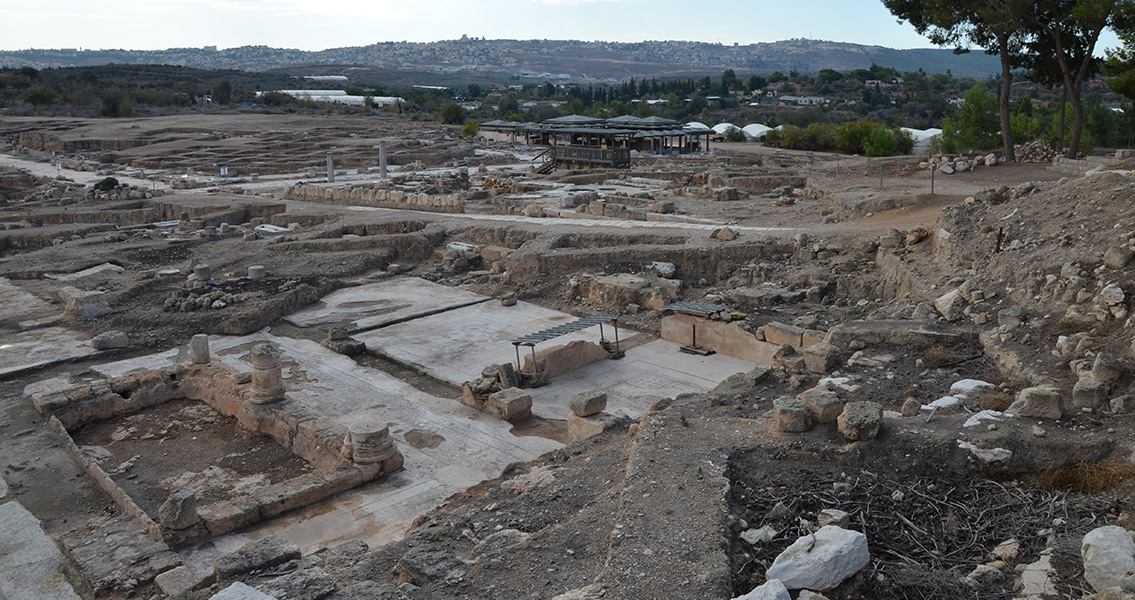
Haaretz, both a dig conducted by researchers from the Hebrew University of Jerusalem at Zippori and one conducted there by archaeologists from Kinneret College have found indications that regions in the Galilee – one of the biggest hotbeds of radicalized Judeans during the Great Revolt – may have been subjected to fewer reprisals at the hands of the Romans than previously thought. Frescoes found in Zippori dating to around 1,800 years in the past and a synagogue found in Nahal Tabor that predates the destruction of Jerusalem’s Second Temple have had researchers questioning what they know of the period. Zippori made a very public and controversial decision in 67 CE, during the early days of the Revolt. Town leaders declined to join in the rebellion, endearing it to Rome and sparing the city. While Jerusalem was sacked and reduced to rubble, Zippori became a major metropolitan center in the region with a mixed pagan and Jewish population, growing to house cyclopean structures and column-lined streets. One of the most impressive of these structures dating to Zippori’s heyday was found this summer, with Hebrew University’s Professor Zeev Weiss spearheading the endeavor. A multitude of colored fresco fragments were found within the structure’s ruins, including partial images of a leopard, a bird, some sort of horned animal that was likely a bull, and the head of a lion. The images are doubly noteworthy as the only other site in ancient Judea that has been found to have similar decorative touches is in Herodium, at Herod’s palace. These depictions are thought to have been a rare deviation from the Torah’s injunction against graven images. Weiss, who has been overseeing the uncovering of Zippori’s ancient ruins for decades, remarked that it’s a strong indication that the Jewish population was not displaced after the Great Revolt, though he was quick to say that there’s no evidence one way or another that Jews built it. However, with stone vessels and ritual baths existing from the time period as well, there are strong indications that pagan and Jewish communities were living side-by-side. Meanwhile, the Kinneret College dig has discovered the newest synagogue dating from the Second Temple period, bringing the grand total to eight found in Israel. The first to be discovered outside of an urban setting, the place of worship certainly predates the Great Revolt, as the historical record has shown that synagogues built after the failed revolution were prohibited from having regular prayer services or to house a Torah in an ark. According to Dr. Mordechai Aviam, the director of the excavation, the rural community survived the Great Revolt intact, much as Zippori did. “We now know that if there is a Jewish settlement that is identified by stone vessels and an absence of pig bones and we find a building with benches along the walls, that is a synagogue.” Having discovered a complex of buildings from the Roman period in the area, Dr, Aviam believes it was home to a large community who used the synagogue.]]>

Categories
News

From Turkey to Coca Cola – The History of Santa Claus

Categories
Editorial

Britain's Long History of Immigration

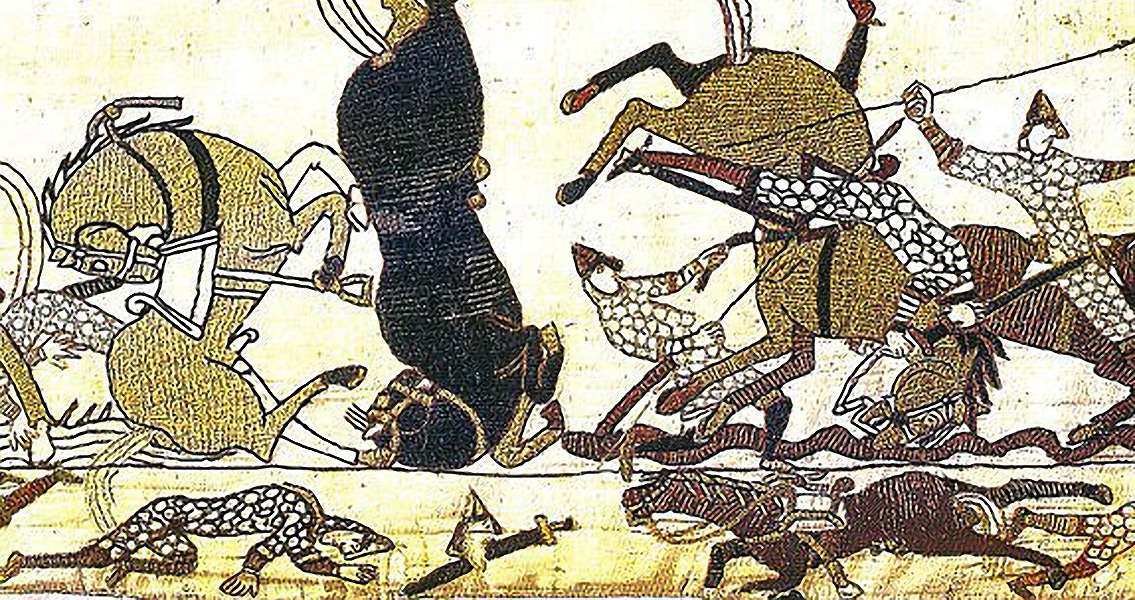
Geography providing the basis of much our knowledge. The Roman Conquest, starting from 43 CE, led to a significant increase in diversity. Traders from across the Roman Empire were drawn to the Roman colonies in England, and soldiers from as far away as Africa were deployed there. Following the Roman withdrawal many of these people left Britain, but there is little doubt that the years of Roman occupation led to a diversification of the inhabitants of the British Isles. After the Romans abandoned their colonies in Britain, several centuries of colonisation by Germanic Tribes followed. These groups, the Angles, Jutes and Saxons, settled in the south of England, and slowly became the ‘English’. This was followed by Viking influences, starting from the eighth century. Initially raiders who attacked and pillaged Anglo-Saxon communities, Norse armies began to settle in the north of England from the ninth century. Again, the Vikings ultimately left the British Isles, but they undoubtedly left a mark on the population. The final major invasion of the British Isles in the early medieval period came in 1066, with the Norman Conquest. The story of William the Conqueror is well known, but it is important to acknowledge the long term impact the Normans had on English culture. French influence permanently altered the largely Germanic language, and can still be heard in modern English. Norman traditions also filtered through into British politics and law, with traces that can still be seen to this day. The Norman, Viking and Roman immigration to Britain was largely facilitated though invasion and military expansion. In the centuries since, immigration has remained a central part of British history, one far too complex to discuss here. As politicians debate ideas of immigration and British identity, it is important to remember just intertwined foreign influence is with the country’s past.]]>

Categories
Breaking News

Test Promises to Reveal Ancient Malaria Spread

Categories
Breaking News

Bold Archaeologist Questions Origins of Western Wall Stones