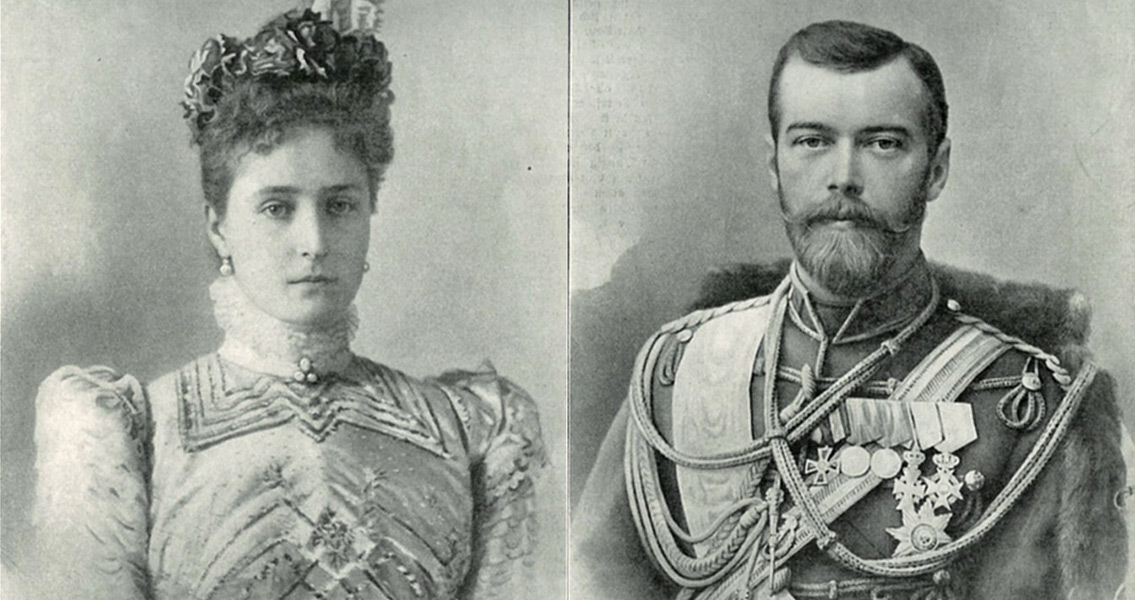


Rasputin. Significantly, it was claimed Anderson had a foot deformity identical to Anastasia Romanov, adding further credence to her story. Others who had held a close relationship with the Romanovs reported Anna Anderson had knowledge about the Tsar’s family that could have only been possessed by one of his daughters. Although other relatives of the Romanovs labelled her an imposter, Anna Anderson insisted until her death in 1984 that she was Anastasia Romanova. In the 1990s, posthumous DNA tests proved she wasn’t a Romanov, although there are some who question the validity of those results. Subsequent DNA studies seemingly debunked Anderson’s claims once and for all, putting an end to suggestions that any of the Romanovs had escaped the execution in Yekaterinburg. In 2009, a scientific study pieced together DNA evidence from remains unearthed in two mass graves close to Yekaterinburg, and showed that the Tsar, his wife and his five children, had all been killed and then buried there. Yet the controversy around the fate of Anastasia and the other Romanov children has continued. In 2014, a book written by Russian historian Veniamin Alekseyev questioned the DNA evidence identifying the Tsar’s four daughters: Anastasia and her sisters, Olga, Marie and Tatiana. Alekseyev also claimed to have discovered archived documents which threw doubt on the official accounts of the fate of the Tsar and his family. Close to a century after the shootings at Ipatiev House, for some the fate of Anastasia Romanov and the other daughters of the Tsar is still far from certain. ]]>

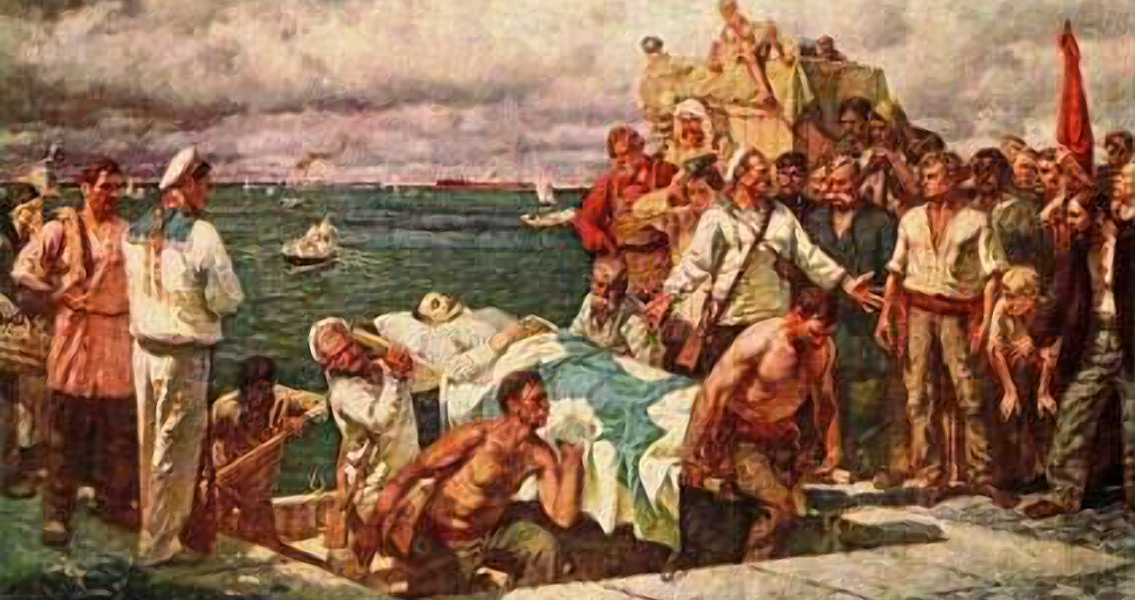
Potemkin surrendered to Romanian authorities at the port of Constantza, on the west coast of the Black Sea. Immortalised in Sergei Eisenstein’s 1925 movie, ‘Battleship Potemkin’, the Potemkin mutiny was one of the most shocking moments of a year of upheaval and unrest in Russia. The striking scenes of Eisenstein’s propaganda film ensured that events on the battleship Potemkin have been remembered more than others from the 1905 revolution as a symptom of the growing conflict between labour and capital which would ultimately split Russia and see the end of the Romanov monarchy. Commissioned in 1903, the Potemkin was one of the newest battleships in Russia’s Black Sea fleet. At sea on 27th June, the ship’s cooks complained that the meat they had been given to prepare was riddled with maggots. The ship’s doctor said that the meat was still fit to use, and instructed the cooks to continue serving it. Hours later a delegation from the crew went to the captain and complained that there were worms in the soup they had been served. Commander Gilarovsky, the ship’s commanding officer, inexplicably flew into a rage which some historians put down to the coarse language used by the crew members, and shot the group’s spokesman, a seaman named Valenchuk. Gilarovsky’s murderous response to the protest inevitably bred more violence. At once the crew members seized the commander and threw him over board. As he struggled in the water he was shot and killed. The refusal of the Potemkin‘s guard to fire on their own ship mates allowed the mutiny to rapidly escalate. A brawl ensued in which sailors were able to seize weapons from the ship’s armory. Several of the ship’s officers and the doctor were shot, while the rest of the officers were imprisoned in one of the Potemkin‘s cabins. A red flag was raised on the ship, and it set sail for Odessa. It was decided that the ship would be governed by a people’s committee, with one of the initial protest’s ringleaders, Matyushenko, elected its leader. At this point protests, riots and unrest were common throughout Russia’s southern cities as the Tsar’s grip on power began to look increasingly fragile. When the Potemkin arrived at Odessa on the 29th June, the unrest in the city quickly escalated as the population tried to deliver food and supplies to the ship’s crew. A violent clash erupted between rioters and government troops which saw huge swathes of the city burnt and over a thousand people killed. Tsar Nicholas II ordered the Russian army to Odessa to suppress the resistance and restore order. They indiscriminately attacked the crowd of protesters, and the Potemkin, powerless to assist the people of Odessa, fled the city. A squadron from the Russian navy was then dispatched to either capture or sink the Potemkin. The ships confronted the Potemkin in the Black Sea, but ultimately refused to open fire out of fear it could trigger mutiny among their own crews. The Potemkin then fled to the Constantza port in Romania to gain vital supplies, but was refused entry. Short on food, and lacking vital supplies to keep the ship running, the crew soon realised they had no choice but to surrender, and on 8th July they handed the ship over to the Romanian authorities. A large chunk of the crew returned to Russia, where they were imprisoned and trialed. Others stayed in Romania, and didn’t return to Russia until after the 1917 Bolshevik Revolution. The mutiny was the culmination of a variety of factors. The February 1905 Bloody Sunday Massacre had shocked the Russian people and galvanised resentment against the Tsarist regime. This led to growing acts of defiance and protest, of which the events on the Potemkin were just one example. In the longer term, Russia’s embarrassing failure in the recent war with Japan, combined with continued terrible conditions for its armed forces, had led to widespread dissatisfaction among all but the highest ranking members of the military. As Eisenstein’s movie about the Potemkin shows, the mutiny was later used by Soviet leaders as a heroic example of the history of the development of communist ideals in the country. Image courtesy of Wikimedia Commons user: HOBOPOCC]]>