Categories
Ceausescu Regime Ends in Bloody Revolution

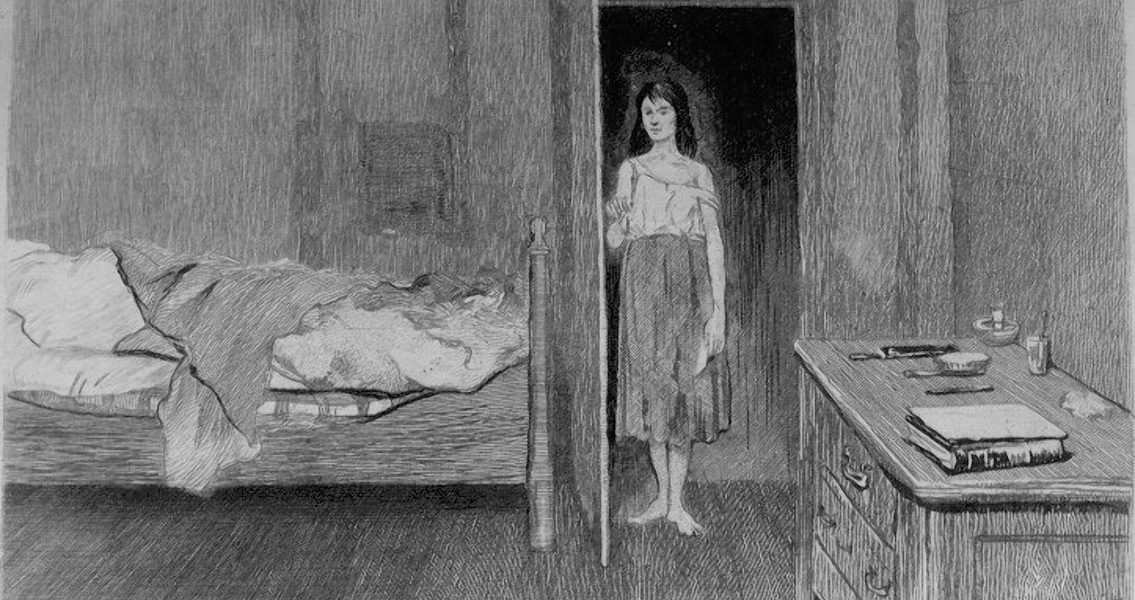
Les Miserables has evolved well beyond its nineteenth century origins into a modern cultural phenomenon. As the story has been retold and adjusted to fit new forms however, it is important to remember that the original novel was a vital piece of social commentary that strove to both reflect and affect the context in which it was created. Les Miserables is not a book about the French Revolution, its author was born over a decade after the events of 1789, and the story is set in the middle of the nineteenth century. However, its backdrop is a France still coming to terms with 1789, reflecting the experiences of an author who grew up and lived in the wake of that momentous event. As such, it captures the upheaval of nineteenth century France, a century which witnessed both the Napoleonic Wars and the Paris Commune, and conveys the sense of constant change and instability of the early nineteenth century through the troubled lives of its protagonists. Hugo was born 26th February, 1802, in Besançon, France. His father, Joseph-Léopold-Sigisbert Hugo, was a general in Napoleon’s armies. Joseph Hugo’s constant traveling for the French campaigns in Italy and Spain meant that the Napoleonic Wars had a very direct relevance to the younger Hugo’s early life. The tumultuous politics of the period became a feature of his upbringing. While his mother was a staunch royalist, Hugo’s father was loyal to each successive French government: the Convention, the Empire, the Restoration. Marital tensions meant Hugo’s childhood was spent switching from accompanying his father on his campaigns through Europe and returning home to Paris to see his mother. Although Les Miserables charts a broad chunk of French history in the aftermath of 1789, it reaches its climax in the June 1832 Rebellion in Paris, an event Hugo witnessed first hand. Already established as a writer, the events in June proved particularly inspirational. The 1830 Revolution had seen the ‘Citizen king’ Louis-Philippe take the throne. Initially popular, the widening gap between rich and poor during the first years of his reign saw resentment build among the poor in France. Amidst a major cholera epidemic, thousands of Parisians took to the streets to commemorate the death of General Jean Maximilien Lamarque, a man considered to have been a champion for the poor. The mob swelled as political agitators joined those attempting to witness the funeral procession. Some observers claim that around 100,000 protesters eventually joined and the mob eventually took over half of Paris. Barricades were erected throughout the city, as the insurgents looked for arms to defend the sections of Paris they had gained control of. Ultimately, a lack of broader support from the citizens of the city meant that the uprising was suppressed within twenty four hours of its start. In a century of revolutions throughout France and Europe, the rebellion of June 1832 had failed to achieve any lasting change, which explains why it is perhaps overlooked compared to other events in French history. As a first hand witness to the rebellion however, Hugo immortalised it in Les Miserables for what it was – an expression of the continued discontent of the poor in Parisian society. Les Miserables charts a period of constant revolution and change. It comments on the failings of successive administrations, and the effects these failings had on the French people. Its focus is the poor in society, and how time and again the French class system punished good, honest people with poverty. Each of the main characters represents a problem of their time that Hugo felt needed reform – education, women’s rights and the treatment of criminals. These personal tragedies are linked explicitly to problems with nineteenth century France as a whole, and towards the end of the book become manifested in the insurrection in Paris. Les Miserables is a fantastic story which has rightly been retold in different languages and different formats. On top of that, it is an analysis by one of France’s greatest writers about the condition of the society in which he lived. Image by Pierre Jeanniot

Les Miserables
A Novel
Vol. 1Vol. 1
by Victor Hugo
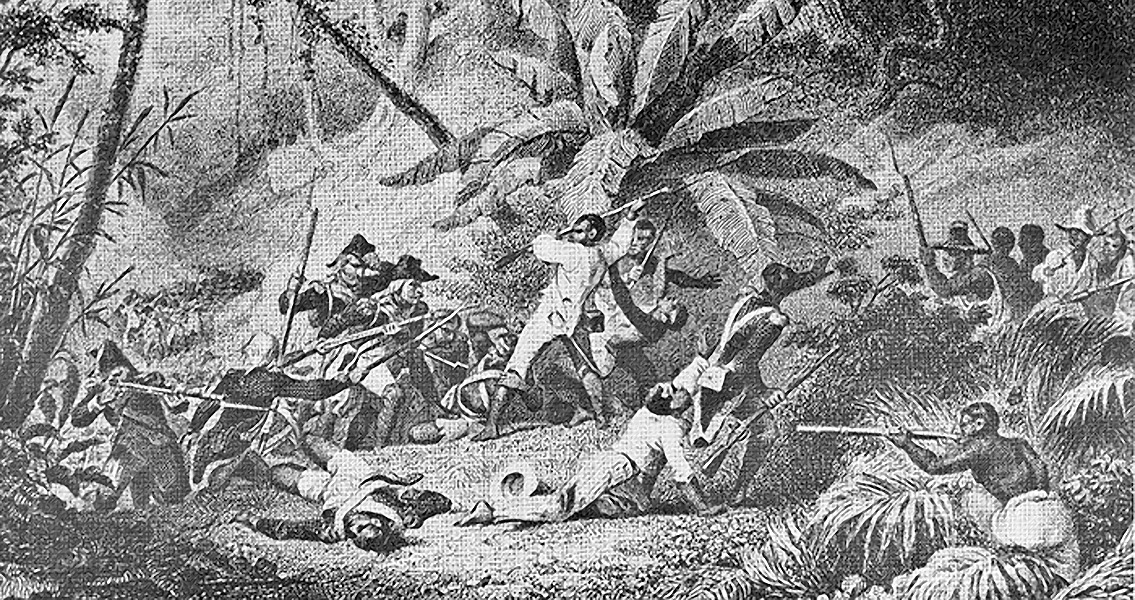
History Compass. The post-Revolution crash, Taber argues, does not necessarily reflect the policies of an independent Haiti. The expansion of Haiti’s plantation economy in the mid-eighteenth century and the importation of hundreds of thousands of slaves explains the colony’s economic productivity explosion. “It is probable that soil exhaustion and deforestation would have diminished Saint- Domingue’s economic role even without the revolution,” Taber writes. Taber argues that most slaves, who initially had little property, probably saw their living standards increase following the Haitian Revolution. Later scholarship, Taber writes, influenced by “Algerian independence from France, the USA civil rights movement, and general de-colonization coupled with the emergence of social history generated new interest around the Atlantic in the Haitian experience and its significance for understanding decolonization, black liberation, and structural racism.” There is still heated debate around the political ideas of Haitian slaves and the possible influence of Enlightenment ideas on their thinking. Taber notes that historians such as Laurent Dubois have argued that slaves further radicalised Enlightenment ideas as they adopted them. “In contrast, Geggus, Thornton, and Ogle show that most slaves followed a type of royalism that allowed an appeal to an authority higher than the planters,” Taber wrote. Most of the Haitian Revolution does not fit into easy narratives of racial solidarity or universal liberation. Numerous historians have argued over what caused the Revolution, with little concession. It is tempting, Taber writes, “to describe Saint-Domingue simply as the abyss of 18th-century slavery and colonialism and the Haitian Revolution as the universal triumph of human rights, but such easy narratives do a disservice to the women and men involved and mask Haiti’s complexity.” His conclusion is that further work needs to be done. Taber’s summary of Haitian history is impressive in scope and offers a wonderful synopsis for anyone wanting to understand Haiti’s complicated and nuanced past. For more information: www.onlinelibrary.wiley.com ]]>
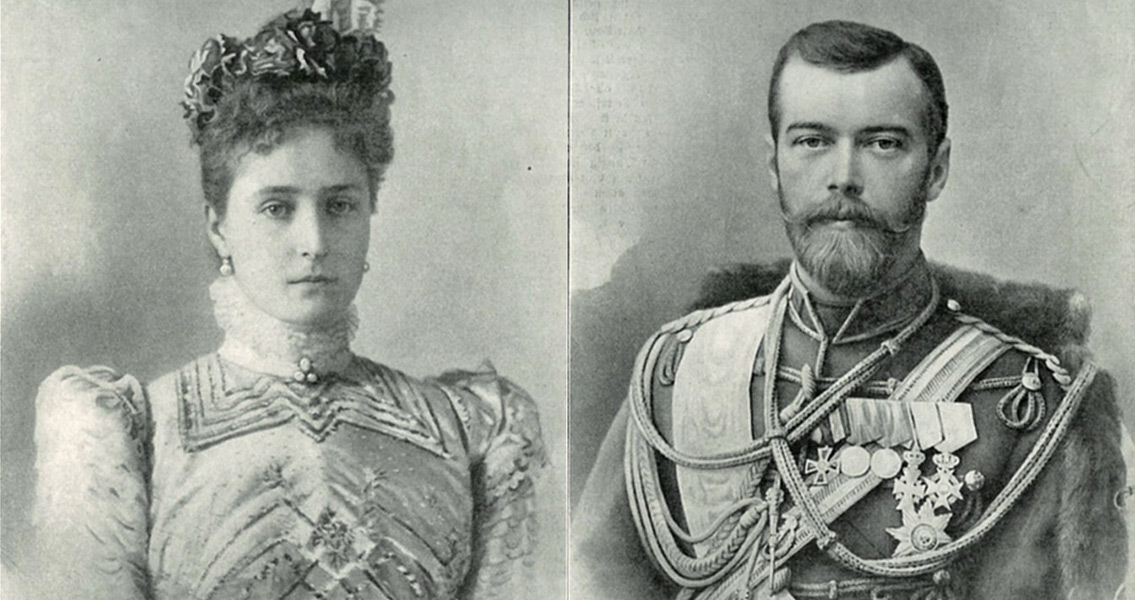
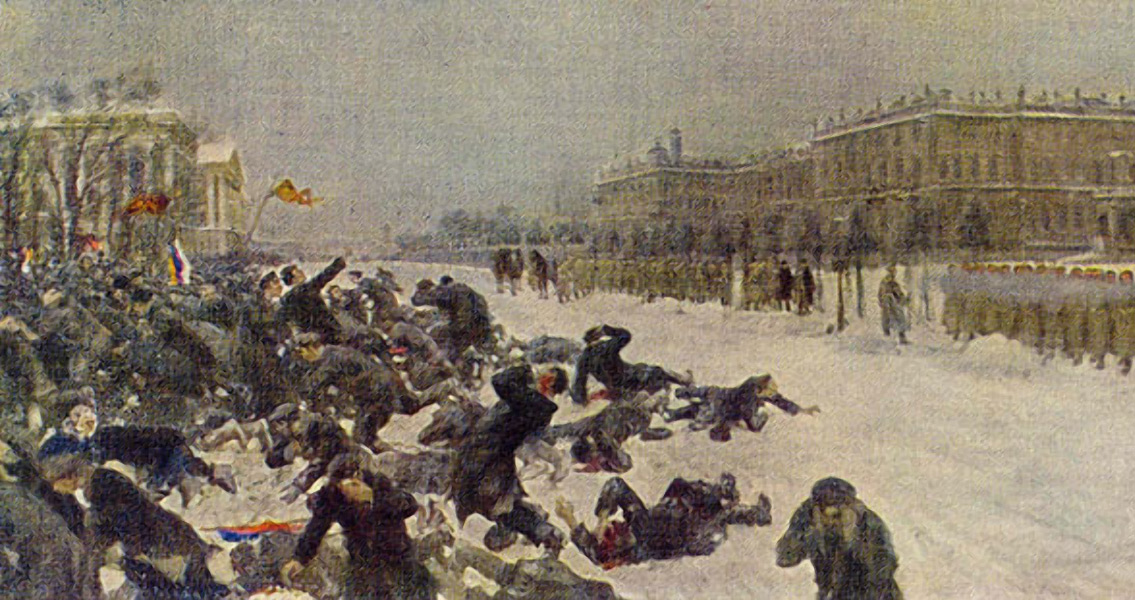
Jewish History. In the aftermath of the Revolution, new secular Jewish spaces began to emerge after the liberalisation policies of Tsar Nicholas II had slackened restrictions on the press and public gatherings. This new Jewish public sphere – comprised of the Yiddish press, coffeehouses and theatres – created an ‘ethno-linguistic’ community amongst Warsaw’s Jews, providing new collective bonds for the community. This new Jewish community provided a sense of order for new migrants to Warsaw, a place which could be very worrying. “The disorder, confusion, and possible dangers of urban life—from unfamiliar streetscapes to charlatans who preyed on those who were vulnerable—disoriented newcomers and other city residents, particularly women and children,” Auerbach notes. It is clear that scholarship has taken a clear shift in how Warsaw’s Jewish community is examined. The modern Jewish politics which arose in early-twentieth-century Warsaw was a reaction to a crisis of modernity and urbanisation. Jewish politics did not grow out of internal Jewish developments; they were a response to outside factors. “By shifting the focus away from ideologues, elite decision makers, and cultural figures and toward the broader public,” Auerbach notes, “[new research] complements and challenges the foundational historiography of modern Jewish politics in eastern Europe.” New cultural institutions expanded the Jewish public sphere and were instrumental in bringing Jews into political modernity. Coffeeshops, the press and theatres provided secular arenas where ideas could be shared and debated and Jews could form new bonds. “These spaces curbed the sense of isolation experienced by newcomers,” Auerbach concludes. For more information: www.link.springer.com Image courtesy of Wikimedia Commons user: Alex Bakharev ]]>