

Tennessean, Nance remarked that so far two grave shafts have been discovered at the cemetery. However, the likelihood of discovering more remains high. To date, there are at least ten discovered gravesites present at the long-buried cemetery; five of the graves still bear markers, including Mary, Bosley’s infant daughter who died in 1825, and Bosley’s wife as well. The Tennessee DEC partnered with excavation firm TRC Companies Inc. to provide the heavy equipment and manpower to conduct the lion’s share of the dig. TRC archaeologist Jared Barrett, who has been involved in several Nashville-area digs, characterized the find as celebratory; finding something that has been lost to history for more than a century is a thrill, Barrett told The Tennessean. With Nashville gaining in popularity, leading to new construction and renovation projects, thrilling finds such as the Bosley cemetery have become increasingly common. It’s no surprise to local developers when cemeteries such as the one at Aquinas College are uncovered, according to Nance, who added that many early Nashville families would have started their own cemeteries, especially since most of the areas outside of downtown Nashville were farmland. The only thing needed to start one of these cemeteries was a shovel, the archaeologist remarked. While there are graves and headstones buried beneath the ground of Aquinas College, it’s likely that the site does not host any human remains. Eleanor Whitworth, a descendant of the Bosley family, remarked in an interview that the bodies were relocated in the 1920s. Researchers plan to conduct thorough analysis to ensure the site is indeed devoid of any remains. ]]>
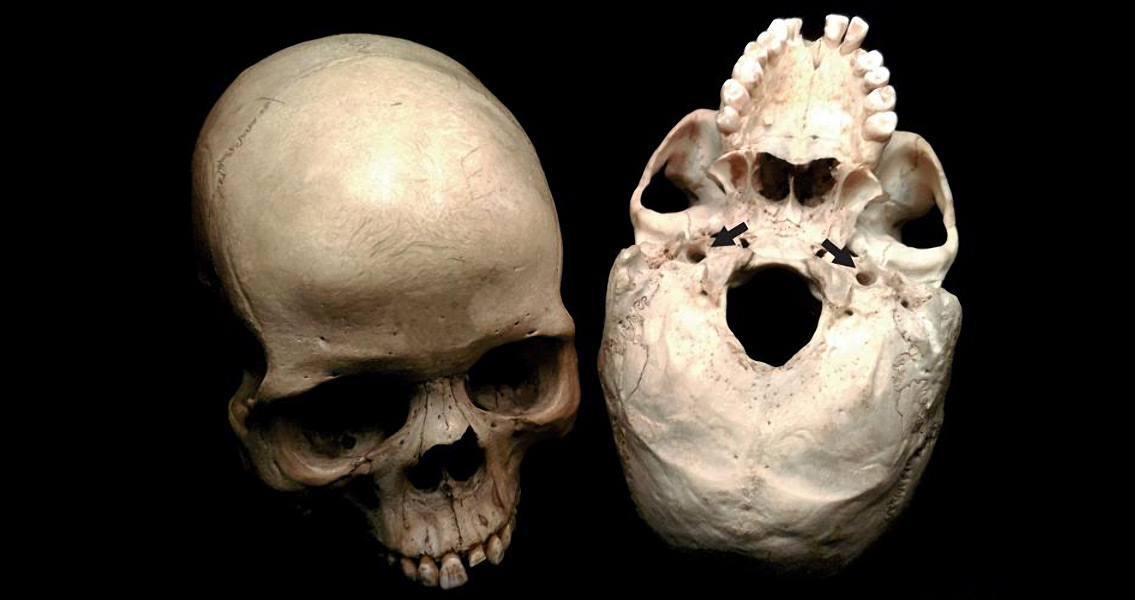
here Image courtesy of Edward Snelling. Sourced from the Raymond Dart Collection of Human Skeletons, School of Anatomical Sciences, Faculty of Health Sciences, University of the Witwatersrand.]]>

The Jerusalem Post, the international team of archaeologists – spearheaded by the Zinman Institute of Archaeology from the University of Haifa – announced the find this week, remarking that with such a large quantity of olive pits, it is highly likely that these early farmers would have needed to employ irrigation techniques. Professor Daniel Rosenberd, the co-leader of the research project, stated that the revelation that ancient agrarian societies were relying on artificial irrigation could result in a fundamental change in how scientists and historians understand how sophisticated these ancient farmers were. Rosenberg and his colleague: Dr. Florian Klimsh from the German Archaeological institute, believe that the prehistoric settlements found here in northern Israel in close proximity to Jordan were instrumental in the developmental process of the Near Eastern cultures and cities of antiquity. Despite this, little is known about these ancient settlements today. In order to broaden that knowledge, the recent research into the region focused on gathering botanical evidence to make determinations regarding what the conditions would have been in the Jordan Valley seven thousand years ago. Doing so could help shed light on not just agricultural practices and diet but also the economy of the region and how these settlements were organized socially, researchers say. It is well known that olives were being used in the region at this time, based on other documented evidence. However, with the sheer number of olive seeds found on site, Rosenberg said that several questions were raised which necessitate a new look at how ancient farmers irrigated their crops – and how the olive and olive oil trade operated during the time as well. Data collection over the past four years has already revealed much regarding the lives of these ancient farmers, with evidence pointing to the inhabitants growing different plant species concurrently. These plants, which all had differing maturation cycles, were meant to be used as a back-up in the event of a poor harvest. ]]>

The Astrophysical Journal Letters, is available online here ]]>


Etruscan Studies. Image courtesy of Mugello Valley Project]]>

The Guardian, Wilkinson made the decision to begin translating the new anthology to close a gap in the modern understanding of ancient Egypt. He was particularly interested in providing access to “the life of the mind, as expressed in the written word” of ancient Egyptians. With writing found on nearly every temple wall and within every tomb, the nearly 3,500 year written tradition of Egypt is much more than decorative. Wilkinson added. The researcher felt that the public were being denied a deep literary tradition, especially with many museums displaying papyrus scrolls covered with hieroglyphs as artifacts instead of texts. The new translations should provide surprises for readers, Wilkinson hopes, adding a much-needed dimension to the ancient people besides pyramids, pharaohs, and Tutankhamun’s famous sarcophagus and mask. While hieroglyphics are pictograms, Wilkinson says that the concepts they convey could be as sophisticated as any Latin or Greek script. The passages he’s chosen to translate offer a glimpse into the life of the ancient Egyptians and are rich with symbolism and metaphor, and include eyewitness accounts of natural disasters and military battles. The researcher, who has written several books on the subject of ancient Egyptians, says that many texts in the collection haven’t been translated for nearly a century. These older translations, only some of which are in English, use diction and idiom that are “very old-fashioned and impenetrable”, Wilkinson said, something that makes it even harder to relate to ancient Egyptians. The problem is not unique to ancient Egyptian; in fact, translating an archaic text into a modern language in a way that provides a close approximation of the original intent without making it unreadable to modern audiences is a dilemma prevalent in many academic translations. However, Wilkinson says that the new translations are much more relatable, even to a modern audience. He attributes this to focusing on the emotional impact of the texts, which are a wide, varied collection of tales that contain literary fiction, correspondence between a farmer and his overseer, and a description of a catastrophic thunderstorm that caused widespread destruction and flooding. The new anthology, which has been titled Writings from Ancient Egypt, is available this week from Penguin Classics. ]]>

