Categories
Breaking News

Scientists Use New Tech to Virtually Unwrap Biblical Scroll

New York Times, Seales has been working for the past 13 years on imaging techniques to digitally restore ancient scrolls too damaged to be read. Inspired by the charred scrolls found in Herculaneum, one of the locations destroyed by the eruption of Mount Vesuvius in 79 CE, the computer scientist was unsatisfied with traditional computer tomography (CT) scans as this technique would reveal only a jumbled mass of ink within a scroll. The solution that Seales devised was to reconstruct the writing surface of the scroll digitally before placing the inked letters back on it, resulting in an almost miraculously clear and legible image. The text of the scroll has been verified by Biblical experts to be the first two chapters of Leviticus from the Hebrew Bible. While the En-Gedi manuscript is not the first instance of this version of the text to be discovered by archaeologists, it is the very first time a severely damaged scroll thought to be impossible to read has been unrolled and then identified using non-invasive techniques. Additionally, the version of Leviticus recorded in the scrolls was found to be identical to the Masoretic text, making it the earliest instance of the use of such a text considering the document has been dated to between 50 and 100 CE. The Masoretic text is considered the authoritative version of the Hebrew Bible, and is one of the texts most often used for Protestant translations of the Old Testament. The revelation that the Masoretic text was in use as far back as nearly 2,000 years ago has prompted some paleography experts to suggest the En-Gedi text should be officially categorized as a Dead Sea scroll, especially if the age of the scroll is indeed accurate. Researchers have responded with enthusiasm to the news, proclaiming that Seales’ new technique could be the key to unlocking the secrets of any number of scrolls too damaged to open without risking permanent damage to the texts concealed within. The suite of software tools the computer scientist developed will be made available under an open source license once his current government grant period expires. The new research study, published recently in the journal Science Advances, can be found online here]]>

Categories
Breaking News

New Research Says Neanderthals Were Jewelry-Makers

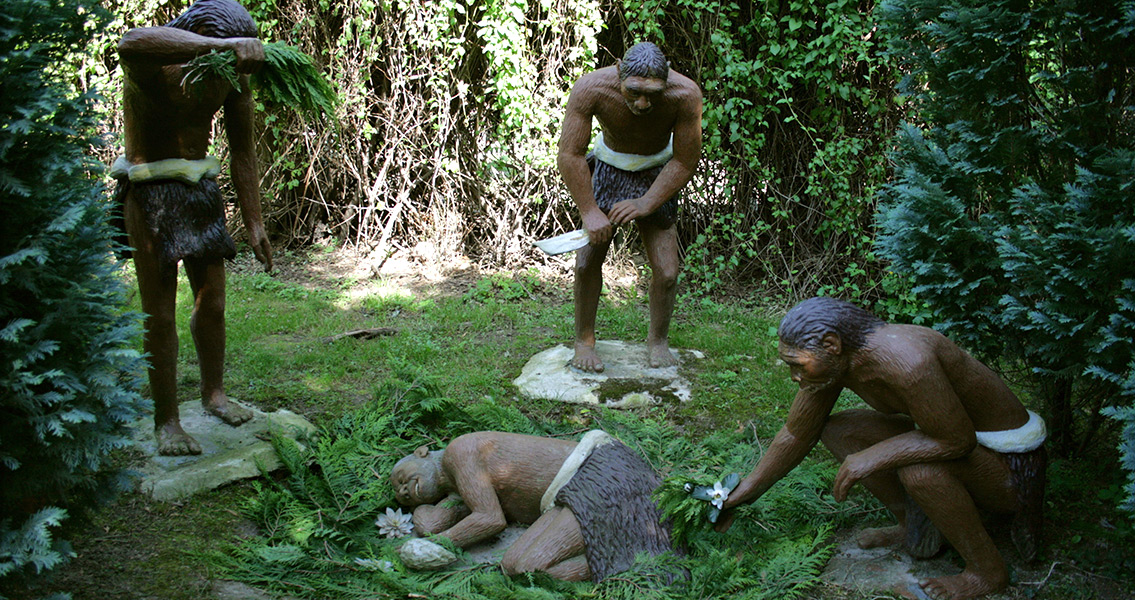
Science, other scientists have been touting the new research as “a landmark study” proving that Neanderthals had enough intelligence to make these cognitive symbolic leaps. Much of the controversy stems from the date of the artifacts, as they were made around 42,000 years in the past – a time when Neanderthals were well in decline while modern humans were spreading across Europe and replacing them. However, after University of York bioarchaeologist Matthew Collins examined some of the unidentified bones discovered at the dig site and found them too small to use more traditional DNA identification methods on, he and his colleagues made the decision to use the new ancient protein analysis method instead. Analysis proved conclusively that the bone fragments were human, but it was still unclear if they had once belonged to a modern human or an archaic species such as a Neanderthal. To further pinpoint the identity, Collins and his colleagues conducted a comparison of the collagen within the fragments to those produced by modern humans and those produced by archaic humans. Collagen in Neanderthals contained high levels of an amino acid known as aparagine, as evidenced from previously-sequenced Neanderthal DNA; modern humans do not produce aparagine but instead have aspartic acid in their collagen. The researchers found evidence of aparagine amino acid, pointing to the bone fragments being of Neanderthal origin. Additionally, the type of collagen within the bone is only present in types of bone that are still growing, which combined with the presence of nitrogen isotopes associated with breast-fed children has led the scientists to believe that at least a portion of the bone fragments were from a Neanderthal infant. The findings have fanned the flames of debate when it comes to claiming that Neanderthals were incapable of creating symbolic jewelry of the type found on the site. It may be, according to some scientists, that Neanderthals living on site learned of the tools and techniques used for creating such jewelry from modern humans migrating to the area. The new data points towards renewed evidence that our archaic human cousins created these pieces of art themselves. Collins and his research team’s new study, published in the Proceedings of the National Academy of Sciences, can be found online here]]>

Categories
Breaking News

Human Remains Found in Antikythera Shipwreck

The Guardian, an international team of researchers from the Greek Ephorate of Underwater Antiquities and the Woods Hole Oceanographic Institution discovered the jumbled skeleton near the end of August during an exploratory dive to the seafloor where the ship rests. Woods Hole representative Brendan Foley, one of the participants in the underwater study of the Antikythera wreck, says that the remains may be the most exciting scientific discovery made during the current efforts to study the sunken ship. Judging by the well-preserved state of the bones, researchers say the person was male, likely a teenager or in his early twenties, and might have been trapped when the ship went down. Foley added that the remains of the young man, who has been dubbed “Pamphilos” by the researchers, may have been buried fairly quickly in silt as a result. This bodes well for the possibility of extracting genetic material from Pamphilos’ bones and sequencing them successfully, raising hopes that this will lead to the first instance of a victim of an ancient shipwreck having his entire DNA mapped for study. In fact, the only similar efforts include remains from the Vasa, a Swedish warship that sank beneath the waves in 1628, and the Mary Rose, the great British warship of King Henry VIII. Pamphilos – or what was left of him – was discovered in a jumble of bones: arm bones lying atop leg bones and rib pieces, with teeth and the skull all scattered close by. The skeleton was found surrounded by other artifacts such as broken pieces of pottery. The young man’s nickname comes from a drinking vessel bearing the name discovered on a previous underwater dig. In ancient Greek, Pamphilos means “friend of all.” There is of course no proof that the identity of these remains is the same as the original owner of the cup. However, Foley says that it can be surmised that a Greek male bearing that name had been either a passenger or a crewmember present on the ship during its final, fateful voyage. These remains are not the first to be found within the wreck. Indeed, the famous Jacques Cousteau, who visited the site in 1976, brought several bone fragments to the surface. However, the most recent find is much more complete, much more well preserved, and has the merit of being discovered after several decades’ worth of advances in archaeological technology methods for analyzing ancient remains. ]]>

Categories
Breaking News

Mammoth Skull Find Raises New Evolutionary Questions

The Mammoth Site who worked with the national park team, called the fossil “spectacular-looking”. He added that it was one of the best mammoth skulls he had ever seen himself – and that he had seen many good mammoth skulls during his professional career. The fossil was first discovered by national park biologist Peter Larramendy in 2014. The sharp-eyed scientist spotted one of the skull’s tusks jutting out from a canyon wall, prompting an investigation and excavation. Based on radiocarbon dating of nearby charcoal samples conducted by the US Geological Survey, the fossil is thought to be about 13,000 years old. This timeline puts the mammoth living concurrently with Arlington Man: a set of remains discovered on Santa Rosa Island in 1959 which potentially represent the oldest known human skeleton yet to be found in North America. However, now that the mammoth skull has been fully excavated for analysis, the mystery has deepened instead of becoming clearer. Wilkins says the species the mammoth belongs to is uncertain, as it does not fit the profile of the pygmy mammoth, a species of mammoth that lived on the Channel Islands and grew to about six feet tall. The pygmy mammoth was an evolutionary offshoot of the larger, 14-foot-tall Columbian mammoth, which was common across the North American continent at the time. The solution to this mystery may be revealed through a study of the skull’s fossilized teeth. Doing so could help scientists determine the age of the creature before it died. It also has the potential to reveal the genetic makeup of the mammoth, placing it more decisively in either the Columbian or the pygmy bloodline. There is the possibility of a third result, as the mammoth skull could represent a transitional species between Columbian and pygmy mammoths – evidence of the evolutionary adaptation to a smaller habitat as it was selected as an advantageous trait. The likelihood of this being the case seems low, however. The next stop for the fossilized skull will be the Santa Barbara Museum of Natural History. Once it arrives, it will be properly preserved and studied before being put on display and made available to the general public. The second-largest island of the Channel Islands, Santa Rosa is approximately 26 miles from the city of Santa Barbara. During the last Ice Age, Santa Rosa and the surrounding islands were one solid landmass only five miles off the coast, making it relatively easy for large animals such as the Columbia mammoth to migrate to the island. Later, the island would come to be inhabited by a maritime Paleocostal population of early humans that are thought to have been the progenitors of the native Chumash people who resided on the island until being displaced by white settlers. ]]>

Categories
Breaking News

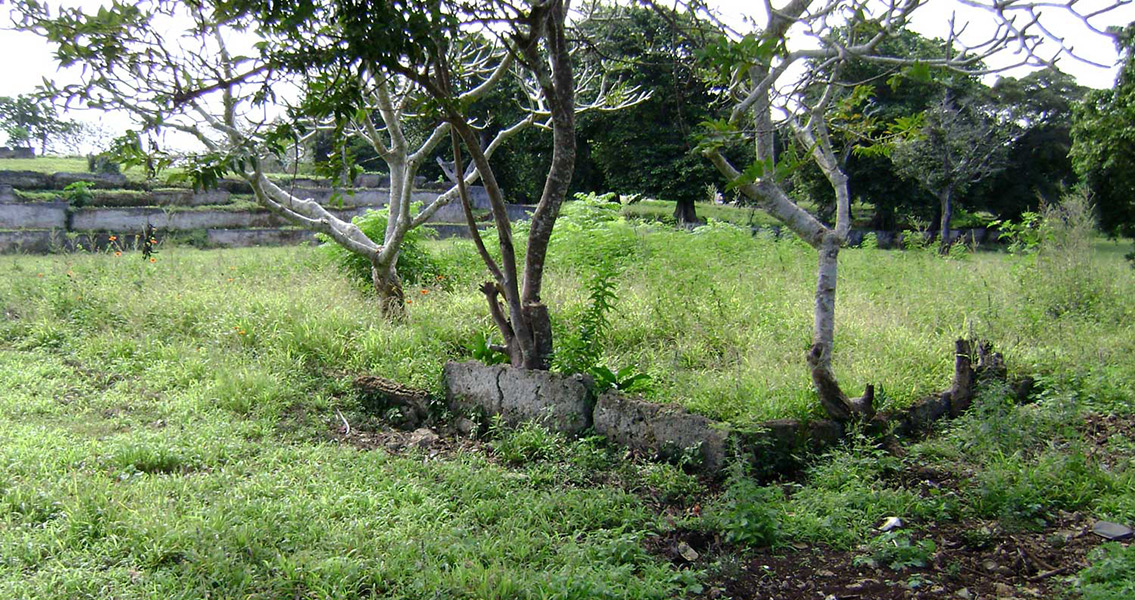
New Tech Used to Literally Throw New Light On Tongan Ruins

Categories
Breaking News

HMS Terror Found 168 Years After Sinking

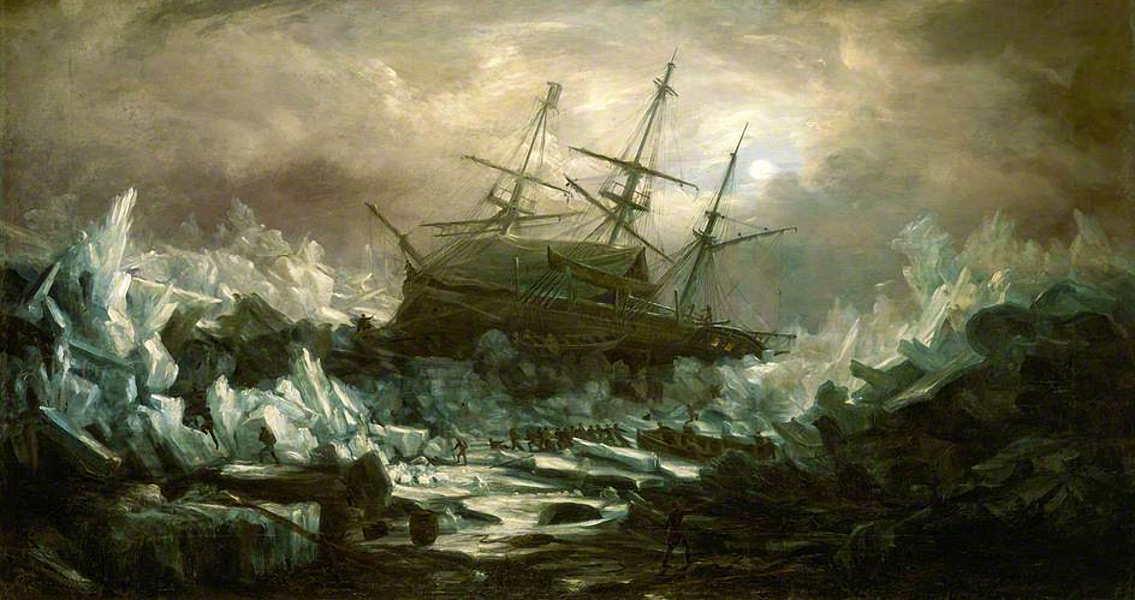
The Guardian, the Arctic Research Foundation sent a small, remote-controlled submersible watercraft through one of the wreck’s open hatches, sending back remarkable images of the exterior and interior of the ship. Foundation operations director Adrian Schimnowski, corresponding from the research vessel Martin Bergmann, informed the newspaper that the researchers positively identified the ship’s mess hall, several of the cabins, and the food storage compartment – complete with plates still on the shelves. Other finds include a pair of wine bottles, several tables, and even a desk with its drawers still open. The newly-found wreck is almost certainly HMS Terror, but estimates of where the Royal Navy explorer vessel was thought to have succumbed to the sea ice say the wreck should have been located around 60 miles further north of its current location. If this wreck, located in Terror Bay: an uncharted body of water off the shore of King William Island, is indeed the HMS Terror the accepted narrative of polar exploration may need to be rewritten, researchers say. From the wreck’s discovery on September 3rd to the most recent series of images gathered by the researchers’ remote-operated vehicle, the team has been hard at work comparing the gathered data to the builder’s plans for HMS Terror. Many correlations have been made, helped by the fact that the condition of the wreck is excellent, with the metal-sheathed hull largely intact. Sheathing was added to the Terror prior to its expedition to help it withstand sea ice during its exploration. Sitting 80 feet below the surface, HMS Terror was found level on the seafloor, something that indicates the ship sank gently to the bottom, Schimnowski remarked. Study of the vessel suggests that before the wreck sank beneath the waves the ship’s crew may have deployed an anchor line, based on a long, heavy rope spotted protruding through a hole in the deck of the ship. The implications of the new find could be groundbreaking – researchers suggest that after it was initially abandoned, HMS Terror might have been re-manned by British explorers seeking an escape route from the all-encompassing ice. This may explain why the ship, which was originally abandoned at the top of Victoria Strait, was found 60 miles south of where it was expected to be. ]]>

Categories
Breaking News

World's Oldest Snowshoe Disovered in Northern Italy

The Telegraph. The 5,800-year-old snowshoe is the oldest discovered so far, scientists say, and was stumbled upon nearly by accident on the Gugrler Eisjoch glacier at an elevation of 10,280 feet (3,134 meters). Researchers say that because of the frigid environment of the glacier, the conditions were “ideal” to preserve the organic materials from which the snowshoe was constructed. The twine-wrapped oval frame was discovered by cartographer Simone Bartolini as part of a project to map the Italian-Austrian border at the behest of the Military Geographical Institute of Italy in 2003. For more than a decade, Bartolini says he kept the snowshoe in his Florentine office as a strange memento of his work on the glacier, simply assuming that it was lost by a farmer or cattle-driver sometime in the last century. However, in 2015 he began to suspect that the find might have much more significance, prompting him to have it studied by archaeologists who confirmed the age of the snowshoe. The announcement was made this week in the South Tyrol city of Bolanzo, the capital of the autonomous province. Meanwhile, this is not the only rare archaeological find to have emerged from the Dolomite range. A quarter of a century ago, a pair of German hikers discovered the frozen remains of a Neolithic hunter nearby; nicknamed “Oetzi” for a local range of mountains, the mummified remains have been a near-constant source of archaeological data regarding how local Neolithic humans lived. Oetzi has provided information on how humans traveled, how they hunted, what they ate, and what they wore. Oetzi’s death is one of the oldest clearly recorded cases of homicide, as well. The remains, which have been dated to around 5,300 years ago, show clear evidence of Oetzi being first struck by an arrow and then possibly finished off with some sort of blunt instrument. The snowshoe, however, predates Oetzi by up to 500 years. According to Dr. Catrin Marzoli, who also spoke at the press conference, the shoe is proof positive that individuals residing in the region during the Neolithic had adapted themselves to the environment by equipping themselves appropriately. The director of the cultural heritage department for the province, Dr. Marzoli added that there are no clear indications as to why individuals might have been attempting to traverse such treacherous terrain, suggesting that the snowshoe could have been lost during a hunt, a visit to a pagan site of worship, or even during a panicked flight from enemies. Meanwhile, one of the reasons the snowshoe was discovered in the first place may have negative implications for modern humans. With climate change causing glaciers to recede, many new archaeological finds have come to light as a result – though increased climate change could spell disaster through coastal flooding caused by rising sea levels. Images of the find can be found here]]>

Categories
Breaking News

Ancient Statue of Goddess Kybele Unearthed in Turkey

Hurriyet Daily News, Mayor Enver Yilmaz said that the decision was made to support the dig after 2015’s initial one million Lira provision to begin excavations of Kurul Castle. Hopes are high that the restored, excavated castle will bolster tourism in the area, providing opportunities for visitors to observe archaeological artifacts such as the sculpture in an open-air museum. Researchers working on site say that the new statue is one of the most significant finds discovered within Turkey so far in 2016. Besides its historical significance, the Kybele sculpture is the first of its kind to have been discovered in situ – an extremely rare event. This is made even more noteworthy because of the state of Kurul Castle, as the main gate’s walls collapsed during an early occupation by Roman forces. Thought to be constructed during the reign of Mithridates the Sixth, king of Pontus and Armenia Minor from circa 120 BCE to 63 BCE, Kurul Castle may not have been the original home of the Kybele statue. The sculpture likely belonged to the Hellenistic Pontus Kingdom, and could have been transported to Kurul from a more western province, most likely that of Afyon. Located on a mountain ridge outside the village of Bayadi, a close suburb of the city of Ordu, Kurul Castle stands at an elevation of some 1800 feet (571 meters). The site once consisted of an open-air temple, surrounded by a pair of curtain walls. The interior of the castle also held a gallery, a water cistern, and at least four living spaces unearthed by recent excavations. Archaeologists plan to leave the statue in place for now until it can be secured for transport and conservation to a suitable museum in Ordu. Images of the statue can be found here ]]>

Categories
Breaking News

Sunken WWII-Era British Submarine Found off Danish Coast

Categories
Breaking News

Floor Tiles from Second Temple of Jerusalem Reconstructed

Haaretz, representatives from the Temple Mount Sifting Project believe that these ornate tiles had once been used as adornment on the Temple Mount, decorating porticos – or colonnades covered by roofs – between 37 BCE and 4 BCE. If true, it means the tiles were there during the reign of Herod, Jerusalem’s ruler and a vassal of the Romans. Project director and co-founder Zachi Dvira stated in a blog post that this marks the first time a portion of the Second Temple complex has been restored. The shards of shattered marble were discovered through a painstaking process of debris sifting. The detritus was left over by an excavation of the 600-square-yard underground prayer space known as Solomon’s Stables, undertaken by the Jerusalem Islamic Waqf: the civil organization that maintains Islamic centers of worship within Old Jerusalem. The Israeli authorities classify the 1999 excavation of the site as illegal, citing that the Waqf began its excavation and renovation efforts without first seeking a permit to do so. Around 600 pieces of colored floor tile have been found in the rubble. Around 100 of these pieces have so far been traced back to the Second Temple period with a high degree of certainty. Archaeologists say these tiles share characteristics of other relics dating to the time, specifically in other monuments built for and by Herod. Two of these – the Herodian palaces at Jericho and Masada – have been a rich source of artifacts in the past. Cut with precision in a wide array of geometric shapes, the multicolored stone that comprises these tiles is thought to have been polished to a bright shine. The majority of the stones used in constructing the tiles had been imported from Egypt, Tunisia, Asia Minor, and of course Rome. Additional clues as to the origin of the tiles is that they were sized to correspond with the pes, the Roman unit of measurement that is roughly equivalent to a foot (0.971 feet). The particular design of tile, referred to as “opus sectile”, originated during Herod’s time; researchers say that the elite of the Second Temple era preferred these tiles due to their increased cost and prestige. The newly restored tiles – seven in total – are to be displayed this month at the City of David Archaeological Conference. While these reconstructions are only potential designs –the flooring was not discovered in situ and therefore these designs cannot be proven conclusively to have been the ones the tiles were set in all those centuries ago – the best guess of some of the world’s foremost experts on the Second Temple of Jerusalem represents the closest we may ever be able to come to recapturing the alleged splendor of Herod’s Temple. The project, which is officiated by the Israel Parks and Nature Authority, is funded by the City of David Foundation. Images of the the reconstructed floor tiles can be found here ]]>