

here]]>

Herald Scotland newspaper: “These stones have been linked to Randolph’s skirmish, though I thought they were more likely to be prehistoric and possibly incorporated into the battle. This year I received funding and I have now obtained a radiocarbon date in association with the foundation of the stone. The date that came up is contemporary with the battle. It raises the very real possibility that the stones were constructed to mark the site of Randolph’s victory on the first day.” It was a highly significant battle in that it prevented the English from reaching Stirling Castle, as well as setting up the Scots for their historic victory over the much larger army of King Edward II on the following day. Like a modern day commemorative plaque, the stones, believed to have come from Castle Rock, would have been placed there as a memorial. Police Scotland, who permitted the investigation, have stated that after this new discovery the stones may be made more visible and accessible to the public. Stirling’s Local Area Commander, Chief Inspector Lynn Ratcliff, told The Herald: “These stones are literally in our front yard. We’ve been aware of them, but we did not know their history or background.” The Battle of Bannockburn, during the First War of Scottish Independence, is considered a milestone in Scottish history. The Scots fortress, Stirling Castle, was occupied at the time by the English, and was under siege by the Scottish forces. The English king put together a formidable army to end the siege and keep the castle. His attempt was a failure and his troops were defeated by the much smaller army led by Robert the Bruce, the King of Scots, in a fierce battle. The Wars of Scottish Independence, fought between Scotland and England, started in 1296 with the English initially successful, having won a series of important victories such as the Battle of Dunbar (1296) as well as the Capture of Berwick (1296). However, when Robert the Bruce took the Scottish throne in 1306, the war was restarted. The Bannockburn battlefield is part of the Historic Battlefields in Scotland and is protected by Historic Scotland under the Historic Environment Act. ]]>

Huffington Post. Haining was born in 1897 and moved to Budapest to take a position as matron of the Jewish Mission School, where 315 pupils, 48 of them boarders and a number of them orphans, were educated. As the Nazis moved across Europe, her situation became increasingly dangerous, resulting in her superiors ordering her to return to Scotland on three separate occasions. Haining, however, refused to leave “her” girls behind. Rev. Ian Alexander, the Secretary of the Church of Scotland World Mission Council, explained to the Huffington Post: “Scottish missionaries were advised to return home from Europe during the dark days of the Second World War but Jane declined and wrote ‘if these children need me in days of sunshine, how much more do they need me in days of darkness’.” For four years Haining was able to keep the children in her care safe, despite constant Nazi surveillance. She was ultimately betrayed by the son-in-law of the school’s cook, after she caught him eating the scarce amount of food intended for the girls. Charged with the following eight offenses: working alongside the Jews, weeping at the sight of the girls wearing yellow stars in class, firing her housekeeper, listening to BBC news broadcasts, receiving a large number of British visitors, being politically active, visiting British war prisoners, and sending war parcels to British prisoners; Haining was imprisoned and ultimately sent to Auschwitz, along with several of her wards, where she later died. Her will, which was dated July, 1942, includes instructions pertaining to the distribution of her belongings and money, and many of the photographs feature her young wards. She is believed to be one of ten Scottish people to have been killed in the Nazi death camps. Haining was named in Jerusalem’s Yad Vashem as one of the Righteous Among the Nations. The items will be housed at the Church of Scotland, in Edinburgh. ]]>


Archaeological Science: Reports, give fresh insight into the relationships ancient Britons held with the sky; connecting the earth to astronomical phenomena through spectacular monuments. “Nobody before this has ever statistically determined that a single stone circle was constructed with astronomical phenomena in mind – it was all supposition,” said project leader and University of Adelaide Visiting Research Fellow Dr Gail Higginbottom, who is also a Visiting Research Fellow at the Australian National University. Callanish, on the Isle of Lewis, and Stenness, Isle of Orkney; are the oldest stone circles in Scotland, built during the late Neolithic over 5000 years ago. It has long been thought that the megaliths were laid out to reflect the cosmos, but the quantitative tests carried out by the team on the patterns of alignment of the standing stones have finally provided convincing evidence that this was indeed the case. The team found a great concentration of alignments towards the Sun and Moon at different times in their cycles. What’s more, it seems that 2,000 years later simpler monuments were still being built which had at least one of the astronomical alignments found at the great circles. Remarkably, the monuments are not just connected with the Sun and Moon. According to the researchers, there is a complicated relationship between the stones, the surrounding landscape, the horizon and the movement of the Sun and Moon across that landscape. “This research is finally proof that the ancient Britons connected the Earth to the sky with their earliest standing stones, and that this practice continued in the same way for 2000 years,” said Higginbottom in a University of Adelaide press release. About half of the sites under analysis were surrounded by one landscape pattern, the other half by the complete reverse. “These chosen surroundings would have influenced the way the Sun and Moon were seen, particularly in the timing of their rising and setting at special times, like when the Moon appears at its most northerly position on the horizon, which only happens every 18.6 years,” explained Higginbottom. “For example, at 50% of the sites, the northern horizon is relatively higher and closer than the southern and the summer solstice Sun rises out of the highest peak in the north. At the other 50% of sites, the southern horizon is higher and closer than the northern, with the winter solstice Sun rising out of these highest horizons.” The findings paint a picture of just how sophisticated late-Neolithic societies in Scotland were, and the deep connection they had with their environment. It also offers some clues about their cultures, which have in general left precious little evidence. “These people chose to erect these great stones very precisely within the landscape and in relation to the astronomy they knew. They invested a tremendous amount of effort and work to do so. It tells us about their strong connection with their environment, and how important it must have been to them, for their culture and for their culture’s survival.” Featured Image: Copyright Douglas Scott. ]]>
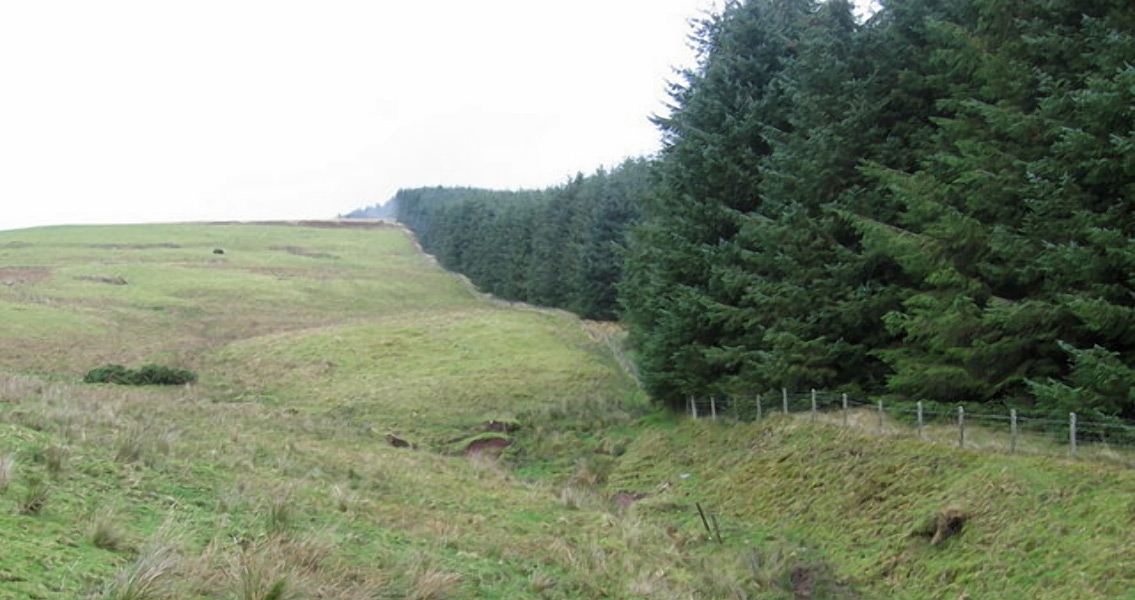
The Courier, “Evidence for ploughing and fields in Neolithic Britain is incredibly rare and so the excavation of the ard marks at Wellhill is a very significant discovery that suggests a farming economy had taken hold in this location only a few generations after farming began in Britain around 4000BC. This is an amazing insight into the lives of Scotland’s first farmers.” Additional radiocarbon dating of the pit sites shows that they may actually date back even further, into the eighth millennium BCE, meaning they’re providing evidence of the very first Mesolithic events in the lowlands of Kinross and Perth. Dr. Rebecca Jones, with Historic Environment Scotland, is quoted in The Courier as saying, “These are very significant discoveries for archaeology in Scotland and even further afield, which is thanks mainly to the endeavors of the principle excavator, Dr. Dene Wright, who recognized the potential of these astonishingly early settlements, which were then confirmed via radiocarbon dating.” Historic Environment Scotland is a public body that was established to investigate, preserve and promote Scotland’s historic monuments and structures. They are responsible for approximately 300 historically significant properties, including Edinburgh Castle. In total, these sites receive over 3 million visitors annually. The organization is also responsible for a variety of collections, including over 5 million drawings, manuscripts, and photographs, in addition to 20 million aerial images of sites around the world. The SERF project has received an archaeology grant from Historic Environment Scotland to complete excavation, geophysical surveys, reporting and archival research. ]]>
