

Genome Biology, can be found online at www.oxfordjournals.org]]>


Archaeology in Bulgaria website. Sexaginta Prista, which translates to “port of the sixty ships” in Latin, was a major city within Moesia Inferior, the Late Antiquity province that bordered on so-called “barbarian” regions along the Lower Danube. The fortress city itself was one of several frontier fortifications known as the Limes Moesiae, designed to keep these barbarian forces at bay; the 20-meter long fragment of wall most recently discovered, which would have been part of the southern wall of the ancient Roman city, has been dated back to the fourth century CE. The importance of the find was reinforced in a press release from the museum. The museum stated that the remarkably high levels of preservation had made it possible to compare the Sexaginta Prista fortification system to other cities in the surrounding regions over the past several years. These other finds include the ancient Roman cities of Trimamium and Iatrus, the museum added. In addition to the wall – an invaluable find in and of itself – museum archaeologists also found coins and ceramic vessels that span the centuries between Late Antiquity and the eleventh century CE, otherwise known as the Early Middle Ages. Discoveries include coins from the Early Byzantine and Late Roman periods as well as later pottery fragments that have been dated to well after the transformation of Sexanginta Prista to the settlement that would one day become known as Ruse. Additionally, evidence of coins dating to the fifteenth through the nineteenth centuries, the time of the Ottoman Empire, have also been discovered. All told, some 300 coins, all from varying historical periods, have been excavated during the effort to study the ancient Roman wall fragment. Meanwhile, the dig itself was a historic event. The rescue excavations were noteworthy in that they marked the first time in the history of Ruse that an archaeological dig had occurred on private property. At the same time, the Roman roots of the Bulgarian city aren’t even the true beginning of the story of Ruse. Sexaginta Prista itself, which existed in the northwestern region of modern Ruse alongside the Danube, was erected on the ruins of an ancient Thracian settlement thought to date back to as early as the third century BCE. ]]>


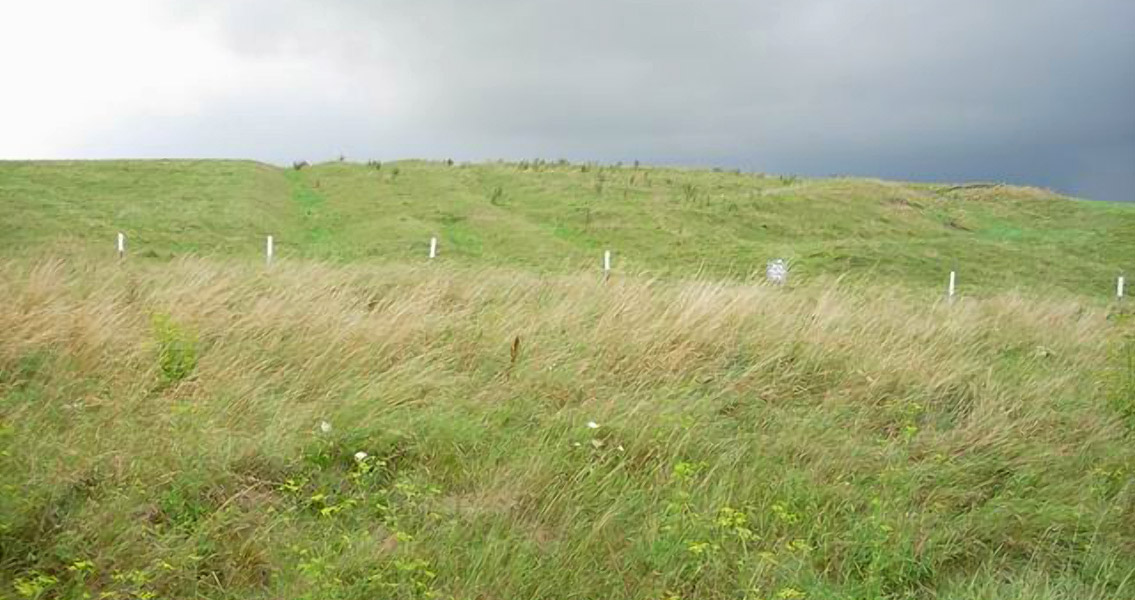
Current Archaeology. The Defence Infrastructure Organisation enlisted the aid of Wessex Archaeology to undertake excavation and study of the mass grave site. Jackie McKinley, an osteologist with the archaeology organisation, remarked that the site was likely a planned cemetery and would have featured some sort of grave identification such as low mounds or markers. While rather large for its date, the cemetery is a normal domestic one judging from the wide range of ages of the deceased, McKinley added. Grave goods were found within many of the burials, including personal possessions such as knives, brooches and glass beads. There was also evidence that those buried within were part of a community that had wide-ranging trade and commerce connections, judging by the Red Sea cowrie shells found in a selection of the graves. One unique object, a small cylinder found buried with a young woman, is of special note; known as a “work box” because other examples unearthed at other dig sites have been found containing pins, the object has yet to be opened. However, x-ray analysis has revealed that there could be several fragmented objects made of a copper alloy within. McKinley stated that the work box would have certainly been a status symbol at the time. Its properties were likely as functional as they were “amuletic”, she added. While there’s no evidence of any Anglo-Saxon settlement within close proximity to the cemetery, there is evidence of why the community chose the site for its burial needs. A pair of prehistoric “hengiform” monuments, edifices that could have been barrows or ring ditches, have been found close by the cemetery. The research team says that right now, based on preliminary findings, these monuments could have been used from as early as the Neolithic to as late as the Bronze Age. Additional prehistoric discoveries at the site include several Neolithic ceremonial pits found to have been filled deliberately with a selection of unique objects. The majority included potsherds from grooved ware pottery in the Woodlands style as well as intact and fragmented axes – one of which seems to have been constructed from a distinctive Cornish green stone. Antlers, aurochs bones, flint hammerstones, and pieces of chalk carved into the shape of a ball and a bowl round out the prehistoric finds. The crown jewel of the Neolithic artifacts, a rare standout oval flint blade known as a discoidal knife, is now one of only three ever found dating back to the time period. Image courtesy of Wikimedia Commons user: Hugh Venables]]>

Tullimonstrum gregarium, have been found exclusively in the state of Illinois, deep in its coal quarries. The bizarre visage of the Tully Monster – with its long, eel-like body, fins on its tail resembling that of a squid’s back end, and long, tentacle-like neck ending in a mouth reminiscent of a crab claw – has captured the imaginations of scientists and cryptozoologists alike. Because of the strange agglomeration of body parts – which included a pair of stalks that ended in blob-like ovals thought to have been eyes – researchers have been flummoxed as to how to classify the Tully Monster. However, the new research study, headed by University of Leicester PhD student Thomas Clements, managed to reveal some of T. gregarium’s secrets, specifically by investigating those strange eye stalks. In a university press release, Clements recounted how it was the distinctiveness of those stalked structures that inspired the study. Bizarre anatomy in a fossil makes it difficult to choose a starting point, the PhD student added, which led the research team to focus on what they thought was the most interesting feature of the Tully Monster. The idea panned out in a big way. The researchers, who joined forces with colleagues from the University of Texas in Austin and the University of Bristol, found that the dark blobs at the ends of those stalks were composed of microscopically small granules, hundreds of thousands of them, and they were identical chemically and physically to melanosomes, organelles instrumental in the creation and storage of melanin. Almost every animal is capable of producing this pigment, according to the University of Bristol’s Dr. Jakob Vinther, who was also involved in the study. Melanin is instrumental in the wide range of hair and skin color in humanity, for instance; however, it’s also found in the eyes of a large number of animals, where it plays a role in blocking excess light from entering the eye, and allowing a clear visual image to form. What this means for the Tully Monster – finding melanosomes in such high concentrations in the two terminal bulbs on its stalks – is that it has been conclusively proven that the dark blobs were eyes. The team also found that there were two differently-shaped melansomes in the Tully Monster’s eyes. This is a characteristic found exclusively in vertebrates. In other words, not only has it been proven that T. gregarium had eyestalks but also that it was indeed a vertebrate, unlike previous research that suggested the Tully Monster lacked a backbone. These new revelations – the fact that the Tully Monster had rather good vision and that it was indeed a vertebrate – suggest that the animal might have been a fish. A rather bizarre fish, Thomas commented, but a fish nonetheless. The research study, which was published in the journal Nature, can be found online here Image courtesy of University of Leicester]]>
