Categories
Breaking News

Black Sea Mapping Project Uncovers Shipwrecks, Prehistoric Lands

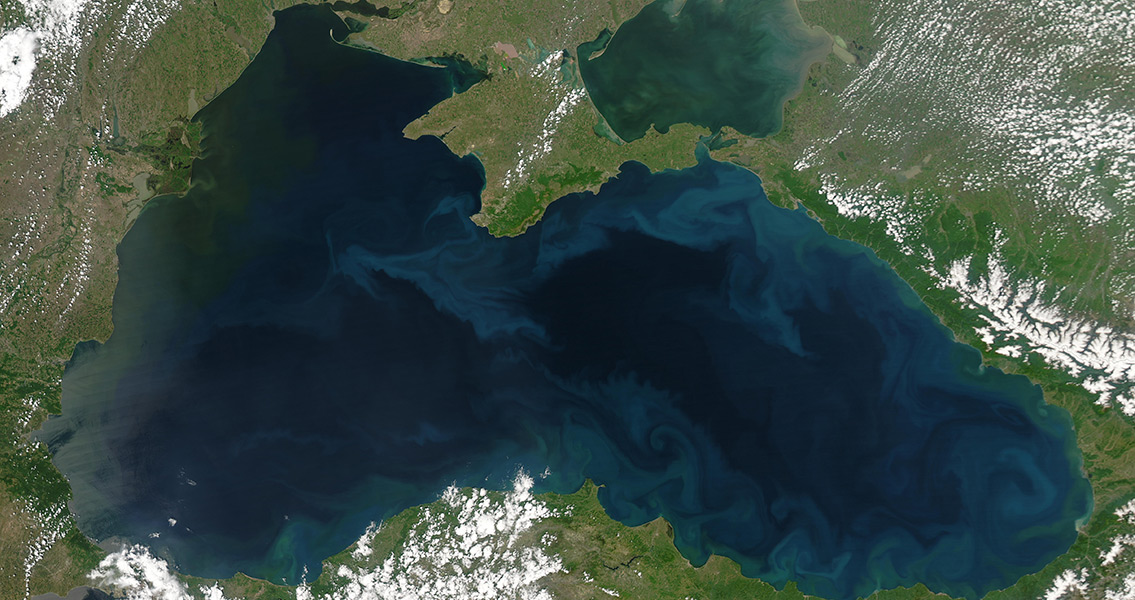
ScienceDaily that the team is attempting to answer some of the biggest unknowns when it comes to when the water level of the Black Sea rose, how rapidly it did so and what type of impact it might have had on human populations that were inhabiting the coast of Bulgaria at the time. The majority of the work has consisted of geophysical surveys, thanks to the aid of two specially designed Remotely Operated Vehicles (ROVs), but the investigation also calls for several core samples to be taken from the seabed in order to reconstruct the prehistory of the Black Sea, Professor Adams added. These two ROVs have already discovered a wealth of new information, especially when it comes to ancient shipwrecks. Thanks to the highly advanced technologies fitted to these two submersibles, which includes the ability to take high-resolution 3D images, laser scans and gather other types of geophysical data, the remains of more than forty ships have so far been found resting on the bottom of the Black Sea within the search area. Many of these ships date back to the Ottoman and Byzantine empires and offer some of the first real-world examples of shipbuilding dating to these time periods. Additionally, thanks to the lack of oxygen in the waters of the Black Sea at depths over 150 meters, these ships are also remarkably well-preserved. Professor Adams remarked that the images the team has been able to capture have been “astonishing”, especially in light of the fact that the technology being used by these ROVs has been able to operate without necessitating the disturbance of the Black Sea’s seabed. The scientist had high words of praise for the public/private partnership that made this expedition a reality, singling out the EEF as being one of the “enlightened bodies” that funded the academic research. The Centre for Marine Archaeology allied with the Bulgarian Centre for Underwater Archaeology and the Bulgarian National Institute of Archaeology in order to launch the Black Sea MAP project. It’s joined by the Marine Archaeological Research Institute from Sweden’s Södertörn University, Greece’s Hellenic Centre for Marine Research, and the University of Connecticut in the United States. ROV technology innovations were provided by private company MMT. ]]>
Categories
Breaking News

Archaeologists Suspect Medieval Inn on the Black Sea was a Brothel

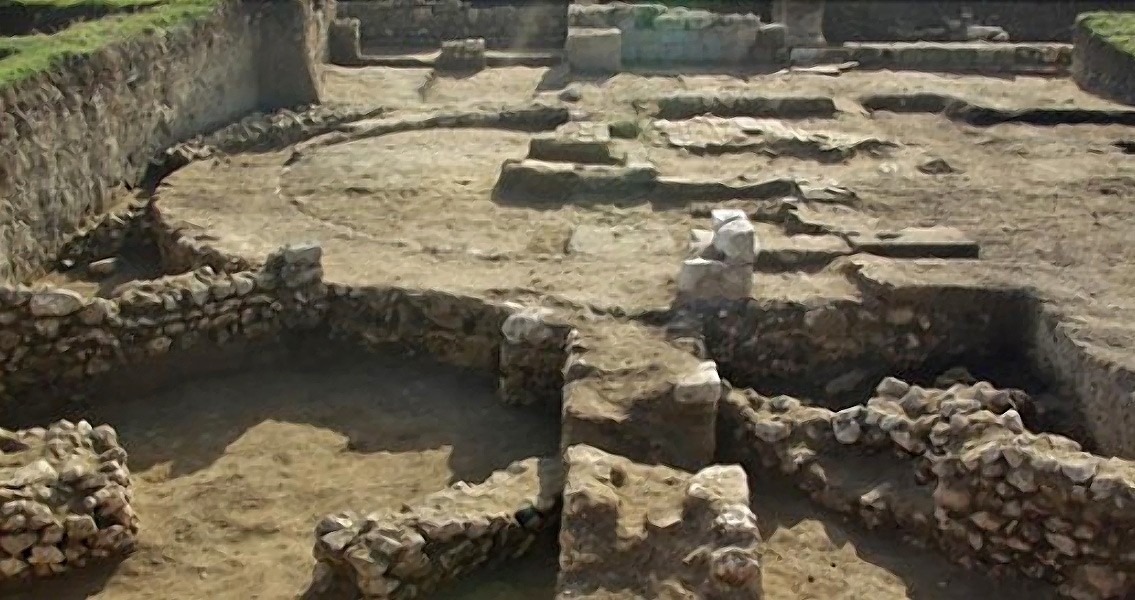
Radio Focus Varna. Other recently discovered artifacts unearthed during the excavations in Kastritsi include a Lydian stone, very rare in Bulgaria, which was used to test the carats of silver and gold coins and was an essential instrument in commercial dealings. Additionally, archaeologists unearthed a small anvil and a mold used to forge silver icons of the Virgin Mary, from the middle of the fourteenth century. Another mold, used to forge icons of Jesus Christ the Pantrokrator, was found during earlier work at the site. Researchers also discovered cattle, pig and lamb bones inside the kilns at the medieval inn, as well as tuna and turbot bones and fish hooks. The exposed parts of the medieval inn are located in Cape Yani, the same location that Tsar Ferdinand, the Third Bulgarian Tsardom ruler between 1887 and 1918, would watch the sea while sitting on a stone throne. The throne was later destroyed during construction of a breakwater in the Communist period. Many of the amazing discoveries found at the Kastritsi Fortress include coins: a hoard of 36 coins featuring Ottoman Sultan Bayezid I the Thunderbolt who ruled from 1389 until 1402, along with a cache of silver coins featuring his father Emir (Sultan) Murad I, who ruled between 1362 and 1389. Another coin unearthed at the site features Bulgarian Tsar Ivan Alexander (ruled 1331-1371) and Despot Dobrotitsa, ruler of the Principality of Karvuna in northeast Bulgaria (1347-1385). Coins from Egypt, Asia Minor, Italy, Wallachia and Poland have also been found. Archaeologists in Bulgaria have excavated over one-fifth of the Kastritsi Fortress site, part of which is open to the public. Images of the Inn can be found here: here Featured Image, Euxinograd Palace, Courtesy of Wikimedia Commons user: Dimcho Panayotov (Benkovski)]]>

Categories
Breaking News

Mythology Comes to Life in Bulgarian Rock Grave

Archaeology of Bulgaria as Hellenistic period body and head adornments, with 11 rings that bear the images of ancient deities like Nike, the victory goddess. Archaeologists also found a silver coin used in the ancient Greek city of Maroneia, which was located on the coast of the Aegean Sea. The coin, a tetradrachm, was used as an obol, a coin which was ritually placed under the tongue of a deceased person as payment to the Charon, the mythical ferryman of Hades who transported the souls of the deceased across the rivers Acheron and Styx to the underworld. Several of the artifacts recovered from the grave are believed to have been produced in either Maroneia or other Greek cities along the Aegean coast, which is only 100 km away. Some however, were made in the prehistoric Thracian Odrysian Kingdom. The combination of imported and locally made items is believed to be evidence of the material culture enjoyed by these ancient people. The Thracians were actually a group of individual Indo-European tribes that inhabited a large region in southeastern Europe. It’s generally accepted that the Thracian people were in existence starting in the early Bronze Age. In Greek mythology, Thrax (also known as Thracian) was known as one of the sons of the god Ares. The excavations are being privately funded by businessman Alexander Mitushev, who made headlines last year when he purchased a Bronze Age archaeological artifact; a toy stork which could be the oldest children’s toy in Europe. An amateur archaeologist, Mitushev discovered a stone altar last year only 4 meters from the rock grave. ]]>

Categories
Breaking News

New Section of Ancient Roman Wall Found in Bulgaria

Archaeology in Bulgaria website. Sexaginta Prista, which translates to “port of the sixty ships” in Latin, was a major city within Moesia Inferior, the Late Antiquity province that bordered on so-called “barbarian” regions along the Lower Danube. The fortress city itself was one of several frontier fortifications known as the Limes Moesiae, designed to keep these barbarian forces at bay; the 20-meter long fragment of wall most recently discovered, which would have been part of the southern wall of the ancient Roman city, has been dated back to the fourth century CE. The importance of the find was reinforced in a press release from the museum. The museum stated that the remarkably high levels of preservation had made it possible to compare the Sexaginta Prista fortification system to other cities in the surrounding regions over the past several years. These other finds include the ancient Roman cities of Trimamium and Iatrus, the museum added. In addition to the wall – an invaluable find in and of itself – museum archaeologists also found coins and ceramic vessels that span the centuries between Late Antiquity and the eleventh century CE, otherwise known as the Early Middle Ages. Discoveries include coins from the Early Byzantine and Late Roman periods as well as later pottery fragments that have been dated to well after the transformation of Sexanginta Prista to the settlement that would one day become known as Ruse. Additionally, evidence of coins dating to the fifteenth through the nineteenth centuries, the time of the Ottoman Empire, have also been discovered. All told, some 300 coins, all from varying historical periods, have been excavated during the effort to study the ancient Roman wall fragment. Meanwhile, the dig itself was a historic event. The rescue excavations were noteworthy in that they marked the first time in the history of Ruse that an archaeological dig had occurred on private property. At the same time, the Roman roots of the Bulgarian city aren’t even the true beginning of the story of Ruse. Sexaginta Prista itself, which existed in the northwestern region of modern Ruse alongside the Danube, was erected on the ruins of an ancient Thracian settlement thought to date back to as early as the third century BCE. ]]>

Categories
Breaking News

Pirate Ship Found in the Black Sea

Categories
Breaking News

New Martyr's Crypt Discovered in Bulgaria

Categories
Breaking News

Byzantine Diplomacy Explored

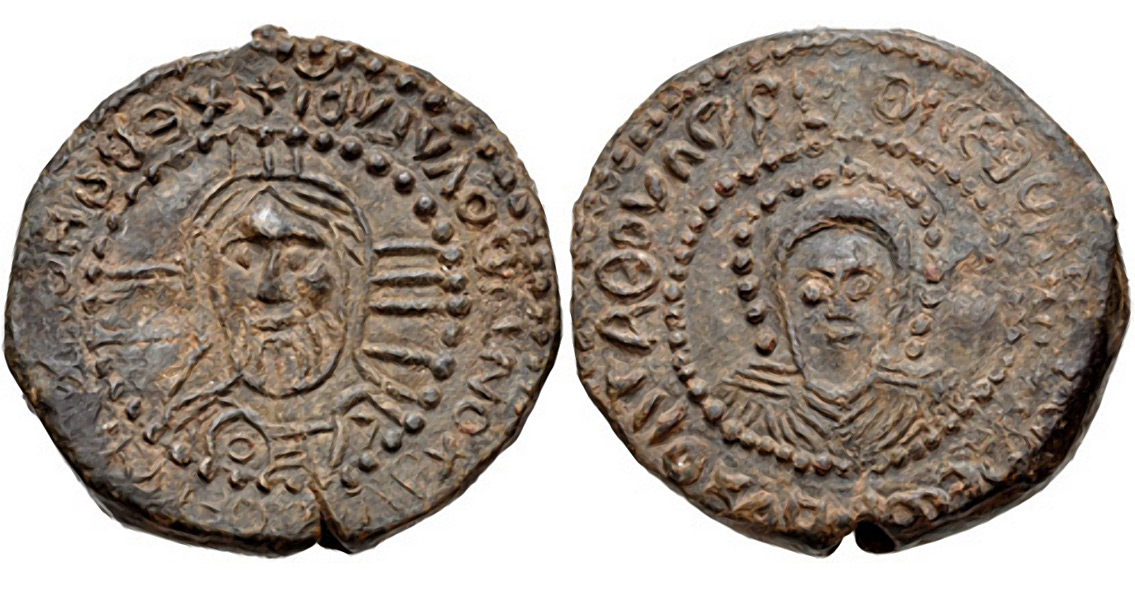
History Compass, Ian Mladjov, from the Department of History, Bowling Green State University, Ohio, USA, noted that “when it comes to diplomatic relations, the phrase ‘too close for comfort’ perfectly describes the relationship between the medieval Byzantine and Bulgarian states in the Balkan peninsula.” The Byzantine Empire was the predominantly Greek-speaking remains of the Eastern Roman Empire. Its citizens referred to themselves as ‘Romans’ and the ruler retained the title of ‘Emperor’. Mladjov argues that the conflict between Bulgaria and the Byzantine Empire was about more than simple territory or wealth. The bloody conflict was rooted in prestige. Interestingly, the siege of Constantinople in 912 did not end in an agreed peace. At a ceremony between the Patriarch of Constantinople and Simeon, the Bulgarian king was placated and given a crown, although not the imperial title. Simeon returned home after the meeting, laden with gifts, but with no formal peace treaty being signed. After returning to Bulgaria, Simeon began using the imperial title and, curiously, even styled himself ‘Emperor of the Romans.’ In all contemporary sources, it is made very clear that Simeon was never offered the title of emperor. In fact, it appears that Byzantine rulers went to great lengths to preserve the Byzantine emperor’s exclusive monopoly on the Roman imperial title. “For a long time, the significance and importance of [this] event were overlooked,” Mladjov explains. Much more attention has been paid to subsequent events, particularly Simeon’s adoption of the imperial title. For Mladjov, the crowning of Simeon by the Patriarch is of crucial importance, revealing a tremendous amount of information about how the Byzantine Empire conducted itself with its neighbours. “Clearly, the form a crown took was less important than the coronation itself,” Mladjov writes. “Whatever the idiosyncrasies of Simeon’s coronation by Patriarch Nicholas in 913, it must have been considered acceptable to him. The implications of our sources are clear: Simeon had been recognized as emperor, apparently only of his own people, by the Byzantine court and left for home in peace.” Simeon seems to have sought parity with the Byzantine Empire. Mladjov argues that Simeon identified recognition as fellow emperor as a means to redress the situation where the Byzantines claimed authority over Bulgaria. Diplomatic relations in the medieval world were rife with states posturing for status. The Byzantine Empire, in particular, wanted to maintain an aura of superiority to other states. As this episode shows, the Empire’s neighbours desired parity and respect from the Byzantines. Sometimes, this was expressed in demands for recognition as fellow emperors. The Byzantine Empire’s response to this was impressively nuanced, they crowned Simeon I as emperor and of the same rank as the Byzantine emperor. Importantly, however, Byzantium never conceded the title of emperor of the Romans; instead they crowned Simeon the emperor of his own, non-Roman people. For more information: www,onlinelibrary.wiley.com Image courtesy of Wikimedia Commons user: Cplakidas ]]>

Categories
Breaking News

John the Apostle Relic Found in Bulgaria

Categories
Breaking News

Strange "Vampire" Grave Found In Bulgaria