Categories
Breaking News

Not Western after all: veterinary science originates from Mongolia

Max Planck Institute for the Science of Human History. A team of scholars, led by William Taylor of the Institute, have analysed ancient horse remains from a Mongolian pastoral culture called the Deer Stone-Khirigsuur Culture. Crucially. their findings challenge the traditional view that veterinary care is a Western science.

Who were the people of the Deer Stone-Khirigsuur Culture?

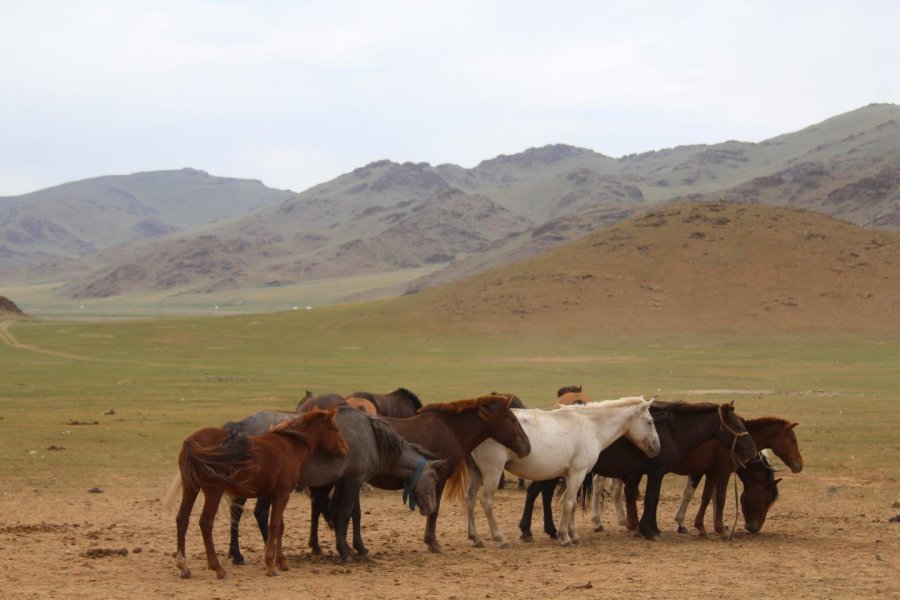
This pastoral culture roamed the steppes of Mongolia and the eastern parts of Eurasia between 1300 and 700 BC. The nomadic tribe carved beautiful standing stones, known as deer stones, and created burial mounds, or khirigsuurs, across the Mongolian Steppe. As peaceful horsemen, they have been linked to some of the oldest evidence for nomadic herding and the keeping of domestic livestock in that part of the world. [caption id="attachment_8781" align="aligncenter" width="500"] Horses congregate near a deer stone site in Bayankhongor, in central Mongolia’s Khangai mountains.
Credit: William Taylor[/caption] They were the first peoples in eastern Eurasia to utilise horses as livestock, and it has been suggested that they were among the first to ride the animals. At roughly the same time as their inhabitancy, bronze and metal mouthpieces for riding spread throughout the region. These would have given riders more nuanced control over the animals, enabling them to use them for new purposes – including warfare. However, using metal to control horses also saw the rise of new oral issues, including painful interactions with a vestigial tooth that develops in some animals, known as a ‘wolf tooth’. A common problem among the horses, ‘wolf tooth’ would have been alleviated by the use of blunt metal instruments. The practice remains in a similar form today. This dentistry care would have allowed the early riders to control their horses, and further use them to advance their own society. Near each deer stone and khirigsuur, stone mounds symbolise the ritual burials of domestic horses. To contextualise the scale of this culture, the number of horses buried can run up into the hundreds, or even thousands. [caption id="attachment_8782" align="aligncenter" width="500"] A depiction of the classic Mongolian style of deer stone. Credit: Kyarrakun, via Wikimedia Commons[/caption]
“Oldest known practitioners of vet care”

A careful study of the skeletal remains found in these burials has exposed never-before-known information about early veterinary dental procedures. The Deer-Stone Khirigsuur people would have removed any baby teeth causing pain in young horses – making them the world’s oldest known practitioners of veterinary dental care. Throughout the study, Taylor worked closely with colleagues from the National Museum of Mongolia. Jamsranjav Bayarsaikhan and Tumurbaatar Tuvshinjargal were able to provide him with deeper insight about the development of horseback riding and how a horse-based pastoral economy facilitates scientific advancement. “We may think of veterinary care as kind of a Western science,” Taylor comments. “But herders in Mongolia today practice relatively sophisticated procedures using very simple equipment. This results of our study show that a careful understanding of horse anatomy and a tradition of care was first developed, not in the sedentary civilizations of China or the Mediterranean, but centuries earlier, among the nomadic people whose livelihood depended on the well-being of their horses.”

Connecting East and West

Nicole Boivin, Director of the Department of Archaeology at the Max Planck Institute for the Science of Human History, concludes: “In many ways, the movements of horses and horse-mounted peoples during the first millennium BCE reshaped the cultural and biological landscapes of Eurasia. “Dr. Taylor’s study shows that veterinary dentistry – developed by Inner Asian herders – may have been a key factor that helped to stimulate the spread of people, ideas, and organisms between East and West.” The research has been published in full here.]]>

Categories
Breaking News

Remains of 13th Century 'Siberian Robin Hood' Discovered

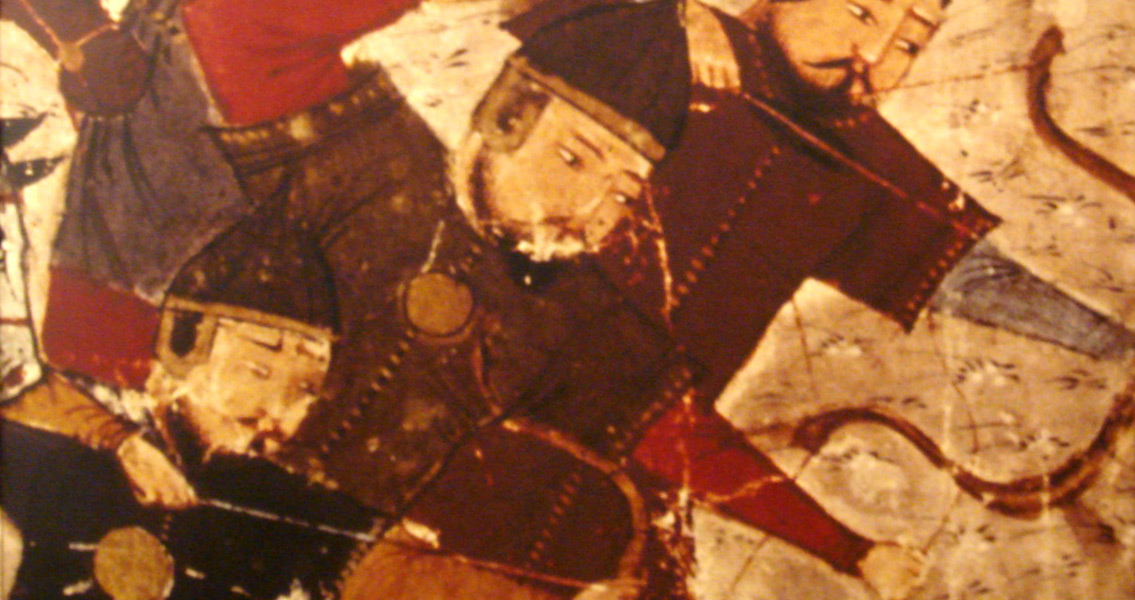
the Siberian Times: “At the moment we have a birch bark quiver, two bone plates with elaborate ornaments, iron arrowheads, wooden arrow shafts, birch bark linings for a saddle, the remains of ribbons, likely silk, and what is left of a leather strap. Initially we thought that the bone plates were details of the bow, but they turned out to be the decorations of the quiver.” The warrior is believed to be Mongolian, although no other quivers like the one at the burial site have ever been found. The shape of the arrow heads suggest the man was a warrior, although they could also have been used for hunting. Archeologists are hopeful they’ll receive permission to examine the sarcophagus next year. In the meantime, steps have been taken to preserve the site, and work will continue to find the deceased archer’s bow. Vasily Oinoshev, the director of the Agency for Cultural and Historical Heritage of the Altai Republic, says in the Siberian Times: “The quiver is a very interesting one. It has separate ‘pockets’ for different types of arrows. This quiver is a great find, it is very well preserved. It will be important to examine it more thoroughly to understand its construction,” adding, “Sadly we cannot go and excavate the grave immediately. We need to have a special permission for work. Excavations are allowed in the period from 1 April to 1 November. So as soon as we get all the permits we will go to work on this grave. “ “We are doing all we can to ensure the safety of the grave in winter and to ensure the security of other archaeological objects. I have many questions to how these items were found. The story was that the locals found the grave in a hole in a cliff and took some items from there. But I am not completely sure they have not unearthed it. We need to check all this thoroughly.” Mongolians conquered the region of Altai in the twelfth century, and the area stayed under Mongolian control into the fourteenth and fifteenth centuries, yet finds from this time are rare in Altai. ]]>

Categories
Breaking News

Mummified 1,500 Year Old Woman Found in Mongolia

Categories
Breaking News

Did Dogs Come from Central Asia?

” target=”_blank”>”Genetic structure in village dogs reveals a Central Asian domestication origin” Image courtesy of Wikimedia Commons user: Peter Wadsworth ]]>

Categories
Breaking News

Mummified Monk Found in Lotus Position