Categories
Breaking News

Military Complex in Israel Dates to the Reign of King Solomon

FoxNews article. “Only when the dates came back from the lab we were reassured that indeed these were the remains of stables and other activities from the time of David and Solomon.” The research highlights the early community’s sophisticated and refined defense system and trade links, demonstrating a connection with the distant Mediterranean region. In addition to moving food and materials back and forth from other regions, the donkeys housed at the complex would have been used as part of copper production. The fact that one of the biggest ancient copper smelting plants in the Timna Valley is located near the fortification is of particular importance. Ben-Yosef says in the article: “Until now we didn’t have evidence of military conflicts in the copper mines of Timna at this period. Moreover, they are in accord with the biblical accounts depicting wars between David and the Edomites who inhabited this region.” The archaeologist went on to add that given the hotly debated accounts between biblical historians, finding actual evidence is significant. Aviv University notes in a recently released statement that the fabled King Solomon mines are believed by some experts to be located somewhere among the Timna Valley ancient smelting camps. There is no clear description of “King Solomon’s mines” within the Old Testament, but there are references to military clashes between the Edomites (the descendants of Esau, Isaac’s firstborn son and Jacob’s twin brother) and Israel. Discovered in 1934, the copper smelting site in Timna Valley was first believed to be a slave camp dating to the Iron Age. This theory was debunked by Ben-Yosef along with his colleagues in 2014, when they analyzed organic clothing and material finds which indicated a sophisticated, hierarchical society. The research team intends to continue their exploration of the ancient societies in the Timna copper mine area. The research has been published in The Journal of Archaeological Science. ]]>

Categories
Breaking News

We’ve Been Remembering the Alamo Incorrectly

Categories
Breaking News

Mounted Archers' Fearsome Arsenal Revealed

www.wih.sagepub.com Image courtesy of Wikimedia Commons user: Yaan]]>

Categories
Breaking News

European Military Prowess Challenged

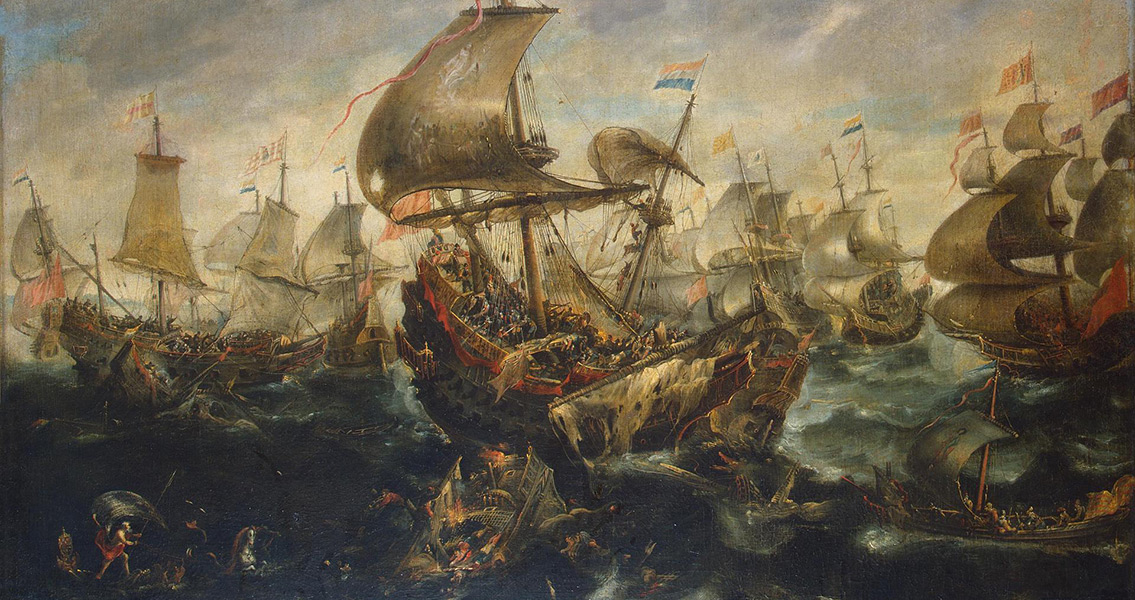
Deadliest Warrior – a television programme which anachronistically pits historical soldiers against one another to find out who would ‘win’ – attests to the appeal of such discussions. A new work has analysed the power of European militaries in the Early Modern period when they came up against their Asian contemporaries. Heated debate over the respective prowess of European soldiers and those from other parts of the world has a very long history. European pamphlets printed in the seventeenth century debated the potential impact of Japanese mercenaries. Some were impressed by the prowess and valour of Japanese warriors; others praised European soldiers for their skill and organisation. In historical circles this debate is scaled up. Individual soldiers are not compared, but armies and navies can be discussed with regard to a central historical question: Did European countries possess a significant military advantage that armies in Asia, the Americas, and elsewhere could not match? This question is important as it could offer an explanation for what is called the “rise of the West.” In an attempt to provide an answer, Adam Clulow, a historian from Monash University, Melbourne, Australia, has assessed the scholarship surrounding this debate. His work is published in the most recent edition of History Compass. Traditionally, it is thought that early modern European powers underwent an unprecedented military revolution. The resultant technological advances – particularly the capital ship, infantry firepower, and the artillery fortress – transformed the continent; leading to a dramatic shift in the power balance between Europe and the rest of the world. It was these tools which allowed Europeans to conquer over 35% of the world by 1800. This model of European expansion, however, has been hotly debated. Many opponents of this model claim that there was not a significant lag between the supposed ‘European military juggernaut,’ as Clulow puts it, and other parts of the world. Military organisation in Europe, therefore, should not be seen as exceptional. New research has forged a middle ground between these two positions. By looking at the Sino-Dutch war (1661-1668), it is possible to see a ‘limited advantage template.’ Clulow states that this conflict allows us to see that “while Europeans did possess a genuine technological advantage, most notably in forts and ships, it was not nearly as expansive as is sometimes assumed by supporters of the military revolution thesis.” Clulow, an expert on Tokugawa Japan, also notes that Europe had not always been able to fully utilise its technological advantages. European powers were unable to use maritime violence against Japan, for example. One reason for this was that the overseas resources the European forces were able to muster were simply not enough to challenge the regime of Tokugawa Japan. “The result was that the potential impact of superior military technology was so consistently blunted that it was essentially eliminated from the equation,” Clulow remarks. Technological advances can often give a military force a decisive upper hand in a conflict. Deadlier weapons and stronger armour are of obvious benefit in a fight. These advantages, however, are only useful if they can be effectively deployed. Clulow’s work clearly shows that rather than overestimate the importance of technology, we should remain cautious in drawing assumptions. Image courtesy of Wikimedia Commons user: Trzęsacz www.onlinelibrary.wiley.com]]>

Categories
News

Roman Military Camp Discovered from the 2nd Century

Categories
Editorial

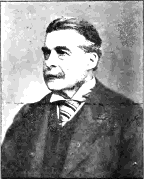
Sir Arthur S. Sullivan (1842-1900)

The Beginnings of a Great Composer Arthur Seymour Sullivan was born in London on 13th May 1842. Music was part of his life from his earliest years since his father, Thomas, served as Bandmaster at the Royal Military College in Sandhurst. Although the family financial means were stressed the relationships between family members were very warm. As his surname suggests, Thomas Sullivan was of Irish origin but his wife was Italian. Arthur was close to both his parents and to his talented older brother, Frederick. Everything was in place for a happy childhood but Arthur Sullivan had health problems from an early age. He was also burdened with a second name that he detested. If you see what the initial of his names spell out it is easy to understand why Sullivan wished his middle name forgotten! Coming from such a musical family it is hardly surprising that Arthur Sullivan learned to play the flute and most other wind instruments as a young child. He also had a fine voice. He was appointed “first boy” in the choir of Queen Victoria’s Chapel Royal. Albert, the Prince Consort, was so delighted with Sullivan’s singing that he rewarded him with a gold half sovereign coin. This was a most generous present at the time. In twenty-first century terms it might have been worth as much as 100 pounds in purchasing power terms. Even before the young Arthur Sullivan had made his name for himself in the Chapel Royal Choir he had published his first musical composition. Sullivan was not even twelve years old when he composed the piece of religious music named “O Israel.” It is easy to understand how this young musical genius won the prestigious Mendelssohn Scholarship to the Royal Academy of Music. He continued his musical education in Germany where he became acquainted with the composer Franz Listz. While studying at Leipzig 18 year old Sullivan’s music first came to public attention with a performance of his composition for Shakespeare’s “The Tempest”. The performance was repeated the following year at London’s Crystal Palace. Now back resident in London Arthur Sullivan supported himself as a church organist while at the same time writing classical music such as the Prince of Wales march. The death of his father caused him great distress but he turned his feelings in a creative direction to write a work called In Memoriam. On a happier note Sullivan became friendly with Sir George Grove who later became a famous figure in his own right through his Dictionary of Music. Grove and Sullivan travelled together to Vienna in a search for a lost score of Schubert. They were about to give up their search and return to England. Before packing their bags and leaving an old cupboard caught their attention. In a dramatic moment in musical history they discovered the manuscript of Schubert’s Rosamunde in this cupboard! Gilbert and Sullivan At the time of Gilbert and Sullivan’s first meeting in 1869 the latter had already established a reputation as a star of London’s serious music scene. In truth he had also turned his hands to writing light music for the playwright F.C.Barnand but he certainly had no intentions of focusing on this area of music. Sullivan and Gilbert were first introduced by their mutual friend, dramatist and musician Frederick Clay. Clay was working with Gilbert on a play entitled “Ages Ago” and he invited Sullivan to see it. Although they made each other’s acquaintance at this time it took another 6 years before they first worked together. London theatre promoter John Hollinshead brought Gilbert and Sullivan together in 1871 to produce the one act comedy “Thespsis.” This comedy based on an Ancient Greek theme ran for 64 performances. This was a reasonable run for a production put together so quickly but with this play behind them, Gilbert and Sullivan continued their separate careers. In Sullivan’s case this included writing music for Shakespeare’s “Merry Wives of Windsor”, and a hymn of thanks for the recovery of the Prince of Wales from a serious illness. The man who finally brought Gilbert and Sullivan into their famous partnership was theatre impresario Richard D’Oyly Carte. In 1875 D’Oyly Carte encouraged Gilbert to approach Sullivan to write a score for his comic opera “Trial for Jury”. Gilbert was confident that the serious composer Sullivan would not be interested in writing music for his work, but Sullivan found the script hilarious and was happy to co-operate. Arthur Sullivan’s older brother Frederick played the role of the Judge and was a great hit. The opera ran for over three months and would have continued longer but Frederick Sullivan took ill and died. Arthur was close to his brother and his early death delivered him a heavy blow. As with the death of his father years earlier he expressed his grief through his music. Sullivan’s composition “The Lost Chord” remains very popular to this day although not everyone knows the sad background behind its composition. Sullivan was very sensitive over this work. When he found out someone was making a parody of it he wrote to them to explain how he came to write the ‘Lost Chord” and he urged the parodist not to proceed with something he would consider disrespectful of his brother’s memory. Although saddened by his brother’s death, Sullivan must have found some consolation in the success of his music. The popularity of Trial by Jury convinced Richard D’Oyly Carte that the partnership between Gilbert and Sullivan was a potential gold mine. Their co-operation on the comic operas HMS Pinafore (1878) and the Pirates of Penance (1879) proved that D’Oyly Carte had correctly assessed public taste. The operas quickly became very popular in England and also in the United States. Sullivan’s light music reached a far greater audience than his serious music ever reached with even the delivery boys in the streets of London humming tunes from the operas. He became one of the pioneers of style of opera that gently poked fun at while at the same time became an integral part of British culture. His fame resulted in the bestowal of a knighthood by Queen Victoria. It is interesting to note that these D’Oyly Carte productions were also pioneers in the use of the latest technology. When a scene in the opera Ruddigore (1887) demanded the theatre to be darkened, the question arose how could Sullivan possibility conduct the orchestra when they would no longer be able to see him gesturing with his baton? The ingenious solution was to provide him with a baton lit by electricity. A Difficult Partnership The success of the series of Gilbert and Sullivan operas throughout the 1880s elevated Gilbert and Sullivan into the mega-stars of the late Victorian entertainment scene. It also made them both into very wealthy men. Sullivan’s addiction to gambling at the tables of Monte Carlo meant that the income from the operas became indispensable to the kind of lifestyle he aspired to lead. He certainly realised that he was earning far more than he might hope to get as a classic composer but his sense of artistic self-esteem was damaged. He did not want his reputation to rest on comic opera but wanted to take his place alongside Franz Listz and the other highly-respected classic composers of the era. He regularly struggled with his need for funds that his partnership with Gilbert answered and his desire to break away and make his name as a classical composer. Gilbert’s contentious personality did not make their co-operation any easier. It took all the diplomatic skills of Richard D’Oyly Carte and his wife Helen to put the partnership back together after a serious of quarrels and breakups. At one point he wrote angrily to Gilbert about how he had become burned out writing music for comic opera and was angry how he thought that the emphasis is always on Gilbert’s words with his music “never allowed to rise and speak for itself.” The most famous dispute between them over the expenses of a production ended up in a legal case when Gilbert took Sullivan and D’Oyly Carte to court in a dispute over 200 pounds spent on a carpet for theatre auditorium. The Closing Curtain Gilbert and Sullivan came together for the last time in 1896 for the light opera the Grand Duke. Although it was nowhere near the success of their earlier operas, the audience gave them enthusiastic applause when they came out and took their bows from the opposite end of the stage. Sullivan resumed writing music on more serious themes working on a score for a ballet to mark Queen Victoria’s Diamond Jubilee. The liver complaint that he had suffered from since his earliest years became increasingly serious. He had almost died from this on previous occasions and finally on November 22nd 1900 he succumbed. He was buried in St.Paul’s Cathedral. Sir William Gilbert expressed genuine sadness at his death and chose to focus on all they had accomplished together and ignore the ill-feeling that had often been expressed between them.]]>