Categories
Book Reviews

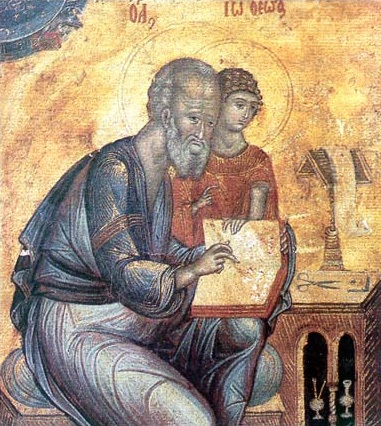
Better Understand Your Bible with the Gospel Parallels

Gospel Parallels. Learn all about the Gospel Parallels and how this great resource can increase your knowledge of, understanding for, and connection to the word of the Bible: What are the Gospel Parallels? In general, a gospel parallel is a text that provides multiple pieces of information in tandem. Oftentimes, this means presenting the multiple versions of the gospel (Matthew, Mark, Luke, and John) beside each other so that each can be read for a more holistic and sometimes comparative understanding. At other times, a gospel parallel will present biblical analysis and enlightening information to accompany the actual word of the biblical gospels. The texts tend to be formatted so that the gospel and accompanying information are presented on a single page, with various columns and footnotes. In 1949 Burton H. Throckmorton Jr. produced the definitive version of a gospel parallel in his definitive text Gospel Parallels: A Comparison of the Synoptic Gospels. Based on the Revised Standard Version of the bible, Throckmorton utilized many resources, including ancient texts, to produce his comprehensive examination of the Synoptic Gospels (those written by Matthew, Mark, and Luke). Why own the Gospel Parallels? At one point in human history, it was believed that only an elite few could read, comprehend, and convey the word of God to others. This made biblical study and inquiry inaccessible to the common person. It also led to an indirect connection between the average person and their spiritual practices. Many people started to recognize that the Bible should be not only for the elite. Instead, they felt “the good word” should be printed and disseminated wide and far, so that everyone could personally access it. This process was, of course, made easier by the printing press. Now, everyone can indeed easily access a Bible. The text is even handed out for free whenever possible to enlighten interested minds. If you believe that it is important for anyone to be able to access the word of the Bible, then know that it is equally important for anyone to be able to compare, contrast, and generally analyze that word. There is no sin in inquiry, or even doubting and searching for answers. The true problem would be in being unable to carry out that inquiry, especially if doing so would ultimately bring you greater knowledge. For this reason, it is recommended to get texts that will allow you to engage in that inquiry. When you have them on hand, you can easily analyze and answer your own questions at any time they enter your mind. When investing in a gospel parallel, be sure to consider the definitive text from Throckmorton. How did Throckmorton’s text become definitive? First, you may wonder who exactly Burton H. Throckmorton Jr. was and why his gospel parallels should be relied upon above other options. Throckmorton was born in 1921 in Elizabeth, New Jersey (United States). His strong interest in religious studies led him to pursue an education in that arena. That gave him the knowledge necessary to write this text (along with several others that were equally popular). He also acted as a minister and taught on these subjects at Bangor Theological Seminary in Maine (U.S.). Throckmorton’s text, Gospel Parallels: A Comparison of the Synoptic Gospels became definitive, in part, because it was put together with a true dedication to thoroughness and a high attention to detail. For Throckmorton, good enough was not good enough. It was important to him to delve deep into all the available resources and pull that information together, to fully analyze the three Synoptic Gospels Also, the Gospel Parallels: A Comparison of the Synoptic Gospels was published in 1949, and while it was well-researched and well-organized to present comprehensive information, it was also put together at a certain point in time that allows the reader a sort of glimpse into the theological past. Throckmorton compiled his work at a time prior to the re-organization of the Catholic church (which occurred largely in the 1960s). Thus, when using this text, you can obtain not only a deeper understanding of the Bible and the Synoptic Gospels, but also a deeper understanding of the spiritual context at that time. Final Recommendations Throckmorton’s Gospel Parallels: A Comparison of the Synoptic Gospels is strongly recommended for theologians and biblical scholars. It may also hold particular interest for those who study literature. However, this text is not only for academics making serious inquiries, it is accessible and strongly recommended reading for any person who simply wants to increase their understanding of the Bible. You can buy a print copy of Gospel Parallels from Amazon with the link below, or find an ebook version here on the Forgotten Books website.

]]>
Categories
Breaking News

Could this 2,800 year old sculpture show us the face of a biblical king?

Credit: Gabi Laron[/caption]

A tiny representation of a momentous past

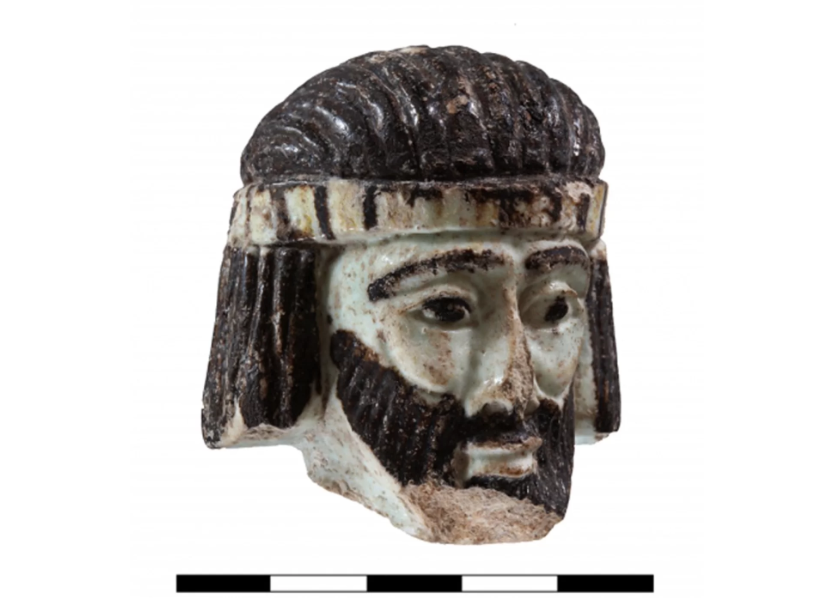
The glazed ceramic sculpture is of a man with long, black hair and a beard. He is wearing a yellow and black headband, which pulls the hair away from his dark, almond-shaped eyes. At only 5.1 cm x 5.6 cm, this tiny head is thought to have been part of a small statuette, according to archaeologists. At full size, the statuette would have been around 20 cm x 25 cm. Professor Robert Mullins from Azusa Pacific University’s Department of Biblical and Religious Studies is also co-director of excavations in the ancient city. He said: “Despite the head’s small and innocuous appearance, it provides us with a unique opportunity to gaze into the eyes of a famous person from the past — a past enshrined in the Book of Ages [the Hebrew Bible].”  

Whom does the sculpture depict?

Given that it was found inside what is thought to be an administrative building at the city’s peak, it is likely that the sculpture is of an elite person. The first assumptions have been that it was a biblical king; though Mullins and his team have yet to undertake the necessary research to prove or disprove this theory. So if it is indeed a king, whom would it have been? [caption id="attachment_8706" align="aligncenter" width="500"] Credit: Gabi Laron[/caption]  

Power struggles in Abel Beth Maacah

In the early stages of research, the team performed radiocarbon dating on the organic materials that were found in the same room as the sculpture. According to the findings, the object would have been constructed some time between 902 BC and 806 BC. The control of Abel Beth Maacah fluctuated greatly during this period. This is down to the fact that it sat at the border of 3 separate kingdoms: Israel, Tyre and Aram-Damascus. Borders were changing continually, leaving Abel Beth Maacah to be under the jurisdiction of different nations. Taking likelihood into account, Mullins thinks the sculpture could depict one of 3 possibilities: King Ahab of Israel, King Hazael of Aram-Damascus, and King Ethbaal of Tyre. However, there are many other candidates, he has said.  

Future research to confirm identity

The sculpture will be displayed at the Israel Museum in Jerusalem, while the scientists are publishing a paper on the discovery for the journal Near Eastern Archaeology. Excavations at Abel Beth Maacah are undertaken by Azusa Pacific University and the Hebrew University of Jerusalem. Joining Professor Mullins are Naama Yahalom-Mack and Nava Panitz-Cohen, both from the Hebrew University of Jerusalem. They will continue to arrange excavations of the large building into summer 2018. Archaeologists are hopeful that new information will arise to determine the identity of this miniature sculpture.]]>

Categories
Breaking News

History News of the Week – Minoan 'Masterpiece' Unearthed

Discovery of Minoan Sealstone Could ‘Rewrite’ History of Ancient Greek Art Researchers working at the tomb of 3,500 year old Bronze Age warrior in the southwest of Greece have unearthed an ‘intricately carved’ sealstone which University of Cincinnati (UC) archaeologists are heralding as one of the finest works of prehistoric Greek art ever discovered. Depicting an intense hand-to-hand battle, the artefact has been dubbed the ‘Pylos Combat Agate’. “Looking at the image for the first time was a very moving experience, and it still is,” said Shari Stocker, a senior research associate in UC’s Department of Classics “It’s brought some people to tears.” “What is fascinating is that the representation of the human body is at a level of detail and musculature that one doesn’t find again until the classical period of Greek art 1,000 years later,” explained Jack Davis, the university’s Carl W. Blegen professor of Greek archaeology and department head, in a statement from UC. Davis and Stocker have been leading a dig at the tomb of the Bronze Age warrior, which was first discovered in 2015. The tomb’s occupant has been dubbed the ‘Griffin Warrior’, and his final resting place has already yielded a wealth of fascinating artefacts, including four gold signet rings. The size of the hand carved stone is perhaps the most remarkable thing about it, measuring just 3.6cm in length. Many of its details can only be viewed with a powerful camera lens and photomicroscopy. “Some of the details on this are only a half-millimetre big,” said Davis. “They’re incomprehensibly small.” The dramatic image of a warrior plunging a sword into a shielded enemy’s neck is reminiscent of the kinds of scenes described in Homer’s Iliad. Although the researchers can’t say if the image reflects a Homeric epic, they’re confident it would be from a legend familiar to Minoans and Mycenaeans. “It would have been a valuable and prized possession, which certainly is representative of the Griffin Warrior’s role in Mycenaean society,” Stocker explained. “I think he would have certainly identified himself with the hero depicted on the seal.” The sheer skill that would have been needed to create the sealstone is causing a re-evaluation of the history and development of Ancient Greek art. “It seems that the Minoans were producing art of the sort that no one ever imagined they were capable of producing,” explained Davis. “It shows that their ability and interest in representational art, particularly movement and human anatomy, is beyond what it was imagined to be. Combined with the stylised features, that itself is just extraordinary.” “This seal should be included in all forthcoming art history texts, and will change the way that prehistoric art is viewed,” said Stocker. Date of Biblical Eclipse Pinpointed Researchers have determined the date of an ancient eclipse which is referred to in the Bible. They believe it could be the oldest date of a solar eclipse yet recorded. The researchers used a combination of the Bible and Ancient Egyptian texts to pinpoint the date of the eclipse to 30th October 1207 BCE. From this information they’ve been able to refine the dates of Egypt’s ancient pharaohs, particularly the reign of Ramesses the Great. Biblical scholars have long been perplexed by the book of Joshua, which describes Joshua leading the people of Israel in Canaan, a region which covers modern day Israel and Palestine. According to the Biblical text, Joshua prayed “Sun, stand still at Gibeon, and Moon, in the Valley of Aijalon. And the Sun stood still, and the Moon stopped, until the nation took vengeance on their enemies.” “If these words are describing a real observation, then a major astronomical event was taking place – the question for us to figure out is what the text actually means,” said paper co-author Professor Sir Colin Humphreys from the University of Cambridge’s Department of Materials Science & Metallurgy. “Modern English translations, which follow the King James translation of 1611, usually interpret this text to mean that the sun and moon stopped moving,” said Humphreys, who is also a Fellow of Selwyn College. “But going back to the original Hebrew text, we determined that an alternative meaning could be that the sun and moon just stopped doing what they normally do: they stopped shining. In this context, the Hebrew words could be referring to a solar eclipse, when the moon passes between the earth and the sun, and the sun appears to stop shining. This interpretation is supported by the fact that the Hebrew word translated ‘stand still’ has the same root as a Babylonian word used in ancient astronomical texts to describe eclipses.” Evidence that the Israelites were in Canaan between 1500 and 1050 BCE can be found in the Merneptah Stele, an Egyptian text dating from the reign of the Pharaoh Merneptah, son of Ramesses the Great. The large granite block, held in the Egyptian Museum in Cairo, says that it was carved in the fifth year of Merneptah’s reign and mentions a campaign in Canaan in which he defeated the people of Israel. Using an innovative eclipse code, one which considers variations in the planet’s rotation, the team determined that the only annular eclipse visible from Canaan between 1500 and 1050 BCE was on 30 October 1207 BCE, in the afternoon. If the team’s calculations, which have been published in the Journal of Astronomy and Geophysics, are correct, then it is possible to date the reign of both Ramesses and his son to within a year. “Solar eclipses are often used as a fixed point to date events in the ancient world, Humphreys said. If Humphreys et al’s results of accepted, then the reign of Merneptah began in 1210 or 1209 BCE. As it is known from Egyptian texts how long he and his father reigned for, it would mean that Ramesses the Great reigned from 1276-1210 BCE, with a precision of plus or minus one year, the most accurate dates available. Hitler Only Joined the Nazis After Being Rejected by Another Far-Right Group Adolf Hitler only joined the Nazi Party after being rejected by another far right group, a historian at Aberdeen University is claiming. According to the Independent, historian Dr Thomas Weber unearthed an unpublished document which reveals that the German Socialist party told Hitler in 1919 they did not want him in their party nor to write for their newspaper. Weber argues that this rejection by the German Socialist Party should be seen as a crucial historic event, a turning point which ultimately led to Hitler joining the Nazi party and becoming its leader. Weber suggests that Hitler would have found it much more difficult to rise to the leadership of the much larger German Socialist Party. “I can only speculate why they did not let him join but one would imagine it had something to do with the fact Hitler was opinionated and they did not want to have someone there who was telling them what to do,” he told the Independent. He added: “If he had been accepted into the German Socialist party he would have almost certainly remained on the sidelines. Hitler managed to push over the established leadership of Nazi party but that would have been very unlikely to have happened if he had joined the German Socialist party.” The document Weber has discovered is from the testimony of Hans Georg Grassinger, the founding chairman of the German Socialist party, reports the Guardian. It describes how, in 1919, Hitler approached Grassinger to join the Party. Hitler also asked Grassinger to borrow money. Hitler, who was 30 at the time, was informed that the party did not him in their ranks. Featured image: The tiny sealstone depicting warriors in battle measures just 1.4 inches across but contains incredible detail. Credit: University of Cincinnati ]]>

Categories
Breaking News

Findings from the Site of David Versus Goliath on Display for the First Time

Tazpit Press Service (TPS), “Archaeology cannot find a man and we did not find the remnants linked to King David himself, but what we did find is archaeological evidence of the social process of urbanization in Judea.” This evidence of urbanization is in line with what the Bible describes as the formation of the Kingdom of David, when fortified towns replaced small agricultural communities. Carbon testing on olive pits unearthed at the Khirbet Qeiyafa site indicates the town was built towards the end of the eleventh century BCE, which fits the chronology of the Biblical narrative. Two aspects of the Elah Fortress were of particular interest to archaeologists, the large number of iron stones found and the wall with two unusual hollows, which encircled the site. Sha’arayim means “two gates” in Hebrew, and the hollows in the modern wall, which was constructed directly on top of the ancient wall, were in the same place, precisely, as the ancient wall’s two gates had been. The town’s geographical location also fits with the Biblical description of Sha’arayim, following the battle of David and Goliath and again in the Book of Joshua. The finds from the site include two inscriptions (in Canaanite script) which are considered to be the earliest writing examples of the Hebrew language, and a pottery shard with the Hebrew words, “king”, “don’t do”, and “judge”, easily identifiable. “Although I led the excavations, I myself was amazed to see the different pieces brought together in a way that allows visitors to get a clear picture of how the town looked and that gives them an opportunity to go back in history to the times of the kingdom of David,” Professor Garfinkel told TPS. The biblical account of the battle between David and Goliath tells of it occurring near the Valley of Elah, when the Israelites were facing the Philistines. For 40 days, twice daily, Goliath, the Philistines’ champion, challenges the Israelites to send out their own champion to decide the outcome with a single combat. No one comes forward until David accepts the challenge, taking only his staff, sling and five stones. David defeats Goliath with just one stone from his sling, and the Philistines flee. The exhibition, “In the Valley of David and Goliath”, at the Bible Lands Museum will include the pottery shards in addition to a clay model of a shrine discovered at the site and the huge stones used to build the wall enclosing the town. ]]>

Categories
Uncategorized

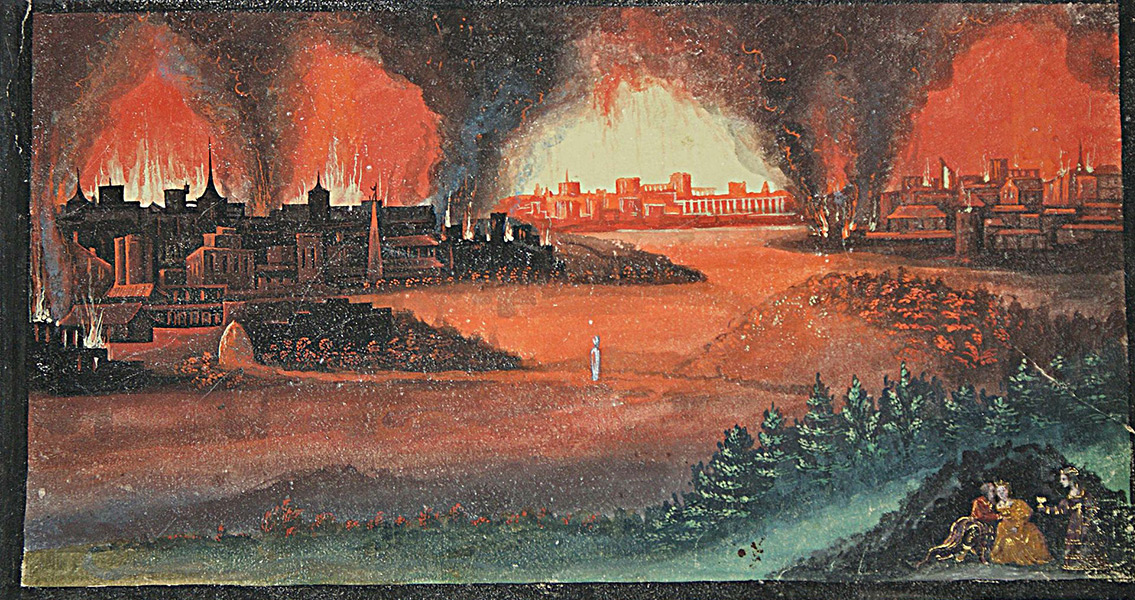
Sodom Possibly Found

Categories
Breaking News

Natural Disasters May Have Inspired Exodus

A Numerical Modelling Study on the Potential Role of Tsunamis in the Biblical Exodus” ]]>

Categories
Breaking News

Tomb of the Maccabees Found, Maybe

Categories
News

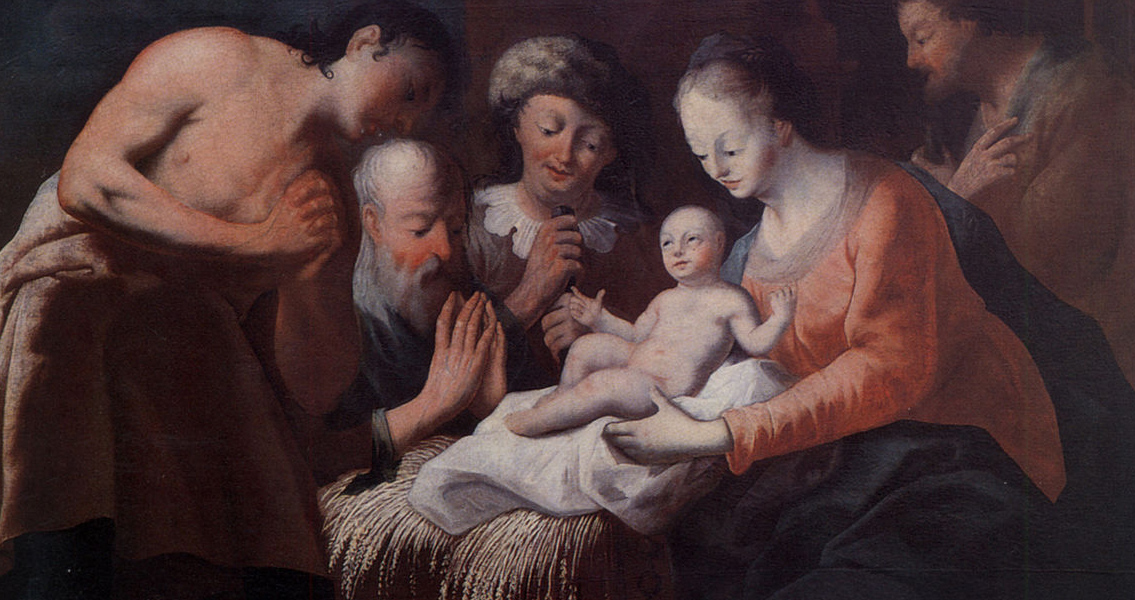
Why the 25th December?

Categories
Breaking News

Archaeologists Face Peril Near ISIS-Controlled Area

Categories
Breaking News

Contentious Book Claims Jesus Married