Categories
Breaking News

520 Million Year Old Brains Preserved in Fool’s Gold

Fuxianhuia protensa – small, shrimp-like arthropods that thrived during the Cambrian Period – have been uncovered and positively identified. Many of these fossilized brains have been found with an overlay of pyrite, a mineral that is commonly referred to as “fool’s gold” because of its passing resemblance to the precious metal. The Cambrian Period is known as a turning point in the evolutionary development of life on Earth. Prior to the Cambrian, most of the planet’s forms of life were decidedly simple. However, an evolutionary event referred to today as the Cambrian explosion saw the complexity of planetary fauna blossom overnight in a geological sense, leaving massive marks on the fossil record. F. protensa is one of the many creatures that flourished in the wake of the Cambrian explosion, with these small sea-bottom dwelling creatures a common fossil find from the era. However, Strausfeld and his research team say that their excavation efforts have uncovered not one F. protensa fossil with an intact brain but a total of seven – the first such find of its kind since the discovery of just one such specimen in 2012. In a paper written by Strausfeld, it is revealed that the little arthropod had a very complex brain structure for creatures in the Cambrian. With a three-sectioned brain consisting of regions referred to as the protocerebrum, deutocerebrum and tritocerebrum, F. protensa had a brain that turns out to be strikingly similar to its modern relatives, which include insects, crustaceans, and other arthropods. Additionally, the research team discovered how such soft tissues, usually completely obliterated during the fossilization process, could have survived for hundreds of millions of years. In the paper, the researchers say that the fossilized brains appear as dark shadows overlaid in a high-carbon film over other fossilized tissue, which tends to be lighter in color and to carry a heavy iron content. In many of these instances, the carbon brain film is also sketched with fool’s gold as well. The key to preserving these brains in this way is likely to rely on very rapid burial of the specimens in question. Strausfeld and his team suggested an underwater mudslide as one path to this. Sediments within the mudslide would have prevented oxygen from eating away at the remains while also “dewatering” the brains of these arthropods by forcing out the moisture held within them. This would have caused the so-called “brain films” to appear on the fossil. For more information: www.cell.com]]>

Categories
Breaking News

Sponge Discovery Questions Cambrian Explosion

Eocyathispongia qiania. The information provided through these methods was sufficient for the team to determine that the fossil had a number of characteristics in common with sponges from the Cambrian, characteristics that were until now thought to have only emerged during the explosion period. Bottjer told Phys.org that the sponge had already developed “fundamental sponge traits” 60 million years before the beginning of the Cambrian explosion, which meant that the majority of “developmental genes” for sponges were already present at the time. The obvious implication is that evolution was more gradual than believed, causing a rethink of the dating of early animal evolution. What’s perhaps even more fascinating is that the genes in the sponge fossil are present to this day in a variety of animals up to and including us humans. Bottjer added that in the future, the relatively new discipline of palaeogenomics will come to play an increasingly prominent role in research thanks to modern technology. Palaeogenomics focuses on the evolution of genes, determining when this or that gene first appeared in an organism. Until now, the fossil record came from bigger animals, but with SEM and synchrotron microscopy, it is likely that a host of previously unknown stages in evolution will be revealed. For more information: “Sponge grade body fossil with cellular resolution dating 60 Myr before the Cambrian” ]]>

Categories
Breaking News

New Ancient Worm Species Discovered in China

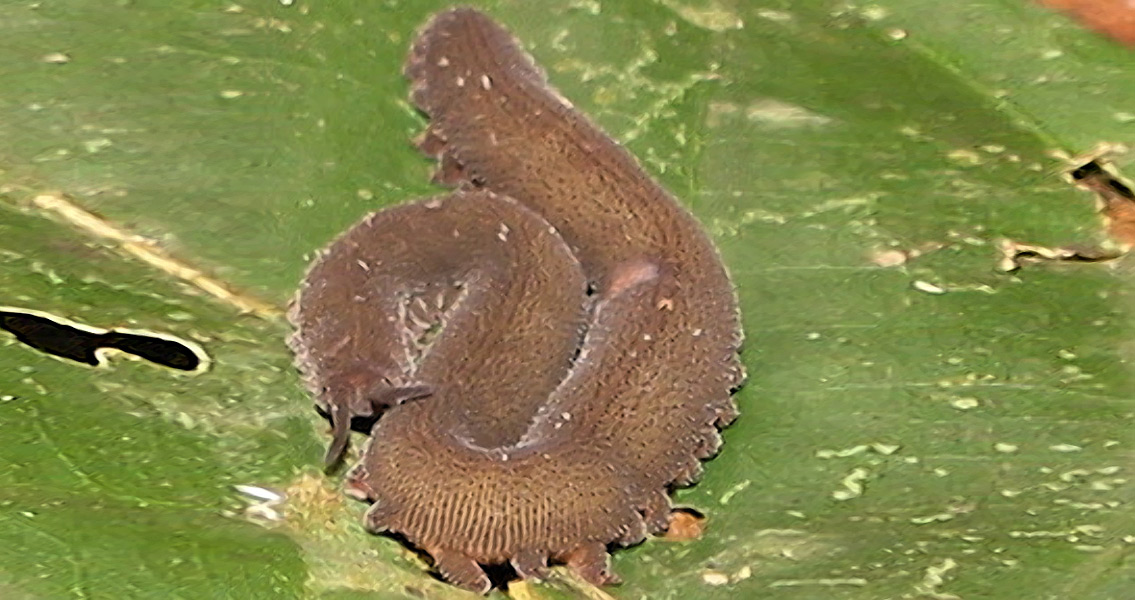
Collinsium ciliosum, the armored worm has been nicknamed “Hairy Collins’ Monster” after Desmond Collins, the Canadian paleontologist that initially illustrated the worm during the 1980s. The closest living relative to C. ciliosum today would be the velvet worm, a strange centipede-like worm with segmented legs; large, almost snail-like antennae; and a distinct lack of armor. There are around 180 species of velvet worm in existence, with most of them living in the Southern hemisphere and exhibiting little in the way of differentiation besides size and coloration. However, according to Cambridge University’s Dr. Javier Ortega-Hernández, the lead author of the study on C. ciliosum, the evolutionary great-great grandfather of the velvet worm exhibited a startling amount of diversification, coming “in a surprising variety of bizarre shapes and sizes” according to a university press release. The sheer volume of divergent forms the armored worms took so far in the past is typical of the geological era in which they lived. Called the Cambrian explosion, the time period was characterized by intense evolutionary development. Other creatures from the period, such as lamp shells and sea lilies, have also demonstrated a high level of evolutionary activity during the Cambrian explosion, but this is the first time that it’s been evidenced in a relatively soft and squishy group of creatures such as that which C. ciliosum belongs to – even if its hard, aggressive-looking carapace seems to belie that description. It is likely that the otherwise soft and tender body of the worm made it a prime target for larger predators. The creature’s limited mobility and its status as a sedentary filter-feeder meant that it could have easily faced extinction through predation if it had not adapted the hard shell that it came to be encased in, complete with as many as 72 sharp, fierce, spiky horns of varying shapes and sizes. Ortega-Hernández referred to C. ciliosum as “Hallucigenia on steroids”, referencing a recent but unrelated fossil find in Canada of a similar worm-like creature that also existed in the Cambrian. The two worms are in fact members of the same evolutionary family and bear a passing resemblance to one another, though Hallucigenia lacked the impressive armored suit that its cousin C. ciliosum evolved to keep itself safe from harm. For more information: www.pnas.org Image courtesy of Wikimedia Commons user: Thomas Stromberg]]>

Categories
Breaking News

Multi-cellular Life Evolved 60 Million Years Earlier, Says New Study