Categories
Breaking News

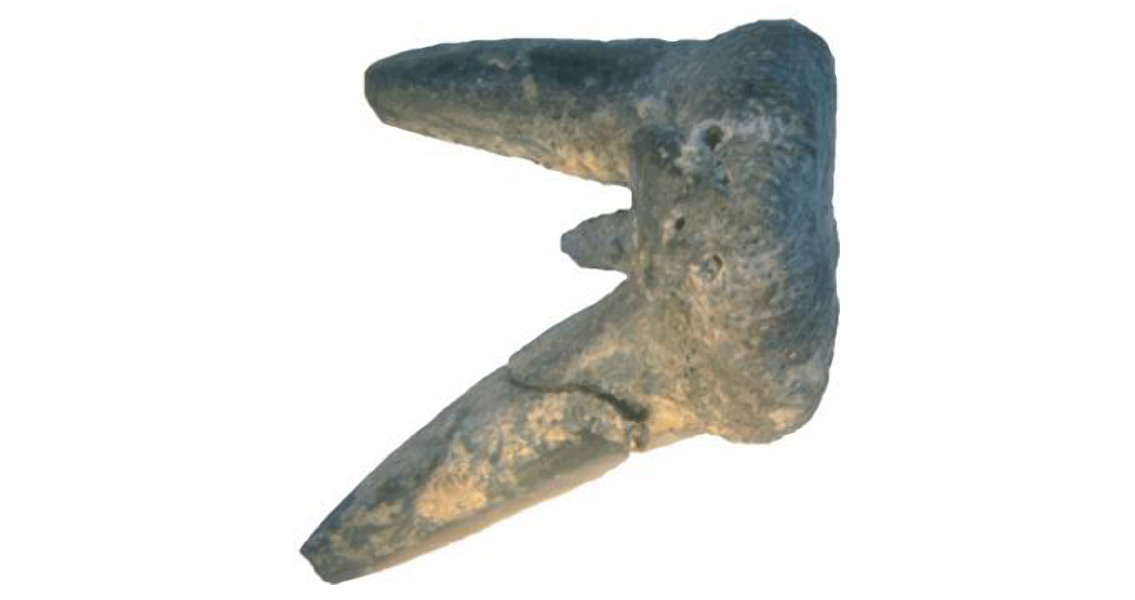
Ovatiovermis cribratus – A New “Stand-Up” Species

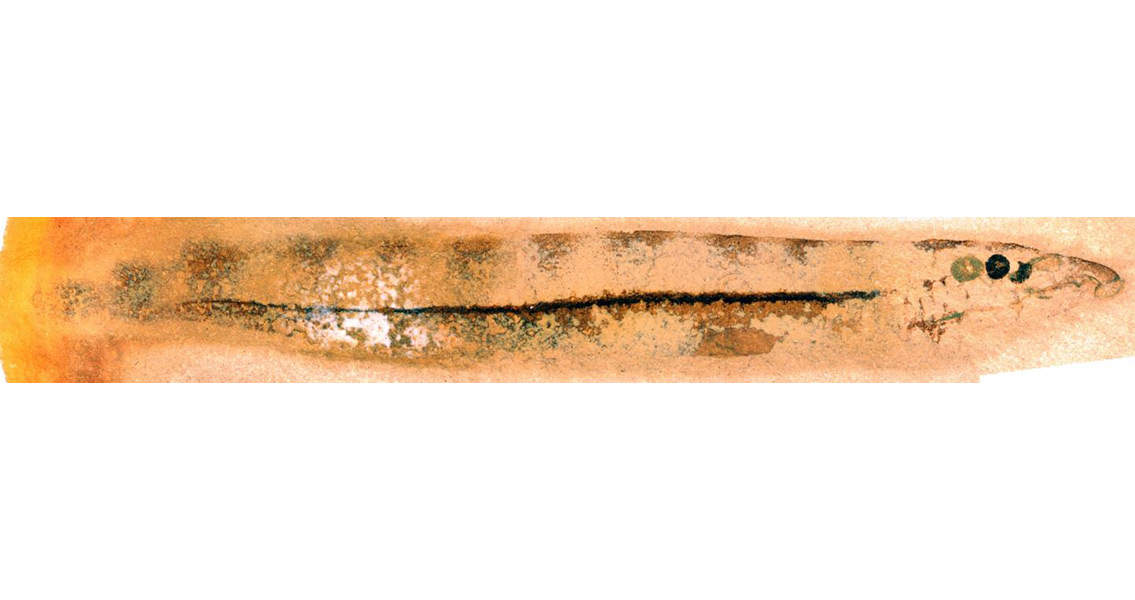
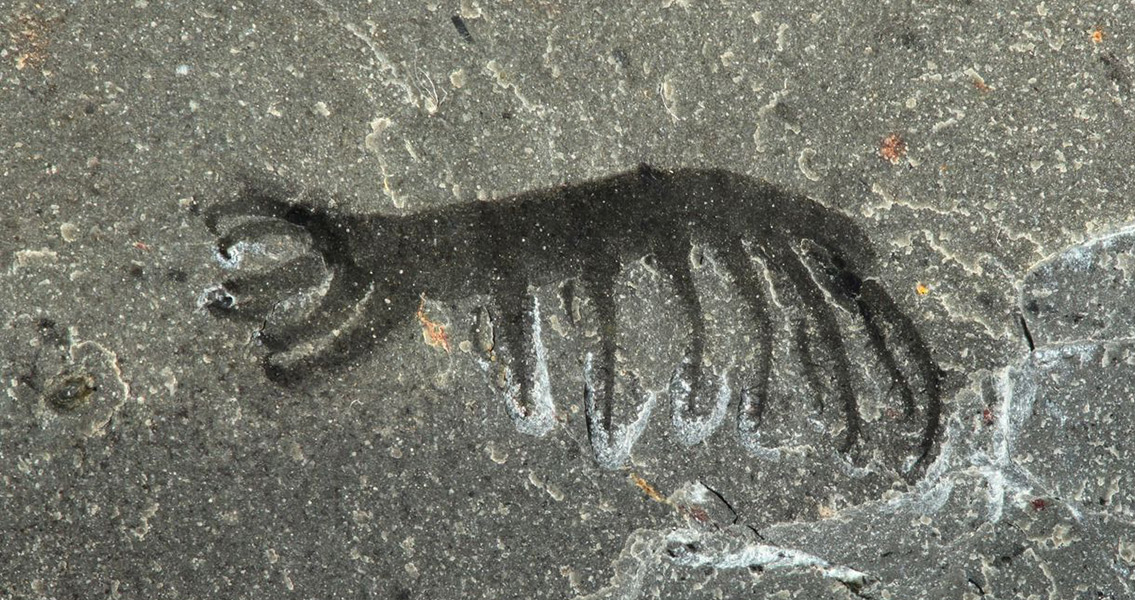
Ovatiovermis cribratus, a 500-million-year-old worm no bigger than a thumb and with leg-like appendages, has recently been identified as a new species. The fossil specimen resembles a flattened shrimp, but the tiny creature, a distant relative of arthropods and tardigrades, hung around in North America’s shallow seas eons before shrimp existed. Evolutionary biologists based their approximation of the worm-like creature on two fossils, the first discovered decades ago and a second which was found by a tourist in 2011 visiting the Burgess Shale. The Burgess Shale Formation, where both specimens were found, is a UNESCO World Heritage site known for its extraordinary deposit of marine fossils. The Formation, a former seafloor, is found in the Canadian Rockies of British Columbia and boasts more than just exoskeletons and bones. It’s also known for the exceptional preservation of the soft tissues of the fossils there. At 508 million years old, Burgess is one of the earliest fossil beds known to contain soft-part imprints. The rock formation is black shale and is visible at several locations near the city of Field, B.C., in Yoho National Park and Kicking Horse Pass – a high mountain pass on the border of Alberta and British Columbia. Another outcrop is located 42 km south, in Kootenay National Park. The Burgess Shale was discovered in 1909 by Charles Walcott, a paleontologist. He returned with his family in 1910 and established a quarry at Fossil Ridge. The importance of soft-bodied preservation, and the wide range of organisms Walcott recognized as being new to science, caused him to return to the site numerous times until 1924. By 1924, at age 74, Walcott had collected more than 65,000 specimens. The name, Ovatiovermis cribratus, stems from how researchers believe the creature fed. Ovatiovermis because it’s thought the creature stood up on the seafloor, in an ongoing standing ovation of sorts, and cribratus in reference to the way it may have sieved passing water in order to collect food. Lobopodians (meaning “blunt feet” in Greek) are worm-like organisms with stubby legs. “Lobopodians have mostly been seen so far as an eclectic group. We think that suspension feeding was common among them and turned out to be important in the initial ‘burst’ of that colossal group that gave rise to water bears, velvet worms and arthropods,” Cédric Aria, a co-author of the recently published study, said in a statement. Other animals, the skeleton shrimp for example, have comparable eating patterns. The Burgess Shale Formation and its fossil-carrying deposits correlate to the Stephen formation, a collection of dark mudstones approximately 508 million years old. The beds holding the fossils were deposited at the bottom of a cliff that was around 160 meters tall, deep enough to be below the agitation caused by waves during a storm. Originally it was believed the Burgess Shale was set down in anoxic conditions, ongoing research, however, suggests oxygen was present on a continual basis. Ovatiovermis cribratus was identified in an article recently published in BMC Evolutionary Biology. Photo courtesy of Jean-Bernard Caron—Royal Ontario Museum ]]>
Categories
Breaking News

Terrifying 300 Million-Year-Old Sharks Were Filial Cannibals

Paleontology. Image courtesy of Aodhán Ó Gogáin (Trinity College Dublin)]]>

Categories
Breaking News

New Research on Evolution of the Eyes of Vertebrates

The Proceedings of the Royal Society B, can be found online here Image courtesy of Rober Sansom]]>

Categories
Breaking News

Fossils of 50 Million Year Old Ostrich Relative Discovered

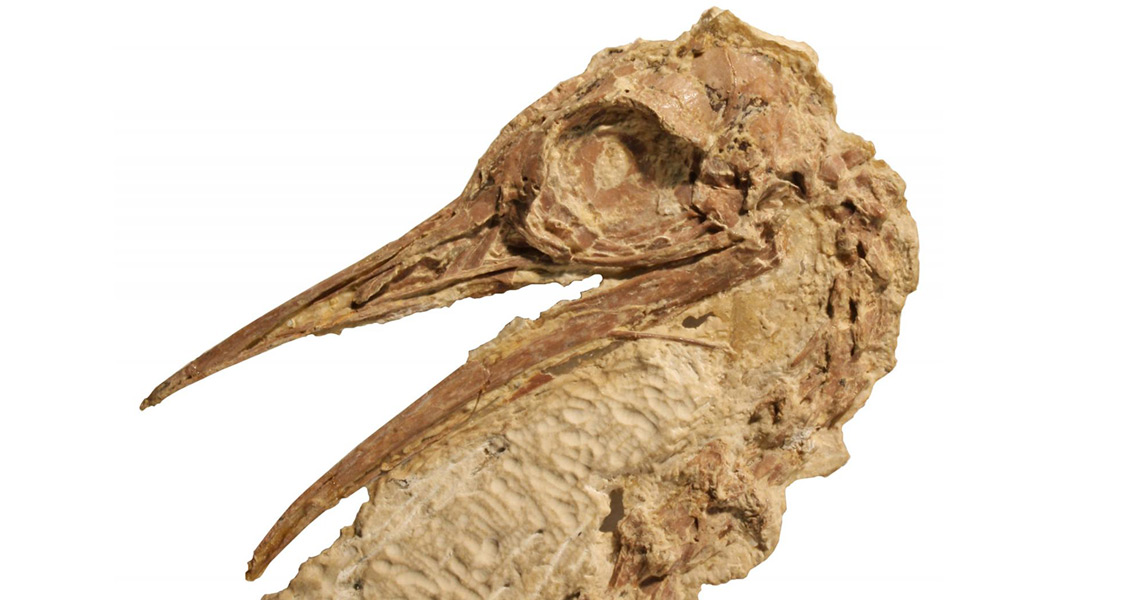
Bulletin of the American Museum of National History. Named Calciavis grandei, the newly discovered species is believed to have been roughly the size of a chicken. The creature was probably a predominantly ground dwelling bird, again, much like a chicken according to the authors, only engaging in short bursts of flight to evade predators. The species was partially named after renowned archaeologist Lance Grande, who had studied fossil fish in the same lake the new species was discovered in. The first part of the name is comprised of calci, meaning hard or stone, and avis, the Latin for bird. Fossil diggers unearthed two Calciavis fossils in the Green River Formation in Wyoming, a site usually considered a hotbed for fossilised fish. The Calciavis fossils date back to the Eocene Epoch, between roughly 56 million and 30 million years ago. Nesbitt, and his co-author Professor Julia Clarke, believe the fossils fit into the extinct group of early Palaeognathae birds, the Lithornithidae. They explain that the extinct bird is a close relative of ostriches, kiwis and tinamous now living in the southern hemisphere. Calciavis likely went extinct following the disappearance of tropical forests in North America. The creature’s discovery offers fresh insight into the chronology and distribution of tropical birds on the continent. “The new bird shows us that the bird group that includes the largest flightless birds of today had a much wider distribution and longer evolutionary history in North America,” Nesbitt said. “Back when Calciavis was alive, it lived in a tropical environment that was rich with tropical life and this is in stark contrast to the high-desert environment in Wyoming today.” The discovery of such a spectacularly well preserved example of a new species has the potential to greatly aid the interpretation of both bird fossils discovered decades ago, and those found in the future. “This spectacular specimen could be a ‘keystone’ that helps interpret much of the sparse fossils of birds that once lived in North America millions of years ago,” said Nesbitt. For more information: American Museum of Natural History ]]>

Categories
Breaking News

800,000 Year Old Homo Erectus Footprints Found in Eritrea

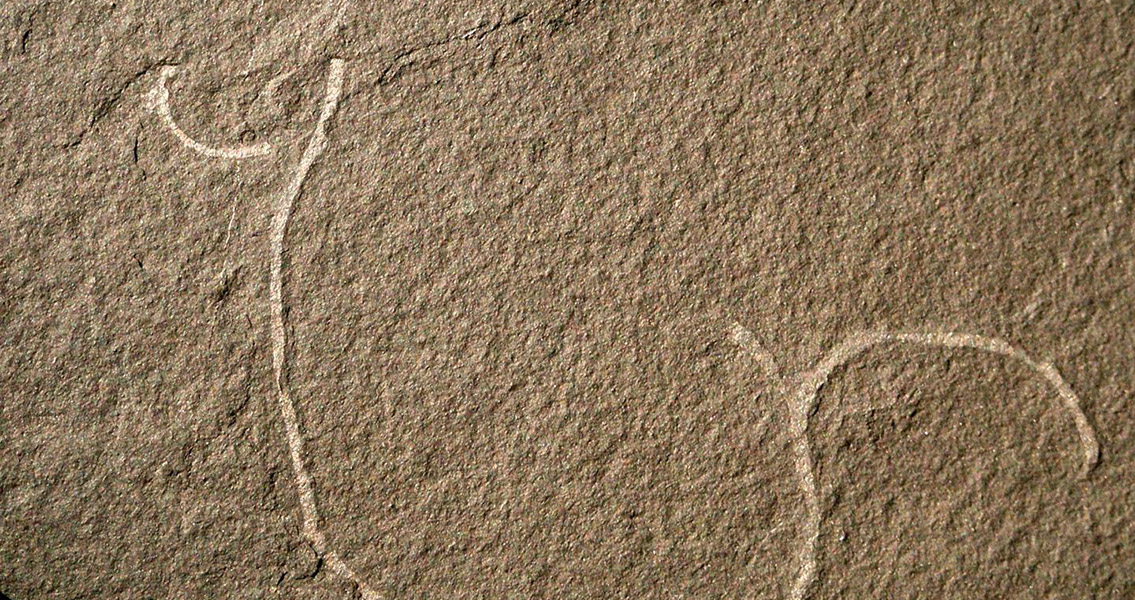
Homo erectus, in the desert of the East African country of Eritrea. It’s believed the prints date back approximately 800,000 years, and although their age has yet to be verified, it’s anticipated they will provide a wealth of information about the movements and gait of this extinct species of hominid. Alfredo Coppa, an archaeologist with Sapienza University in Rome, along with his Italian research team and researchers with Eritrea’s National Museum discovered the 26 square meter stone slab that contained the footprints. Today, the region where they were found is in the middle of a desert, but 800,000 years ago the environment was very different. The fossilized footprints, which are practically indistinguishable from our own, were left in the sandy sediments on the shore of a lake, which archaeologists believe was part of the landscape at the time. The shapes of the footprints indicate they filled with water directly after they were formed and before they dried out and were eventually buried. The footprints suggest movement from the north to the south, and amazingly, there were also tracks from an animal similar to a gazelle around them, suggesting perhaps our early ancestors were on a hunting expedition. “Fossilized footprints are extremely rare,” Coppa explained to the Italian publication, The Local, “We need to carry out more digs in the area, which has so far turned up the fossilized remains of five or six different Homo erectus specimens.” Homo erectus (which means “upright man”) lived through most of the Pleistocene epoch which lasted from about 2,588,000 years ago up to 11,700 years ago. The earliest Homo erectus fossils date back 1.9 million years, and there are two schools of thought on how and where they evolved. The first theory has Homo erectus evolving from the Australopithecina, in East Africa, and migrating (around 2 million years ago) as a result of the desertifying conditions which were developing in northern and eastern Africa at the time. H.erectus joined other migrations travelling through the “Saharan Pump” and spread throughout much of Eurasia, getting as far as India, Georgia, Sri Lanka, Indonesia, and China. The second theory is that H.erectus evolved in Eurasia and then migrated to Africa, based largely on evidence which has been discovered at the Dmanisi site in Georgia which shows they inhabited the area around the same time or even slightly before the earliest evidence of H.erectus in Africa. What has been decided is that we, Homo sapiens, evolved from African Homo erectus approximately 200,000 years ago. Even if the footprints are found to be the oldest left by Homo erectus, they aren’t even close to being the oldest prints left by a hominid species; a team of researchers in Tanzania discovered the tracks of our first upright ancestor, Australopithecus, which were 3.8 million years old. ]]>

Categories
Breaking News

Past Biodiversity Patterns Different to Today's

Proceedings of the National Academy of Sciences. ]]>

Categories
Breaking News

Fossils of Two New Marine Plant Species Discovered

Scientific Reports Image courtesy of Stephen Dornbos]]>

Categories
Breaking News

New Information Added to Timeline of Human Evolution

Categories
Breaking News

Infant Fossils Shed Light on Native American Lineages

Categories
Breaking News

New Horned Dinosaur Usurps Triceratops Throne

regaliceratops peterhewsi, the new species is is indeed related to the triceratops but represents an evolutionary convergence between the more well-known dinosaur species and older, less-developed species that preceded it; the most noteworthy physical manifestation of this legacy is the crown-like frill regaliceratops sports on the back of its skull. The fossil was originally discovered in 2005 by Peter Hews, a geologist from Calgary, when he was surveying a cliff in southwestern Alberta that ran alongside the Oldman River. Hews contacted the Royal Tyrell Museum – the same museum New Historian reported being shipped another paleontological find of five fossilized fish discovered in a Calgary basement last week – and researchers excavated the fossil. After years of study and analysis, the new species, which was named in honor of Hews to commemorate his discovery, is now on display at the museum. The process for extricating the fossilized skull was a painstaking one, thanks to the presence of bull trout in the river below. As a protected species in Canada, the fish had to be provided specific protections by the excavation team, including preventing any dirt or debris from the excavation from falling in the river. Taken together with the extremely hard rock within which the fossilized bones were encased, the museum teams found the entire experience “hellish,” according to paleontologist Caleb Brown in an interview with CTV News. The extreme difficulty of the dig, combined with the unique nature of the small, almost stunted-looking horns located over the eye sockets that carry a close resemblance to a certain otherworldly science-fiction and comic book character, led to the dinosaur being nicknamed “Hellboy” by the excavation team. Brown says that the region where ‘Hellboy’ was found doesn’t have a reputation for being particularly rich when it comes to fossilized remains. Regions located farther east from the mountainous terrain are much more likely to yield fossils, but the museum paleontologist remarked that with the new regaliceratops find, research efforts will be expanded within the area, even with the possible difficulties that may be faced by research teams attempting to remove subsequent fossils. After careful examination of Hellboy’s skull, museum researchers say that the regaliceratops was likely to have weighed around 1.5 tons in life. Its massive frill was topped with jagged, tooth-like protrusions that resembled a spiked crown. The skull, once exhumed painstakingly from the cliff above the river, turned out to be nearly intact – only the beak and lower jaw were missing. Brown said that with less than one percent of dinosaur remains actually surviving the fossilization process, there could have been millions of regaliceratops roaming the world 70 million years in the past. Image courtesy of Wikimedia Commons user: Royal Tyrell Museum Drumheller, Alberta]]>