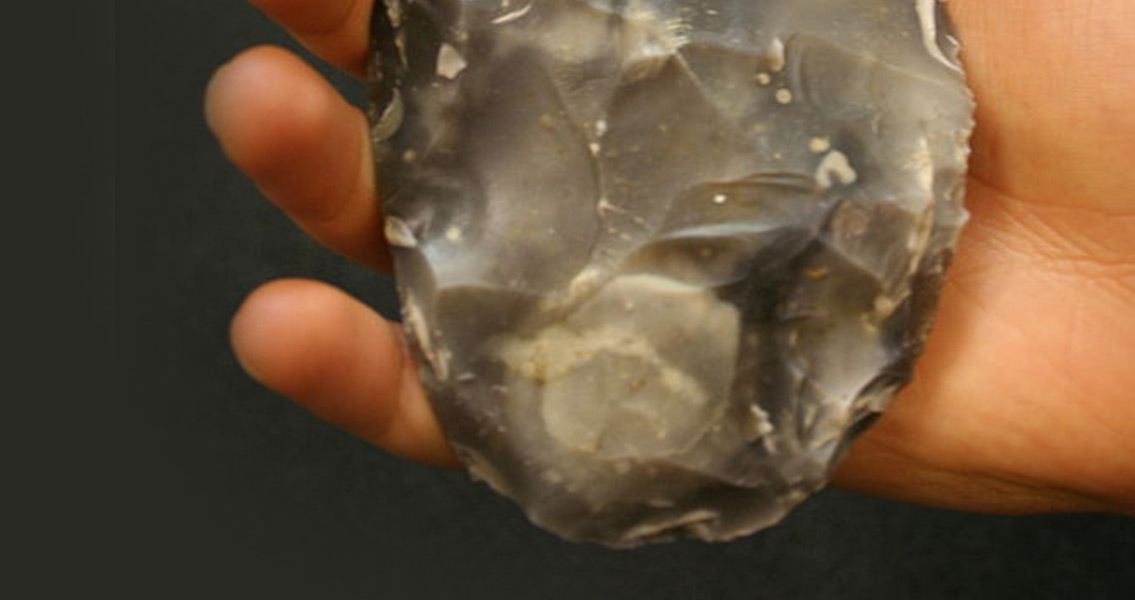
Scientific Reports, suggests an extraterrestrial cause. The University of Carolina archaeologists found that platinum was most abundant in soil layers which coincided with the ‘Younger Dryas’, a period of extreme climatic cooling which started around 12,800 years ago and lasted around 1,400 years. The return to ice age conditions during the Younger-Dryas is well documented, but its causes have remained shrouded in mystery. The platinum discovery could change all that. “Platinum is very rare in the Earth’s crust, but it is common in asteroids and comets,” explained lead author of the study Christopher Moore in a University of Carolina press release. He stressed that the platinum found at archaeological sites in California, Arizona, New Mexico, Ohio, Virginia, North Carolina and South Carolina was most definitely an anomaly. “The presence of elevated platinum in archaeological sites is a confirmation of data previously reported for the Younger-Dryas onset several years ago in a Greenland ice-core. The authors for that study concluded that the most likely source of such platinum enrichment was from the impact of an extraterrestrial object,” Moore said. “Our data show that this anomaly is present in sediments from U.S. archaeological sites that date to the start of the Younger-Dryas event. It is continental in scale – possibly global – and it’s consistent with the hypothesis that an extraterrestrial impact took place.” In the study, the authors point out that the platinum anomaly is similar to the discovery of iridium in rock layers dated to 65 million years ago, a time that coincided with the cosmic collision which wiped out the dinosaurs. Like platinum, iridium is another element typically associated with cosmic objects. “In both cases, the anomalies represent the atmospheric fallout of rare elements resulting from an extraterrestrial impact,” Moore says. While the dinosaur extinction was the result of a large meteor impact, the Younger-Dryas onset was the likely the consequence of being hit by the fragments of a smaller comet or asteroid. The question now, of course, is where did this impact take place? Until an impact crater is found, the Younger-Dryas impact hypothesis is likely to be met with a certain level of skepticism. “… the Younger-Dryas impact event is not yet associated with any known impact crater,” Moore says. “This may be because the fragments of the large object struck the glacial ice-sheet or exploded in the atmosphere. Several candidate craters are under investigation but have not been confirmed.” Image courtesy of South Carolina Institute for Archaeology and Anthropology, University of South Carolina ]]>