Categories
Breaking News

Giant Polar Bear Skull Could Belong to 'King' Bear

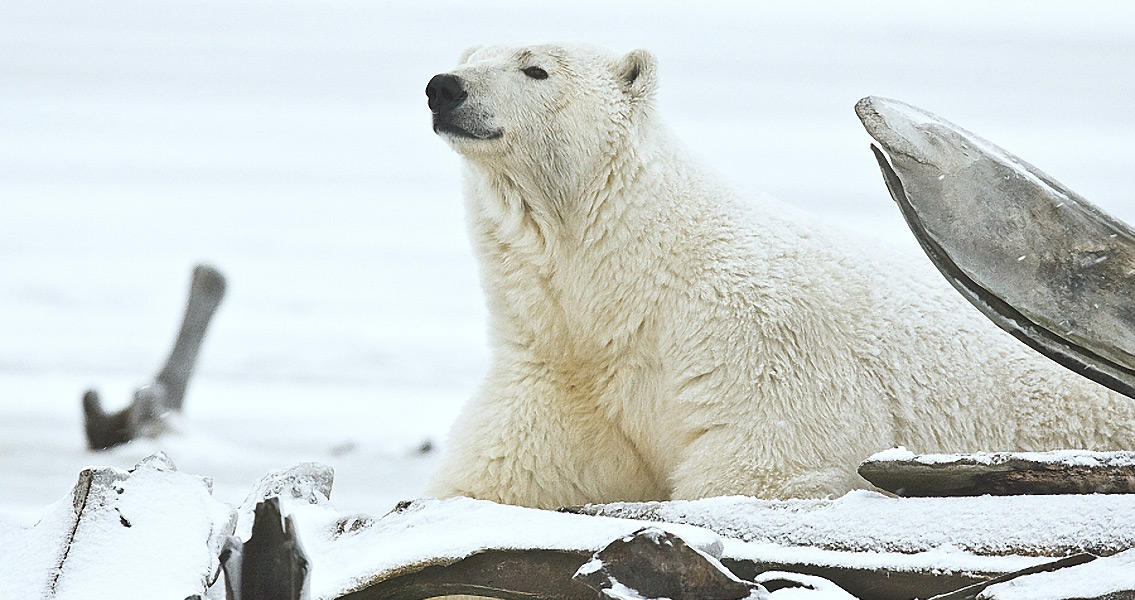
Western Digs article, adding, “The back of the skull is longer and comparatively narrow, for example, with features that are noticeably different from those of modern polar bears. The front part of the skull, from roughly the eyes forward, is like that of typical polar bears,” Jensen said. Research biologist Dr. Raphaela Stimmelmayr compared The Old One to over 300 polar bear skulls kept at the University of Alaska Museum of the North and discovered several others that had similar features, making it unlikely that The Old One was entirely unique. “It’s possible it’s a subspecies,” Jensen says in the article, “or perhaps it’s more like [with] domestic dogs, where a borzoi and pug are considered members of the same species, [and] not [a] subspecies, even though their skulls are far more different than this is from a standard polar bear skull.” Ethnographers have documented stories of oversized polar bears from a number of Inuit groups. For example, the Inuvialuit people of Canada’s Northwest Territories have tales about a giant “weasel bear”, and the indigenous peoples on St. Lawrence Island and other locations have shared accounts of what they refer to as a “king bear.” Ethnographic accounts from the Utqiagvik area, however, don’t include any mention of a giant bear, either because these bears weren’t present when the ethnographic accounts were collected or because researchers didn’t ask the right questions. The archeological site Walapka, an ancient settlement, was occupied off and on over a 4,000-year period. Jensen, along with her colleagues, intend to further research the skull, including the cross-sectioning of several teeth as well as DNA analysis. The team’s findings were reported in Anchorage, Alaska, during the Alaska Marine Science Symposium. Images of the skull can be found here]]>
Categories
Breaking News

Migration To Americas Came in Waves, According to Big Data

Categories
Breaking News

Scientists Get Amazingly Accurate Date for Mammoth Extinction

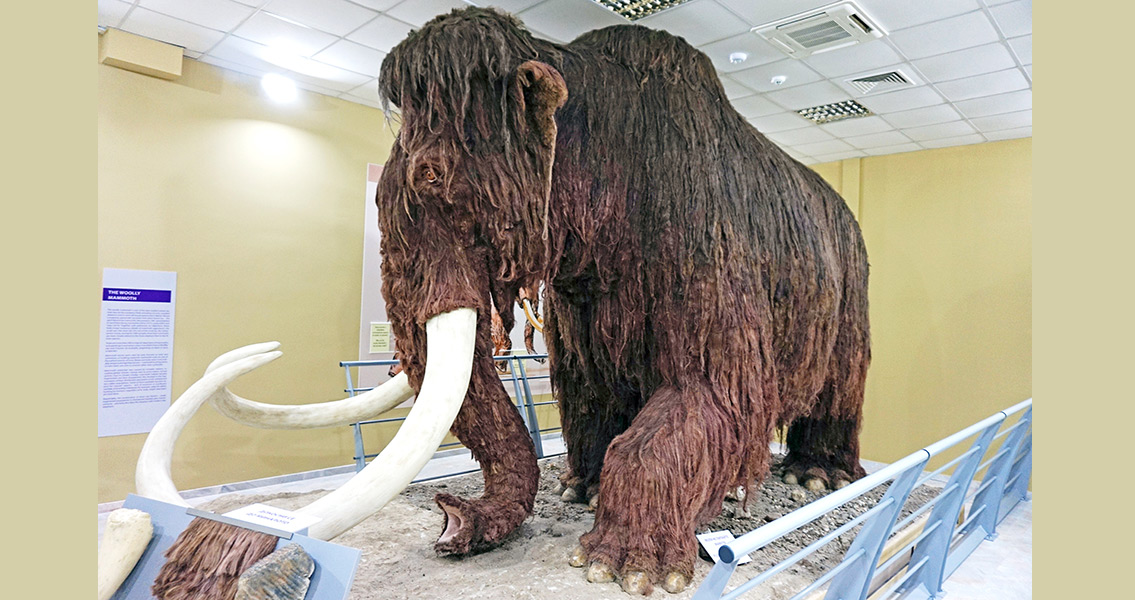
Proceedings of the National Academy of Sciences. Exactly what caused the extinction of woolly mammoths and other prehistoric megafauna is a major point of contention among scientists. Theories tend to focus on climate change, the actions of humans (for example hunting), or a combination of both. The researchers used environmental proxies to study how the habitat on St. Paul Island was changing at the time of the mammoths’ extinction. They found that the fate of mammoths on the island was different to those on the world’s continents, where mammoths went extinct around 12,000 years ago. Formed between 14,700 and 13,500 years ago, the island sank rapidly until 9,000 years ago, and continued to sink slowly until 6,000 years ago (at present it is just 42 square miles in area). As the island shrank the mammoths were concentrated into an ever decreasing area, and the available water started to run out. Pollen from the lake cores show that the area around the lake was denuded of vegetation by the mammoths. Much like modern elephants, the mammoths likely started to dig holes in search of water, increasing erosion and filling the lake with soil, in turn leaving even less water for drinking. Once the mammoths had gone extinct however, vegetation returned to the area and the erosion came to an end. Put simply, the mammoths had contributed to their own demise. Interestingly, the authors point out that this raises a fresh take on what can push a population to extinction. “(the research) highlights freshwater limitation as an overlooked extinction driver and underscores the vulnerability of small island populations to environmental change, even in the absence of human influence”. Image courtesy of Wikimedia Commons user: Tiia Monto]]>

Categories
Breaking News

Asian Metals Arrived in Alaska Long Before European Contact

Journal of Archaeological Science, the new findings have the potential to drastically rewrite the history of North America and trade between continents. The artifacts in question, examples of smelted alloys, were found on Alaska’s northwestern coast, at Cape Espenberg. The site, on the Seaward Peninsula, was inhabited by the Thule people, an Arctic culture which originated on the Alaskan coast in around 900 CE and spread as far as Greenland. A society whose existence was built around hunting, Thule houses were built from whale bones, skin and sod. Previous archaeological finds and oral histories have long given clues that objects from Eurasia reached prehistoric North America, but concrete proof had not been found until now. H. Kory Cooper, an associate professor of anthropology at Purdue University, led the metallurgical analysis of the artifacts. “We believe these smelted alloys were made somewhere in Eurasia and traded to Siberia and then traded across the Bering Strait to ancestral Inuits people, also known as Thule culture, in Alaska. Locally available metal in parts of the Arctic, such as native metal, copper and meteoritic and telluric iron were used by ancient Inuit people for tools and to sometimes indicate status”, he explained in a press release from the university. “Two of the Cape Espenberg items that were found – a bead and a buckle — are heavily leaded bronze artifacts. Both are from a house at the site dating to the Late Prehistoric Period, around 1100-1300 AD, which is before sustained European contact in the late 18th century.” Fieldwork for the study was led by Owen K. Mason and John F. Hoffecker, both from the Institute of Arctic and Alpine Research at the University of Colorado, Boulder. Between 2009 and 2011 they excavated a host of artifacts, including six objects made from metal. Both the belt buckle and the bead were made from leaded bronze – an alloy of copper, tin and lead. They were a lucky find, with metal artifacts rarely found at dig sites due to poor preservation. The fragmented leather belt strap was dated to between 500 and 800 years old, although the metal component could be significantly older. “The belt buckle also is considered an industrial product and is an unprecedented find for this time,” Cooper said. “It resembles a buckle used as part of a horse harness that would have been used in north-central China during the first six centuries before the Common Era.” Cooper and colleagues’ study adds to the growing body of knowledge about prehistoric North America, and the remarkably diverse and complicated cultures that lived and thrived there long before Europeans arrived and changed the continent forever. “This will cause other people to think about the Arctic differently. Some have presented the Arctic and Subarctic regions as backwater areas with no technological innovation because there was a very small population at the time.” Cooper said. “That doesn’t mean interesting things weren’t happening, and this shows that locals were not only using locally available metals but were also obtaining metals from elsewhere.” ]]>

Categories
News

Did a Curse Sink the Neva or the Weather?

Categories
Breaking News

Shipwrecks from the Whaling Disaster of 1871 Found

Categories
Breaking News

New Polar Dinosaur Species Discovered

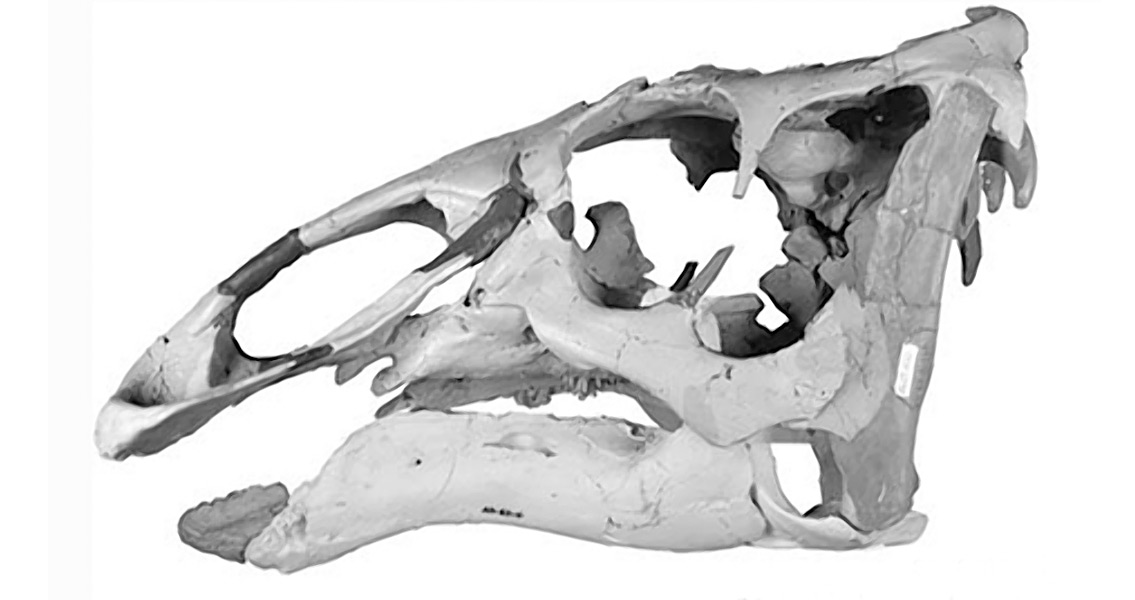
Ugrunaaluk kuukpikensis, a hadrosaur, or duck-billed dinosaur, probably lived around 69 million years ago and spent four months every year in darkness, surviving on tree bark, ferns, and whatever other vegetation was left when the sun went down for the winter. The hadrosaur fossils were discovered in the Liscomb Bone Bed, a geological layer rich in ancient fossils along Colville River, in the Prince Creek formation, the University of Alaska Fairbanks said in a press release. Pat Druckenmiller, one of the authors of the new study and the earth science curator at the University of Alaska Museum of the North, said the animal stood between six and seven feet tall and was up to 30 feet long. The creature’s hind legs were much longer that its front legs but it could walk on all fours, the authors also report. Another one of the authors, biologist Gregory M. Erickson from Florida State University, told the New York Times that the “ancient grazer” had crests along its back, like Godzilla, and a mouth full of as many as 1,000 sharp teeth. Although Ugrunaaluk kuukpikensis had to survive snowfalls and a long period of darkness, the authors note that temperatures above the Arctic Circle during the Cretaceous were warmer than they are now, with the average standing around 4 degrees Celsius above zero. Still, if that was the average, then there were certainly prolonged periods when temperatures dipped below zero, which suggests the hadrosaur was a uniquely hardy creature. Druckenmiller told the New York Times that the species is completely new to science, distinctly different from other dinosaur species discovered earlier at lower latitudes in Alaska, a “truly polar” dinosaur. The authors of this new paper, which was published in the journal Acta Palaeontologica Polonica, had earlier published work suggesting that there were animals living in northern Alaska 69 million years ago, when there were forests in the area because of the more temperate climate, the press release notes. Erickson says that the discovery of the Ugrunaaluk kuukpikensis fossils “challenges everything we thought about a dinosaur’s physiology.” he added that the discovery prompts the question of how the duck-billed herbivores survived the harsh Arctic winter. Since 1961, when palaeontologist Robert Liscombe, after whom the area is named, discovered the first dinosaur fossils in the Northern Slope of Alaska, a total of 6,000 dinosaur bones have been unearthed there. Most of them belong to young, smaller, animals, probably a herd that was suddenly killed, Druckenmiller says in the press release. As for species, three distinct ones have been named and catalogued, all of them unique to northern Alaska. This latest one, “the ancient grazer” as its name translates from the language of the local indigenous community, is by far the most complete ever discovered in a polar region, Druckenmiller says. For more information: “A new Arctic hadrosaurid from the Prince Creek Formation (lower Maastrichtian) of lower Alaska” Image courtesy of Wikimedia Commons user: Hirotsugu Mori, Patrick S. Druckenmiller, and Gregory M. Erickson]]>

Categories
Breaking News

Ice Age Humans Hunted Salmon for Food

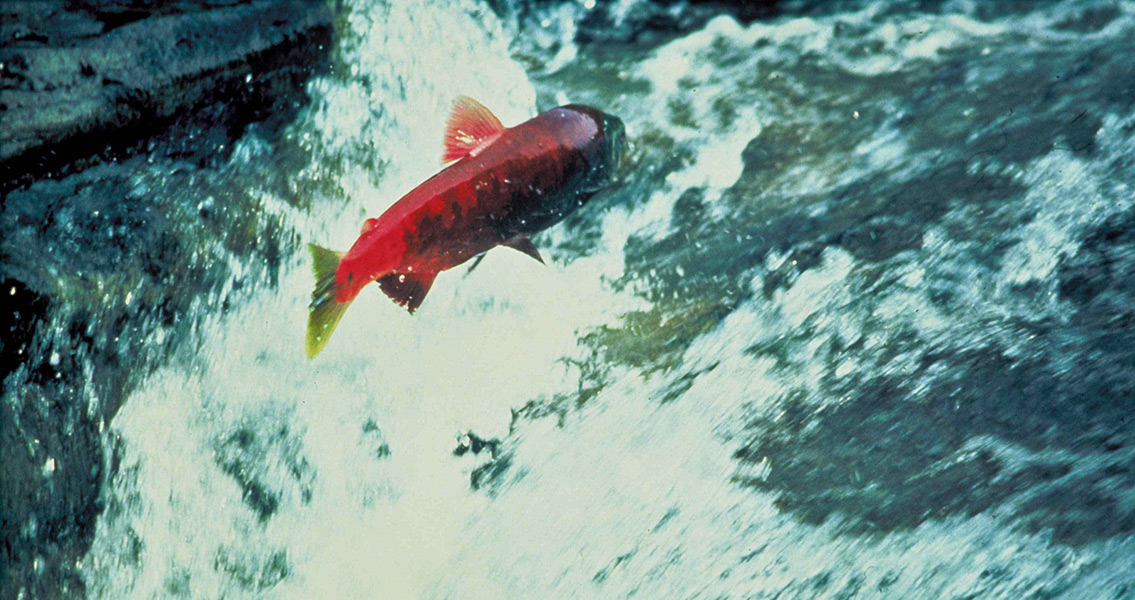
www.pnas.org ]]>

Categories
Breaking News

Alaskan Researchers Discover Marine Fossil

plesiosaur family known as an elasmosaur. According to the museum’s press release, Curvin Metzler, a fossil collector based out of Anchorage, made the find. The elasmosaur featured extremely long necks and long, paddle-like limbs that would have enabled them to swim freely underwater, according to the museum’s marine fossil expert and earth science curator Patrick Druckenmiller, who was quoted in the museum announcement as comparing the ancient dinosaur and the mythical Loch Ness monster that is rumored to live in the Scottish lake. Elasmosaurs roamed the waters of Alaska around 70 million years ago, but are not actually classified as dinosaurs because they never set foot on land. Theresa Bakker, a spokeswoman for the museum, said that there were highly specific criteria that needed to be satisfied before a creature could be considered a dinosaur, despite the fact that elasmosaurs lived during the Late Cretaceous when terrestrial giant reptiles were at the top of the food chain. The new find represents a historic moment in Alaskan paleontology, as it is the first time fossilized remains of an elsamosaur have been discovered within the state. Metzler discovered several of the creature’s fossilized vertebrae protruding from a bluff as the stone around it eroded, and he joined forces with Druckenmiller and an additional pair of experts to excavate the site in June this year. It was at that point that the fossil hunter was able to identify the skeleton as originating from an elasmosaur; a large percentage of the remains have since been recovered. Although the fossils were 30 feet up a 60-foot cliff, Druckenmiller wasn’t deterred from pursuing the find. A passionate plesiosaur fossil hunter, he has previously led several paleontology excavation teams across North America; one of his most recent finds was a nearly-complete elasmosaur unearthed in Montana in 2010. For now, the majority of the skeleton is being put on display at the Museum of the North, located in Fairbanks. Druckenmiller says there’s still a few remnants to recover from the site; according to his estimates, the elasmosaur would have been a minimum of 25 feet long in life. This new find isn’t the only example of a fossilized marine reptile being discovered within the state. Alaska has also been the home of two distinct finds, the first being a long, lizard-like reptile with a flattened tail known as a thalattosaur, which was uncovered on the shores of the Thongass National Forest southeast of Juneau; the other, an ichthyosaur, which resembles a modern dolphin, was discovered in the Brooks Range, located in the northernmost reaches of the state. Image courtesy of Wikimedia Commons user: D. Gordon E. Robertson]]>

Categories
Breaking News

New Study Names Siberia as Origin of Native Americans

Beringia for the Bering Strait that separates Alaska and Russia, was indeed the route taken by early Native American forebears. In a press release accompanying the publication of the report, University of California, Berkeley associate professor Yun Song commented that while there is a level of uncertainty in when this migration occurred and when the northern and southern Native American populations diverged, researchers will be able to become more precise in their estimates as additional ancient genomes become sequenced. Song, one of the co-authors of the new study, added that there were three different statistical models used in conjunction with one of the most modern and comprehensive sets of data ever to be used in the quest to identify the genetic forebears of Native Americans. The data sets consisted of genomes mapped from the remains of 23 different North and South American individuals that have been dated to between 200 and 6,000 years ago. These ancient genome sequences were then compared to genetic data collected from modern humans belonging to Native American tribes as well as those inhabiting Siberia. According to the team’s findings, the populations that would eventually become the northern and southern Native American civilizations broke apart from one another sometime between 11,500 and 14,500 years ago. While the majority of those that migrated to the south are the forebears of native Central and South American populations, part of North America was populated by these individuals as well. According to UC Berkeley professor Rasmus Nielsen, the first unique Native American culture, known as the Clovis, first appeared around 13,000 years in the past, which corresponds with the time that modern Native American bloodlines began to diversify. This date can be pinpointed with such confidence thanks to the discovery of the remains of a 12,600 year old boy who was revealed to have been associated with the Clovis after careful analysis. ]]>