Categories
Breaking News

Not food scraps after all: turtle shells as Native American musical instruments

An example of a Native American flute, which was crafted by
Chief Arthur Two-Crows in 1987. Music and the animal kingdom share a deep connection. Photo credit: Jossi Fresco[/caption] Considering, more specifically, the music of Native American cultures, the voice and percussion are considered paramount. But with new research from Florida State University, we now know that turtle shells once played a significant role in this pocket of North America’s indigenous cultures.

Keeping the beat

In the past, turtle shells found at archaeological sites have often been dismissed as food remains. However, in an article published in academic journal PLOS One, Professor of Anthropology, Tanya Peres, says these turtle shells were used as rattles and other musical instruments. “Music is an important part of many cultures in ways we may not realize,” Peres comments. “Musical instruments have a deep ancient history in human society and are encoded with meanings beyond their sound making capabilities.”

Not just food

Peres worked alongside lead author Andrew Gillreath-Brown, a doctoral candidate from Washington State University. The research team closely examined the use of turtle shells as percussion instruments across the south eastern states. They identified and analyzed several partial Eastern box turtle shells from middle Tennessee archaeological sites that they believe were used as rattles. “It is important to explore and understand what other ways — besides food — prehistoric animal remains may have been used in the past,” Gillreath-Brown said. “Turtle shell rattles provide deep insights into human-environment and -animal relationships.”

Turtles: deeply symbolic in indigenous cultures

Gillreath-Brown notes that the belief that the world was formed upon a turtle’s back is a belief held across many indigenous groups. “This symbology and belief is imbued into the turtle shell rattles, which are meant to keep rhythm and thereby interjects powerful symbology and spiritual energy into dances and ceremonies,” he said. [caption id="attachment_8889" align="aligncenter" width="500"] The belief that the world was formed upon a turtle’s back is a belief held across many indigenous groups. Photo credit: kormandallas[/caption]
Consistent across cultures

The research draws upon turtle shell rattles that have been discovered throughout North America; from Florida to the north east, and all the way up to Canada. Each region is likely to attribute different meaning and levels of importance to these rattles; but their presence in such a widespread group of localities demonstrates that turtle shells were important to creating rhythm in ceremonies across prehistoric North America.

Rethinking food scraps

Peres says there are still many questions for researchers to investigate regarding the roles of turtles in indigenous populations. “We need to continue to bring together multiple lines of evidence and viewpoints so we can attempt a more nuanced understanding of past human-animal relationships,” she says. For now, the research has opened the door to re-examining curated turtle remains from archaeological digs, which may have wrongly been dismissed as food scraps.]]>

Categories
Breaking News

New Native American Population Could Rewrite History – The History News of the Week

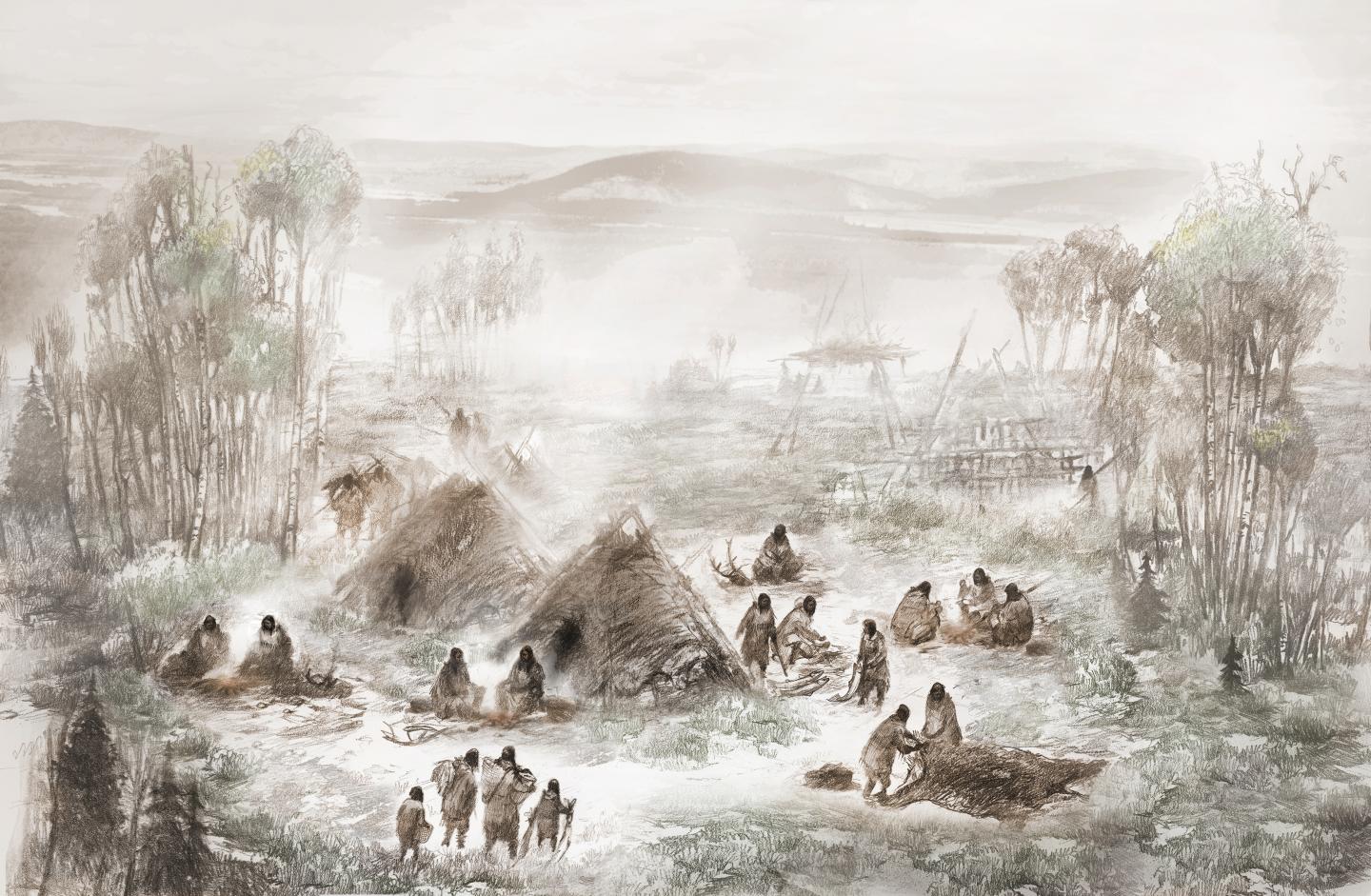
New Native American Population Could Rewrite History of North America Scientists have found evidence of a previously unknown population of Native Americans, a discovery that could cause a drastic rethink on the history of how humans populated the Americas. The revelation came from the genetic analysis of ancient DNA from the remains of a six-week old infant found at an Interior Alaska archaeological site. The new Native American group have been named “Ancient Beringians”. “We didn’t know this population existed,” said Ben Potter, one of the lead authors of the study published in the journal Nature, and a professor of anthropology at the University of Alaska Fairbanks. “These data also provide the first direct evidence of the initial founding Native American population, which sheds new light on how these early populations were migrating and settling throughout North America.” The discovery suggests two new scenarios for the populating of the Americas. One possibility is that there were two distinct groups of people who crossed the Beringian land bridge prior to 15,700 years ago. The second is that a single group crossed the land bridge and then split in Beringia into two groups, the Ancient Beringians, and other Native Americans, with the second group moving south of the ice sheets 15,700 years ago. Combined with archaeological evidence, the DNA results suggest that Athabascan ancestors moved north again, possibly around 6,000 years ago, and eventually either absorbed or replaced the Ancient Beringian population. “There is very limited genetic information about modern Alaska Athabascan people,” Potter explained. “These findings create opportunities for Alaska Native people to gain new knowledge about their own connections to both the northern Native American and Ancient Beringian people.” New Method for Determining a Skeleton’s Age of Death Christine Cave, an archaeologist from the Australian National University, has developed a new way to determine a skeleton’s age of death based on how worn the teeth are. The breakthrough could cause a drastic rethink on just how long people lived prior to the arrival of modern medicine. The method involves analysing the wear on teeth and comparing it to living populations of comparable cultures. Cave applied the technique to skeletal remains from three Anglo-Saxon cemeteries for people buried between 475CE and 625CE. “People sometimes think that in those days if you lived to 40 that was about as good as it got. But that’s not true.,” Cave said in an Australian National University press release. “For people living traditional lives without modern medicine or markets the most common age of death is about 70, and that is remarkably similar across all different cultures.” Cave believes that this myth about ancient populations dying young comes from difficulties in categorising the elderly in archaeological studies. “Older people have been very much ignored in archaeological studies and part of the reason for that has been the inability to identify them,” she said. “When you are determining the age of children you use developmental points like tooth eruption or the fusion of bones that all happen at a certain age. Once people are fully grown it becomes increasingly difficult to determine their age from skeletal remains, which is why most studies just have a highest age category of 40 plus or 45 plus. “So effectively they don’t distinguish between a fit and healthy 40-year-old and a frail 95 year old. It’s meaningless if you are trying to study elderly people.” Cave’s new method allowed her to notice a significant difference in the way male and female people of old age were buried in the Anglo-Saxon period. “Women were more likely to be given prominent burials if they died young, but were much less likely to be given one if they were old,” she said. “The higher status men are generally buried with weapons, like a spear and a shield or occasionally a sword. Women were buried with jewellery, like brooches, beads and pins. This highlights their beauty which helps explain why most of the high-status burials for women were for those who were quite young.” Cave’s research has been published in the Journal of Anthropological Archaeology. She is a PhD scholar at the Australian National University’s School of Archaeology and Anthropology. Mummy’s Name Finally Revealed A new scanning technique has revealed the name of an ancient Egyptian mummy, according to the Daily Express. The new technique was developed by researchers from University College London and the University of Manchester in collaboration with scientists from the USA. It revealed the name of the mummy, a man named Irethoreu. Irethoreu’s name was hidden on the foot plate of the coffin. According to the Daily Express, the international team of researchers used different frequencies of light to read hieroglyphics painted on scraps of papyrus used to make the case. Without this innovative technique, the only way to have read the name would have been by destroying the coffin. The name means “The Eye of Horus”. It’s believed that Irethoreu lived sometime between 664 CE and 30 CE. Featured image: A scientific illustration of the Upward Sun River camp in what is now Interior Alaska. Illustration by Eric S. Carlson in collaboration with Ben A. Potter ]]>

Categories
Breaking News

Humans Migrated To North America 10,000 Years Earlier Than Thought

PLOS ONE. Until now, the earliest settlement date for North America was estimated at 14,000 years Before Present (BP), based on the earliest reliably dated archaeological sites. The new study has moved that date back to 24,000 years BP, to a period that coincides with the height of the last ice age. The groundbreaking research was carried out by Ariane Burke, a professor in Université de Montréal’s Department of Anthropology, and her doctoral student Lauriane Bourgeon, with the contribution of Dr. Thomas Higham, Deputy Director of Oxford University’s Radiocarbon Accelerator Unit. A controversial site first excavated forty years ago is at the heart of the latest study. The Bluefish Caves, located on the banks of the Bluefish river in northern Yukon near the Alaskan border, were first studied by archaeologist Jacques Cinq-Mars over a ten year period beginning in 1977. Radiocarbon dating of animal bones discovered at the site led the researcher to hypothesize that human settlement in the surrounding region dated back to 30,000 BP. For thirty years Cinq-Mars’ conclusions have remained controversial in the scientific community, primarily due to the lack of other sites of a similar age. In addition, there was no clear evidence that the horse, mammoth, bison and caribou bones found in the Bluefish Caves were the result of human activity there. Bourgeon set out to answer once and for all whether Cing-Mars’ hypothesis was correct. Over the course of two years she examined 36,000 bone fragments taken from the Bluefish Caves and preserved in the Canadian Museum of History in Gatineau. Fifteen bones showed ‘undeniable’ traces of human activity, according to a University of Montreal press release. Another twenty fragments showed probable traces of human activity. “Series of straight, V-shaped lines on the surface of the bones were made by stone tools used to skin animals,” said Burke. “These are indisputable cut-marks created by humans.” The bones were then submitted for radiocarbon dating. The oldest fragment, a horse mandible showing marks likely caused by the tongue being removed by a stone tool, was dated to between 23,000 and 24,000 years BP. “Our discovery confirms previous analyses and demonstrates that this is the earliest known site of human settlement in Canada,” explained Burke in the press release. “It shows that Eastern Beringia was inhabited during the last ice age.” The results support findings made in studies of population genetics that a group of a few thousand individuals lived in isolation in Beringia between 15,000 and 24,000 years ago. “Our discovery confirms the ‘Beringian standstill [or genetic isolation] hypothesis,'” said Burke, “Genetic isolation would have corresponded to geographical isolation. During the Last Glacial Maximum, Beringia was isolated from the rest of North America by glaciers and steppes too inhospitable for human occupation to the West. It was potentially a place of refuge.” It seems, therefore, that the ancient humans inhabiting the Bluefish Caves were among those who, at the end of the last ice age, migrated south and went on to colonise the entire North American continent, along the coast and down to South America. Image courtesy of Université de Montréal ]]>

Categories
Breaking News

Satellite Imagery Reveals New North American Viking Site?

Categories
Breaking News

Infant Fossils Shed Light on Native American Lineages

Categories
Breaking News

Cats Brought Extinction to Dog Species in North America

“The role of clade competition in the diversification of North American canids” Image courtesy of Wikimedia Commons user: Don Wecua ]]>

Categories
Breaking News

Cahokia Brought Down By Floods

Proceedings of the National Academy of Sciences, presents new ideas to explore. “We are not arguing against the role of drought in Cahokia’s decline but this presents another piece of information,” says Samuel Munoz, currently writing his Ph.D. in geography and the study’s lead author. The research also provides new information about the history of the Mississippi River, a waterway known to flood regularly, which may be useful now. “By understanding the river better, we can hopefully offer new information to those concerned about the exposure of current populations to floods”, explains Williams, a professor of geography. By using radiocarbon dating techniques of plant remains and charcoal within the core samples, Munoz and Williams have established ‘fingerprints’ of major flood events from the last 2,000 years. Following a 300-year-period of numerous floods, the centuries after 600 CE witnessed an increasingly arid climate. Archaeological evidence from this period reveals that human activity increased in the floodplain as people moved into the area and farmed more intensively. Around 1200, however, population began to decline. “There are shifts in craft production, house size and shape, and other signals in material production that indicate political, social and economic changes that may be associated with social unrest,” explained Sissel Schroeder, a UW-Madison professor of anthropology who aided Munoz and Williams. Cahokia fractured and the population began to migrate away from the floodplain. By 1400, the site was deserted. Many factors obviously contributed to Cahokia’s rise and eventual decline. A period of gradual aridification followed by increased flood activity provides a means of understanding how past societies, as well as modern ones, are dependent on the climate. Sudden shifts in environmental conditions can prove disastrous for communities, as happened at Cahokia. For more information: www.pnas.org Image courtesy of Wikimedia Commons user: Innotata]]>

Categories
Breaking News

Fifth-Century Native American Pendant Found

Categories
Breaking News

Social Networks Key to Survival

Categories
Breaking News

North America's First Big City