Categories
Breaking News

History News of the Week – A Cover-up of a Nazi Plot, a Ghost Species, and a Rethink on Australia

Churchill Tried to Cover-up Nazi Royal Plot Newly released papers from the UK’s National Archives have revealed that Winston Churchill wanted to “destroy all traces” of telegrams about a Nazi plot to reinstate the abdicated King Edward VIII to the throne in return for his support during the Second World War. According to the Guardian, the telegrams reveal a plan to kidnap the Duke of Windsor – as the abdicated monarch was then known, and his wife Wallis Simpson, in Portugal in 1940. The Cabinet Office papers released by the National Archives reveal a 1953 appeal from Churchill to US president Dwight D Eisenhower and the French government to prevent publication of the telegrams for at least “10 to 20 years”, the Guardian reports. Churchill believed the telegrams were likely to give the misleading impression that the duke was in regular touch with German agents, and open to ideas which were disloyal. The prime minister’s appeal was made after he’d learnt a microfilm of the documents had fallen into the hands of the US State Department, and were being considered for inclusion in the US’ official history of the war. Although Churchill succeeded, and publication of the telegrams was delayed by a few years, they still eventually came to light in 1957. “Ghost” Species Points to Interbreeding Between Humans and Other Hominins Through studying saliva, scientists have discovered clues to a “ghost” species of archaic humans that may have contributed genetic material to the ancestors of people living in Sub-Saharan Africa today. The new findings add to growing evidence that sexual relationships between different species of archaic humans might not have been unusual, and in fact the norm. Previous research has already concluded that the ancestors of modern humans interbred with other hominin species, such as Neanderthals and Denisovans, in Asia and Europe. The latest research, published in the journal Molecular Biology and Evolution, adds to other recent genetic analyses indicating ancient Africans also interbred with other early hominins. “It seems that interbreeding between different early hominin species is not the exception — it’s the norm,” said Omer Gokcumen, PhD, an assistant professor of biological sciences in the University at Buffalo College of Arts and Sciences. “Our research traced the evolution of an important mucin protein called MUC7 that is found in saliva,” he said. “When we looked at the history of the gene that codes for the protein, we see the signature of archaic admixture in modern day Sub-Saharan African populations.” The MUC7 protein gives spit its slimy consistency, as well as binding to microbes, which may help the body get rid of disease-causing bacteria. The team of scientists were researching the purpose and origins of the protein by examining the gene in more than 2,500 human genomes, when they discovered that one group from Sub-Saharan Africa had a significantly different version to that found in other humans. “Based on our analysis, the most plausible explanation for this extreme variation is archaic introgression – the introduction of genetic material from a ‘ghost’ species of ancient hominins,” Gokcumen says. “This unknown human relative could be a species that has been discovered, such as a subspecies of Homo erectus, or an undiscovered hominin. We call it a ‘ghost’ species because we don’t have the fossils.” The study was led by Gokcumen and Stefan Ruhl, DDS, PhD, a professor of oral biology in UB’s School of Dental Medicine. Humans May Have Arrived in Australia 10,000 Years Earlier than Thought Newly discovered artefacts suggest humans arrived in Australia 10,000 years earlier than previously believed. Exactly when Australia was first settled by humans has long been shrouded in ambiguity, with recent studies seemingly pushing the approximate date further and further back in time. A team of researchers led by the University of Queensland, and including scientists from the University of Washington, found and dated artefacts from Madjedbebe, Northern Australia that suggest humans arrived there 65,000 years ago. A paper detailing the artefacts and the dating method has been published in the journal Nature. The new findings could have a significant impact on theories about the emergence of early humans and how they coexisted with their environment. In particular, according to the researchers it throws serious doubt on the idea that humans caused the extinction of megafauna such as giant kangaroos, wombats and tortoises. “Previously it was thought that humans arrived and hunted them out or disturbed their habits, leading to extinction, but these dates confirm that people arrived so far before that they wouldn’t be the central cause of the death of megafauna,” co-author and UW associate professor of anthropology Ben Marwick said. “It shifts the idea of humans charging into the landscape and killing off the megafauna. It moves toward a vision of humans moving in and coexisting, which is quite a different view of human evolution.” Among the artefacts discovered were ochre crayons and other pigments, as well as objects believed to be the world’s oldest edge-ground hatchets, potential evidence that these ancient humans ground seeds and processed plants. The artefacts were dated using radiocarbon dating and optical stimulated luminescence (OSL) – a technique used on minerals that can reveal a variety of things, such as the last time a grain of sand was exposed to sunlight – useful for determining when an artefact was buried. Featured Image courtesy Bundesarchiv, Bild 183-14059-0005 / CC-BY-SA 3.0 [CC BY-SA 3.0 de (http://creativecommons.org/licenses/by-sa/3.0/de/deed.en)], via Wikimedia Commons ]]>

Categories
Breaking News

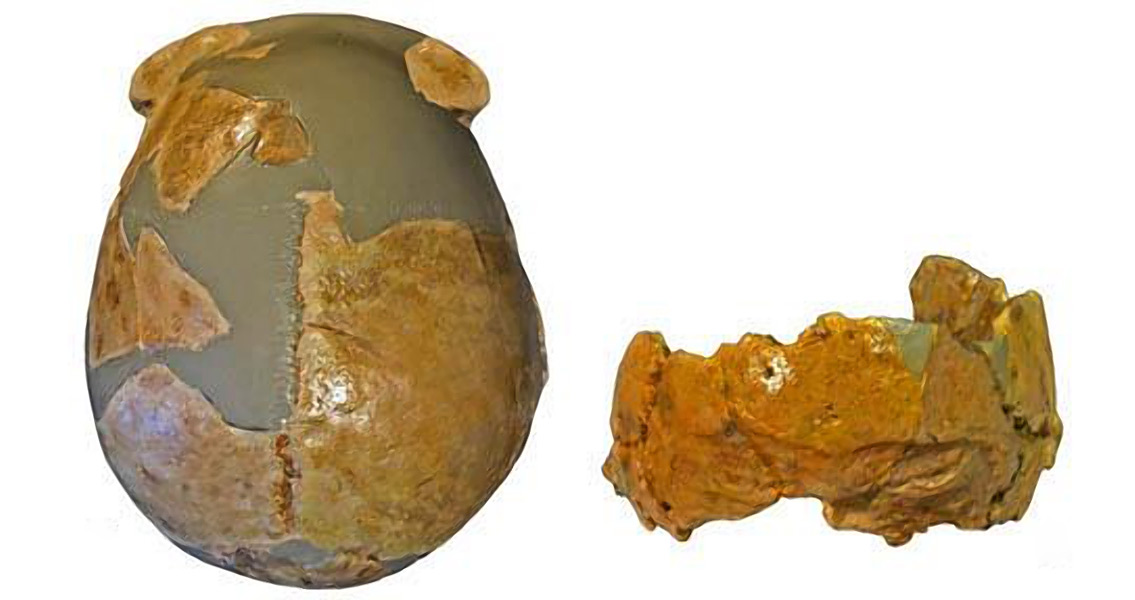
Neanderthal and Human Characteristics Shown in Two Ancient Skulls

Categories
Editorial

Neanderthals and Humans – What Are the Differences?

Homo neanderthalenisis is now long extinct, the differences between the two species can actually be hard to pinpoint. A fact further complicated by the now widely accepted belief that the two species interbred during the time they both inhabited Eurasia. History The first point of difference between the two species can be found in their respective histories. Neanderthals migrated into Eurasia long before modern humans did. Exactly when they left Africa is far from certain, but scientists generally estimate it was sometime between 300,000 and 200,000 years ago. Humanity’s path to Eurasia is also far from certain. The earliest recognisably modern human fossils have been found in Omo Kibish in Ethiopia, and date to around 200,000 years ago. Genetic and paleontological records suggest modern humans started to leave Africa between 60,000 and 70,000 years ago. Exactly why this migration started is unclear, but it is generally believed to have been due to the onset of the last Ice Age. Some 50,000 years ago the first humans started to arrive in what is now the Middle East (this was likely a different group to the original explorers out of Africa, who instead migrated East through India). It was this group that would eventually go on to colonise much of Europe and Asia. Anatomically modern humans then, arrived in Eurasia much later than their evolutionary cousins. Nevertheless, the two species lived alongside each other for several thousands of years, with the Neanderthals finally going extinct sometime between 40,000 and 30,000 years ago. Appearance Although similar in many ways, there are clear physical differences distinguishing Neanderthals and modern humans. Neanderthals were significantly shorter and stockier than modern humans, with much broader rib cages and pelvises. To give some perspective, the average height for a man in the USA is 1.76 metres. Conversely, based on the fossil records available, the average height for a Neanderthal was just 1.6 metres. A study published late last year suggested that some of these anatomical differences could be the result of the Neanderthals being forced to adopt a much more high protein diet than modern humans. Intelligence and Behaviour One of the hottest topics in scientific research right now involves determining just how intelligent Neanderthals were. For years, the prevailing view was that Neanderthals were primitive, poorly developed brutes when compared to modern humans, only capable of expressing themselves in grunts and groans. Discoveries in the last few years have really brought this assumption into question. ⦁ A study last year presented remarkable evidence that Neanderthals may have used vocal communication in a way similar to modern humans. ⦁ Archeologists working at Neanderthal sites in France believe Neanderthals deliberately collected manganese oxide to use in chemically assisted fire making 50,000 years ago. ⦁ Earlier this year, a study pointed towards Neanderthals being rock collectors, suggesting they placed symbolic importance in the objects around them. This is widely considered a signifier of cultural development. ⦁ Jewellery found at various paleolithic sites has long been a bone of contention, with some arguing it was created by humans, others that it was the work of Neanderthals and thus further proof of how advanced they were. If true, any of these discoveries would point to Neanderthals being for more advanced than their typical depiction in popular culture would suggest. The physical differences between Neanderthals and humans are quiet clear, especially in terms of anatomy. Beyond that though, it’s becoming increasingly uncertain just how distinct we are from our closest extinct evolutionary cousins.]]>

Categories
Breaking News

Australia’s Oldest Bone Jewelry was Crafted 50,000 Years Ago

New Scientist: “I’ve met Indigenous Australians who remember their granddads wearing nose bones for special occasions,” adding, “In some groups, nose bones were only worn by elders, but in others, there were no restrictions, so all men and women could wear them to look more appealing.” The first humans to reach Australia would likely have brought the skills to craft bones from Africa where they were originally developed, and then adapted them to work with the bones of animals found in Australia. Kangaroo bones, which are strong, hard and easy to acquire, were easy replacements for ivory and horns. In Africa, humans have used bones as tools for more than a million years, however, the oldest recorded bone ornament on the continent is only around 15,000 years-old. It’s possible some of the bone artifacts which were older were mistakenly identified as tools as opposed to ornaments. This mistake in identification seems more probable than Australia being where bone jewelry was first developed. “Ancient bone technology discovered in Australia is important because it reshapes our understanding of the first inhabitants.” Langley says in New Scientist, “Findings of early bone tools and ornaments have been rare, leading to a long-held theory that Indigenous Australians initially lost the skills they brought from Africa.” “This shows that the first people in Australia were just as capable as those everywhere else of complex actions,” Ian Lilley from the University of Queensland is quoted as saying in the New Scientist article, “So whether this artefact was used as a nose bone or for sewing skins doesn’t really matter – it’s evidence of complicated behaviour.” To date, the oldest jewelry ever made by early humans are the 100,000-year-old shell beads discovered at sites in Africa as well as the Middle East, which look as if they had been strung together to create necklaces. Our cousins the Neanderthals appear to have beaten us to it, as they might have been creating jewelry around 80,000 years before early humans even made it to Europe. Eagle talons discovered at the Krapina Neanderthal site in modern-day Croatia date back 130,000 years and have features that suggest they may have been used in a bracelet or necklace. ]]>

Categories
Breaking News

Evidence Shows Early Humans Travelled to Stonehenge Before it was Built

Guardian the discovery was: “a world first, it’s a big deal,” adding that the information substantially increases what’s known about the site, saying, “It is very hazy and this evidence just makes the glass slightly less dark, it is a significant movement forwards.” “It is an amazing sequence. There is nothing like it in Europe and now we’ve got this evidence from the dog you start to piece it together. You can see that this place seems to have been special to not just local people, it seems to have been drawing in people from long distances away and the sort of distances you would not expect for mobile hunter-gatherers.” Researchers theorize that the dog would have been similar in color, size and shape to an alsatian, although with more wolf-like features. Other artifacts include the bones of oxen (known as aurochs), trout and salmon, as well as frog’s legs – which were staples of people’s diets long before they were synonymous with French cuisine. “Discoveries like this give us a completely new understanding of the establishment of the ritual landscape and make Stonehenge even more special than we thought we knew it was,” Jacques is quoted as saying in the Guardian. The tooth also raises questions as to why humans would travel such a distance and may indicate that Stonehenge was a hub of some sort. Previous excavations have unearthed a slate tool from Wales as well as stone tools from central and west England. Additionally, at the end of the Ice Age, Blick Mead would have been an attractive gathering place with a natural spring and easy access from the nearby Avon river. Numerous deer and aurochs bones at the site also support the idea that massive extinct prehistoric cattle grazed there. “The fact that a dog and a group of people were coming to the area from such a long distance away further underlines just how important the place was four millennia before the circle was built,” Jacques told the Guardian, “A dog tooth from York, a slate tool from Wales and a stone tool from the Midlands show that this wasn’t just the place to live at the end of the Ice Age, but was known by our ancestors for a long time widely across Britain. They kept coming here.” ]]>

Categories
Breaking News

New Carbon Dating May Tie Early Humans to Hobbits' Extinction

Homo floresiensis – the “hobbit” species – was discovered, have been carbon dated to approximately 46,000 years ago. Because the upper premolar and lower molar are somewhat younger than any of the known hobbit remains, this new information seems to support the theory that humans were involved in the demise of H. floresiensis. Discovered at Liang Bua in 2003, the remains of H. floresiensis, widely believed to be in the genus Homo, suggest they would have been around 3.5 feet (1.1 m) tall. Nine partial skeletons from nine individuals, including a single complete skull, have been discovered. Recent re-dating efforts in the cave moved the hobbits’ extinction back to approximately 50,000 years ago, when early humans were known to already be living in South-East Asia, according to the study co-authored by geochronologist Richard Roberts and archeologist Thomas Sutikna, both with the University of Wollongong, Australia. “It’s a smoking gun for modern human interaction, but we haven’t yet found the bullet,” Roberts told Nature, which published the research. Although the team is confident the teeth are from H. sapiens, partly because they’re larger than those of H. floresiensis; a paleoanthropologist from University College London, María Martinón-Torres, believes that the premolar appears slightly more primitive. To conclusively prove the teeth are human, she believes they should be compared to a wide range of H. sapiens and H. erectus remains. There is other evidence which puts humans on Flores Island immediately after H. floresiensis disappeared, supporting the possibility that humans contributed to the hobbits’ extinction by out-competing them for limited resources on the island. Animals which may have been a food source for early human hunter–gatherers, including giant storks (Leptoptilos robustus), miniature elephants; known as stegodons (Stegodon florensis insularis), and vultures (Trigonoceps), all vanish from the sediment layers in the cave after approximately 46,000 years ago. During this same time period, freshwater mollusk shells start to show up. These shellfish are commonly found at other early human sites across Africa and Eurasia. Stone tools constructed using chert, a material which is also regularly seen at other early human sites, and evidence of fire hearths are further examples of findings more recent than the Liang Bua hobbit remains. “What we don’t yet know is whether there was at least a short overlap in the populations, thus raising the question once again of the possible role of modern humans in the extinction of floresiensis”, paleoanthropologist Chris Stringer with the Natural History Museum in London told Nature, adding that if humans and hobbits had overlapped, interbreeding is also a possibility. Meanwhile, the research team intends to return to Liang Bua in order to explore cave deposits from 46,000 to 50,000 years old. The discovery of the teeth was revealed at the European Society for the study of Human Evolution in Madrid’s annual meeting. ]]>

Categories
Breaking News

With the Dinosaurs Gone the Speed of Human Evolution Tripled

Phys Org as saying, “Our findings refute those of other studies which overlooked the fossils of placental mammals present around the last mass extinction. Using rigorous methods, we’ve successfully tracked the evolution of early placental mammals and reconstructed how it changed over time. While the rate differed between species, we see a clear and massive spike in the rates of evolution straight after the dinosaurs become extinct, suggesting our ancestors greatly benefitted from the demise of the dinosaurs. The huge impact of the dinosaur extinction on the evolution of our ancestors really shows how important this event was in shaping the modern world.” The study was funded by the Natural Environment Research Council and published in Proceedings of the Royal Society. ]]>

Categories
Breaking News

Rare Representation of Neolithic Human Rediscovered

Categories
Breaking News

Evidence of Manmade Fires Well Before Clovis Culture

The Post and Courier in Charleston, adding, “I have no doubt that this will be a hotly debated topic for some time, as paradigm shifts often take a while to gain acceptance, but the evidence appears to be solid.” It all started with a chert chopper (also known as the Topper Chopper) – a piece of rock with the face of a blade hammered out of it, that was discovered in the early 1990s by Al Goodyear, who has since retired from the S.C. Institute of Archaeology and Anthropology at the University of South Carolina. The pieces were relatively small, as were the blades cut into them, suggesting they may have been used to carve ornaments from ivory, bone, and antler. They were dug up from soil sediments deeper than the Clovis tools which date humans in North America back to between 12,000 and 13,000 years ago. Critics argue whether or not the stone tools were actually pre-Clovis and whether or not the stone pieces had actually been hammered by humans or split apart by nature. Recent analysis of Goodyear’s artifacts has ascertained they could not have occurred naturally. The dispute is still ongoing in certain quarters, and now the team has gone even deeper and found even earlier evidence of humans. Since the 1930s, it’s been widely accepted that the first humans to inhabit North America were the Clovis people, who appeared around 13,500 years ago. Artifacts from the Clovis culture are found across most of the United States and as far as Panama to the south. This theory has seen challenges in recent decades following the discovery and dating of pre-Clovis sites in Texas (Buttermilk Creek) and Virginia (Cactus Hill). The research team is currently organizing the findings to be published for peer-review. Image courtesy of the University of South Carolina]]>

Categories
Breaking News

Ice Age Migration and Displacement Shown in Study

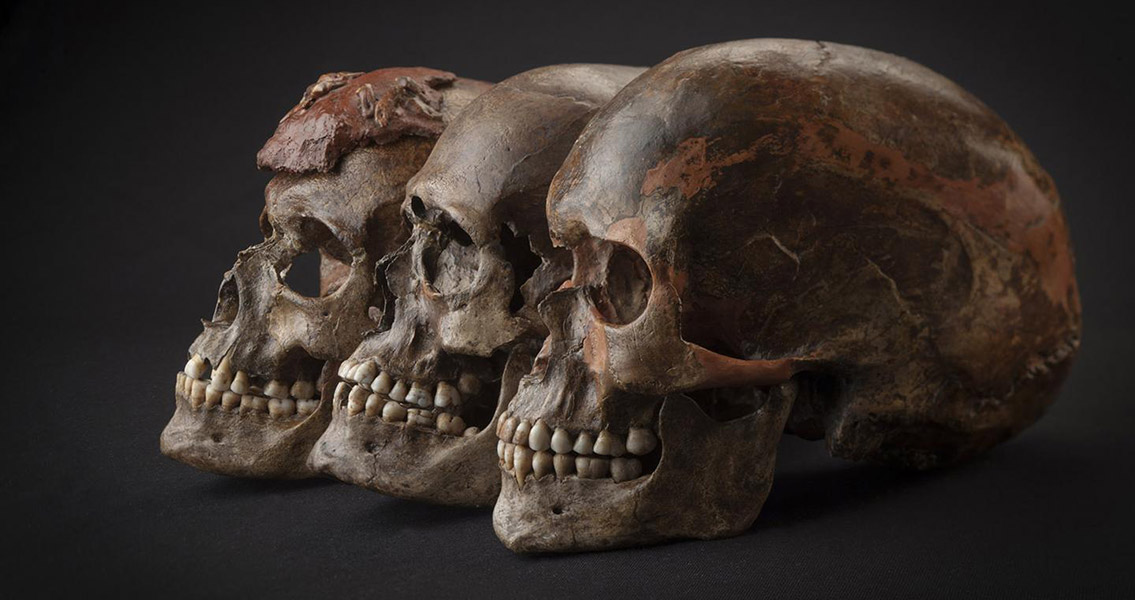
Nature on 2nd May, the study analysed the DNA of prehistoric humans to chart population changes over a period that stretched from the initial inhabitation of Europe by modern humans, to the end of the last Ice Age. The research was led by David Reich, Howard Hughes Medical Institute Investigator at Harvard Medical School. Two massive changes in prehistoric populations are revealed by the genetic data used in the research, which seem to be related to the end of the Ice Age around 19,000 years ago. The first has been documented previously, although in less detail. As the ice sheet retreated, northern Europe was repopulated by prehistoric humans from regions of southwest Europe, such as Spain. A second, more surprising event came some 5,000 years after that initial re-population. Populations from the southeast of Europe, such as what is now Turkey and Greece, migrated into Europe and displaced the first group of humans who had relocated there. The findings have the potential to cause a drastic rethink on how we understand the history of European migration and population. Previously, genetic data were only available for four samples of prehistoric European modern humans between 45,000 and 7,000 years old, but Reich and colleagues’ study has changed that; allowing much better insights to be gleaned on human populations in this distant period. “Trying to represent this vast period of European history with just four samples is like trying to summarize a movie with four still images. With 51 samples, everything changes; we can follow the narrative arc; we get a vivid sense of the dynamic changes over time,” said Reich, in a press release from the Howard Hughes Medical Institute. “And what we see is a population history that is no less complicated than that in the last 7,000 years, with multiple episodes of population replacement and immigration on a vast and dramatic scale, at a time when the climate was changing dramatically.” According to the team’s findings, all Europeans come from a single 37,000 year old population that survived through the last Ice Age. One of the branches of this population, which was represented by a specimen from Belgium, was displaced from most parts of Europe around 33,000 years ago, during the height of the last Ice Age. Some 19,000 years ago, a population related to it expanded across Europe, which the researchers believe could have originated in Spain. The second event took place 14,000 years ago, and would define Europe’s population until the advent of agriculture. “We see a new population turnover in Europe, and this time it seems to be from the east, not the west,” said Reich. “We see very different genetics spreading across Europe that displaces the people from the southwest who were there before. These people persisted for many thousands of years until the arrival of farming.” Fascinatingly, the study also showed the percentage of Neanderthal DNA in humans is decreasing, it consisting of between 3% and 6% of the prehistoric humans’ genetic makeup, but only 2% in most humans today. The results suggest that natural selection could be removing the toxic Neanderthal DNA. Reich and colleagues’ study shows that migration has long been an integral, complicated part of human history, shaping the world’s populations for thousands of years. Image courtesy of Martin Frouz and Ji?í Svoboda]]>