Categories
News

Aboriginals Killed at Pinjarra

The Pinjarra Massacre took place on 28th October, 1834. The event is remembered as one of the most horrendous massacres of Aboriginal peoples in Australia’s history.

Battle or Massacre?

Even now, close to two centuries later, the event in Western Australia is cause for significant controversy. Referred to as the Battle of Pinjarra in some histories – suggesting that the Aboriginal people’s deaths were part of a conflict involving mutual aggression, others argue that the term massacre is the only one capable of truly capturing the events that took place in Pinjarra. Ultimately, a case can be made for both explanations. The Aboriginal people in the region had shown aggression to the European Settlers there, although one could argue this was an inevitable consequence of Europeans moving into their territory. Just as significantly for those who call the event a massacre, among the Aboriginal people killed were a substantial amount of women and children.

Tensions Before Violence

[caption id="attachment_8723" align="aligncenter" width="800"] Panorama of the Swan River Settlement, 1831[/caption] The origins of the tragic events at Pinjarra came in the arrival of the first European settlers to Western Australia, in 1829. Led by Captain James Stirling, the Swan River Colony was quickly established in what is now known as the Peel region of Australia. This was a region which had been inhabited for thousands of years by the Bindjareb tribe, an indigenous people particularly renowned for their spear making ability. Tensions quickly started to form between the white, European settlers and the Bindjareb tribe. While the Aboriginal people initially placed the Europeans into their folk traditions, interpreting them as the returning ghosts of their ancestors, Stirling declared the region a territory of England, arguing that the Bindjareb should be accountable to English law. As the settlers expanded their territory, taking up more land as they established farms, settlements, and ultimately towns, conflict started to brew. One key issue was a fundamental difference in agricultural practices. The Bindjareb people practiced firestick farming, a method where parts of the bush were torched to enable hunting and encourage regrowth of the land. For the white settlers, with little understanding of the firestick tradition, it seemed like an attack, especially on the occasions when the fires spread into the land they had started to cultivate.
The Flash Point

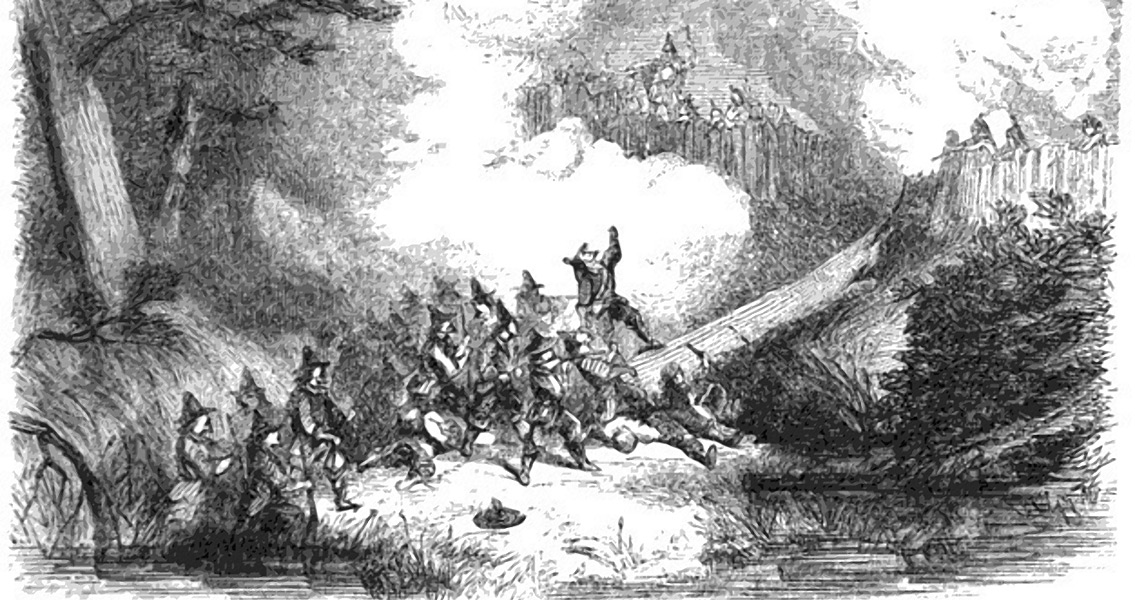
Signs of discontent continued to mount in the region over the next few years, as the settlers desire for land increasingly put pressure on the Aboriginal population. In 1834, with the colonists struggling to feed themselves, Governor Stirling ordered the flour rations given to the Bindjareb as a means of keeping the peace to be cancelled. On 24th April a group of Bindjareb launched a raid on the mill at South Perth, stealing 445kg of flour, possibly as a result of a misunderstanding that saw them believe that the flour rations were payment for the land the settlers had taken from them. Eventually, three Bindjareb believed to have been involved in the incident were captured by the settlers, and publicly flogged. Several days later, in response to their humiliating punishment, the Bindjareb men formed a group and lead a retaliation against the settlers, killing one soldier and seriously injuring another. With tensions high, Governor Stirling set off on an expedition with a group of soldiers and police on 26th October. Taking a surveyor with them, they intended to expand the area of settlement to Pinjarra, a region with fertile land. It was also an area at the heart of the Bindjareb community. At some point on 28th October, Stirling’s party encountered members of the Binjareb tribe. His group divided into two, taking up strategically advantageous positions around the Bindjareb camp. Exact details of which side was the first to show aggression are not clear, with some sources arguing that the Bindjareb hurled their spears at Stirling’s men, while others claim Stirling’s forces opened fire first. Either way, after roughly an hour of fighting, the outnumbered colonists were forced into retreat. Only one settler had been killed in the fighting, although several, including Stirling, were injured. Even now, it is unclear how many Aboriginal people were killed, but estimates range from around fifteen into the hundreds.]]>

Categories
News

Metacom Rebellion Comes To an End

Categories
Book Reviews

Common Sense

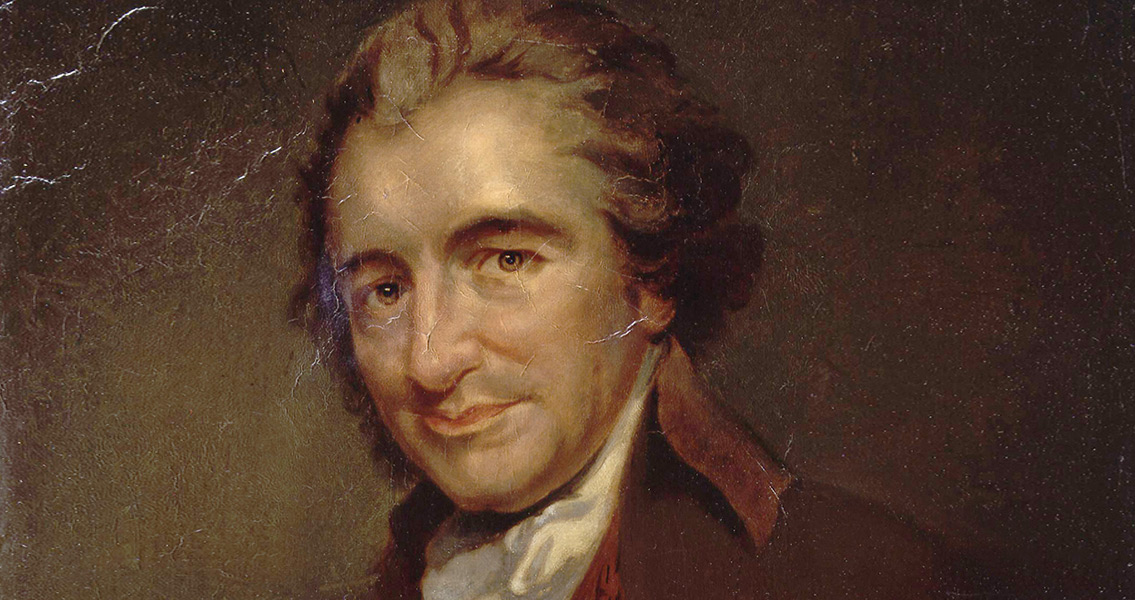
Common Sense was first published as a pamphlet in 1776. The hugely influential seventy-seven page work was one of the first to argue in clear, direct fashion that the future of the American colonies should be one independent from Great Britain. Along with general discussions on the nature of politics and society, Paine’s pamphlet also engages with what he perceived as fundamental flaws in the British political system and the defining injustice of monarchy. All of these factors are combined to form a justification for US independence. Paine was born in Thetford, England, in 1737. He finished his formal education at the age of thirteen and started to work for his father. Throughout his teens and twenties he took in a variety of jobs, ranging from corset maker to school teacher to tax collector. At the same time he used his spare time to pursue the education he hadn’t completed in his youth. He lost the tax collecting job in 1772, after he’d published an article arguing that an increase in tax collectors pay would lead to a reduction in corruption. In 1774, shortly before the American Revolution started, Paine left England for North America. He quickly became involved in American political life, editing the Pennsylvania Magazine and writing a host of articles. At this point relations between the North American colonists and the British were in a precarious state. Several protests against excessive British taxation of the colonies, most notably the Boston Tea Party of December 1773, had already taken place. As more British troops were sent to the colonies, a growing campaign formed among the colonists to break Britain’s interfering presence. Crucially, at this point most colonists viewed themselves as still holding some connection to Britain, and as such campaigned to break the aggressive British taxation rather than win complete independence. Commons Sense played a key role in changing the focus of the campaigns by making a clear argument for independence. At a time when the stirrings of the Revolutionary War had already started with a battle at Lexington and Concord in 1775, Commons Sense convinced many colonists that the only solution was to completely cut all connections to the British government. Pivotal was Paine’s highlighting of the fact that many of the colonists were not just from England, but had actually fled to North America from across Europe in search of liberty. “This new world hath been the asylum for the persecuted lovers of civil and religious liberty from every part of Europe. Hither they have fled, not from the tender embraces of the mother, but from the cruelty of the monster.” By framing the history of migration to the colonies as one from persecution to liberty, Common Sense provided a political justification to the campaign for freedom, and established a clear distinction between the colonists looking for liberty and the conservative politics of the Old World. At the same time, painting Britain as a monster ruled by a tyrannical monarchy and dominated by inequality made explicit the sense of a fundamental divide between the values of the colonists and their rulers across the Atlantic. The pamphlet also argues that when America won its freedom from Britain, its people would stop being rebels and instead become respected internationally. This in turn would allow the new country to make important alliances to further strengthen its position and gain support in its campaign for liberty and freedom. Paine’s Common Sense is a crucial work in understanding American history. Undoubtedly the movement towards the Revolutionary War was already well underway before he had even reached North America. However, the seventy-seven page pamphlet is vital for helping to develop an understanding of the ideological arguments used in the build up to the Declaration of Independence.

Related Books


Common Sense book

Common Sense
by Thomas Paine

[gap height=”20″]]]>

Categories
News

English Colonists Massacre a Pequot Village

Categories
News

The Death of Pocahontas