
Categories
Breaking News

Not food scraps after all: turtle shells as Native American musical instruments

An example of a Native American flute, which was crafted by
Chief Arthur Two-Crows in 1987. Music and the animal kingdom share a deep connection. Photo credit: Jossi Fresco[/caption] Considering, more specifically, the music of Native American cultures, the voice and percussion are considered paramount. But with new research from Florida State University, we now know that turtle shells once played a significant role in this pocket of North America’s indigenous cultures.

Keeping the beat

In the past, turtle shells found at archaeological sites have often been dismissed as food remains. However, in an article published in academic journal PLOS One, Professor of Anthropology, Tanya Peres, says these turtle shells were used as rattles and other musical instruments. “Music is an important part of many cultures in ways we may not realize,” Peres comments. “Musical instruments have a deep ancient history in human society and are encoded with meanings beyond their sound making capabilities.”

Not just food

Peres worked alongside lead author Andrew Gillreath-Brown, a doctoral candidate from Washington State University. The research team closely examined the use of turtle shells as percussion instruments across the south eastern states. They identified and analyzed several partial Eastern box turtle shells from middle Tennessee archaeological sites that they believe were used as rattles. “It is important to explore and understand what other ways — besides food — prehistoric animal remains may have been used in the past,” Gillreath-Brown said. “Turtle shell rattles provide deep insights into human-environment and -animal relationships.”

Turtles: deeply symbolic in indigenous cultures

Gillreath-Brown notes that the belief that the world was formed upon a turtle’s back is a belief held across many indigenous groups. “This symbology and belief is imbued into the turtle shell rattles, which are meant to keep rhythm and thereby interjects powerful symbology and spiritual energy into dances and ceremonies,” he said. [caption id="attachment_8889" align="aligncenter" width="500"] The belief that the world was formed upon a turtle’s back is a belief held across many indigenous groups. Photo credit: kormandallas[/caption]
Consistent across cultures

The research draws upon turtle shell rattles that have been discovered throughout North America; from Florida to the north east, and all the way up to Canada. Each region is likely to attribute different meaning and levels of importance to these rattles; but their presence in such a widespread group of localities demonstrates that turtle shells were important to creating rhythm in ceremonies across prehistoric North America.

Rethinking food scraps

Peres says there are still many questions for researchers to investigate regarding the roles of turtles in indigenous populations. “We need to continue to bring together multiple lines of evidence and viewpoints so we can attempt a more nuanced understanding of past human-animal relationships,” she says. For now, the research has opened the door to re-examining curated turtle remains from archaeological digs, which may have wrongly been dismissed as food scraps.]]>

Categories
Breaking News

New Native American Population Could Rewrite History – The History News of the Week

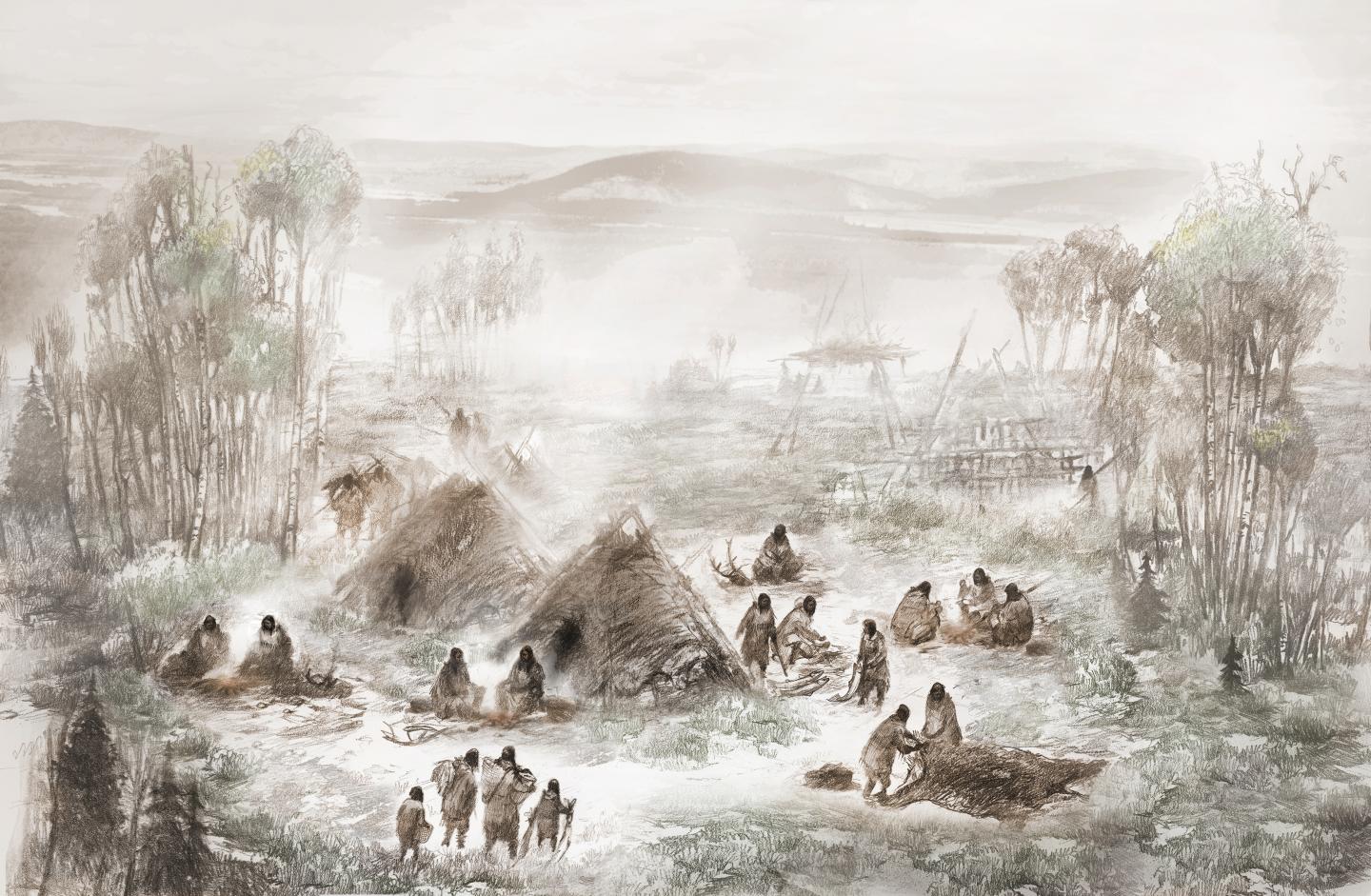
New Native American Population Could Rewrite History of North America Scientists have found evidence of a previously unknown population of Native Americans, a discovery that could cause a drastic rethink on the history of how humans populated the Americas. The revelation came from the genetic analysis of ancient DNA from the remains of a six-week old infant found at an Interior Alaska archaeological site. The new Native American group have been named “Ancient Beringians”. “We didn’t know this population existed,” said Ben Potter, one of the lead authors of the study published in the journal Nature, and a professor of anthropology at the University of Alaska Fairbanks. “These data also provide the first direct evidence of the initial founding Native American population, which sheds new light on how these early populations were migrating and settling throughout North America.” The discovery suggests two new scenarios for the populating of the Americas. One possibility is that there were two distinct groups of people who crossed the Beringian land bridge prior to 15,700 years ago. The second is that a single group crossed the land bridge and then split in Beringia into two groups, the Ancient Beringians, and other Native Americans, with the second group moving south of the ice sheets 15,700 years ago. Combined with archaeological evidence, the DNA results suggest that Athabascan ancestors moved north again, possibly around 6,000 years ago, and eventually either absorbed or replaced the Ancient Beringian population. “There is very limited genetic information about modern Alaska Athabascan people,” Potter explained. “These findings create opportunities for Alaska Native people to gain new knowledge about their own connections to both the northern Native American and Ancient Beringian people.” New Method for Determining a Skeleton’s Age of Death Christine Cave, an archaeologist from the Australian National University, has developed a new way to determine a skeleton’s age of death based on how worn the teeth are. The breakthrough could cause a drastic rethink on just how long people lived prior to the arrival of modern medicine. The method involves analysing the wear on teeth and comparing it to living populations of comparable cultures. Cave applied the technique to skeletal remains from three Anglo-Saxon cemeteries for people buried between 475CE and 625CE. “People sometimes think that in those days if you lived to 40 that was about as good as it got. But that’s not true.,” Cave said in an Australian National University press release. “For people living traditional lives without modern medicine or markets the most common age of death is about 70, and that is remarkably similar across all different cultures.” Cave believes that this myth about ancient populations dying young comes from difficulties in categorising the elderly in archaeological studies. “Older people have been very much ignored in archaeological studies and part of the reason for that has been the inability to identify them,” she said. “When you are determining the age of children you use developmental points like tooth eruption or the fusion of bones that all happen at a certain age. Once people are fully grown it becomes increasingly difficult to determine their age from skeletal remains, which is why most studies just have a highest age category of 40 plus or 45 plus. “So effectively they don’t distinguish between a fit and healthy 40-year-old and a frail 95 year old. It’s meaningless if you are trying to study elderly people.” Cave’s new method allowed her to notice a significant difference in the way male and female people of old age were buried in the Anglo-Saxon period. “Women were more likely to be given prominent burials if they died young, but were much less likely to be given one if they were old,” she said. “The higher status men are generally buried with weapons, like a spear and a shield or occasionally a sword. Women were buried with jewellery, like brooches, beads and pins. This highlights their beauty which helps explain why most of the high-status burials for women were for those who were quite young.” Cave’s research has been published in the Journal of Anthropological Archaeology. She is a PhD scholar at the Australian National University’s School of Archaeology and Anthropology. Mummy’s Name Finally Revealed A new scanning technique has revealed the name of an ancient Egyptian mummy, according to the Daily Express. The new technique was developed by researchers from University College London and the University of Manchester in collaboration with scientists from the USA. It revealed the name of the mummy, a man named Irethoreu. Irethoreu’s name was hidden on the foot plate of the coffin. According to the Daily Express, the international team of researchers used different frequencies of light to read hieroglyphics painted on scraps of papyrus used to make the case. Without this innovative technique, the only way to have read the name would have been by destroying the coffin. The name means “The Eye of Horus”. It’s believed that Irethoreu lived sometime between 664 CE and 30 CE. Featured image: A scientific illustration of the Upward Sun River camp in what is now Interior Alaska. Illustration by Eric S. Carlson in collaboration with Ben A. Potter ]]>

Categories
Breaking News

History News of the Week – Ancient Egyptian Prosthesis Studied

New insights into remarkable Ancient Egyptian prosthesis Egyptologists from the University of Basel have been examining a 3,000-year-old prosthetic big toe from Ancient Egypt. Discovered in a female burial from the necropolis of Sheikh Abd el-Qurna close to Luxor, the prosthesis had been studied before, but the Swiss team have now examined it using the most cutting-edge techniques, such as modern microscopy, X-ray technology and computer tomography. It’s been revealed that the remarkable artefact was refitted several times to its owner, a priest’s daughter. The researchers have also reclassified the materials used in the wooden toe’s construction, and determined how the prosthesis was made and utilised. The new analysis has revealed the skill involved in the toe’s construction, particularly in the mobility the prosthesis would have offered, and the intricately designed belt strap which would have fastened it to its wearer. Together with experts from ETH Zurich, the scientists from Basel are assessing the natural and man-made structures of the tomb and its surroundings. According to a statement from the University: “The specialists are currently developing geometric precise digital elevation, landscape, and architecture models for this area. These will then be combined to an archaeological and geological 3-D map that will illustrate the morphology of the terrain as well as the investigated subterranean structures. On that basis, the researchers want to reconstruct and simulate the development of the cemetery and its use phases.” Water Bottles used by Native Americans could have been poisonous A new study suggests that the water bottles manufactured by Native Californian Americans could have been detrimental to their health. Scientists recreated the Native American water bottles to gain insights into the manufacturing process. In particular, they wanted to see if bitumen, a material derived from petroleum, could have had an impact on the indigenous Californians’ health. The team made two types of ancient water bottle using traditional Native American methods. One of the bottles was lined with soft bitumen, known as ‘malak’, which washes ashore after seeping through the ocean floor, and one was lined with hard bitumen, known as ‘woqo’, typically found in land deposits. “In accordance with historical records, we used a Monterey chert flake and a bird bone awl to weave baskets from soft rush plants from California. We sourced abalone shells to use as mixing dish and heated the bitumen with metavolcanic pebbles before applying to the basket by hand using a sea mammal bone,” said Kevin Smith, co-author of the study and a PhD student from the University of California. Bitumen consists of polycyclic aromatic hydrocarbons (PAHs), which are linked with health problems such as cancer, hormone imbalances, organ damage and developmental impairments. After studying the recreated bottles, the scientists behind the study found that although storing water in the bitumen lined bottles didn’t cause dangerous levels of PAHs to leech out – even after two months, olive oil quickly became contaminated, suggesting the storage of fatty foods could have been a health risk. Dr Sabrina Sholts, lead author of the study from the Smithsonian Institution’s National Museum of Natural History, said: “To our knowledge, this is the first time that experimental archaeology has been used to quantify PAH exposure in an ancient population. We believe that our research provides a deeper temporal context for understanding health impacts and evolutionary changes related to harmful chemical exposure caused by human technology.” The study has been published in the journal Environmental Health. Nazi artefacts found in Argentina could be fake On 20th June, the New York Post reported a “a trove of original Nazi artefacts” had been discovered in Argentina. Among the objects were an original bas relief of Hitler and a medical device used for measuring heads. The collection of 75 objects was found hidden in an art collector’s home, just outside the capital city of Buenos Aires. According to the Associated Press, the objects are believed to have belonged to high-ranking Nazis in Germany. “Our first investigations indicate that these are original pieces,” Argentine Security Minister Patricia Bullrich told the Associated Press On 24th June, the Washington Examiner reported that the objects could be fake, citing a leading auctioneer of Nazi artefacts, Bill Panagopulos, president of Maryland-based Alexander Historical Auctions. Panagopulos said the items were ‘obvious replicas’, after seeing video footage and pictures of the artefacts. The art collector whose home the objects were discovered in is still under investigation. Image courtesy of University of Basel, LHTT. Image: Matja� Kačičnik ]]>

Categories
Breaking News

DNA Study Reveals Genealogy of Ancient Alaskan Remains

Science Online, human remains from On Your Knees Cave, dated to around 10,300 years old, were found to be closely related to a trio of ancient skeletons found along the Canadian coast of British Columbia. In turn, these three ancient individuals hold close relation to the Haida, Nisga’a and Tlingit tribes that inhabit the region today, revealing a direct line of descent to these tribes. Begun a generation ago thanks to an amicable collaboration between archaeologists and the Tlingit tribe living near the Alaskan remains, the research revolved around DNA extraction from the 10,300 year old skeletal remains. Named Shuká Káa, or “Man Ahead of Us”, the remains were first checked for maternally inherited mitochondrial DNA (mtDNA). Initially, there were no matches between the Tlingit tribe’s mtDNA and the data extracted from Shuká Káa, but it was revealed that the man had been an ancient mariner based on the isotopes in his teeth, which indicated a diet rich in seafood. Shuká Káa was ceremonially reburied in 2008, but with the advent of new DNA sequencing technology, researchers sought permission from the local Tlingit tribe as well as other tribes native to the region to take nuclear DNA samples from Shuká Káa. The three other ancient skeletons, one 750-year-old skeleton from Prince Rupert harbor in British Columbia, a 2500-year-old skeleton from the same region, and a 6075-skeleton located on Lucy Island in British Columbia, were all included in the survey. While the DNA sample taken from Shuká Káa was too damaged to sequence his genome completely, around 6% of it was recovered. The other three sets of remains were able to yield between one-third and two-thirds of their genomes as well, easily enough to compare genetic markers between these ancient humans and modern ones. The results of this study revealed that the Tsimshian tribe, and other Pacific Northwest tribes, were closely related to the Prince Rupert harbor and Lucy Island humans. Meanwhile, Shuká Káa seems to be a closer match to modern Southern and Central American tribes like the Ticuna, Surui, and Karitana of the Amazon. However, researchers say that the genetic markers aren’t particularly strong, and could simply represent a link to DNA shared by ancient ancestors living in Beringia or Asia before migrating to the Americas. Taken together with Shuká Káa‘s maternally inherited mtDNA, his nuclear DNA does raise the suggestion that he is also closely related to the younger skeletons found in British Columbia. Researchers played connect the dots between all four sets of remains, proposing that Shuká Káa is an ancestor of all related groups in the Pacific Northwest related to the Tsimshian. Meanwhile, there were genetic similarities found between the group and the remains of two other Paleo-indians: Kennewick Man, who is around 8545 years old and who was found in Washington state, and Montana’s 12,600-year-old Anzick child. The new research, published in the Proceedings of the National Academy of Sciences, is available online

Categories
Breaking News

New Research Confirms the Oral Histories of Montezuma Castle

Western Digs: “The conventional thinking left a lot of room for speculation about when and why people might have abandoned the area. The new study doesn’t explain why violence occurred at the site, but it does provide a mechanism for the abandonment. Aside from a small research project conducted in the 1980s, very little archaeological work had been done since the 1930s.” When the site was originally studied approximately 80 years ago, archaeologists discovered a large amount of evidence, including burnt roof beams and charred areas on the wall plaster. One of the structures, the one that became known as Montezuma Castle, was built inside a natural alcove on the face of the limestone cliff, about 90 feet (27 meters) above the canyon floor. The other, erected on the ground next to the canyon’s north wall, was named Castle A. The charred remains of both buildings led many to the conclusion that the buildings burned after they had been abandoned. Later, however, that changed, and some experts came to think the sites had been burned intentionally by the Sinagua as part of some unknown ritual performed as they were leaving. This new research was undertaken to see if new archeological methods and technology could uncover information about why the dwellings were abandoned. Guebard, along with his colleagues, reviewed notes from the original excavations, studied features of the site as well as artifacts which included roof beams, ceramics, and a variety of other architectural elements. Additionally, Guebard solicited several tribal groups whose ancestors were from the Verde Valley, for their input. “Generally speaking, we spend a lot of time and effort working closely with culturally associated Native American tribal governments”, Guebard says in Western Digs. “They review many of our projects and provide important feedback that helps to develop project objectives.” Following these lines of evidence, a completely new picture of the final days at the cliff dwellings started to become clear. For example, new dating of the charred plaster indicates the fire occurred between 1375 and 1395, while the pottery from the dwelling showed signs of having been made in styles from that same time period, suggesting that Castle A was inhabited right up to the time it was burned. Even more persuasive are the four bodies. Discovered in the original excavation in the 1930s, at the time it was believed that the deceased had been buried well before the fire, but a closer look at the earlier research reveals the dead had suffered trauma before their deaths, such as bones with cut marks, burn marks, and skull fractures in three of the four bodies. “We learned that the interior portion of each fracture displayed evidence of singeing on live bone,” Guebard is quoted as saying in the article. “So, the sequence of events seems to be blunt trauma followed closely by burning. It is also interesting to note that all of the remains with reported evidence of trauma and burning were found in a single grave.” The research was corroborated by the oral histories of the Native Americans, which describe Castle A being attacked by rival bands seeking to drive the Sinagua away. “Years before starting the project, I had heard from tribal members that there were stories about violence at the site”, Guebard explains in the article. “So as I started to realize that the archaeological evidence was supporting violence at Castle A, I felt it would be helpful to get their unique perspectives on the project and on my interpretation of the data. What was interesting is how close the oral histories match up with the archaeological evidence, but also how each story provided a unique and different perspective of the event represented by the archaeological evidence.” A Hopi Bearstrap Clan member recounted stories of Sinagua villagers running into Montezuma Castle and then pulling up the ladders, while invaders set it on fire. Members of the Dil zhe’e, also known as the Tonto Apache, recount the story of how their ancestors joined with the Yavapai, and together they evicted the Sinagua by setting fire to the dwellings. ]]>

Categories
Breaking News

Hundreds of Archaeologists Sign on to Protect Bears Ears

Categories
News

Biggest Atrocity of The Revolutionary War At Gnadenhutten

Categories
Breaking News

Infant Fossils Shed Light on Native American Lineages

Categories
Breaking News

Love for Caffeine in America Traced Back to 750 CE

”Ritual drinks in the pre-Hispanic US Southwest and Mexican Northwest” Image courtesy of Wikimedia Commons user: Alejandro Linares Garcia]]>

Categories
Breaking News

Kennewick Man a Native American, DNA Research Says

www.nature.com Image courtesy of Wikimedia Commons user: LavaBaron]]>